The Volkswagen Polo II Coupe (86C) 1.0 (45 Hp): A European Entry-Level Icon
The Volkswagen Polo II Coupe (86C) 1.0 (45 Hp) represents a significant chapter in the history of the European supermini segment. Produced by the German automotive giant Volkswagen from 1985 to 1992, this particular variant of the second-generation Polo, internally known as the Type 86C, carved out a niche as an economical, practical, and surprisingly versatile vehicle in its primary markets across Europe. While never officially sold in the United States, the Polo II Coupe played a crucial role in establishing Volkswagen’s reputation for building robust, no-nonsense small cars that catered to a wide demographic seeking efficiency and reliability without unnecessary frills. This generation of the Polo, particularly in its distinctive coupe body style, became a ubiquitous sight on European roads, embodying the spirit of accessible motoring for millions.
Evolution of the Volkswagen Polo II Coupe (86C)
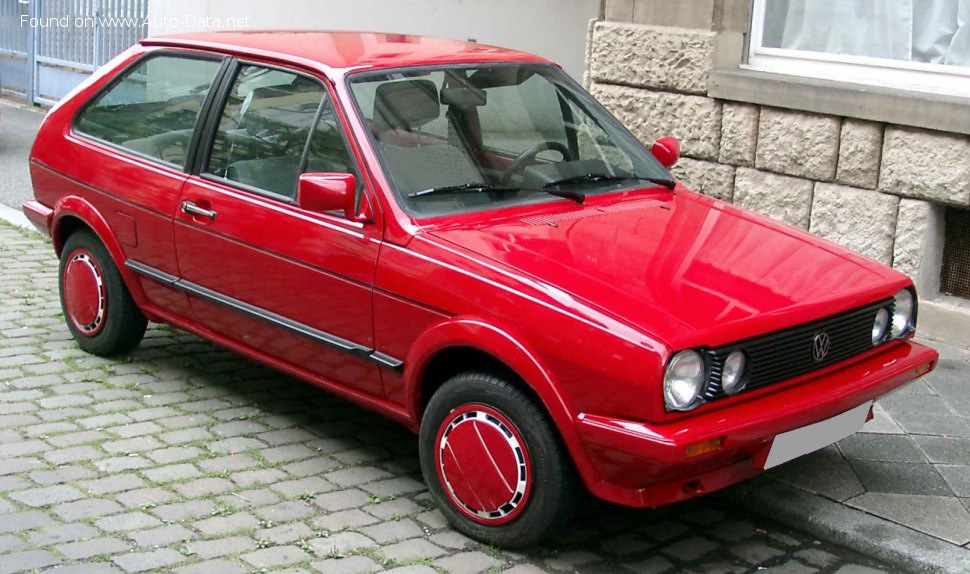
The second-generation Polo, introduced in 1981, marked a departure from its predecessor with a more angular, functional design. While initially offered as a hatchback (often referred to as a “Formel E” or “breadvan” due to its boxy rear) and a sedan (the Polo Classic or Derby), the 3-door “Coupe” variant, as featured here, joined the lineup in 1983. Despite its name, the Coupe was essentially a sportier-looking hatchback with a more steeply raked rear window and a slightly less upright tailgate compared to the standard hatchback. This design choice provided a more dynamic aesthetic while retaining much of the practicality expected from a small car. The 1.0-liter, 45 horsepower engine variant, available from 1985, served as one of the entry-level options, appealing to buyers prioritizing fuel economy and low running costs above outright performance.
Engine and Performance of the Volkswagen Polo II Coupe (86C)
Under the hood of the Volkswagen Polo II Coupe (86C) 1.0 (45 Hp) resided a modest yet highly efficient powertrain designed for urban environments and economical commuting. This particular model was equipped with the HZ code engine, a naturally aspirated, 1.0-liter (specifically 1043 cubic centimeters or 63.65 cubic inches) inline-four gasoline unit. With a bore of 2.95 inches and a piston stroke of 2.32 inches, combined with a compression ratio of 10:1, the engine was engineered for durability and straightforward maintenance.
Power output for this small engine was rated at 45 horsepower, achieved at a respectable 5200 revolutions per minute. Torque figures were equally modest, peaking at 56.05 pound-feet at a relatively low 2800 rpm, which contributed to its tractable nature in city driving. Fuel delivery was managed by a single-point injection system, a common and cost-effective solution for entry-level vehicles of its era, offering a balance between efficiency and emissions control.
The powertrain architecture featured a front, transverse engine layout, driving the front wheels through a 4-speed manual transmission. This setup was typical for small European cars, optimizing interior space and providing predictable handling. Performance figures reflected its economical intent rather than sporting aspirations: the Volkswagen Polo II Coupe (86C) 1.0 (45 Hp) could accelerate from 0 to 60 mph in a leisurely 19.3 seconds, with a top speed of 90.1 mph. While these numbers may seem slow by modern standards, they were perfectly adequate for the traffic conditions and speed limits prevalent in its target European markets.
Fuel efficiency was a strong suit for the 1.0-liter Polo. Volkswagen quoted a combined fuel consumption of 35.1 US miles per gallon, with urban driving yielding around 32.7 US mpg and extra-urban figures reaching an impressive 47 US mpg. These figures underscored its appeal as a cost-effective mode of transport, a critical factor for many European buyers during the 1980s. The 11.1 US gallon fuel tank provided a decent cruising range, further enhancing its practicality.
Design and Features
The design of the Volkswagen Polo II Coupe (86C), though named a “coupe,” retained the inherent practicality of a small hatchback. It featured a 3-door body with seating for five, though the rear seats were naturally more suited for children or short journeys for adults. Its compact dimensions were key to its urban maneuverability: measuring 146.65 inches in length, 61.81 inches in width, and 53.15 inches in height, the Polo II Coupe was easy to park and navigate through narrow city streets. A wheelbase of 91.93 inches contributed to its nimble character.
From an aesthetic standpoint, the Polo II Coupe embodied the no-nonsense, functional design language prevalent at Volkswagen during the 1980s. Clean lines, a relatively flat hood, and large glass areas ensured good visibility, a crucial safety feature. The “coupe” designation primarily referred to its more raked tailgate and slightly sportier roofline compared to the more utilitarian standard hatchback.
Inside, the cabin was characterized by its simplicity and robustness. Materials were durable, designed to withstand years of use, rather than offering luxurious comfort. Despite its small exterior, the Polo offered a respectable amount of cargo space. The trunk could hold 8.48 cubic feet of luggage with the rear seats up, expanding significantly to 32.31 cubic feet when the rear seats were folded down, demonstrating excellent versatility for its class.
In terms of mechanical features, the Polo II Coupe utilized a straightforward and reliable setup. It featured coil spring suspension at both the front and rear, providing a comfortable ride for its size. Braking duties were handled by disc brakes at the front and drum brakes at the rear, a common and effective combination for light vehicles. Power steering, specifically a hydraulic rack-and-pinion system, made parking and low-speed maneuvers effortless. While basic, the inclusion of ABS (Anti-lock Braking System) as an assisting system was noteworthy for an entry-level car of this vintage, highlighting Volkswagen’s early commitment to enhancing safety, even on its most affordable models. The car rode on relatively small 155/70 R13 tires, mounted on 5.5J x 13 wheel rims, further emphasizing its focus on efficiency and low running costs.
Technical Specifications: Volkswagen Polo II Coupe (86C) 1.0 (45 Hp)
| Category | Specification | Value |
|---|---|---|
| General Information | ||
| Brand | Volkswagen | |
| Model | Polo | |
| Generation | Polo II Coupe (86C) | |
| Type (Engine) | 1.0 (45 Hp) | |
| Production Years | 1985 – 1992 | |
| Powertrain Architecture | Internal Combustion engine | |
| Body Type | Coupe (3 Doors, 5 Seats) | |
| Performance Specs | ||
| Fuel Consumption (Urban) | 32.7 US mpg (7.2 l/100 km) | |
| Fuel Consumption (Extra Urban) | 47 US mpg (5 l/100 km) | |
| Fuel Consumption (Combined) | 35.1 US mpg (6.7 l/100 km) | |
| Fuel Type | Petrol (Gasoline) | |
| Acceleration 0-60 mph | 19.3 seconds | |
| Maximum Speed | 90.1 mph (145 km/h) | |
| Weight-to-Power Ratio | 17 kg/Hp, 58.8 Hp/tonne | |
| Weight-to-Torque Ratio | 10.1 kg/Nm, 99.3 Nm/tonne | |
| Engine Specs | ||
| Power | 45 Hp @ 5200 rpm | |
| Torque | 56.05 lb.-ft. @ 2800 rpm | |
| Engine Layout | Front, Transverse | |
| Engine Model/Code | HZ | |
| Engine Displacement | 63.65 cu. in. (1043 cm³) | |
| Number of Cylinders | 4, Inline | |
| Cylinder Bore | 2.95 in. (75 mm) | |
| Piston Stroke | 2.32 in. (59 mm) | |
| Compression Ratio | 10:1 | |
| Valves per Cylinder | 2 | |
| Fuel Injection System | Single-point injection | |
| Engine Aspiration | Naturally aspirated | |
| Engine Oil Capacity | 3.7 US qt (3.5 l) | |
| Coolant Capacity | 5.92 US qt (5.6 l) | |
| Space, Volume and Weights | ||
| Kerb Weight | 1686.54 lbs (765 kg) | |
| Maximum Weight | 2711.69 lbs (1230 kg) | |
| Maximum Load | 1025.15 lbs (465 kg) | |
| Trunk Space (Minimum) | 8.48 cu. ft. (240 l) | |
| Trunk Space (Maximum) | 32.31 cu. ft. (915 l) | |
| Fuel Tank Capacity | 11.1 US gal (42 l) | |
| Dimensions | ||
| Length | 146.65 in. (3725 mm) | |
| Width | 61.81 in. (1570 mm) | |
| Height | 53.15 in. (1350 mm) | |
| Wheelbase | 91.93 in. (2335 mm) | |
| Front Track | 51.97 in. (1320 mm) | |
| Rear Track | 52.95 in. (1345 mm) | |
| Drivetrain, Brakes and Suspension Specs | ||
| Drivetrain Architecture | Internal Combustion engine drives the front wheels | |
| Drive Wheel | Front-wheel drive | |
| Gearbox Type | 4 gears, manual transmission | |
| Front Suspension | Coil spring | |
| Rear Suspension | Coil spring | |
| Front Brakes | Disc | |
| Rear Brakes | Drum | |
| Assisting Systems | ABS (Anti-lock braking system) | |
| Steering Type | Steering rack and pinion | |
| Power Steering | Hydraulic Steering | |
| Tires Size | 155/70 R13 | |
| Wheel Rims Size | 5.5J x 13 | |
Legacy and Market Impact
The Volkswagen Polo II Coupe (86C) 1.0 (45 Hp), and indeed the entire Polo II generation, left an indelible mark on the European automotive landscape. Its reputation was built on a foundation of reliability, exceptional fuel economy, and straightforward engineering, making it an ideal choice for first-time buyers, urban dwellers, and budget-conscious families. In an era where small cars were becoming increasingly sophisticated, the Polo II maintained a sensible, functional approach that resonated with a broad segment of the market.
In its primary European markets, the Polo II Coupe faced stiff competition from a host of popular superminis. Key rivals included the Ford Fiesta, Opel Corsa (known as Vauxhall Nova in the UK), Fiat Uno, Renault 5, and the Peugeot 205. Each of these models vied for dominance in a fiercely contested segment, offering various combinations of style, performance, and practicality. The Polo differentiated itself through its perceived build quality, Volkswagen’s strong brand image, and its reputation for longevity. While perhaps not as flashy as some of its French or Italian counterparts, the Polo’s Germanic solidity and dependable nature won over many customers.
Historically, the Polo II generation cemented the Polo’s position as a core model in Volkswagen’s product lineup, sitting comfortably below the larger and more premium Golf. It demonstrated Volkswagen’s ability to produce a successful range of vehicles across different segments, catering to diverse needs and budgets. The 1.0-liter variant, in particular, highlighted the increasing importance of efficiency and low emissions, a trend that would only accelerate in subsequent decades.
The Polo II’s enduring legacy is evident in its continued presence on European roads well into the 21st century, a testament to its robust construction and simple mechanics that allowed for easy maintenance and repair. It contributed significantly to Volkswagen’s global sales figures and helped establish the Polo brand as a byword for sensible, reliable small-car motoring. While the Volkswagen Polo II Coupe (86C) 1.0 (45 Hp) may not have the performance credentials of a sports car or the luxurious features of a premium sedan, its impact as an accessible, economical, and dependable vehicle in a critical automotive segment cannot be overstated. It represents a classic example of Volkswagen’s engineering philosophy applied to the needs of the everyday European motorist.