The Rover 75 Tourer (facelift 2004): A Swan Song of British Motoring
The Rover 75 Tourer (facelift 2004) represents a poignant chapter in the history of the British automotive industry, standing as one of the last truly new vehicles produced by the storied Rover marque before its eventual collapse. Launched in 2004, this facelifted generation of the Rover 75, particularly in its practical Tourer (station wagon) guise with the efficient 2.0 CDT (Common Rail Direct Injection Turbodiesel) engine, aimed to refresh the model’s appeal in the competitive European executive compact segment. While never officially sold in the United States, the Rover 75 garnered a reputation in its primary European and Asian markets for its distinctive “new-retro” styling, refined ride, and a blend of traditional British luxury with modern engineering, much of which was influenced by its brief ownership under BMW.
The 2004 facelift sought to modernize the vehicle’s appearance and address some criticisms of its initial styling, particularly the front fascia. Despite these updates, the core character of the Rover 75 Tourer remained, offering a comfortable and spacious alternative to its more overtly sporting German rivals. The 2.0 CDT variant was a particularly popular choice in markets where diesel engines dominated, offering a compelling blend of fuel economy and usable torque for daily driving and long-distance cruising.
Engine & Performance: The 2.0 CDT Powertrain in the Rover 75 Tourer (facelift 2004)
At the heart of the Rover 75 Tourer (facelift 2004) 2.0 CDT lies a robust 2.0-liter (1951 cm³ or 119.06 cu. in.) inline-four turbodiesel engine, code-named M47R or 204D2. This engine was a derivative of BMW’s highly regarded M47 diesel unit, adapted for transverse mounting and front-wheel-drive application in the Rover 75. Featuring a DOHC valvetrain with four valves per cylinder and a common rail fuel injection system, it was considered quite advanced for its time, especially regarding refinement and fuel efficiency.
The engine produced a respectable 116 horsepower at 4000 rpm, which, while not class-leading in terms of outright power, was complemented by a generous 260 Nm (191.77 lb.-ft.) of torque delivered at a low 2000 rpm. This torque output was crucial for the Tourer’s everyday drivability, providing strong acceleration from low speeds and making it well-suited for hauling passengers and cargo. Power was sent to the front wheels via a smooth-shifting 5-speed manual transmission.
Performance figures for the 2.0 CDT Tourer included an acceleration time from 0 to 60 mph in 11.5 seconds and a top speed of 114.95 mph (185 km/h). Where this powertrain truly excelled was in its fuel economy. The Rover 75 Tourer 2.0 CDT achieved an impressive combined fuel consumption of 40.6 US mpg (5.8 l/100 km). On the extra-urban cycle, it could reach up to 50 US mpg (4.7 l/100 km), making it a highly economical choice for long-distance travel. With CO2 emissions rated at 163 g/km, it met the Euro 3 emission standard of its era, reflecting a solid balance of performance and environmental consideration for a diesel vehicle of its time.
The engine’s layout was front, transverse, contributing to the vehicle’s efficient packaging and spacious interior. With a compression ratio of 18:1 and equipped with a turbocharger and intercooler, the 2.0 CDT offered a responsive and surprisingly quiet driving experience for a diesel, a testament to Rover’s focus on refinement.
Design & Features: Elegance Meets Utility
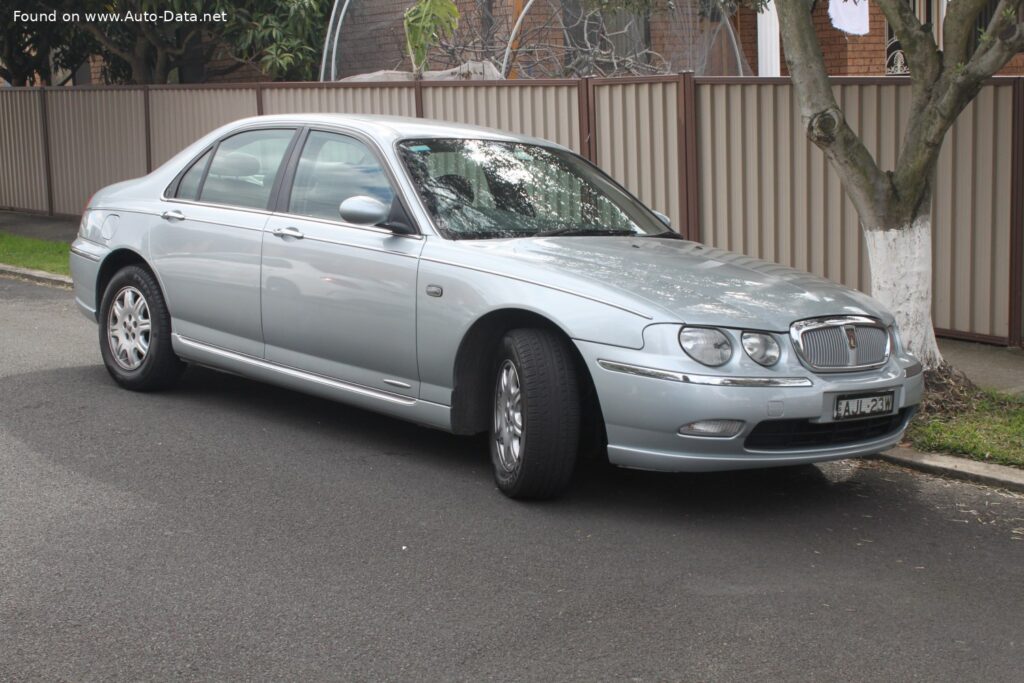
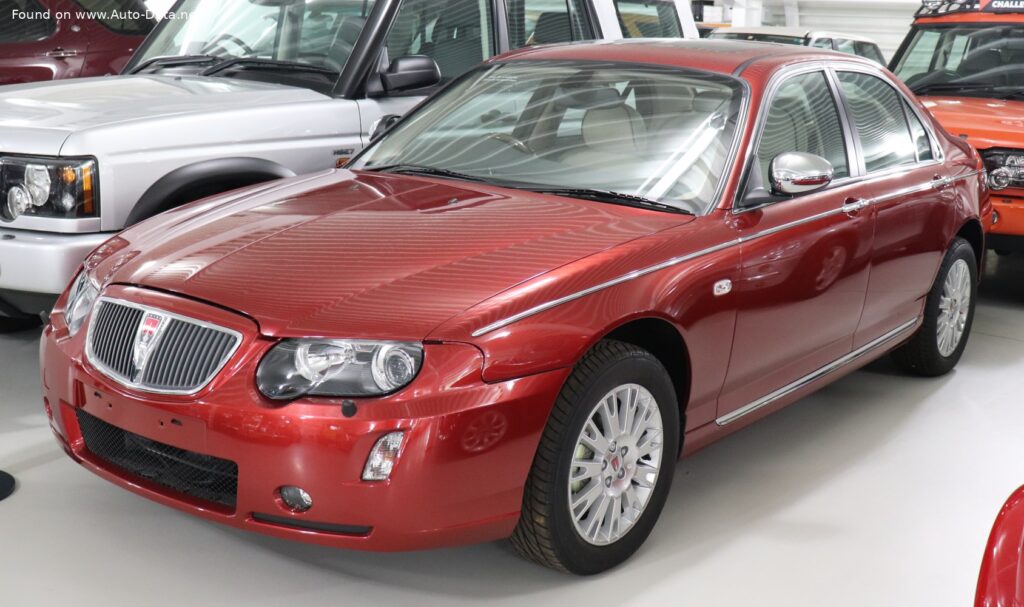
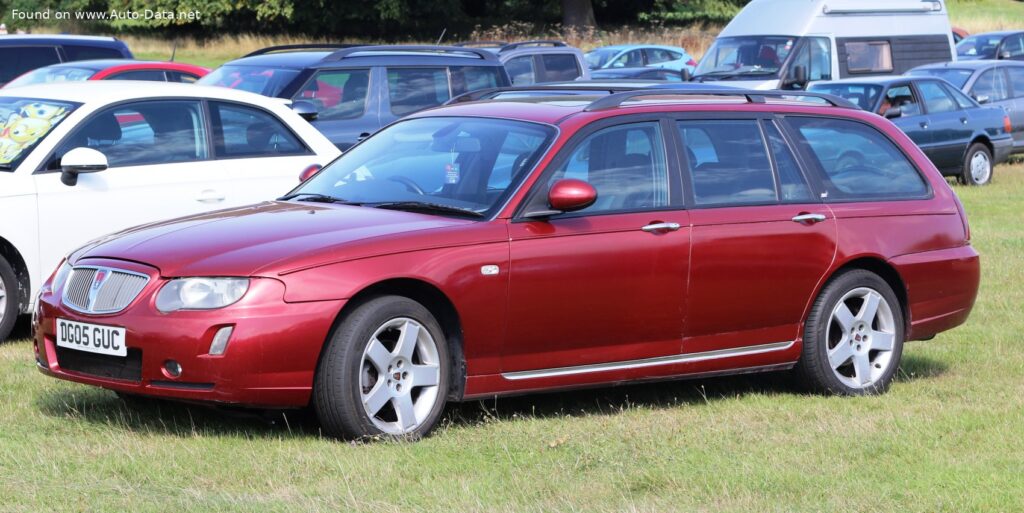
The Rover 75 Tourer, even in its facelifted 2004 iteration, retained the distinctive “heritage” styling that set it apart from its contemporaries. Its design was a deliberate nod to classic Rovers of the past, featuring prominent chrome accents, a sculpted grille, and elegant lines that exuded a sense of understated luxury. The facelift introduced a revised front bumper, grille, and headlights, giving it a slightly more contemporary and less ‘bug-eyed’ appearance, though it still maintained its unique character.
As a station wagon (or “estate” in European parlance), the Tourer body style emphasized practicality without sacrificing the 75’s inherent elegance. Measuring 188.58 inches (4790 mm) in length and 70 inches (1778 mm) in width, with a substantial 108.11-inch (2746 mm) wheelbase, the Tourer offered a spacious cabin for five occupants and a versatile cargo area. Minimum trunk space stood at 14.13 cu. ft. (400 liters), expanding significantly to 43.15 cu. ft. (1222 liters) with the rear seats folded, making it highly capable for family duties or transporting larger items.
Inside, the Rover 75 was known for its comfortable and well-appointed cabin, often featuring wood trim, chrome accents, and high-quality fabrics or leather. While specific features are not detailed in the provided data, typical amenities for a vehicle in its segment and era would have included climate control, a multi-speaker audio system, and power windows/mirrors. Safety features for the 2004 model year included a standard Anti-lock Braking System (ABS), complementing its ventilated disc brakes at the front and disc brakes at the rear. The independent McPherson strut front suspension and independent multi-link rear suspension, both with anti-roll bars, contributed to the car’s renowned smooth and composed ride quality.
The vehicle rode on a choice of tire sizes, including 195/65 R15, 205/60 R15, or 215/55 R16, paired with 6J x 15 or 6.5J x 16 wheel rims, providing a balance of comfort and grip. Hydraulic power steering, utilizing a rack and pinion system, offered a pleasant and communicative driving feel.
Technical Specifications: Rover 75 Tourer (facelift 2004) 2.0 CDT (116 Hp)
| Category | Specification |
|---|---|
| General Information | |
| Brand | Rover |
| Model | 75 |
| Generation | 75 Tourer (facelift 2004) |
| Engine Type | 2.0 CDT (116 Hp) |
| Production Start | 2004 |
| Production End | 2005 |
| Powertrain Architecture | Internal Combustion engine |
| Body Type | Station wagon (estate) |
| Seats | 5 |
| Doors | 5 |
| Performance Specs | |
| Fuel Consumption (Urban) | 7.7 l/100 km (30.5 US mpg) |
| Fuel Consumption (Extra Urban) | 4.7 l/100 km (50 US mpg) |
| Fuel Consumption (Combined) | 5.8 l/100 km (40.6 US mpg) |
| CO2 Emissions | 163 g/km |
| Fuel Type | Diesel |
| Acceleration 0 – 60 mph | 11.5 seconds |
| Maximum Speed | 114.95 mph (185 km/h) |
| Emission Standard | Euro 3 |
| Weight-to-Power Ratio | 13.4 kg/Hp (74.4 Hp/tonne) |
| Weight-to-Torque Ratio | 6 kg/Nm (166.7 Nm/tonne) |
| Engine Specs | |
| Power | 116 Hp @ 4000 rpm |
| Power per liter | 59.5 Hp/l |
| Torque | 260 Nm (191.77 lb.-ft.) @ 2000 rpm |
| Engine Layout | Front, Transverse |
| Engine Model/Code | M47R / 204D2 |
| Engine Displacement | 1951 cm³ (119.06 cu. in.) |
| Number of Cylinders | 4 |
| Engine Configuration | Inline |
| Cylinder Bore | 84 mm (3.31 in.) |
| Piston Stroke | 88 mm (3.46 in.) |
| Compression Ratio | 18:1 |
| Valves per Cylinder | 4 |
| Fuel Injection System | Diesel Commonrail |
| Engine Aspiration | Turbocharger, Intercooler |
| Valvetrain | DOHC |
| Engine Oil Capacity | 6.8 l (7.19 US qt) |
| Coolant Capacity | 8.2 l (8.66 US qt) |
| Space, Volume & Weights | |
| Kerb Weight | 1560-1665 kg (3439.21 – 3670.7 lbs.) |
| Maximum Weight | 2090 kg (4607.66 lbs.) |
| Maximum Load | 425-530 kg (936.96 – 1168.45 lbs.) |
| Trunk (Boot) Space – Minimum | 400 l (14.13 cu. ft.) |
| Trunk (Boot) Space – Maximum | 1222 l (43.15 cu. ft.) |
| Fuel Tank Capacity | 65 l (17.17 US gal) |
| Max. Roof Load | 100 kg (220.46 lbs.) |
| Permitted Trailer Load (with brakes) | 1600 kg (3527.4 lbs.) |
| Permitted Trailer Load (without brakes) | 750 kg (1653.47 lbs.) |
| Permitted Towbar Download | 100 kg (220.46 lbs.) |
| Dimensions | |
| Length | 4790 mm (188.58 in.) |
| Width | 1778 mm (70 in.) |
| Width including mirrors | 1970 mm (77.56 in.) |
| Wheelbase | 2746 mm (108.11 in.) |
| Front Track | 1511 mm (59.49 in.) |
| Rear Track | 1504 mm (59.21 in.) |
| Minimum Turning Circle | 11.33 m (37.17 ft.) |
| Drivetrain, Brakes & Suspension | |
| Drivetrain Architecture | Front-wheel drive, Internal Combustion Engine |
| Drive Wheel | Front-wheel drive |
| Number of Gears & Type | 5 gears, manual transmission |
| Front Suspension | Independent, McPherson with coil spring and anti-roll bar |
| Rear Suspension | Independent multi-link spring suspension with stabilizer |
| Front Brakes | Ventilated discs |
| Rear Brakes | Disc |
| Assisting Systems | ABS (Anti-lock braking system) |
| Steering Type | Steering rack and pinion |
| Power Steering | Hydraulic Steering |
| Tire Sizes | 195/65 R15; 205/60 R15; 215/55 R16 |
| Wheel Rim Sizes | 6J x 15; 6.5J x 16 |
Legacy & Market Impact: The Enduring Appeal of the Rover 75
The Rover 75 Tourer (facelift 2004) entered a highly competitive European market, vying for sales against established players like the Ford Mondeo Estate, Vauxhall Vectra Estate (Opel Vectra in mainland Europe), and premium offerings such as the BMW 3 Series Touring and Audi A4 Avant. Despite being an independent offering from a struggling brand, the 75 carved out a niche with its unique blend of traditional British luxury and a comfortable, refined driving experience that often surpassed its mainstream rivals. Its “new-retro” styling, while polarizing for some, appealed to buyers seeking something different from the increasingly homogenised designs of its competitors.
The decision to offer a diesel variant, particularly with the BMW-derived 2.0 CDT engine, was a strategic move that ensured the 75’s relevance in a market that heavily favored diesel power for its efficiency and torque. This engine, known for its reliability and smooth operation, contributed significantly to the car’s appeal, especially for fleet buyers and high-mileage drivers. The Tourer’s generous cargo capacity and comfortable ride made it an excellent choice for families and those needing practical utility.
Unfortunately, the facelifted Rover 75 models, including the Tourer, were among the last vehicles to roll off the Longbridge assembly line before MG Rover Group entered administration in 2005. This timing cemented the 75’s status as a swan song for the historic British brand. Despite its untimely demise, the Rover 75, and especially the Tourer, has retained a loyal following. Enthusiasts appreciate its distinctive design, well-appointed interior, and the comfortable, relaxed driving experience it offers. It stands as a testament to what Rover was capable of, even in its twilight years, blending a sense of classic British charm with competent engineering. Today, the Rover 75 Tourer is remembered not just as a practical family car, but as a significant piece of modern British automotive history, embodying the final aspirations of a once-great marque.