The Renault Espace IV 2.2 dCi (150 Hp): A European Minivan Icon
The Renault Espace IV 2.2 dCi (150 Hp) represents a significant iteration in the lineage of one of Europe’s pioneering multi-purpose vehicles (MPVs). Launched in 2002, the fourth generation Espace continued Renault’s legacy of innovative, family-oriented transport, redefining the segment with its distinctive design, advanced technology for its time, and unparalleled interior versatility. Produced until 2006 in this specific powertrain configuration, the Espace IV was a cornerstone of Renault’s offerings in the European market, catering to families and businesses demanding spaciousness, comfort, and a commanding road presence. While never officially imported into the United States, the Espace holds a revered status in automotive history as a benchmark for minivan design and functionality in its primary European and Asian markets.
Engine and Performance
Underpinning the robust capabilities of the Renault Espace IV 2.2 dCi (150 Hp) was its highly regarded 2.2-liter dCi (direct common-rail injection) turbodiesel engine. This inline four-cylinder powerplant, identified by the engine code G9T, was a workhorse for Renault, optimized for a blend of performance and fuel efficiency crucial in the European market. It delivered a respectable 150 horsepower at 4000 rpm, providing ample motivation for a vehicle of its size and weight. More importantly, its torque output was a robust 236.02 lb.-ft. (320 Nm) available at a low 1750 rpm, ensuring strong acceleration from a standstill and effortless cruising, even when fully loaded with passengers and cargo.
Power was channeled to the front wheels via a smooth-shifting 6-speed manual transmission, a common and preferred setup for drivers seeking greater control and efficiency. This powertrain allowed the Espace IV 2.2 dCi to accelerate from 0 to 60 mph in a competitive 10.9 seconds, with a top speed reaching 116.82 mph (188 km/h). These figures underscored its capability as a comfortable long-distance cruiser, capable of handling highway speeds with ease.
Fuel economy was a key selling point for diesel vehicles in Europe, and the Espace IV 2.2 dCi delivered commendable figures. It achieved an estimated 30.5 US mpg (7.7 l/100 km) in combined driving conditions, with urban consumption at 22.8 US mpg (10.3 l/100 km) and an impressive extra-urban (highway) rating of 37.3 US mpg (6.3 l/100 km). These numbers made it an economical choice for families embarking on long journeys. Adhering to the Euro 3 emission standard, the vehicle produced 206 g/km of CO2, reflecting the environmental considerations of its era.
Design and Features
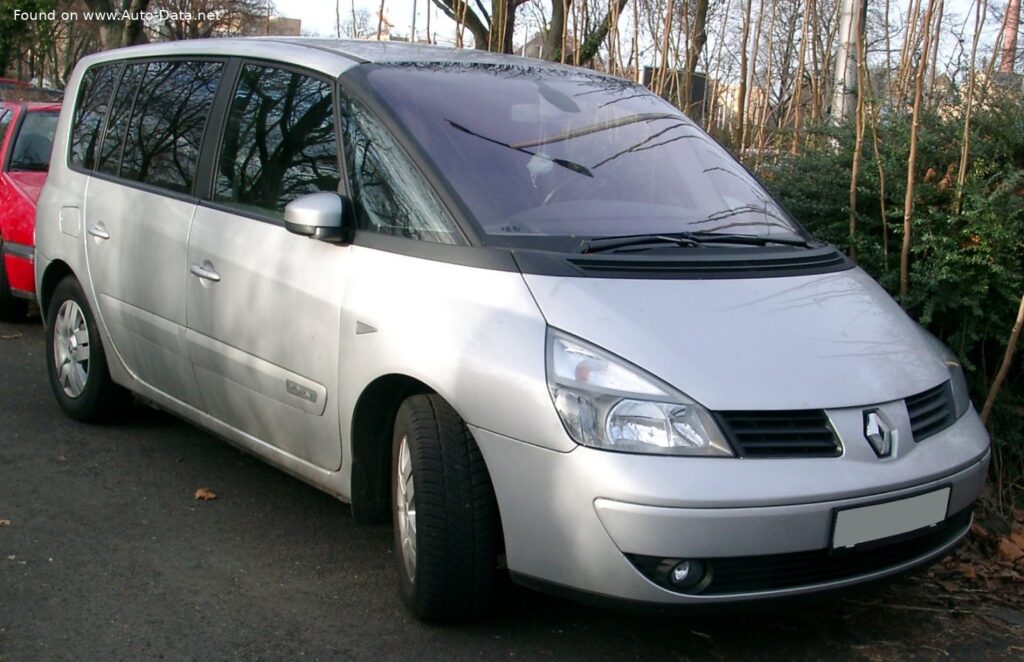
The Espace IV represented a significant departure in design from its predecessors, adopting a more contemporary and aerodynamic aesthetic while retaining its core functionality. Its minivan body type, often referred to as an MPV (Multi-Purpose Vehicle) in Europe, featured five doors and a flexible seating arrangement for up to seven occupants. The exterior was characterized by its smooth lines, large glass areas, and a distinctive front fascia that integrated seamlessly with the overall design. With a drag coefficient (Cd) of 0.35, the Espace IV was designed for aerodynamic efficiency, contributing to both fuel economy and reduced wind noise at speed.
Measuring 183.5 inches in length, 73.23 inches in width (82.83 inches including mirrors), and between 68.03 to 70.16 inches in height, the Espace IV commanded a substantial footprint on the road. Its generous 110.35-inch wheelbase contributed significantly to interior volume and ride comfort. The interior was where the Espace truly shone, offering a highly modular and versatile cabin. The individual seats could be removed, slid, or folded to create a vast array of configurations, from a seven-seater family hauler to a cargo van with an impressive 101 cubic feet (2860 liters) of maximum trunk space. Even with all seven seats in place, a respectable 10.28 cubic feet (291 liters) of luggage capacity remained.
The driving experience was further enhanced by its well-engineered chassis. The front suspension utilized an independent McPherson strut setup, known for its balance of comfort and handling. The rear featured a trailing arm suspension, contributing to a smooth ride. Braking power came from ventilated discs at the front and solid discs at the rear, augmented by an Anti-lock Braking System (ABS) for enhanced safety. The Espace IV also featured electric power steering with a rack and pinion system, providing light and precise steering, especially beneficial for maneuvering in urban environments with a minimum turning circle of 37.07 feet. Standard tire size was 225/55 R17, mounted on 17-inch wheel rims, providing a good balance of grip and ride quality.
Technical Specifications
| Feature | Specification |
|---|---|
| Brand | Renault |
| Model | Espace |
| Generation | Espace IV |
| Type (Engine) | 2.2 dCi (150 Hp) |
| Start of Production | 2002 |
| End of Production | 2006 |
| Powertrain Architecture | Internal Combustion engine |
| Body Type | Minivan, MPV |
| Seats | 7 |
| Doors | 5 |
| Fuel Consumption (Urban) | 22.8 US mpg (10.3 l/100 km) |
| Fuel Consumption (Extra Urban) | 37.3 US mpg (6.3 l/100 km) |
| Fuel Consumption (Combined) | 30.5 US mpg (7.7 l/100 km) |
| CO2 Emissions | 206 g/km |
| Fuel Type | Diesel |
| Acceleration 0 – 60 mph | 10.9 sec |
| Maximum Speed | 116.82 mph (188 km/h) |
| Emission Standard | Euro 3 |
| Weight-to-Power Ratio | 12.3 kg/Hp, 81.1 Hp/tonne |
| Weight-to-Torque Ratio | 5.8 kg/Nm, 173 Nm/tonne |
| Power | 150 Hp @ 4000 rpm |
| Power per Liter | 68.6 Hp/l |
| Torque | 236.02 lb.-ft. (320 Nm) @ 1750 rpm |
| Engine Layout | Front, Transverse |
| Engine Model/Code | G9T |
| Engine Displacement | 2.2 Liters (2188 cm³, 133.52 cu. in.) |
| Number of Cylinders | 4 |
| Engine Configuration | Inline |
| Cylinder Bore | 3.43 in. (87 mm) |
| Piston Stroke | 3.62 in. (92 mm) |
| Compression Ratio | 18:1 |
| Number of Valves per Cylinder | 4 |
| Fuel Injection System | Diesel Commonrail |
| Engine Aspiration | Turbocharger, Intercooler |
| Valvetrain | DOHC |
| Engine Oil Capacity | 6.66 US qt (6.3 l) |
| Coolant Capacity | 9.62 US qt (9.1 l) |
| Kerb Weight | 4078.55 lbs. (1850 kg) |
| Max. Weight | 5632.81 lbs. (2555 kg) |
| Max Load | 1554.26 lbs. (705 kg) |
| Trunk Space (Minimum) | 10.28 cu. ft. (291 l) |
| Trunk Space (Maximum) | 101 cu. ft. (2860 l) |
| Fuel Tank Capacity | 21.93 US gal (83 l) |
| Max. Roof Load | 176.37 lbs. (80 kg) |
| Permitted Trailer Load with Brakes (12%) | 4409.25 lbs. (2000 kg) |
| Permitted Trailer Load without Brakes | 1653.47 lbs. (750 kg) |
| Permitted Towbar Download | 187.39 lbs. (85 kg) |
| Length | 183.5 in. (4661 mm) |
| Width | 73.23 in. (1860 mm) |
| Width Including Mirrors | 82.83 in. (2104 mm) |
| Height | 68.03 – 70.16 in. (1728-1782 mm) |
| Wheelbase | 110.35 in. (2803 mm) |
| Front Track | 61.97 in. (1574 mm) |
| Rear Track | 61.26 in. (1556 mm) |
| Front Overhang | 40.39 in. (1026 mm) |
| Rear Overhang | 32.76 in. (832 mm) |
| Ride Height (Ground Clearance) | 6.89 in. (175 mm) |
| Drag Coefficient (Cd) | 0.35 |
| Minimum Turning Circle | 37.07 ft. (11.3 m) |
| Drivetrain Architecture | Front-wheel drive, Internal Combustion engine |
| Drive Wheel | Front wheel drive |
| Number of Gears and Type of Gearbox | 6 gears, manual transmission |
| Front Suspension | Independent type McPherson |
| Rear Suspension | Trailing arm |
| Front Brakes | Ventilated discs |
| Rear Brakes | Disc |
| Assisting Systems | ABS (Anti-lock braking system) |
| Steering Type | Steering rack and pinion |
| Power Steering | Electric Steering |
| Tires Size | 225/55 R17 |
| Wheel Rims Size | 17 inches |
Legacy and Market Impact
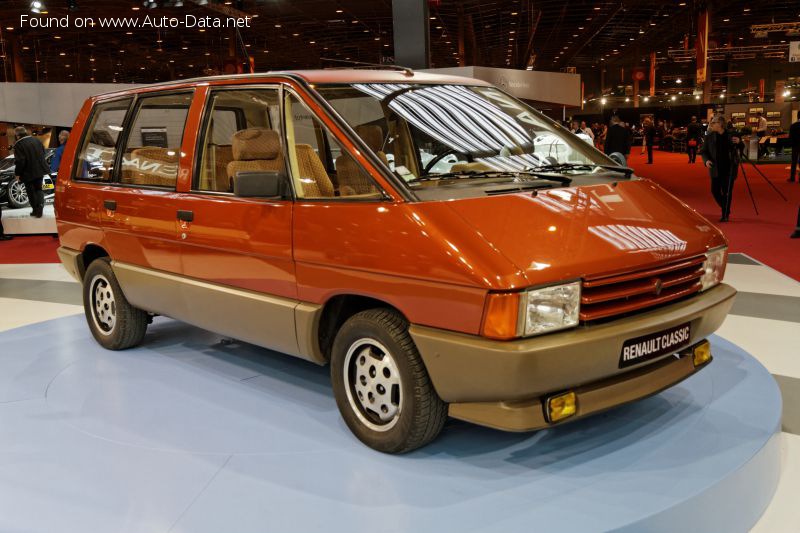
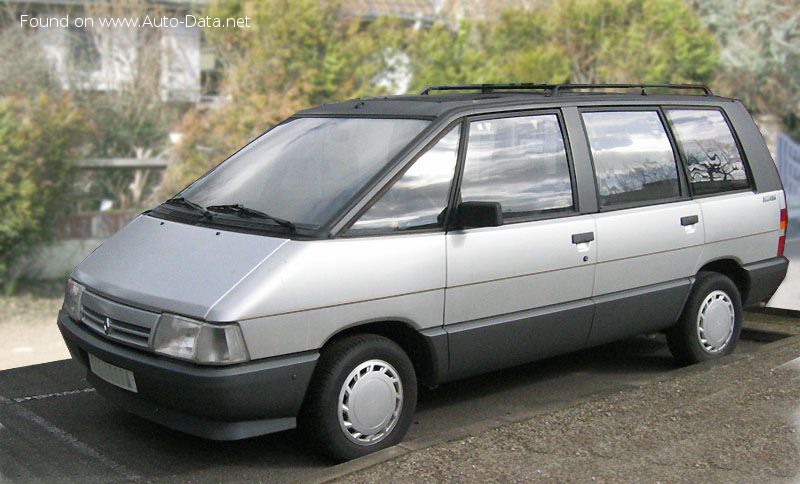
The Renault Espace holds a unique and revered position in European automotive history. When the first generation launched in 1984, it was a truly revolutionary vehicle, essentially inventing the modern European MPV segment. The Espace IV, produced from 2002 to 2014, built upon this strong foundation, evolving the concept with greater sophistication, improved safety, and more refined powertrains like the 2.2 dCi (150 Hp) variant. It solidified Renault’s reputation as a leader in innovative family transport.
In a market where diesel engines were highly favored for their fuel efficiency and torque characteristics, the 2.2 dCi (150 Hp) model was a popular choice among European consumers. It directly competed with other prominent MPVs of the era, such as the Ford Galaxy/VW Sharan/SEAT Alhambra trio, the Peugeot 807, Citroën C8, and even the Chrysler Voyager (which had a significant European presence). The Espace IV differentiated itself with its distinctive styling, a strong emphasis on modularity, and a reputation for comfort and a smooth ride, often described as car-like despite its larger dimensions.
Its impact extended beyond mere sales figures; the Espace IV continued to influence vehicle design and consumer expectations for family cars. Its focus on a large, adaptable interior, combined with a comfortable driving experience and efficient diesel power, made it an ideal vehicle for the diverse needs of European families, from daily commutes to long-haul vacation trips. The Espace IV’s ability to seamlessly blend practicality with a degree of luxury and advanced features for its time ensured its place as a significant and well-regarded vehicle in the history of the European automotive landscape.
While the minivan segment has seen shifts and challenges over the years, particularly with the rise of SUVs, the Renault Espace IV 2.2 dCi (150 Hp) remains a testament to a period when dedicated MPVs offered unmatched versatility and comfort for families. It epitomized Renault’s bold approach to design and engineering, leaving a lasting legacy as a true icon of European family motoring.