<!DOCTYPE html>
<html lang=”en”>
<head>
<meta charset=”UTF-8″>
<meta name=”viewport” content=”width=device-width, initial-scale=1.0″>
<title>Toyota Harrier II (XU30) 2.4 16V (160 Hp) 4×4 Automatic</title>
</head>
<body>
<h2>Toyota Harrier II (XU30) 2.4 16V (160 Hp) 4×4 Automatic</h2>
<p>
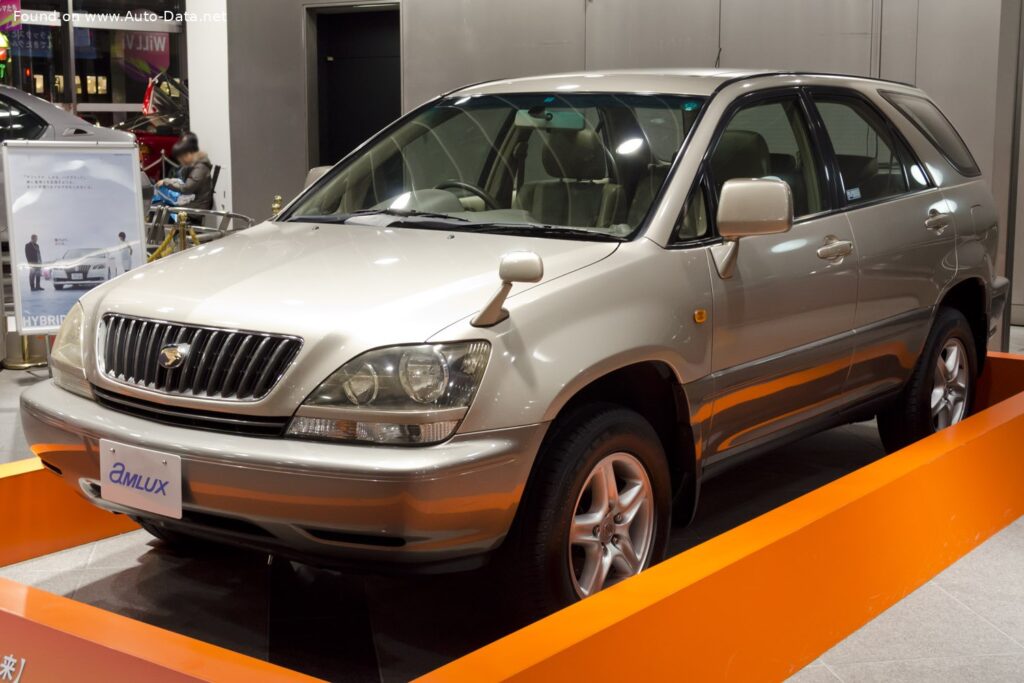
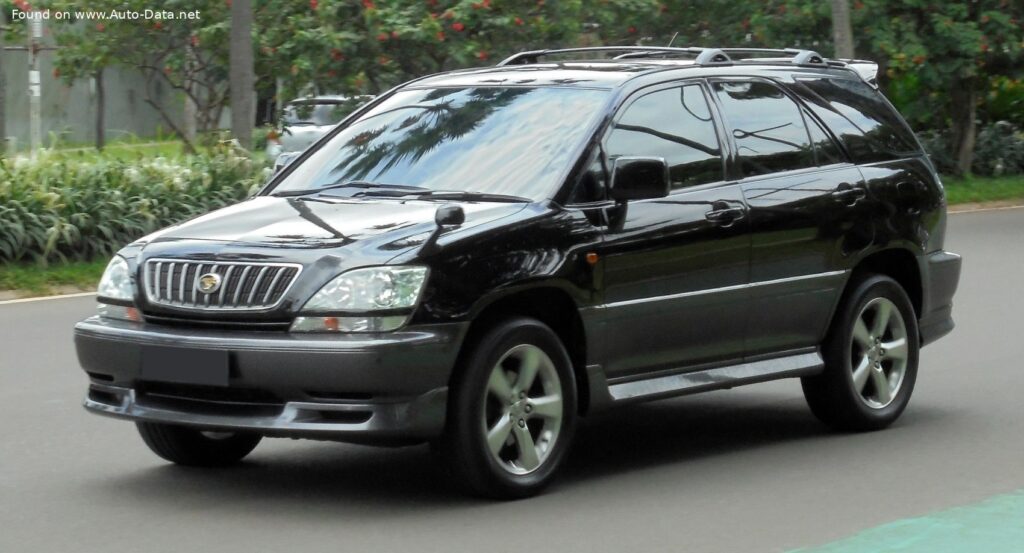
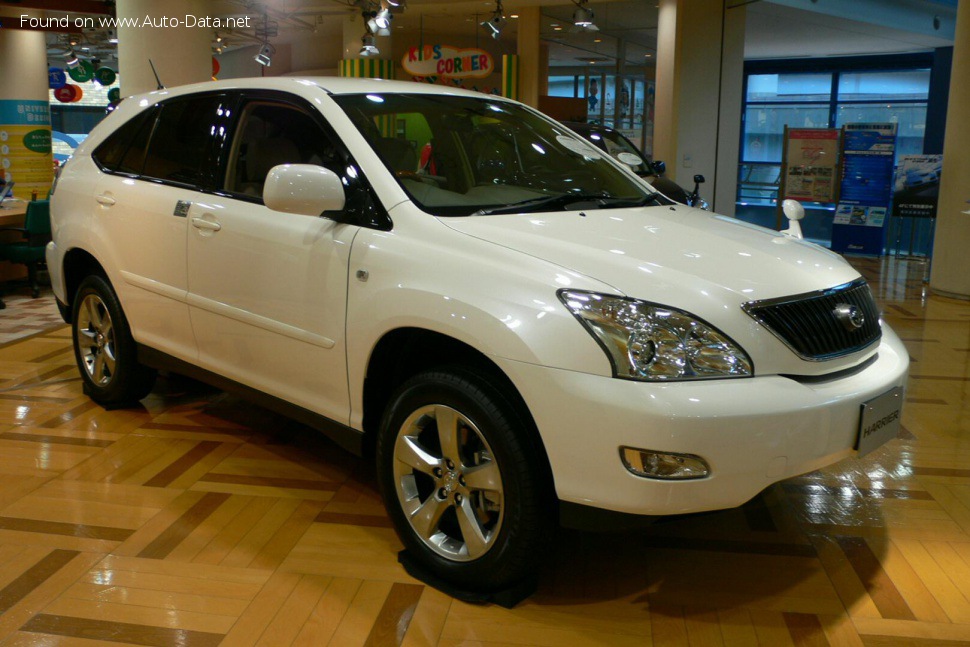
The <strong>Toyota Harrier II (XU30) 2.4 16V (160 Hp) 4×4 Automatic</strong> represents the second generation of Toyota’s popular mid-size luxury crossover SUV. Launched in 2003 and produced until 2013, the XU30 generation built upon the success of its predecessor by offering enhanced refinement, advanced features, and a more sophisticated design. While primarily known in North America as the Lexus RX, the Harrier badge was retained for the Japanese Domestic Market (JDM) and several other international markets, where it was positioned as a premium offering blending SUV utility with sedan-like comfort and driving dynamics. This particular variant, equipped with a 2.4-liter engine, 16 valves, 160 horsepower, and a four-wheel-drive automatic transmission, was a cornerstone of the lineup, providing a balanced blend of efficiency, capability, and performance for a broad range of consumers seeking a versatile and reliable family vehicle.
</p>
<h2>Development and Market Positioning of The Toyota Harrier II (XU30)</h2>
<p>
The second-generation Toyota Harrier, internally designated XU30, continued the model’s pioneering role in the luxury crossover segment. Introduced in 2003, it quickly established itself as a benchmark for comfort, reliability, and upscale appeal in its primary markets, particularly Japan and parts of Asia. Unlike the rugged, body-on-frame SUVs of earlier decades, the Harrier was designed with a unibody construction, emphasizing a smooth, quiet ride and car-like handling. This approach made it exceptionally popular among urban and suburban families who desired the elevated driving position and spaciousness of an SUV without the compromises in fuel economy or driving refinement often associated with traditional trucks.
</p>
<p>
In markets where it was sold as the Lexus RX (RX 330, RX 350, RX 400h), the XU30 solidified Lexus’s presence in the burgeoning luxury crossover market. However, under the Toyota Harrier badge, it provided a similarly upscale experience, albeit often with slightly different trim levels and engine options tailored to local preferences. The 2.4-liter, 160 horsepower 4×4 Automatic variant was particularly significant as it offered a more accessible entry point into the Harrier lineup while still delivering adequate power and the added traction of all-wheel drive, making it suitable for varying weather conditions and light off-road excursions. Its enduring popularity throughout its decade-long production run underscored Toyota’s foresight in creating a vehicle that perfectly matched the evolving tastes of global consumers.
</p>
<h3>Engine and Performance</h3>
<p>
At the heart of the <strong>Toyota Harrier II (XU30) 2.4 16V (160 Hp) 4×4 Automatic</strong> lies the venerable 2AZ-FE engine. This 2.4-liter (2362 cm3 or 144.14 cu. in.) naturally aspirated inline-four cylinder engine was a staple across many Toyota models of the era, renowned for its bulletproof reliability and smooth power delivery. Featuring a DOHC (Double Overhead Camshaft) valvetrain with 4 valves per cylinder, it produced a respectable 160 horsepower at 5600 rpm and 163 lb.-ft. (221 Nm) of torque at 4000 rpm. The engine’s front, transverse layout was optimized for efficient packaging and contributing to the vehicle’s spacious interior.
</p>
<p>
Power was routed through a conventional 4-speed automatic transmission, a choice that prioritized durability and smooth shifts over outright performance or cutting-edge efficiency, which was typical for vehicles of this class during its production period. The full-time all-wheel-drive (4×4) system provided enhanced traction and stability, especially beneficial in adverse weather conditions or on unpaved roads, without significantly compromising the vehicle’s car-like driving feel. Despite its SUV classification, the Harrier was not designed for serious off-roading, but its 7.28-inch (185 mm) ground clearance and 4×4 system provided ample capability for most daily driving scenarios.
</p>
<p>
In terms of fuel economy, the 2.4-liter Harrier achieved a combined rating of approximately 25 US miles per gallon (9.4 liters per 100 km). This was a competitive figure for a mid-size AWD crossover of its time, especially considering its kerb weight of 3769.9 lbs (1710 kg). The multi-port manifold injection system ensured efficient fuel delivery, while the 9.6:1 compression ratio allowed for the use of regular unleaded gasoline. The engine’s focus was clearly on longevity, low maintenance, and a comfortable driving experience rather than raw power, making it an ideal powertrain for its target audience.
</p>
<h3>Design and Features</h3>
<p>
The <strong>Toyota Harrier II (XU30)</strong> showcased a sophisticated and contemporary design that successfully blended the robust appearance of an SUV with the sleek lines of a luxury sedan. Its body type is classified as an SUV/Crossover, featuring five doors and comfortable seating for five occupants. With an overall length of 186.22 inches (4730 mm), a width of 72.64 inches (1845 mm), and a height of 66.14 inches (1680 mm), the Harrier struck an imposing yet elegant presence on the road. The generous 106.89-inch (2715 mm) wheelbase contributed significantly to its stable ride and spacious interior cabin.
</p>
<p>
Inside, the Harrier XU30 was celebrated for its luxurious and ergonomically designed interior. High-quality materials, refined finishes, and thoughtful amenities were standard, reflecting its premium positioning. The cabin offered ample head and legroom for both front and rear passengers, making long journeys comfortable. Practicality was also a strong suit, with a minimum trunk space of 15.54 cubic feet (440 liters) that could expand to an impressive 75.22 cubic feet (2130 liters) with the rear seats folded down, accommodating a wide array of cargo needs.
</p>
<p>
Key features for this generation included a robust safety suite for its era, prominently featuring an Anti-lock Braking System (ABS) as standard. The braking system comprised ventilated discs at the front and solid discs at the rear, providing confident stopping power. Steering was managed by a hydraulic rack and pinion system, offering tactile feedback and ease of maneuverability, which was highly valued in a vehicle of this size. The Harrier rode on 225/65 R17 tires mounted on 6.5J x 17 ET35 wheel rims, contributing to both its comfortable ride quality and capable handling. The overall design language emphasized aerodynamic efficiency and a refined aesthetic, setting it apart from more utilitarian SUVs of the period.
</p>
<h3>Technical Specifications</h3>
<table border=”1″ style=”width:100%; border-collapse: collapse;”>
<tr><th colspan=”2″ style=”background-color:#f2f2f2; padding: 8px; text-align: left;”>General Information</th></tr>
<tr><td style=”padding: 8px;”>Brand</td><td style=”padding: 8px;”>Toyota</td></tr>
<tr><td style=”padding: 8px;”>Model</td><td style=”padding: 8px;”>Harrier</td></tr>
<tr><td style=”padding: 8px;”>Generation</td><td style=”padding: 8px;”>Harrier II (XU30)</td></tr>
<tr><td style=”padding: 8px;”>Type (Engine)</td><td style=”padding: 8px;”>2.4 16V (160 Hp) 4×4 Automatic</td></tr>
<tr><td style=”padding: 8px;”>Start of Production</td><td style=”padding: 8px;”>2003 year</td></tr>
<tr><td style=”padding: 8px;”>End of Production</td><td style=”padding: 8px;”>2013 year</td></tr>
<tr><td style=”padding: 8px;”>Powertrain Architecture</td><td style=”padding: 8px;”>Internal Combustion engine</td></tr>
<tr><td style=”padding: 8px;”>Body type</td><td style=”padding: 8px;”>SUV, Crossover</td></tr>
<tr><td style=”padding: 8px;”>Seats</td><td style=”padding: 8px;”>5</td></tr>
<tr><td style=”padding: 8px;”>Doors</td><td style=”padding: 8px;”>5</td></tr>
<tr><th colspan=”2″ style=”background-color:#f2f2f2; padding: 8px; text-align: left;”>Performance Specs</th></tr>
<tr><td style=”padding: 8px;”>Fuel consumption (economy) – combined</td><td style=”padding: 8px;”>9.4 l/100 km (25 US mpg)</td></tr>
<tr><td style=”padding: 8px;”>Fuel Type</td><td style=”padding: 8px;”>Petrol (Gasoline)</td></tr>
<tr><td style=”padding: 8px;”>Weight-to-power ratio</td><td style=”padding: 8px;”>10.7 kg/Hp, 93.6 Hp/tonne</td></tr>
<tr><td style=”padding: 8px;”>Weight-to-torque ratio</td><td style=”padding: 8px;”>7.7 kg/Nm, 129.2 Nm/tonne</td></tr>
<tr><th colspan=”2″ style=”background-color:#f2f2f2; padding: 8px; text-align: left;”>Engine Specs</th></tr>
<tr><td style=”padding: 8px;”>Power</td><td style=”padding: 8px;”>160 Hp @ 5600 rpm</td></tr>
<tr><td style=”padding: 8px;”>Power per liter</td><td style=”padding: 8px;”>67.7 Hp/l</td></tr>
<tr><td style=”padding: 8px;”>Torque</td><td style=”padding: 8px;”>221 Nm (163 lb.-ft.) @ 4000 rpm</td></tr>
<tr><td style=”padding: 8px;”>Engine layout</td><td style=”padding: 8px;”>Front, Transverse</td></tr>
<tr><td style=”padding: 8px;”>Engine Model/Code</td><td style=”padding: 8px;”>2AZ-FE</td></tr>
<tr><td style=”padding: 8px;”>Engine displacement</td><td style=”padding: 8px;”>2362 cm3 (144.14 cu. in.)</td></tr>
<tr><td style=”padding: 8px;”>Number of cylinders</td><td style=”padding: 8px;”>4</td></tr>
<tr><td style=”padding: 8px;”>Engine configuration</td><td style=”padding: 8px;”>Inline</td></tr>
<tr><td style=”padding: 8px;”>Cylinder Bore</td><td style=”padding: 8px;”>88.5 mm (3.48 in.)</td></tr>
<tr><td style=”padding: 8px;”>Piston Stroke</td><td style=”padding: 8px;”>96 mm (3.78 in.)</td></tr>
<tr><td style=”padding: 8px;”>Compression ratio</td><td style=”padding: 8px;”>9.6:1</td></tr>
<tr><td style=”padding: 8px;”>Number of valves per cylinder</td><td style=”padding: 8px;”>4</td></tr>
<tr><td style=”padding: 8px;”>Fuel injection system</td><td style=”padding: 8px;”>Multi-port manifold injection</td></tr>
<tr><td style=”padding: 8px;”>Engine aspiration</td><td style=”padding: 8px;”>Naturally aspirated engine</td></tr>
<tr><td style=”padding: 8px;”>Valvetrain</td><td style=”padding: 8px;”>DOHC</td></tr>
<tr><td style=”padding: 8px;”>Engine oil capacity</td><td style=”padding: 8px;”>4.3 l (4.54 US qt)</td></tr>
<tr><td style=”padding: 8px;”>Coolant capacity</td><td style=”padding: 8px;”>6.4 l (6.76 US qt)</td></tr>
<tr><th colspan=”2″ style=”background-color:#f2f2f2; padding: 8px; text-align: left;”>Space, Volume and Weights</th></tr>
<tr><td style=”padding: 8px;”>Kerb Weight</td><td style=”padding: 8px;”>1710 kg (3769.9 lbs.)</td></tr>
<tr><td style=”padding: 8px;”>Trunk (boot) space – minimum</td><td style=”padding: 8px;”>440 l (15.54 cu. ft.)</td></tr>
<tr><td style=”padding: 8px;”>Trunk (boot) space – maximum</td><td style=”padding: 8px;”>2130 l (75.22 cu. ft.)</td></tr>
<tr><td style=”padding: 8px;”>Fuel tank capacity</td><td style=”padding: 8px;”>72 l (19.02 US gal)</td></tr>
<tr><th colspan=”2″ style=”background-color:#f2f2f2; padding: 8px; text-align: left;”>Dimensions</th></tr>
<tr><td style=”