Suzuki Jimny III 1.3 VVT (85 Hp) 4WD: A Compact Off-Road Icon
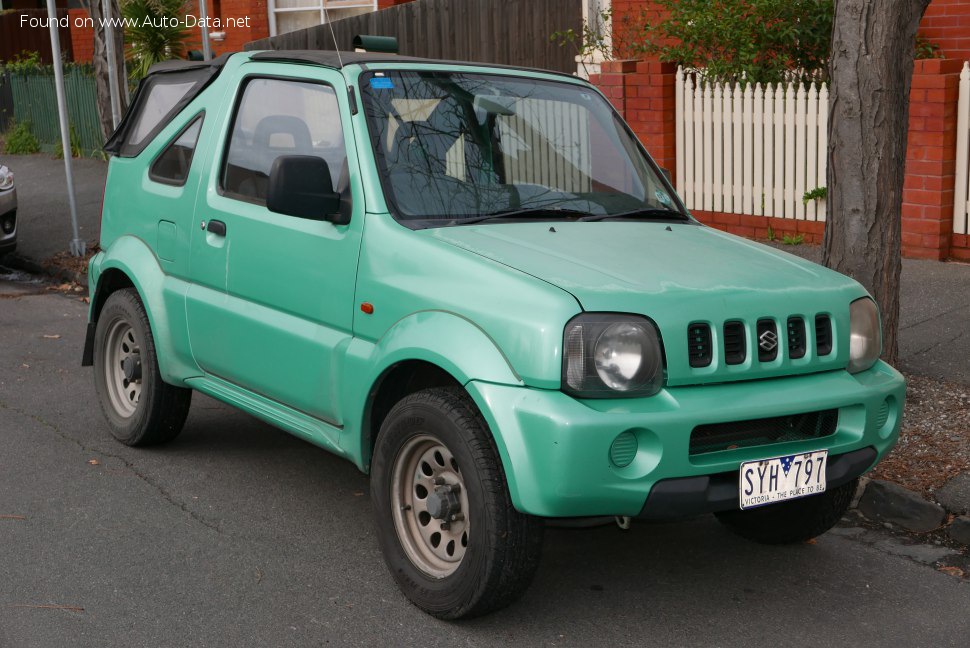
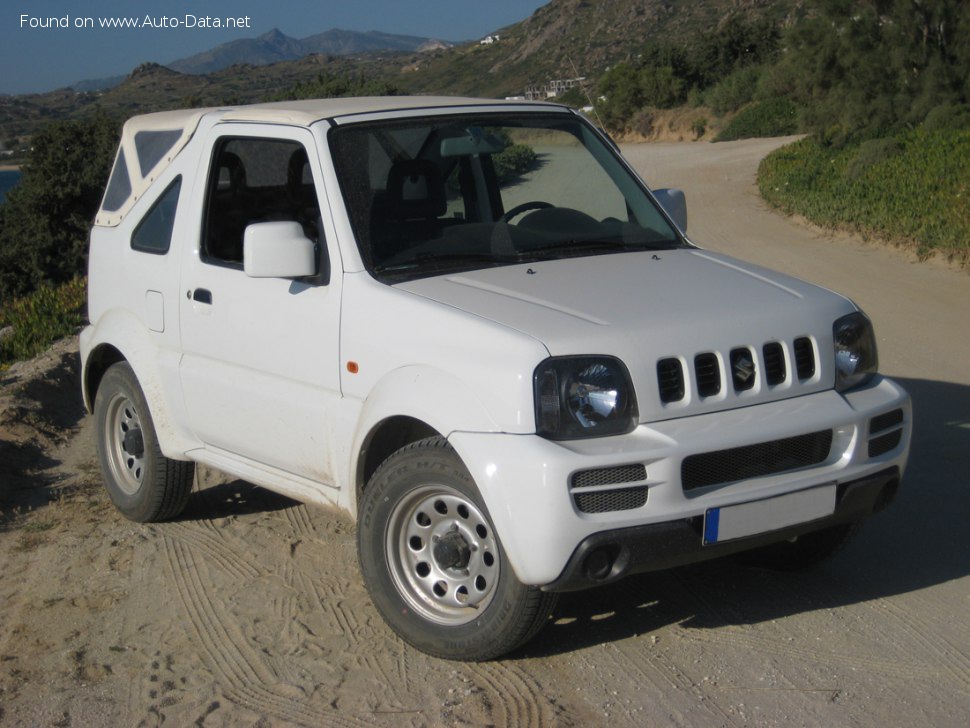
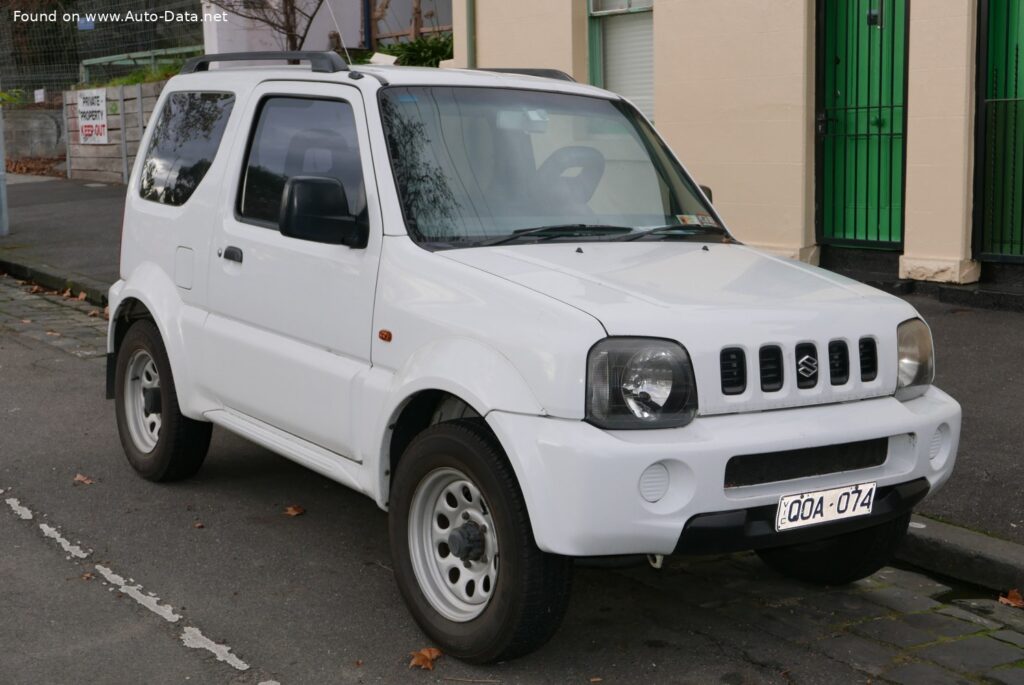
The Suzuki Jimny III 1.3 VVT (85 Hp) 4WD represents a specific iteration of a globally recognized subcompact off-road vehicle, renowned for its rugged capability in a diminutive package. Produced for the 2005 model year, this particular variant falls within the third generation of the Jimny lineage, a series that enjoyed an exceptionally long production run from 1998 to 2018. While never officially sold in the United States, the Jimny carved out a significant niche in markets across Europe, Asia, Australia, and South America, serving as a testament to Suzuki’s enduring commitment to accessible, go-anywhere transportation. This 3-door, 4-seat off-road vehicle distinguished itself with a traditional body-on-frame construction, solid axles, and a robust four-wheel-drive system, attributes that underscored its serious off-road credentials despite its modest dimensions and powertrain.
Engine and Performance
At the heart of the 2005 Suzuki Jimny III 1.3 VVT (85 Hp) 4WD was Suzuki’s M13A engine, a naturally aspirated 1.3-liter (1328 cm3 or 81.04 cubic inches) inline four-cylinder gasoline unit. This engine featured a Double Overhead Camshaft (DOHC) valvetrain with Variable Valve Timing (VVT), an advanced feature for a vehicle of its class and era, designed to optimize both power output and fuel efficiency. It produced a respectable 85 horsepower at 6000 rpm and 81.13 lb.-ft. of torque (110 Nm) at 4100 rpm. With a compression ratio of 9.5:1 and a multi-port manifold injection system, the M13A engine was engineered for reliability and efficient operation, meeting Euro 4 emission standards.
Power was delivered to all four wheels through a durable 5-speed manual transmission. The drivetrain architecture was a part-time four-wheel-drive system, meaning the rear wheels were permanently driven, with the front wheels engaging via an electrically or mechanically operated clutch when needed. This setup provided drivers with the flexibility of two-wheel drive for on-road efficiency and four-wheel drive for tackling challenging terrain. Performance figures reflected the Jimny’s utilitarian purpose rather than outright speed; it accelerated from 0 to 60 mph in a calculated 13.4 seconds and reached a maximum speed of 87 mph (140 km/h). Fuel economy was rated at 32.2 US mpg combined (7.3 l/100 km), with 25.3 US mpg in urban driving and 37.9 US mpg on the highway, underscoring its efficiency for its class.
Design and Features of the Suzuki Jimny III
The Suzuki Jimny III maintained the iconic boxy, utilitarian design language that had defined its predecessors, emphasizing functionality over stylistic extravagance. Its compact 3-door body, measuring just 143.5 inches in length, 62.99 inches in width (70.08 inches including mirrors), and 67.13 inches in height, made it exceptionally maneuverable in tight spaces, both urban and off-road. The short wheelbase of 88.58 inches contributed significantly to its agility.
Key to the Jimny’s off-road prowess were its robust underpinnings. It featured a traditional ladder frame chassis, offering superior rigidity and durability for demanding conditions. The suspension system consisted of rigid axles both front and rear, sprung by coil springs, a setup known for its articulation and strength in uneven terrain. Ground clearance stood at a healthy 7.48 inches, complemented by impressive approach (42°), departure (46°), and ramp-over (31°) angles, allowing it to navigate obstacles that would stop many larger SUVs. Braking duties were handled by front discs and rear drums, with an Anti-lock Braking System (ABS) provided for enhanced safety. The steering system was a recirculating ball type with hydraulic power assist, offering robust control in challenging conditions. The vehicle rode on 205/70 R15 tires mounted on 6J x 15-inch steel wheels, providing a good balance of on-road comfort and off-road grip. Inside, the Jimny offered seating for four, with a minimum trunk capacity of 3.99 cubic feet (113 liters), expandable to 11.44 cubic feet (324 liters) with the rear seats folded, catering to its role as a practical, albeit compact, utility vehicle.
Technical Specifications
| Category | Specification |
|---|---|
| General Information | |
| Brand | Suzuki |
| Model | Jimny |
| Generation | Jimny III |
| Type (Engine) | 1.3 VVT (85 Hp) 4WD |
| Start of production | 2005 year |
| End of production | 2005 year |
| Powertrain Architecture | Internal Combustion engine |
| Body type | Off-road vehicle |
| Seats | 4 |
| Doors | 3 |
| Performance Specs | |
| Fuel consumption (economy) – urban | 9.3 l/100 km (25.3 US mpg) |
| Fuel consumption (economy) – extra urban | 6.2 l/100 km (37.9 US mpg) |
| Fuel consumption (economy) – combined | 7.3 l/100 km (32.2 US mpg) |
| CO2 emissions | 174 g/km |
| Fuel Type | Petrol (Gasoline) |
| Acceleration 0 – 60 mph | 13.4 sec |
| Acceleration 0 – 62 mph (100 km/h) | 14.1 sec |
| Maximum speed | 86.99 mph (140 km/h) |
| Emission standard | Euro 4 |
| Weight-to-power ratio | 12.2 kg/Hp (82.1 Hp/tonne) |
| Weight-to-torque ratio | 9.4 kg/Nm (106.3 Nm/tonne) |
| Engine Specs | |
| Power | 85 Hp @ 6000 rpm |
| Power per liter | 64 Hp/l |
| Torque | 110 Nm (81.13 lb.-ft.) @ 4100 rpm |
| Engine layout | Front, Longitudinal |
| Engine Model/Code | M13A |
| Engine displacement | 1328 cm3 (81.04 cu. in.) |
| Number of cylinders | 4 |
| Engine configuration | Inline |
| Cylinder Bore | 78 mm (3.07 in.) |
| Piston Stroke | 69.5 mm (2.74 in.) |
| Compression ratio | 9.5:1 |
| Number of valves per cylinder | 4 |
| Fuel injection system | Multi-port manifold injection |
| Engine aspiration | Naturally aspirated engine |
| Valvetrain | DOHC |
| Engine oil capacity | 4 l (4.23 US qt) |
| Coolant | 5.9 l (6.23 US qt) |
| Space, Volume and Weights | |
| Kerb Weight | 1035 kg (2281.78 lbs.) |
| Max. weight | 1420 kg (3130.56 lbs.) |
| Max load | 385 kg (848.78 lbs.) |
| Trunk (boot) space – minimum | 113 l (3.99 cu. ft.) |
| Trunk (boot) space – maximum | 324 l (11.44 cu. ft.) |
| Fuel tank capacity | 40 l (10.57 US gal) |
| Permitted trailer load with brakes (12%) | 1300 kg (2866.01 lbs.) |
| Permitted trailer load without brakes | 350 kg (771.62 lbs.) |
| Permitted towbar download | 75 kg (165.35 lbs.) |
| Dimensions | |
| Length | 3645 mm (143.5 in.) |
| Width | 1600 mm (62.99 in.) |
| Width including mirrors | 1780 mm (70.08 in.) |
| Height | 1705 mm (67.13 in.) |
| Wheelbase | 2250 mm (88.58 in.) |
| Front track | 1355 mm (53.35 in.) |
| Rear (Back) track | 1365 mm (53.74 in.) |
| Ride height (ground clearance) | 190 mm (7.48 in.) |
| Minimum turning circle (turning diameter) | 9.8 m (32.15 ft.) |
| Approach angle | 42° |
| Departure angle | 46° |
| Ramp-over (brakeover) angle | 31° |
| Drivetrain, Brakes and Suspension Specs | |
| Drivetrain Architecture | The Internal combustion engine (ICE) drives the rear wheels permanently, and the front wheels are driven through an electrically or mechanically operated clutch if necessary. |
| Drive wheel | All wheel drive (4×4) |
| Number of gears and type of gearbox | 5 gears, manual transmission |
| Front suspension | Coil spring, Rigid axle suspension |
| Rear suspension | Rigid axle suspension, Coil spring |
| Front brakes | Disc |
| Rear brakes | Drum |
| Assisting systems | ABS (Anti-lock braking system) |
| Steering type | Cone worm with recirculation balls |
| Power steering | Hydraulic Steering |
| Tires size | 205/70 R15 |
| Wheel rims size | 6J x 15 |
Legacy and Market Impact
The Suzuki Jimny III, including the 2005 1.3 VVT (85 Hp) 4WD variant, continued a proud heritage of small, capable off-roaders stretching back to the original Suzuki LJ and SJ series (known as Samurai in the U.S.). Though the Jimny III never officially reached American shores, it cultivated a loyal following globally, particularly in markets where compact size, affordability, and genuine off-road capability were highly valued. Its reputation for exceptional reliability and ruggedness made it a popular choice for rural inhabitants, as a fleet vehicle for utility companies, or for off-road enthusiasts seeking a lightweight, maneuverable machine.
In its primary markets, the Jimny III faced competition from a varied field, though few matched its specific blend of size and hardcore off-road features. Competitors might include the Lada Niva, another long-running utilitarian 4×4, or more crossover-oriented vehicles like the Daihatsu Terios, though the Jimny consistently offered superior trail performance. Its robust ladder frame, solid axles, and part-time 4WD system set it apart from the increasing number of unibody SUVs with less capable all-wheel-drive systems. The Jimny’s compact dimensions and impressive turning circle (32.15 feet) made it adept at navigating dense urban environments as well as narrow forest trails, embodying the spirit of a true ‘go-anywhere’ vehicle.
The 2005 model year, with its 1.3 VVT engine, represented a refined iteration within the Jimny III’s long lifecycle, offering improved efficiency and power delivery over earlier non-VVT versions. Its enduring design and mechanical simplicity contributed to its longevity and made it a beloved vehicle for many. The Jimny III’s success and cult status laid the groundwork for its highly anticipated and equally acclaimed successor, the fourth-generation Jimny, which debuted in 2018. This continuation of the Jimny legacy solidified its position as a unique and influential player in the global automotive landscape, proving that true capability doesn’t always require a large footprint or a hefty price tag.