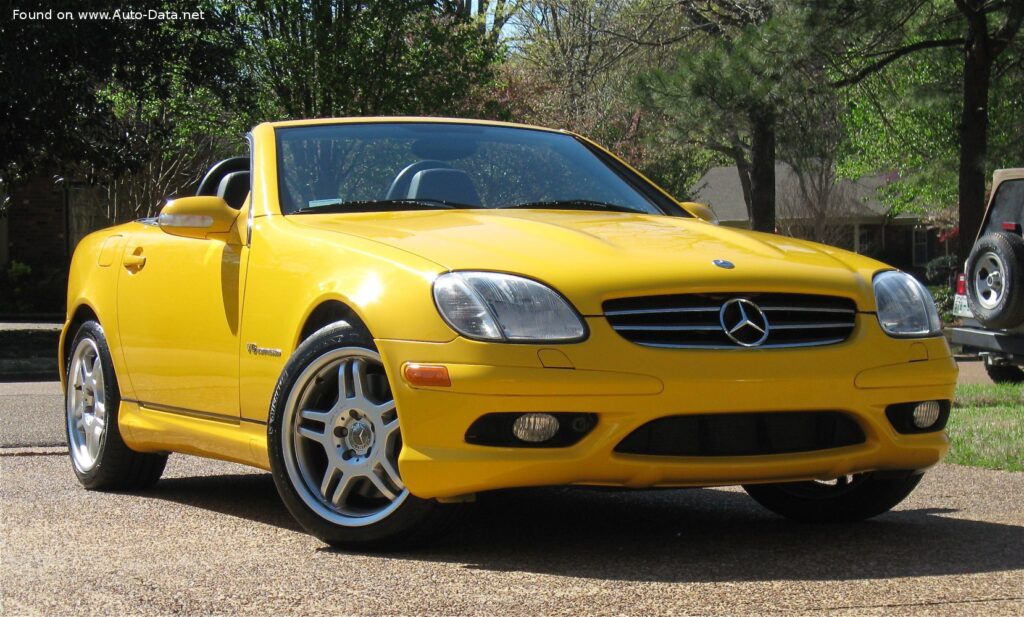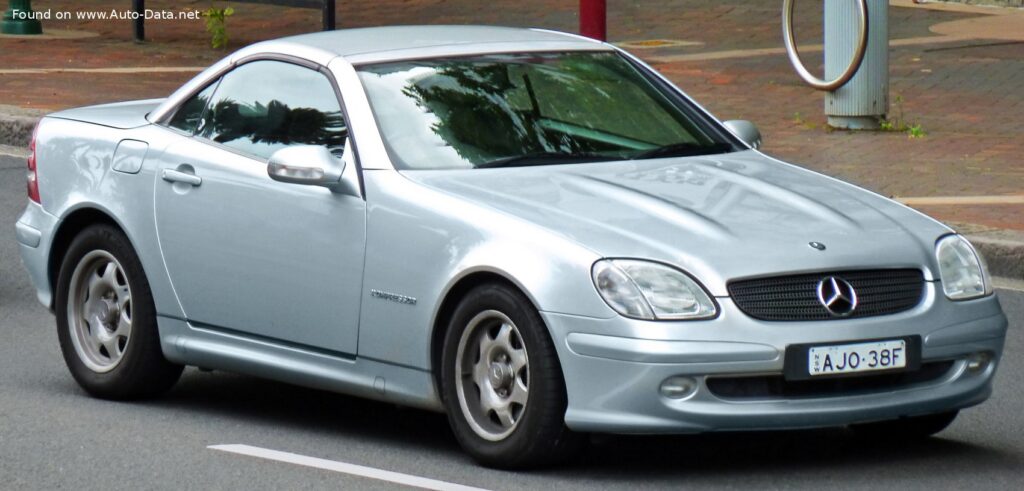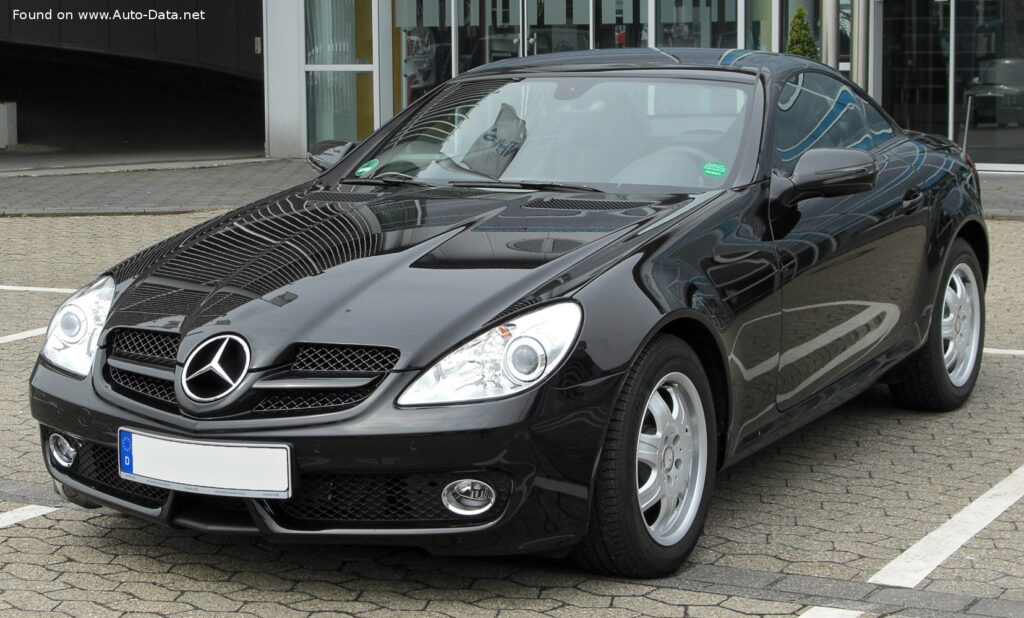
Mercedes-Benz SLK (R171, facelift 2008) SLK 280 V6
The Mercedes-Benz SLK-Class, a compact luxury roadster, represented an iconic blend of sporty performance and open-air driving pleasure within the German automaker’s lineup. The R171 generation, produced from 2004 to 2011, succeeded the original R170 and brought a more aggressive, F1-inspired design language and enhanced technology. The subject of this article is the post-facelift Mercedes-Benz SLK (R171, facelift 2008) SLK 280 V6, a model that refined an already successful formula, offering a compelling balance of power, luxury, and everyday usability. Introduced in April 2008, this variant was a key offering in the SLK range until its production concluded in April 2009, making it a relatively short-lived but significant part of the R171’s lifecycle. Positioned as a direct competitor to other premium two-seater sports cars, the SLK 280 V6 distinguished itself with its sophisticated V6 engine, rear-wheel-drive architecture, and the brand’s signature retractable hardtop, known as the Vario-roof.
Engine and Performance of the Mercedes-Benz SLK (R171, facelift 2008) SLK 280 V6
At the heart of the Mercedes-Benz SLK (R171, facelift 2008) SLK 280 V6 lies a robust and refined M 272.942 V6 engine. This naturally aspirated 3.0-liter (2996 cm3 or 182.83 cubic inches) powerplant was engineered for smooth power delivery and a characteristic Mercedes-Benz driving experience. Utilizing a DOHC (Double Overhead Camshaft) valvetrain with four valves per cylinder and a multi-port manifold injection system, the engine produced a healthy 231 horsepower at 6000 rpm. Torque figures were equally impressive for its class, peaking at 221.27 lb.-ft. across a broad range from 2500 to 5000 rpm, ensuring strong acceleration and flexible in-gear performance.
The power was efficiently managed through a standard six-speed manual transmission, appealing to driving enthusiasts who preferred direct control over gear changes. This powertrain architecture, featuring a front-longitudinal engine layout and rear-wheel drive, provided the classic sports car dynamics expected from a Mercedes-Benz roadster. The SLK 280 V6 was capable of accelerating from 0 to 60 mph in a brisk 6 seconds, with a top speed electronically limited to 155.34 mph (250 km/h). Such performance figures made it a spirited contender in its segment, offering an engaging driving experience whether on winding backroads or cruising on the highway.
Despite its performance capabilities, Mercedes-Benz also focused on efficiency for the facelifted R171. The SLK 280 V6 achieved a combined fuel economy of 25.3 to 24.8 US mpg (9.3-9.5 l/100 km) under the NEDC cycle. Urban consumption ranged from 17.3 to 17 US mpg (13.6-13.8 l/100 km), while extra-urban driving could yield 35.1 to 34.1 US mpg (6.7-6.9 l/100 km). With CO2 emissions rated at 220-225 g/km, the vehicle complied with the Euro 4 emission standard, reflecting a balance between performance and environmental considerations for its time.
Design and Features
The Mercedes-Benz SLK (R171, facelift 2008) SLK 280 V6 retained the sleek, aggressive styling that defined the R171 generation, with subtle refinements introduced during the facelift. Its roadster body type, characterized by two doors and two seats, emphasized its role as a dedicated driver’s car. The compact dimensions, with a length of 161.69 inches, a width of 70.39 inches (78.94 inches including mirrors), and a height of 51.02 inches, contributed to its agile appearance and handling. A wheelbase of 95.67 inches provided a stable platform for dynamic driving.
One of the most defining features of the SLK-Class, and indeed the R171, was its innovative retractable hardtop, or “Vario-roof.” This engineering marvel allowed the car to transform from a secure coupe to an open-top roadster in mere seconds, offering the best of both worlds. The facelift brought minor aesthetic tweaks, often including revised front and rear bumpers, updated lighting elements, and new wheel designs, all aimed at keeping the car’s appearance fresh and modern. The drag coefficient remained a respectable 0.32, contributing to both fuel efficiency and reduced wind noise.
Inside, the SLK 280 V6 offered a driver-focused cockpit trimmed in high-quality materials, typical of Mercedes-Benz. While specific interior features are not detailed in the raw data, standard Mercedes-Benz luxury appointments for the era would have included premium leather or fabric upholstery, automatic climate control, a sophisticated audio system, and a range of power-operated amenities. Safety was paramount, with standard features such as ABS (Anti-lock Braking System) and a comprehensive airbag system ensuring occupant protection. The vehicle’s chassis was designed for both comfort and sporty handling, featuring an independent McPherson type front suspension with a transverse stabilizer and an independent multi-link rear suspension, also with a transverse stabilizer. Braking power was supplied by ventilated discs at the front and solid discs at the rear, complemented by the ABS system. Steering was a hydraulic rack and pinion setup, providing direct and communicative feedback to the driver. The car rode on 16-inch wheels, with front tires measuring 205/55 R 16 and wider rear tires at 225/50 R 16, enhancing grip and stability.
Technical Specifications
| Category | Specification |
|---|---|
| General Information | |
| Brand | Mercedes-Benz |
| Model | SLK |
| Generation | SLK (R171, facelift 2008) |
| Type (Engine) | SLK 280 V6 (231 Hp) |
| Start of Production | April, 2008 |
| End of Production | April, 2009 |
| Powertrain Architecture | Internal Combustion engine |
| Body type | Roadster |
| Seats | 2 |
| Doors | 2 |
| Performance Specs | |
| Fuel Consumption (Urban, NEDC) | 17.3 – 17 US mpg (13.6-13.8 l/100 km) |
| Fuel Consumption (Extra Urban, NEDC) | 35.1 – 34.1 US mpg (6.7-6.9 l/100 km) |
| Fuel Consumption (Combined, NEDC) | 25.3 – 24.8 US mpg (9.3-9.5 l/100 km) |
| CO2 Emissions (NEDC) | 220-225 g/km |
| Fuel Type | Petrol (Gasoline) |
| Acceleration 0 – 60 mph | 6 seconds |
| Acceleration 0 – 62 mph (0 – 100 km/h) | 6.3 seconds |
| Maximum Speed | 155.34 mph (250 km/h, Electronically limited) |
| Emission Standard | Euro 4 |
| Weight-to-power ratio | 6 kg/Hp, 167.4 Hp/tonne |
| Weight-to-torque ratio | 4.6 kg/Nm, 217.4 Nm/tonne |
| Engine Specs | |
| Power | 231 Hp @ 6000 rpm |
| Power per liter | 77.1 Hp/l |
| Torque | 221.27 lb.-ft. @ 2500-5000 rpm (300 Nm) |
| Engine Layout | Front, Longitudinal |
| Engine Model/Code | M 272.942 |
| Engine Displacement | 3.0 liters (2996 cm3 / 182.83 cu. in.) |
| Number of Cylinders | 6 |
| Engine Configuration | V-engine |
| Cylinder Bore | 3.46 inches (88 mm) |
| Piston Stroke | 3.23 inches (82.1 mm) |
| Compression Ratio | 11.3:1 |
| Number of Valves per Cylinder | 4 |
| Fuel Injection System | Multi-port manifold injection |
| Engine Aspiration | Naturally aspirated engine |
| Valvetrain | DOHC |
| Engine Oil Capacity | 8.45 US qt (8 l) |
| Coolant Capacity | 7.5 US qt (7.1 l) |
| Space, Volume and Weights | |
| Kerb Weight | 3042.38 lbs. (1380 kg) |
| Max. Weight | 3902.18 lbs. (1770 kg) |
| Max Load | 859.8 lbs. (390 kg) |
| Trunk (boot) space – minimum | 7.35 cu. ft. (208 l) |
| Fuel Tank Capacity | 18.49 US gal (70 l) |
| Max. Roof Load | 110.23 lbs. (50 kg) |
| Dimensions | |
| Length | 161.69 inches (4107 mm) |
| Width | 70.39 inches (1788 mm) |
| Width including mirrors | 78.94 inches (2005 mm) |
| Height | 51.02 inches (1296 mm) |
| Wheelbase | 95.67 inches (2430 mm) |
| Drag Coefficient (Cd) | 0.32 |
| Minimum Turning Circle | 34.48 ft (10.51 m) |
| Drivetrain, Brakes and Suspension Specs | |
| Drivetrain Architecture | The Internal combustion engine (ICE) drives the rear wheels of the vehicle. |
| Drive Wheel | Rear wheel drive |
| Number of Gears and Type of Gearbox | 6 gears, manual transmission |
| Front Suspension | Independent type McPherson, Transverse stabilizer |
| Rear Suspension | Independent multi-link suspension, Transverse stabilizer |
| Front Brakes | Ventilated discs |
| Rear Brakes | Disc |
| Assisting Systems | ABS (Anti-lock braking system) |
| Steering Type | Steering rack and pinion |
| Power Steering | Hydraulic Steering |
| Tires Size (Front) | 205/55 R 16 |
| Tires Size (Rear) | 225/50 R 16 |
| Wheel Rims Size (Front) | 7 J x 16 |
| Wheel Rims Size (Rear) | 8 J x 16 |
Legacy and Market Impact
The Mercedes-Benz SLK-Class, particularly the R171 generation, carved out a significant niche in the luxury roadster market. The Mercedes-Benz SLK (R171, facelift 2008) SLK 280 V6 represented a sweet spot in the lineup, offering a compelling blend of performance, prestige, and relative affordability compared to its larger SL-Class sibling or higher-performance AMG variants. Its reputation was built on Mercedes-Benz’s hallmark of quality, safety, and sophisticated engineering, wrapped in a stylish, sporty package.
In the North American and European markets, the SLK 280 V6 faced stiff competition from rivals such as the BMW Z4, the Audi TT Roadster, and the Porsche Boxster. Each of these offered a distinct take on the two-seater roadster concept, but the SLK’s unique selling proposition was undoubtedly its metal Vario-roof, which offered superior insulation and security compared to traditional soft-top convertibles. This feature, combined with the brand’s luxurious interior appointments and comfortable ride, made the SLK a more practical and all-weather friendly choice for many buyers.
The facelifted R171, including the SLK 280 V6, helped sustain the model’s appeal during the latter half of its production run. While not a radical overhaul, the updates ensured the SLK remained competitive in terms of aesthetics and technology. The 3.0-liter V6 engine, while not the most powerful in the range, was lauded for its smooth character and sufficient performance for spirited driving, making it a popular choice for those seeking a balanced daily driver and weekend cruiser. Its relatively brief production window as a facelifted model (April 2008 – April 2009) before being superseded by the SLK 300 (which used the same M272 engine but often with a 7-speed automatic) adds a touch of exclusivity to this particular variant.
Historically, the R171 generation, and by extension the SLK 280 V6, played a crucial role in solidifying Mercedes-Benz’s presence in the compact luxury roadster segment. It successfully blended the emotional appeal of an open-top sports car with the practical advantages of a coupe, leaving a lasting impact on the automotive landscape and continuing to be a desirable pre-owned vehicle for enthusiasts seeking an affordable entry into premium German roadster ownership.