Introduction to the Rover 75 Tourer (facelift 2004)
The Rover 75 Tourer (facelift 2004) represents a significant, albeit late-stage, evolution of the Rover Car Company’s executive compact offering. Launched originally in 1998, the Rover 75 was Rover’s attempt to redefine its brand image, aiming for a blend of traditional British luxury and modern engineering prowess. The “Tourer” designation signifies its station wagon body style, a practical and popular choice in European markets. This particular iteration, featuring the 2004 facelift and powered by the 2.0 CDTi (131 Hp) diesel engine, was crucial for the brand’s competitive standing in the mid-2000s, especially in markets where diesel powertrains were highly favored for their efficiency and torque characteristics.
Produced from 2004 until Rover’s demise in 2005, this model was a refinement of the original design, incorporating subtle styling tweaks and minor mechanical updates to keep it fresh against formidable German and Japanese rivals. While never officially sold in the United States, the Rover 75 Tourer enjoyed a respectable following across Europe and other Commonwealth nations, praised for its distinctive retro-modern styling, comfortable ride, and a perceived sense of old-world charm. This article delves into the specifics of the Rover 75 Tourer (facelift 2004) 2.0 CDTi (131 Hp), examining its technical merits, design philosophy, and its place in automotive history.
Engine & Performance of the Rover 75 Tourer (facelift 2004) 2.0 CDTi
At the heart of this particular Rover 75 Tourer model is the M47R / 204D2 engine, a 2.0-liter (1951 cm³ or 119.06 cu. in.) inline-four cylinder diesel powerplant. This unit, designated CDTi, benefits from a common rail fuel injection system, a turbocharger, and an intercooler, technologies designed to maximize both power output and fuel efficiency. With a compression ratio of 18:1 and a DOHC valvetrain featuring four valves per cylinder, the engine is engineered for robust performance and smooth operation.
The engine delivers a respectable 131 horsepower at 3500 rpm, which, for its time and segment, provided ample motivation for the station wagon body. More significantly for a diesel, it produces a healthy 221.27 lb.-ft. (300 Nm) of torque, peaking at a low 1900 rpm. This substantial torque figure ensures strong low-end acceleration and excellent tractability, making it well-suited for both urban driving and highway cruising, especially when carrying passengers or cargo.
Paired with a 5-speed manual transmission driving the front wheels, the Rover 75 Tourer (facelift 2004) 2.0 CDTi accelerates from 0 to 60 mph in 10.6 seconds. While not a performance car, this acceleration is competitive for a family-oriented station wagon of its era. The top speed is rated at 114.95 mph (185 km/h). Fuel economy was a major selling point for this diesel variant in Europe, with a combined cycle rating of 40.6 US mpg (5.8 l/100 km). Even in urban settings, it achieved 29 US mpg (8.1 l/100 km), while extra-urban driving saw figures as high as 53.5 US mpg (4.4 l/100 km). These figures highlight the engine’s efficiency, positioning it as an economical choice for long-distance travel, especially important in markets with high fuel prices. The vehicle met the Euro 3 emission standard, reflecting its environmental compliance for the mid-2000s.
Design & Features
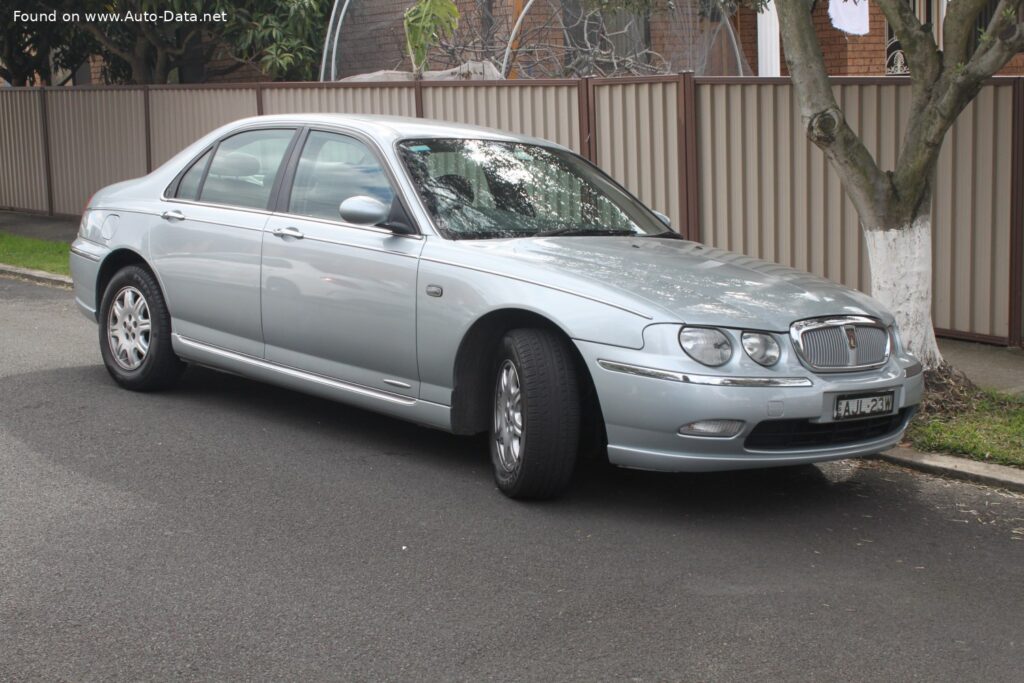
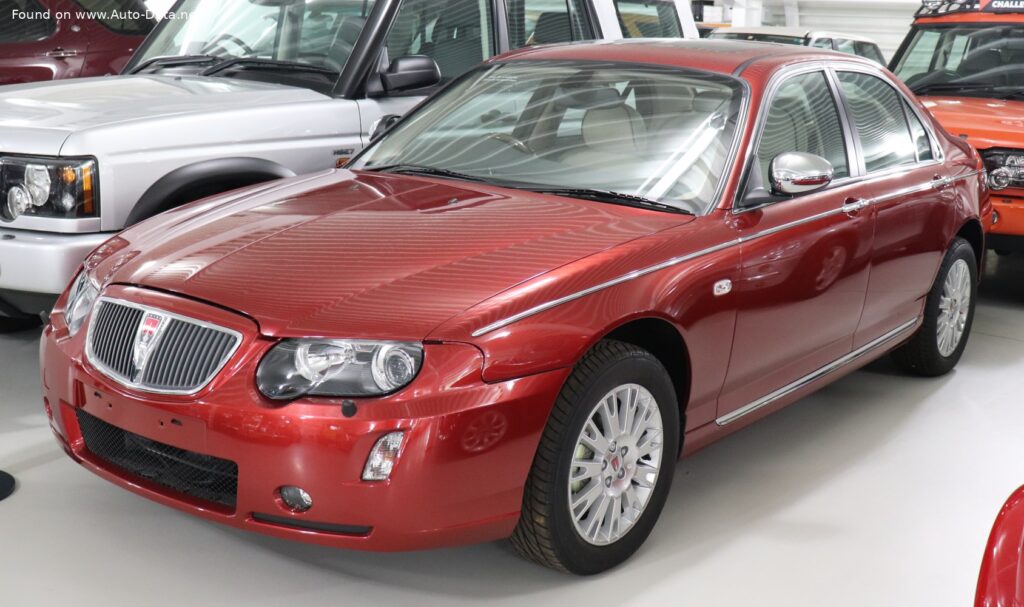
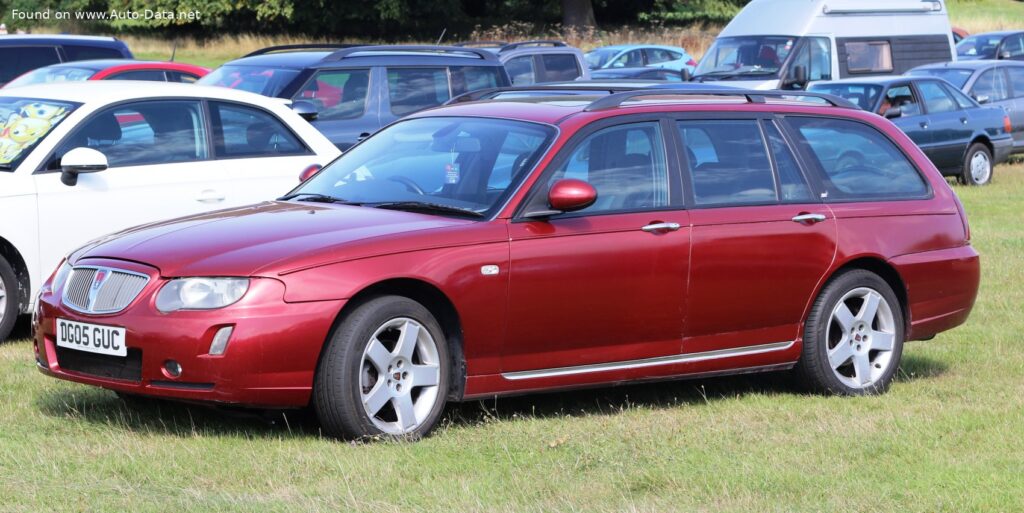
The Rover 75 Tourer (facelift 2004) maintained the distinctive “retro-modern” styling that characterized the original 75, albeit with subtle refinements introduced during the 2004 update. The facelift brought minor changes to the front grille, headlamps, and bumper designs, aiming for a slightly more contemporary and less overtly classical look. Despite these updates, the car retained its unique identity, standing apart from its more conservatively styled German rivals. Its five-door station wagon body type offered practicality without sacrificing the elegant lines of the sedan.
Measuring 188.58 inches (4790 mm) in length, 70 inches (1778 mm) in width (77.56 inches including mirrors), and riding on a 108.11-inch (2746 mm) wheelbase, the Tourer provided a spacious cabin for five occupants. The interior was renowned for its comfortable seating, high-quality materials, and a generally opulent ambiance, often featuring wood and chrome accents that evoked traditional British luxury. This focus on comfort extended to the ride quality, which was praised for its refinement and ability to absorb road imperfections.
In terms of practicality, the Tourer excelled with a minimum trunk (boot) space of 14.13 cu. ft. (400 liters), expanding to an impressive 43.15 cu. ft. (1222 liters) with the rear seats folded down. This made it a highly versatile vehicle for families and those needing significant cargo capacity. The maximum roof load capacity of 220.46 lbs (100 kg) and a permitted trailer load with brakes of 3527.4 lbs (1600 kg) further underscored its utility.
Chassis-wise, the Rover 75 Tourer featured an independent McPherson strut front suspension with coil springs and an anti-roll bar, paired with an independent multi-link spring suspension with a stabilizer at the rear. This setup contributed to its comfortable ride and composed handling. Braking was handled by ventilated discs at the front and solid discs at the rear, augmented by an Anti-lock Braking System (ABS) for enhanced safety. The hydraulic power steering, utilizing a rack and pinion system, provided a good balance of feel and assistance. Tire sizes varied, including 195/65 R15, 205/60 R15, and 215/55 R16, mounted on 15-inch or 16-inch wheel rims.
Technical Specifications
| Category | Specification |
|---|---|
| General Information | |
| Brand | Rover |
| Model | 75 |
| Generation | 75 Tourer (facelift 2004) |
| Engine Type | 2.0 CDTi (131 Hp) |
| Production Start | 2004 |
| Production End | 2005 |
| Powertrain Architecture | Internal Combustion Engine, Front Wheel Drive |
| Body Type | Station Wagon (Estate) |
| Seats | 5 |
| Doors | 5 |
| Performance Specs | |
| Fuel Consumption (Urban) | 8.1 l/100 km (29 US mpg) |
| Fuel Consumption (Extra Urban) | 4.4 l/100 km (53.5 US mpg) |
| Fuel Consumption (Combined) | 5.8 l/100 km (40.6 US mpg) |
| CO2 Emissions | 163 g/km |
| Fuel Type | Diesel |
| Acceleration 0 – 60 mph | 10.6 sec |
| Maximum Speed | 114.95 mph (185 km/h) |
| Emission Standard | Euro 3 |
| Weight-to-Power Ratio | 11.9 kg/Hp (84 Hp/tonne) |
| Weight-to-Torque Ratio | 5.2 kg/Nm (192.3 Nm/tonne) |
| Engine Specs | |
| Power | 131 Hp @ 3500 rpm |
| Power per liter | 67.1 Hp/l |
| Torque | 221.27 lb.-ft. (300 Nm) @ 1900 rpm |
| Engine Layout | Front, Transverse |
| Engine Model/Code | M47R / 204D2 |
| Engine Displacement | 1951 cm³ (119.06 cu. in.) |
| Number of Cylinders | 4 |
| Engine Configuration | Inline |
| Cylinder Bore | 3.31 in. (84 mm) |
| Piston Stroke | 3.46 in. (88 mm) |
| Compression Ratio | 18:1 |
| Number of Valves per Cylinder | 4 |
| Fuel Injection System | Diesel Commonrail |
| Engine Aspiration | Turbocharger, Intercooler |
| Valvetrain | DOHC |
| Engine Oil Capacity | 7.19 US qt (6.8 l) |
| Engine Oil Specification | Not specified |
| Coolant Capacity | 8.66 US qt (8.2 l) |
| Space, Volume and Weights | |
| Kerb Weight | 3439.21 – 3670.7 lbs. (1560-1665 kg) |
| Max. Weight (Gross Vehicle Weight) | 4607.66 lbs. (2090 kg) |
| Max Load | 936.96 – 1168.45 lbs. (425-530 kg) |
| Trunk (Boot) Space – Minimum | 14.13 cu. ft. (400 l) |
| Trunk (Boot) Space – Maximum | 43.15 cu. ft. (1222 l) |
| Fuel Tank Capacity | 17.17 US gal (65 l) |
| Max. Roof Load | 220.46 lbs. (100 kg) |
| Permitted Trailer Load with Brakes (12%) | 3527.4 lbs. (1600 kg) |
| Permitted Trailer Load without Brakes | 1653.47 lbs. (750 kg) |
| Permitted Towbar Download | 220.46 lbs. (100 kg) |
| Dimensions | |
| Length | 188.58 in. (4790 mm) |
| Width | 70 in. (1778 mm) |
| Width including mirrors | 77.56 in. (1970 mm) |
| Wheelbase | 108.11 in. (2746 mm) |
| Front Track | 59.49 in. (1511 mm) |
| Rear Track | 59.21 in. (1504 mm) |
| Minimum Turning Circle | 37.17 ft. (11.33 m) |
| Drivetrain, Brakes and Suspension Specs | |
| Drive Wheel | Front Wheel Drive |
| Gearbox | 5-speed manual transmission |
| Front Suspension | Independent, McPherson with coil spring and anti-roll bar |
| Rear Suspension | Independent multi-link spring suspension with stabilizer |
| Front Brakes | Ventilated discs |
| Rear Brakes | Disc |
| Assisting Systems | ABS (Anti-lock Braking System) |
| Steering Type | Steering rack and pinion |
| Power Steering | Hydraulic Steering |
| Tire Sizes | 195/65 R15; 205/60 R15; 215/55 R16 |
| Wheel Rim Sizes | 6J x 15; 6.5J x 16 |
Legacy & Market Impact
The Rover 75 Tourer (facelift 2004) 2.0 CDTi (131 Hp) arrived at a tumultuous time for the Rover brand. Despite its inherent qualities and the positive reception of its design, the company was facing severe financial difficulties that would ultimately lead to its collapse in 2005. The 75, and especially its Tourer variant, represented Rover’s best shot at competing in the premium mid-size segment in Europe, going up against established players like the BMW 3 Series Touring, Audi A4 Avant, Mercedes-Benz C-Class Estate, and even more mainstream but competent rivals such as the Ford Mondeo Estate and Vauxhall/Opel Vectra Caravan.
In its primary European market, the Rover 75 Tourer (facelift 2004) was appreciated for its distinctive styling, which offered a refreshing alternative to the often-conservative designs of its German competitors. Its comfortable ride, refined interior, and the robust, fuel-efficient BMW-sourced (M47R) diesel engine made it a compelling proposition for buyers seeking a blend of classic British charm and modern practicality. The facelift aimed to broaden its appeal and address some of the criticisms regarding its perceived “old-fashioned” styling by giving it a slightly more assertive front end.
However, despite its merits, the Rover 75 Tourer struggled to achieve the sales volumes necessary to secure the company’s future. Brand perception, reliability concerns (often exaggerated but persistent), and the lack of a strong dealer network compared to its rivals, all contributed to its uphill battle. Its legacy is thus complex: it is remembered as one of Rover’s finest modern cars, a testament to British design and engineering ambition, yet also as a symbol of the company’s tragic downfall.
Today, the Rover 75 Tourer, particularly the diesel variants, enjoys a cult following among enthusiasts who appreciate its unique character, comfortable ride, and relative affordability on the used car market. It stands as a poignant reminder of what Rover could have been and a significant chapter in the history of the British automotive industry. For those in markets like Europe who value a distinctive, comfortable, and practical station wagon with a touch of classic elegance, the Rover 75 Tourer (facelift 2004) 2.0 CDTi remains a compelling choice, showcasing the final, valiant efforts of a storied automotive marque.