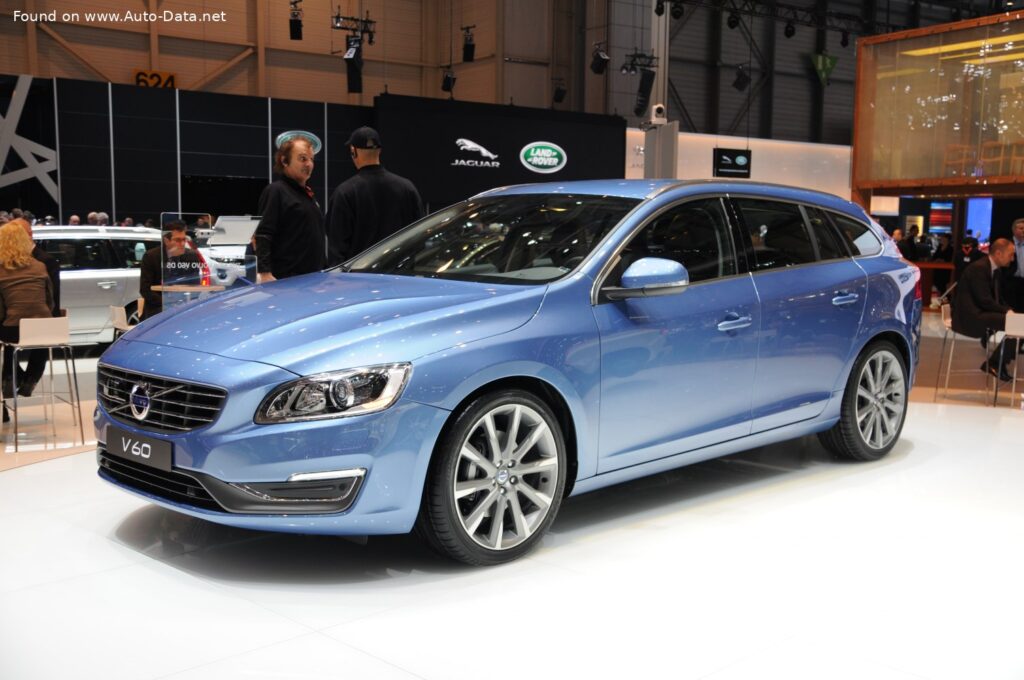
Introduction to the Volvo V60 I (2013 facelift)
The Volvo V60 I (2013 facelift) represents a significant evolution of Volvo’s first-generation compact executive station wagon, introduced as part of a comprehensive refresh for the 2014 model year. Unveiled initially in 2010, the V60 was designed to offer a sportier, more dynamic alternative to its larger, more traditional V70 sibling, blending elegant Scandinavian design with practical versatility. This particular variant, the 2.4 D5 (215 Hp) AWD Automatic, stood out in its primary European market for its potent diesel powertrain, sophisticated all-wheel-drive system, and a suite of advanced safety and convenience features that underscored Volvo’s commitment to innovation.
Positioned in the highly competitive premium D-segment, the V60 aimed to capture buyers looking for a vehicle that combined the driving dynamics of a sedan with the utility of a station wagon, all wrapped in a distinctly modern package. The 2013 facelift brought a host of exterior and interior enhancements, aligning the V60’s aesthetics more closely with Volvo’s contemporary design language and refining its overall appeal. While diesel engines and station wagons are less prevalent in the United States market, this configuration was a cornerstone of Volvo’s sales success in Europe, offering an compelling blend of performance, fuel efficiency, and all-weather capability.
Engine and Performance: The D5 Powerplant in the Volvo V60 I (2013 facelift)
At the heart of this specific Volvo V60 I (2013 facelift) model lies Volvo’s renowned 2.4-liter D5 inline five-cylinder turbo-diesel engine, designated internally as D5244T15. This robust powerplant was a testament to Volvo’s engineering prowess, delivering a formidable 215 horsepower at 4000 rpm. More impressively, it generated a substantial 324.53 lb.-ft. (440 Nm) of torque across a broad and accessible rev range, from 1500 to 3000 rpm. This characteristic torque delivery ensured strong, effortless acceleration and excellent passing power, making it well-suited for both urban driving and long-distance cruising on the highways of Europe.
The D5 engine featured a sophisticated common rail direct injection system, coupled with a turbocharger and intercooler, to optimize combustion efficiency and power output. Its inline five-cylinder configuration provided a distinctive engine note and a smooth power delivery that was a hallmark of Volvo’s larger engines for decades. Power was seamlessly managed by a six-speed automatic transmission, which provided smooth shifts and contributed to the vehicle’s refined driving experience.
Performance figures for the V60 D5 AWD were impressive for a family-oriented station wagon. It could accelerate from 0 to 60 mph in a brisk 7.3 seconds (0-100 km/h in 7.7 seconds) and reach a top speed of 139.81 mph (225 km/h). Despite its strong performance and all-wheel-drive capability, the D5 engine also delivered commendable fuel economy. The combined fuel consumption was rated at 39.9 US mpg (5.9 l/100 km), with extra-urban figures reaching an impressive 50 US mpg (4.7 l/100 km). This efficiency, combined with CO2 emissions of 158 g/km, made it an environmentally conscious choice within its segment, particularly in markets with stringent emissions regulations. The all-wheel-drive system provided enhanced traction and stability, making the V60 a confident performer in diverse weather conditions and on varying road surfaces.
Design and Features of the Volvo V60 I (2013 facelift)
The Volvo V60 I (2013 facelift) brought a refreshed aesthetic that enhanced its already sleek and modern design. The most noticeable changes were at the front, where a wider grille, new headlights, and a redesigned bumper gave the car a more assertive and contemporary look. The daytime running lights were integrated into the bumper, and the chrome accents were subtly revised, contributing to a more sophisticated presence. The body type remained a five-door station wagon (often referred to as an “estate” in European markets), offering a practical yet stylish profile that moved away from the traditional boxy Volvo wagon image.
Inside, the V60 continued Volvo’s tradition of ergonomic excellence and high-quality materials. The cabin featured comfortable seating for five, with a strong emphasis on driver and passenger well-being. The facelift introduced new instrument clusters, often with a configurable digital display, and updated trim options that further elevated the interior ambiance. Volvo’s Sensus infotainment system, with its intuitive controls and connectivity features, was a central element of the dashboard, providing navigation, entertainment, and vehicle settings.
As expected from Volvo, safety was paramount. The V60 I (2013 facelift) was equipped with a comprehensive array of active and passive safety systems. These included ABS (Anti-lock Braking System) as standard, along with a host of other advanced driver-assistance systems (ADAS) that were cutting-edge for its time. Features like City Safety, which could automatically brake the car to avoid or mitigate low-speed collisions, pedestrian detection, and various warning systems, reinforced Volvo’s reputation as a leader in automotive safety. The robust chassis, combined with independent front McPherson strut and rear coil spring suspension, provided a comfortable and composed ride, further enhancing the overall driving experience. The steering system was a precise rack and pinion setup, offering good feedback and responsiveness.