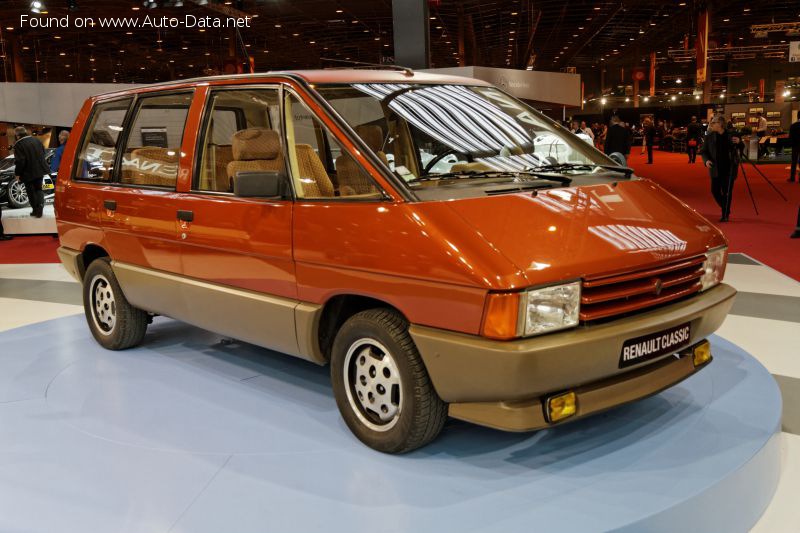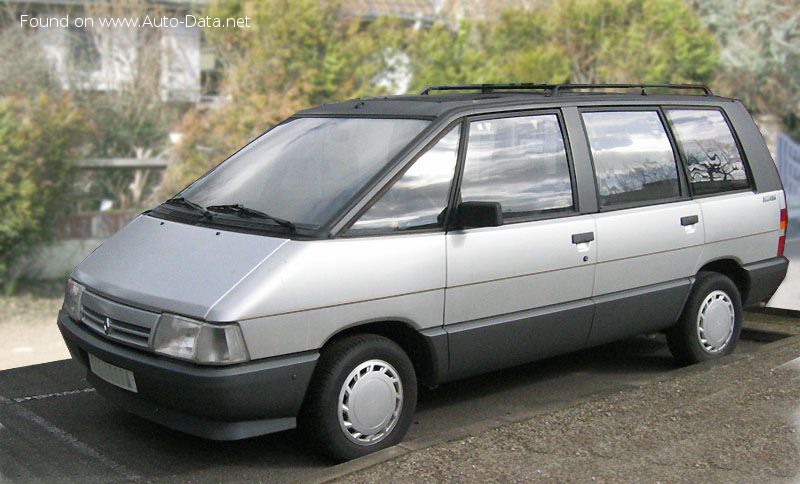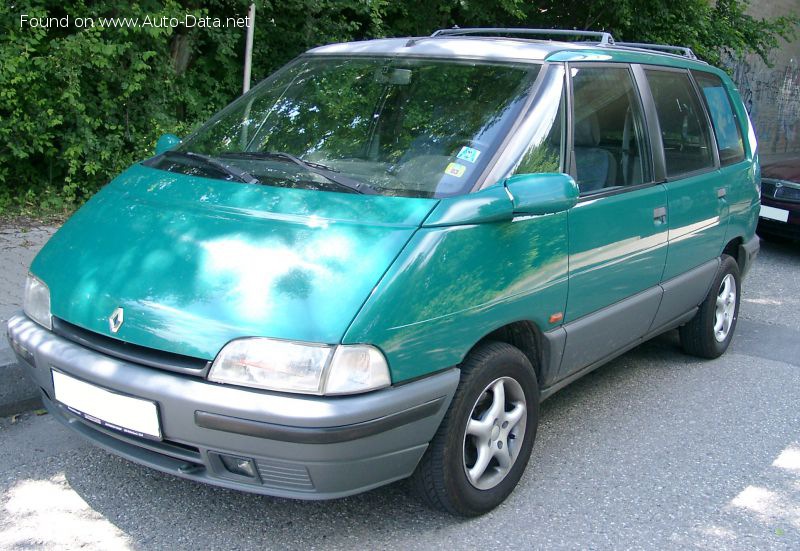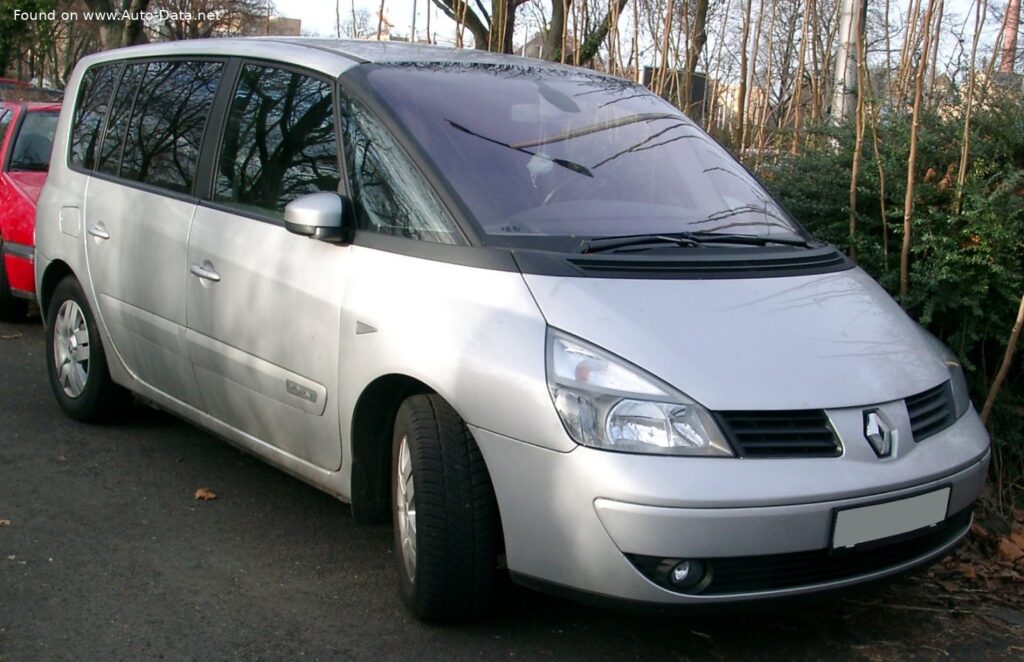
Introduction to the Renault Espace IV
The Renault Espace IV 3.5i V6 24V (241 Hp) Automatic represents a significant chapter in the history of European multi-purpose vehicles (MPVs).
Launched in 2002, the fourth generation of the groundbreaking Espace continued Renault’s legacy of innovation in family transport, solidifying its position as a segment leader in its primary European market.
Unlike many vehicles designed for a global audience, the Espace was specifically tailored to European tastes and family needs, offering a unique blend of spaciousness, modularity, and, in this particular configuration, surprising performance.
This iteration, produced until 2006, stood out with its upscale features and a powerful 3.5-liter V6 engine, a rarity in the MPV segment, positioning it as a premium offering for discerning families who didn’t want to compromise on power or comfort.
While never officially sold in the United States, the Renault Espace IV remains a fascinating study in automotive design and engineering, showcasing how European manufacturers approached the family vehicle segment with distinct priorities compared to their American counterparts.
The Renault Espace IV 3.5i V6 24V (241 Hp) Automatic Powertrain
At the heart of this particular Espace IV was a robust and eager 3.5-liter V6 engine, designated with the internal code V4Y.
This naturally aspirated gasoline powerplant, shared with other Renault and Nissan models, was a sophisticated unit for its time, featuring a Double Overhead Camshaft (DOHC) valvetrain with four valves per cylinder, totaling 24 valves.
It delivered a substantial 241 horsepower at 6000 rpm, an impressive figure for an MPV, and a healthy peak torque of 243.4 lb.-ft. at 3600 rpm.
This output translated into remarkably brisk acceleration for a vehicle of its size, propelling the Espace from 0 to 60 mph in a mere 7.7 seconds and allowing for a top speed of nearly 140 mph.
Power was efficiently managed through a 5-speed automatic transmission, directing drive to the front wheels. This front-wheel-drive architecture, combined with the transverse engine layout, optimized interior space, a critical factor for an MPV.
The engine’s displacement of 3498 cubic centimeters (213.46 cubic inches) and a compression ratio of 10.3:1 underscored its design for smooth, refined power delivery.
Fuel injection was handled by a multi-port manifold injection system, ensuring precise fuel delivery.
While performance was a highlight, fuel economy figures reflected the powerful V6 and the vehicle’s substantial curb weight of 3902.18 pounds.
Combined fuel consumption was rated at 19.3 US mpg, with urban driving yielding 13.6 US mpg and extra-urban figures reaching 25.3 US mpg.
Emissions met the Euro 3 standard, with CO2 output recorded at 283 g/km, typical for a powerful gasoline engine of this era and vehicle class.
Design, Ergonomics, and Features of the Espace IV
The fourth-generation Renault Espace, affectionately known as the Espace IV, continued the model’s tradition of pioneering “monospace” design.
Its distinctive silhouette, characterized by a single, sweeping line from the front to the rear, created an exceptionally airy and spacious cabin.
This particular variant, a 5-door MPV with seating for seven, was engineered from the ground up to maximize interior volume and passenger comfort.
Measuring 183.5 inches in length, 73.23 inches in width (82.83 inches including mirrors), and between 68.03 and 70.16 inches in height, the Espace IV had a commanding presence without being overly cumbersome.
A generous wheelbase of 110.35 inches contributed significantly to both ride comfort and interior roominess.
Inside, the Espace IV was a masterclass in modularity and family-friendly design. The individual seats could be easily removed, slid, or folded, allowing for an astonishing range of configurations from a comfortable 7-seater to a cavernous cargo hauler.
Minimum trunk space was a respectable 10.28 cubic feet, expanding to an enormous 101 cubic feet with the rear seats removed, rivaling many full-size SUVs and vans.
The design emphasized functionality, with numerous storage compartments and a futuristic, centrally mounted digital instrument cluster that freed up dashboard space and offered a unique driving experience.
The large glass areas, often augmented by an optional panoramic sunroof, flooded the cabin with natural light, enhancing the sense of space.
From a chassis and safety perspective, the Espace IV was well-equipped for its time. It featured an independent McPherson strut front suspension and a trailing arm rear suspension, providing a comfortable and stable ride characteristic of Renault vehicles.
Braking was handled by ventilated discs at the front and solid discs at the rear, supported by an Anti-lock Braking System (ABS) for enhanced safety.
Steering was a hydraulic rack and pinion system, offering a direct and communicative feel.
The vehicle rode on 225/55 R17 tires mounted on 17-inch wheel rims, providing a good balance of grip and ride quality.
With a minimum turning circle of 37.07 feet, it remained reasonably maneuverable for its size, an important consideration for urban European environments.
The drag coefficient of 0.35 was commendable for an MPV, contributing to both stability and fuel efficiency at higher speeds.
Technical Specifications
| Category | Specification |
|---|---|
| General Information | |
| Brand | Renault |
| Model | Espace |
| Generation | Espace IV |
| Type (Engine) | 3.5i V6 24V (241 Hp) Automatic |
| Start of Production | 2002 year |
| End of Production | 2006 year |
| Powertrain Architecture | Internal Combustion engine |
| Body type | Minivan, MPV |
| Seats | 7 |
| Doors | 5 |
| Performance Specs | |
| Fuel consumption (economy) – urban | 13.6 US mpg |
| Fuel consumption (economy) – extra urban | 25.3 US mpg |
| Fuel consumption (economy) – combined | 19.3 US mpg |
| CO2 emissions | 283 g/km |
| Fuel Type | Petrol (Gasoline) |
| Acceleration 0 – 60 mph | 7.7 sec |
| Maximum speed | 139.81 mph |
| Emission standard | Euro 3 |
| Weight-to-power ratio | 7.3 kg/Hp, 136.2 Hp/tonne |
| Weight-to-torque ratio | 5.4 kg/Nm, 186.4 Nm/tonne |
| Engine Specs | |
| Power | 241 Hp @ 6000 rpm. |
| Power per liter | 68.9 Hp/l |
| Torque | 243.4 lb.-ft. @ 3600 rpm. |
| Engine layout | Front, Transverse |
| Engine Model/Code | V4Y |
| Engine displacement | 3.5 l (213.46 cu. in.) |
| Number of cylinders | 6 |
| Engine configuration | V-engine |
| Cylinder Bore | 3.76 in. |
| Piston Stroke | 3.2 in. |
| Compression ratio | 10.3:1 |
| Number of valves per cylinder | 4 |
| Fuel injection system | Multi-port manifold injection |
| Engine aspiration | Naturally aspirated engine |
| Valvetrain | DOHC |
| Engine oil capacity | 5.28 US qt |
| Engine oil specification | Not available in provided data |
| Coolant capacity | 7.61 US qt |
| Space, Volume and Weights | |
| Kerb Weight | 3902.18 lbs. |
| Max. weight | 5610.76 lbs. |
| Max load | 1708.58 lbs. |
| Trunk (boot) space – minimum | 10.28 cu. ft. |
| Trunk (boot) space – maximum | 101 cu. ft. |
| Fuel tank capacity | 21.93 US gal |
| Max. roof load | 176.37 lbs. |
| Permitted trailer load without brakes | 1653.47 lbs. |
| Permitted towbar download | 187.39 lbs. |
| Dimensions | |
| Length | 183.5 in. |
| Width | 73.23 in. |
| Width including mirrors | 82.83 in. |
| Height | 68.03 – 70.16 in. |
| Wheelbase | 110.35 in. |
| Front track | 61.97 in. |
| Rear (Back) track | 61.26 in. |
| Front overhang | 40.39 in. |
| Rear overhang | 32.76 in. |
| Ride height (ground clearance) | 6.89 in. |
| Drag coefficient (Cd) | 0.35 |
| Minimum turning circle (turning diameter) | 37.07 ft. |
| Drivetrain, Brakes and Suspension Specs | |
| Drivetrain Architecture | The Internal combustion engine (ICE) drives the front wheels of the vehicle. |
| Drive wheel | Front wheel drive |
| Number of gears and type of gearbox | 5 gears, automatic transmission |
| Front suspension | Independent type McPherson |
| Rear suspension | Trailing arm |
| Front brakes | Ventilated discs |
| Rear brakes | Disc |
| Assisting systems | ABS (Anti-lock braking system) |
| Steering type | Steering rack and pinion |
| Power steering | Hydraulic Steering |
| Tires size | 225/55 R17 |
| Wheel rims size | 17 |
Legacy and Market Impact of the Renault Espace IV
The Renault Espace, particularly its fourth generation, cemented its reputation as the benchmark for European MPVs.
Upon its debut in 2002, the Espace IV built upon the revolutionary foundations laid by its predecessors, which had essentially invented the modern European minivan segment in 1984.
The Espace IV was praised for its bold styling, exceptionally versatile interior, and a focus on safety and comfort that resonated deeply with European families.
The introduction of the 3.5-liter V6 engine variant, as examined here, further broadened its appeal, offering a premium driving experience that was rare in the segment.
This powerful engine allowed the Espace to perform effortlessly on autobahns and long-distance family trips, providing a level of refinement and acceleration that belied its utilitarian roots.
In its primary European market, the Renault Espace IV faced stiff competition from rivals such as the Ford Galaxy/S-Max, Volkswagen Sharan, and the PSA Group’s Citroën C8 and Peugeot 807.
However, the Espace consistently stood out for its distinctive design, innovative interior packaging, and the sheer breadth of its engine lineup, with the V6 being the undisputed performance king.
It carved out a niche for itself as a more avant-garde and luxurious option compared to its more conventional competitors.
Its impact was profound, influencing other manufacturers to adopt similar modular seating systems and prioritize passenger comfort and space in their own MPV offerings.
For American audiences, the Renault Espace IV serves as a fascinating example of market divergence. While minivans like the Chrysler Voyager (which incidentally had a brief and unsuccessful partnership with Renault for the original Espace in the US) and Honda Odyssey dominated the US market, the Espace offered a distinctly European interpretation.
Its relatively compact exterior dimensions for a 7-seater, combined with its emphasis on driving dynamics and sophisticated engines like the V6, highlighted different consumer priorities.
By the 2000s, the US market was already transitioning towards SUVs as the preferred family vehicle, making the Espace’s entry unlikely.
Nonetheless, the Renault Espace IV remains a pivotal model in automotive history, symbolizing Renault’s commitment to innovation and its enduring influence on how families travel across Europe. The 3.5i V6 24V (241 Hp) Automatic variant stands as a testament to combining practical family transport with genuinely engaging performance.