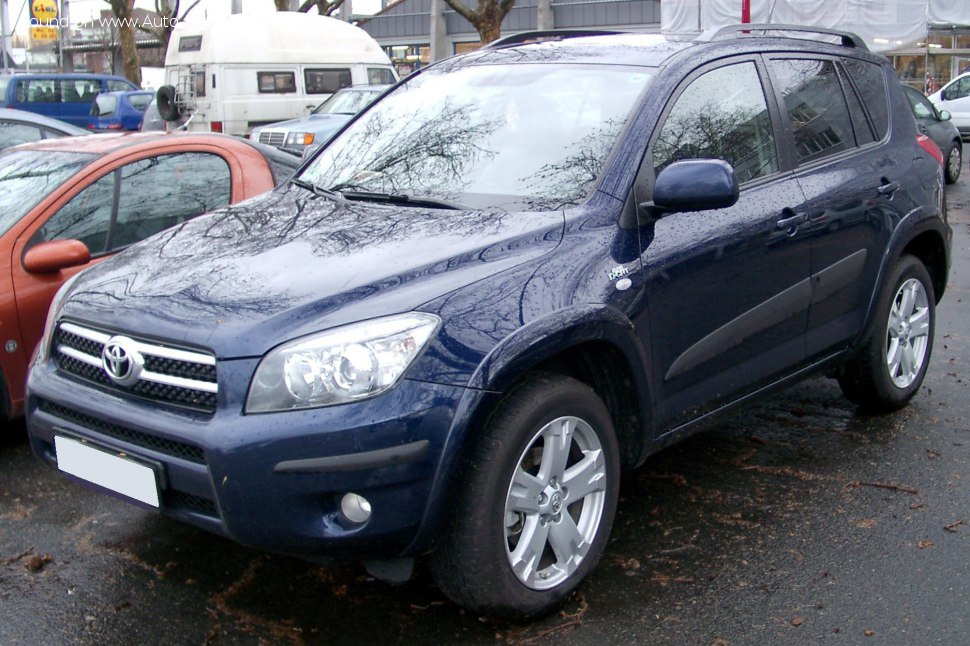
The Toyota RAV4 III (XA30) 2.2 D-CAT (177 Hp) 4WD: A European Compact SUV Stalwart
The Toyota RAV4 III (XA30), specifically the 2.2 D-CAT (177 Hp) 4WD variant, represents a significant chapter in the evolution of the compact SUV segment. Launched in November 2008 as part of the third generation, and produced until 2013, this model was a key player in Toyota’s global lineup, particularly excelling in markets where diesel powertrains were highly favored, such as Europe. While the RAV4 has always been a global phenomenon, this specific diesel-powered, all-wheel-drive configuration underscored Toyota’s commitment to offering efficient and capable vehicles tailored to regional preferences. The XA30 generation marked a maturation of the RAV4 concept, moving away from its more overtly “recreational” origins towards a more refined, family-friendly, and technologically advanced compact SUV.
The third-generation RAV4 grew in size and sophistication compared to its predecessors, adopting a more conventional compact SUV stance with improved interior space and ride comfort. The 2.2 D-CAT (177 Hp) 4WD model combined a potent diesel engine with an intelligent all-wheel-drive system, offering a compelling blend of performance, fuel efficiency, and traction. This made it a formidable competitor in the burgeoning European compact SUV market, appealing to buyers who valued both everyday practicality and the capability to handle diverse driving conditions.
Engine and Performance: The 2.2 D-CAT Powertrain in the Toyota RAV4 III (XA30)
At the heart of this particular Toyota RAV4 III (XA30) variant was the 2.2-liter D-CAT (Diesel Clean Advanced Technology) inline-four engine, designated by the code 2AD-FHV. This powertrain was a testament to Toyota’s engineering prowess in diesel technology, designed to deliver strong performance while meeting the stringent Euro 4 emission standards prevalent during its production years. With an engine displacement of 2231 cubic centimeters (136.14 cu. in.), it produced a robust 177 horsepower at 3600 rpm, translating to an impressive power output of 79.3 horsepower per liter.
More critically for an SUV, the engine delivered a substantial 400 Nm (295.02 lb.-ft.) of torque, available across a broad rev range from 2000 to 2600 rpm. This ample torque ensured strong pulling power and effortless acceleration, whether navigating city streets or cruising on the highway. The engine utilized a Diesel Commonrail fuel injection system, paired with a turbocharger and intercooler, which optimized combustion efficiency and boosted power output. The DOHC (Double Overhead Camshaft) valvetrain with four valves per cylinder further enhanced engine breathing and overall performance. With a compression ratio of 15.8:1, the engine was designed for optimal diesel combustion.
Mated to a precise 6-speed manual transmission, the 2.2 D-CAT RAV4 could accelerate from 0 to 60 mph in a brisk 8.8 seconds (0-100 km/h in 9.3 seconds), an impressive figure for a compact SUV of its size and weight. Its maximum speed was rated at 124.27 mph (200 km/h), demonstrating its capability for sustained highway speeds. Despite its strong performance, Toyota also focused on fuel economy. The combined fuel consumption was rated at 7 liters per 100 kilometers, which translates to a respectable 33.6 US mpg. Urban consumption stood at 8.4 l/100 km (28 US mpg), while extra-urban driving yielded an efficient 6.1 l/100 km (38.6 US mpg). CO2 emissions were 185 g/km, reflecting its Euro 4 compliance.
Design and Features: Practicality Meets Capability
The Toyota RAV4 III (XA30) adopted a more substantial and less quirky design compared to its predecessors. It was a five-door SUV with seating for five occupants, offering a practical and versatile interior. The exterior dimensions varied slightly in length from 169.88 to 173.03 inches (4315-4395 mm), with a consistent width of 71.46 inches (1815 mm) and height ranging from 66.34 to 67.72 inches (1685-1720 mm). Its wheelbase of 100.79 inches (2560 mm) contributed to a stable ride and generous interior volume.
The XA30 generation featured a more integrated spare tire, often moved from the rear tailgate to under the cargo floor in many markets, though some markets retained the tailgate-mounted spare. The 2.2 D-CAT 4WD model boasted a healthy ground clearance of 7.09 inches (180 mm), coupled with approach and departure angles of 28° and 24° respectively, and a ramp-over angle of 20°. These figures, combined with its permanent all-wheel-drive system, provided a respectable level of off-road capability for a compact SUV, making it suitable for light trails and challenging weather conditions.
Underneath, the RAV4 featured an independent McPherson strut front suspension and a double wishbone rear suspension, providing a balanced ride with competent handling. Braking was handled by ventilated discs measuring 296 mm at the front and solid discs of 281 mm at the rear, complemented by an Anti-lock Braking System (ABS) for enhanced safety. The vehicle rolled on 235/55 R18 tires mounted on 7.5J x 18-inch wheel rims, ensuring good grip and stability. With a minimum turning circle of 33.46 feet (10.2 meters), it remained maneuverable in urban environments.
The interior of the XA30 RAV4 was designed with practicality and comfort in mind. It offered a spacious cargo area, with a minimum trunk space of 586 liters (20.69 cu. ft.), expandable by folding down the rear seats. The kerb weight of the vehicle was 3516.37 lbs (1595 kg), with a maximum permissible weight of 4828.12 lbs (2190 kg), allowing for a maximum load of 1311.75 lbs (595 kg). Its towing capacity was also notable, capable of pulling 4409.25 lbs (2000 kg) with brakes and 1653.47 lbs (750 kg) without brakes, further enhancing its utility.
Technical Specifications: Toyota RAV4 III (XA30) 2.2 D-CAT (177 Hp) 4WD
| General Information | |
| Brand | Toyota |
| Model | RAV4 |
| Generation | RAV4 III (XA30) |
| Type (Engine) | 2.2 D-CAT (177 Hp) 4WD |
| Start of Production | November, 2008 |
| End of Production | 2013 |
| Powertrain Architecture | Internal Combustion engine |
| Body Type | SUV |
| Seats | 5 |
| Doors | 5 |
| Performance Specs | |
| Fuel Consumption (Economy) – Urban | 8.4 l/100 km (28 US mpg) |
| Fuel Consumption (Economy) – Extra Urban | 6.1 l/100 km (38.6 US mpg) |
| Fuel Consumption (Economy) – Combined | 7 l/100 km (33.6 US mpg) |
| CO2 Emissions | 185 g/km |
| Fuel Type | Diesel |
| Acceleration 0 – 60 mph | 8.8 sec |
| Acceleration 0 – 100 km/h | 9.3 sec |
| Maximum Speed | 200 km/h (124.27 mph) |
| Emission Standard | Euro 4 |
| Weight-to-Power Ratio | 9 kg/Hp (111 Hp/tonne) |
| Weight-to-Torque Ratio | 4 kg/Nm (250.8 Nm/tonne) |
| Engine Specs | |
| Power | 177 Hp @ 3600 rpm |
| Power per Liter | 79.3 Hp/l |
| Torque | 400 Nm @ 2000-2600 rpm (295.02 lb.-ft.) |
| Engine Layout | Front, Transverse |
| Engine Model/Code | 2AD-FHV |
| Engine Displacement | 2231 cm3 (2.2 Liters / 136.14 cu. in.) |
| Number of Cylinders | 4 |
| Engine Configuration | Inline |
| Cylinder Bore | 86 mm (3.39 in.) |
| Piston Stroke | 96 mm (3.78 in.) |
| Compression Ratio | 15.8:1 |
| Number of Valves per Cylinder | 4 |
| Fuel Injection System | Diesel Commonrail |
| Engine Aspiration | Turbocharger, Intercooler |
| Valvetrain | DOHC |
| Engine Oil Capacity | 5.9 l (6.23 US qt) |
| Space, Volume and Weights | |
| Kerb Weight | 1595 kg (3516.37 lbs) |
| Max. Weight | 2190 kg (4828.12 lbs) |
| Max Load | 595 kg (1311.75 lbs) |
| Trunk (Boot) Space – Minimum | 586 l (20.69 cu. ft.) |
| Fuel Tank Capacity | 60 l (15.85 US gal) |
| Permitted Trailer Load with Brakes (12%) | 2000 kg (4409.25 lbs) |
| Permitted Trailer Load without Brakes | 750 kg (1653.47 lbs) |
| Dimensions | |
| Length | 4315-4395 mm (169.88 – 173.03 in.) |
| Width | 1815 mm (71.46 in.) |
| Height | 1685-1720 mm (66.34 – 67.72 in.) |
| Wheelbase | 2560 mm (100.79 in.) |
| Front Track | 1560 mm (61.42 in.) |
| Rear (Back) Track | 1560 mm (61.42 in.) |
| Front Overhang | 860 mm (33.86 in.) |
| Rear Overhang | 895-975 mm (35.24 – 38.39 in.) |
| Ride Height (Ground Clearance) | 180 mm (7.09 in.) |
| Drag Coefficient (Cd) | 0.31 |
| Minimum Turning Circle (Turning Diameter) | 10.2 m (33.46 ft) |
| Approach Angle | 28° |
| Departure Angle | 24° |
| Ramp-over (Brakeover) Angle | 20° |
| Drivetrain, Brakes and Suspension Specs | |
| Drive Wheel | All-wheel drive (4×4) |
| Number of Gears and Type of Gearbox | 6 gears, manual transmission |
| Front Suspension | Independent type McPherson |
| Rear Suspension | Double wishbone |
| Front Brakes | Ventilated discs, 296 mm |
| Rear Brakes | Disc, 281 mm |
| Assisting Systems | ABS (Anti-lock braking system) |
| Steering Type | Steering rack and pinion |
| Tires Size | 235/55 R18 |
| Wheel Rims Size | 7.5J x 18 |
Legacy and Market Impact of the Toyota RAV4 III (XA30)
The Toyota RAV4 III (XA30) 2.2 D-CAT (177 Hp) 4WD carved out a significant niche for itself in the European automotive landscape. During its production run from 2008 to 2013, it faced stiff competition from a growing array of compact SUVs, including the Honda CR-V, Volkswagen Tiguan, Ford Kuga, Nissan Qashqai, and the Hyundai ix35/Tucson. What set the RAV4 apart, particularly this diesel all-wheel-drive variant, was its reputation for Toyota’s legendary reliability, combined with a highly competent and efficient powertrain.
In Europe, where diesel engines historically dominated many segments due to their fuel efficiency and torque characteristics, the 2.2 D-CAT engine was a strong selling point. It offered a compelling balance of performance for highway driving and sufficient torque for towing or handling varied terrain, a characteristic that resonated with European buyers who often used their SUVs for both urban commuting and longer journeys, sometimes with trailers or in adverse weather conditions. The permanent all-wheel-drive system, coupled with a reasonable ground clearance, provided an added layer of confidence and capability that many competitors in the segment couldn’t match or offered only as an optional extra.
The XA30 generation further solidified the RAV4’s position as a practical, dependable, and family-friendly compact SUV. Its growth in size translated to a more comfortable and spacious interior, making it more appealing to families. The refined suspension setup delivered a comfortable ride, while the precise manual transmission offered an engaging driving experience for those who preferred to be more connected to the vehicle. Toyota’s D-CAT technology, aimed at reducing diesel particulate matter and nitrogen oxides, also enhanced its environmental credentials for the time, a crucial factor in emission-conscious European markets.
Ultimately, the Toyota RAV4 III (XA30) 2.2 D-CAT (177 Hp) 4WD contributed significantly to the RAV4’s enduring global success. It demonstrated Toyota’s ability to adapt its core compact SUV offering to specific market demands, providing a robust, efficient, and capable option that remained highly competitive. Its legacy is one of reliability, practicality, and a well-engineered blend of performance and efficiency, characteristics that continue to define the RAV4 lineage today.