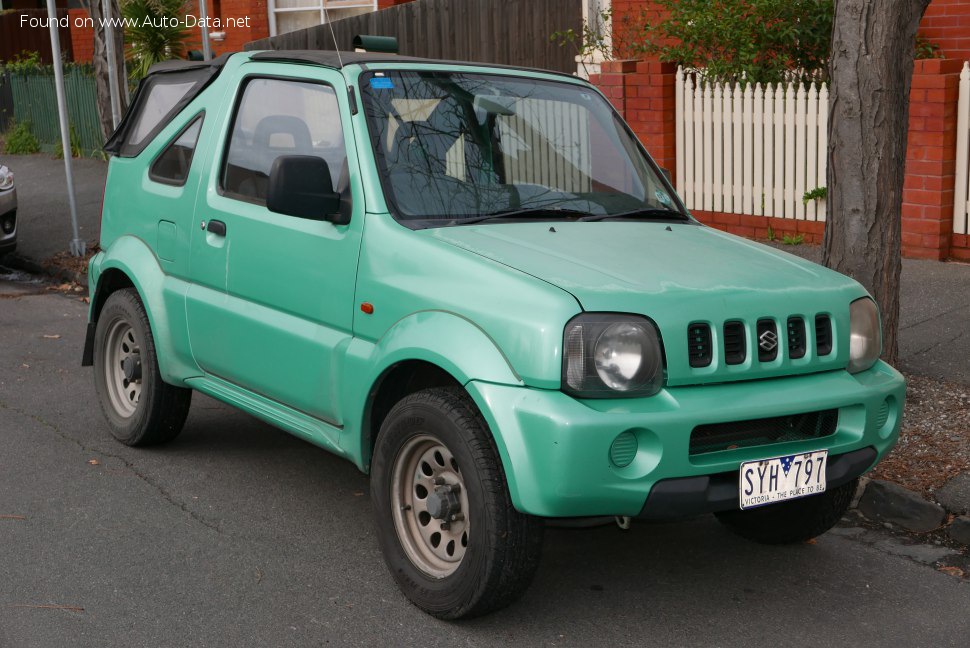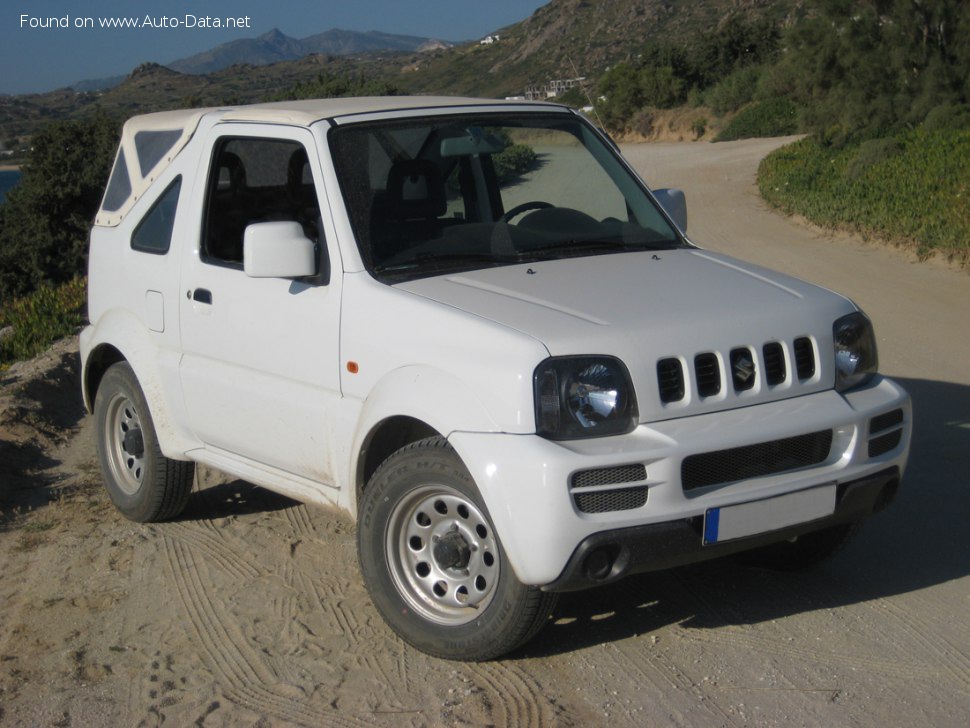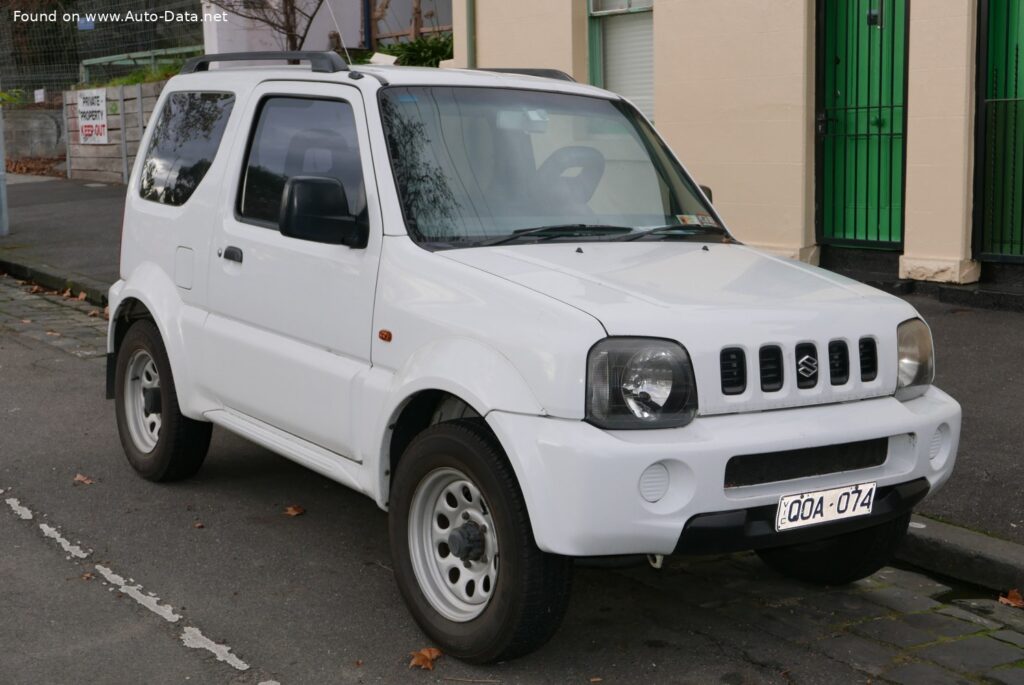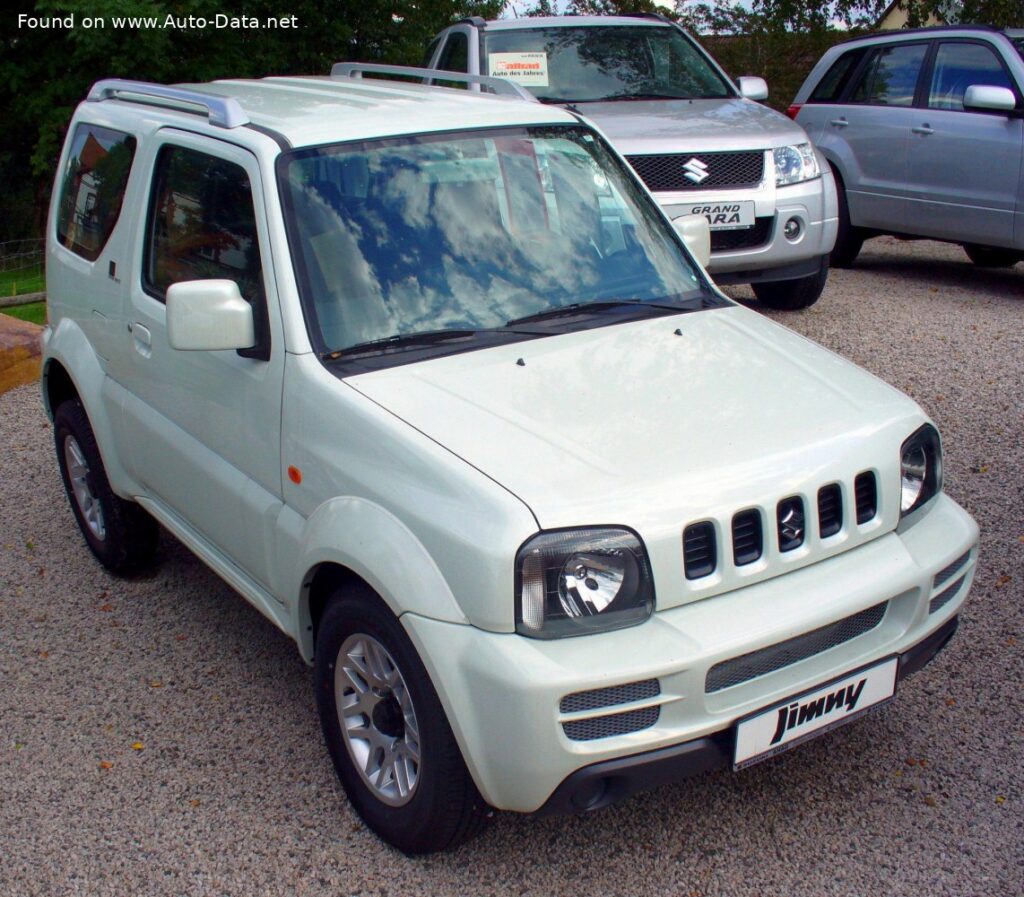
The Enduring Appeal of the Suzuki Jimny III (facelift 2005) 1.3 VVT (85 Hp) 4WD
The Suzuki Jimny, a name synonymous with compact, capable off-roading, represents a unique niche in the global automotive landscape. The third generation, specifically the Suzuki Jimny III (facelift 2005) model produced between 2011 and 2012, with its 1.3 VVT (Variable Valve Timing) engine producing 85 horsepower and standard four-wheel drive, continued the legacy of its predecessors. While not a mainstream vehicle in the United States, the Jimny has carved out a dedicated following in Europe, Asia, and other international markets, celebrated for its rugged construction, diminutive footprint, and genuine go-anywhere capability. This particular iteration, part of the facelift introduced in 2005, maintained the core mechanical integrity while offering subtle refinements to keep it competitive in its segment. It embodied Suzuki’s philosophy of building robust, reliable, and affordable vehicles tailored for challenging environments, a stark contrast to the often larger, more comfort-oriented SUVs prevalent in the American market.
Engine and Performance of the Suzuki Jimny III (facelift 2005)
At the heart of the 2011-2012 Suzuki Jimny III (facelift 2005) 1.3 VVT (85 Hp) 4WD lies Suzuki’s M13A engine, a naturally aspirated 1.3-liter (1328 cm³ or 81.04 cubic inches) inline-four gasoline unit. This engine features a DOHC (Double Overhead Camshaft) valvetrain with Variable Valve Timing (VVT), a technology designed to optimize valve lift and duration for improved performance and fuel efficiency across the RPM range. The engine delivers a modest but effective 85 horsepower at 6000 rpm, paired with 81.13 lb.-ft. of torque at 4100 rpm. While these figures might seem humble by American standards, they are perfectly suited for the Jimny’s lightweight construction and intended purpose.
Power is transmitted through a robust 5-speed manual transmission, offering direct engagement and control, crucial for off-road maneuvering. The drivetrain architecture is a part-time four-wheel-drive system, meaning the internal combustion engine permanently drives the rear wheels, with the front wheels engaged via an electrically or mechanically operated clutch when additional traction is required. This setup allows for greater fuel economy in two-wheel-drive mode on paved roads and formidable traction when venturing off-pavement.
Performance metrics reflect the Jimny’s utilitarian focus rather than outright speed. Acceleration from 0 to 60 mph is achieved in a measured 13.4 seconds, with a top speed of 86.99 mph (140 km/h). Fuel efficiency, while not class-leading for a small car, is respectable for a dedicated 4×4. The combined NEDC (New European Driving Cycle) fuel economy is rated at 33.1 US mpg (7.1 l/100 km), with urban consumption at 26.4 US mpg (8.9 l/100 km) and extra-urban at 39.2 US mpg (6 l/100 km). CO2 emissions stand at 162 g/km, adhering to the Euro 5 emission standard, reflecting its compliance with European environmental regulations of the era. The Jimny’s lightweight nature, with a curb weight ranging from 2336.9 to 2403.04 lbs., contributes significantly to its agility and capability.
Design and Features
The design of the Suzuki Jimny III (facelift 2005) is unmistakably rugged and functional, prioritizing utility over sleek aesthetics. It retains the classic 3-door off-road vehicle body style, a hallmark of the Jimny lineage. Its compact dimensions—144.29 inches in length, 62.99 inches in width (70.08 inches including mirrors), and 67.13 inches in height—make it exceptionally maneuverable in tight urban spaces and challenging off-road trails alike. The short 88.58-inch wheelbase further aids its agility and breakover angle.
Inside, the Jimny offers seating for four occupants, though the rear seats are best suited for shorter journeys or children due to limited legroom. Cargo space is modest, with a minimum trunk capacity of 3.99 cubic feet (113 liters), expandable to 11.44 cubic feet (324 liters) with the rear seats folded. This configuration underscores its primary role as a compact utility vehicle rather than a family hauler.
Off-road prowess is central to the Jimny’s design. It boasts a substantial ground clearance of 7.48 inches (190 mm), complemented by impressive approach (37°), departure (46°), and ramp-over (31°) angles. These figures enable it to tackle steep inclines, descents, and obstacles with remarkable ease, surpassing many larger SUVs. The suspension setup consists of coil springs and rigid axles both front and rear, a durable and articulation-friendly configuration ideal for traversing uneven terrain. Braking is handled by front discs and rear drums, with ABS (Anti-lock Braking System) as a standard assisting system for improved control during emergency stops. Steering is a cone worm with recirculation balls type, aided by hydraulic power steering, providing a robust and communicative feel, essential for off-road driving. The vehicle rides on 205/70 R15 tires mounted on 6J x 15 wheel rims, providing a good balance of on-road comfort and off-road grip.
Technical Specifications
| Category | Specification |
|---|---|
| Brand | Suzuki |
| Model | Jimny |
| Generation | Jimny III (facelift 2005) |
| Type (Engine) | 1.3 VVT (85 Hp) 4WD |
| Start of production | 2011 year |
| End of production | 2012 year |
| Powertrain Architecture | Internal Combustion engine |
| Body type | Off-road vehicle |
| Seats | 4 |
| Doors | 3 |
| Performance Specs | |
| Fuel consumption (economy) – urban (NEDC) | 8.9 l/100 km (26.4 US mpg) |
| Fuel consumption (economy) – extra urban (NEDC) | 6 l/100 km (39.2 US mpg) |
| Fuel consumption (economy) – combined (NEDC) | 7.1 l/100 km (33.1 US mpg) |
| CO2 emissions (NEDC) | 162 g/km |
| Fuel Type | Petrol (Gasoline) |
| Acceleration 0 – 60 mph | 13.4 sec |
| Maximum speed | 140 km/h (86.99 mph) |
| Emission standard | Euro 5 |
| Weight-to-power ratio | 12.5 kg/Hp (80.2 Hp/tonne) |
| Weight-to-torque ratio | 9.6 kg/Nm (103.8 Nm/tonne) |
| Engine Specs | |
| Power | 85 Hp @ 6000 rpm |
| Power per liter | 64 Hp/l |
| Torque | 110 Nm @ 4100 rpm (81.13 lb.-ft. @ 4100 rpm) |
| Engine layout | Front, Longitudinal |
| Engine Model/Code | M13A |
| Engine displacement | 1328 cm³ (1.3 liters, 81.04 cu. in.) |
| Number of cylinders | 4 |
| Engine configuration | Inline |
| Cylinder Bore | 78 mm (3.07 in.) |
| Piston Stroke | 69.5 mm (2.74 in.) |
| Compression ratio | 9.5:1 |
| Number of valves per cylinder | 4 |
| Fuel injection system | Multi-port manifold injection |
| Engine aspiration | Naturally aspirated engine |
| Valvetrain | DOHC |
| Engine oil capacity | 4 l (4.23 US qt) |
| Coolant | 5.9 l (6.23 US qt) |
| Space, Volume and Weights | |
| Kerb Weight | 1060-1090 kg (2336.9 – 2403.04 lbs.) |
| Max. weight | 1420 kg (3130.56 lbs.) |
| Max load | 330-360 kg (727.53 – 793.66 lbs.) |
| Trunk (boot) space – minimum | 113 l (3.99 cu. ft.) |
| Trunk (boot) space – maximum | 324 l (11.44 cu. ft.) |
| Fuel tank capacity | 40 l (10.57 US gal) |
| Permitted trailer load with brakes (12%) | 1300 kg (2866.01 lbs.) |
| Permitted trailer load without brakes | 350 kg (771.62 lbs.) |
| Dimensions | |
| Length | 3665 mm (144.29 in.) |
| Width | 1600 mm (62.99 in.) |
| Width including mirrors | 1780 mm (70.08 in.) |
| Height | 1705 mm (67.13 in.) |
| Wheelbase | 2250 mm (88.58 in.) |
| Front track | 1355 mm (53.35 in.) |
| Rear (Back) track | 1365 mm (53.74 in.) |
| Ride height (ground clearance) | 190 mm (7.48 in.) |
| Minimum turning circle (turning diameter) | 9.8 m (32.15 ft.) |
| Approach angle | 37° |
| Departure angle | 46° |
| Ramp-over (brakeover) angle | 31° |
| Drivetrain, Brakes and Suspension Specs | |
| Drivetrain Architecture | Internal combustion engine (ICE) drives the rear wheels permanently, and the front wheels are driven through an electrically or mechanically operated clutch if necessary. |
| Drive wheel | All wheel drive (4×4) |
| Number of gears and type of gearbox | 5 gears, manual transmission |
| Front suspension | Coil spring, Rigid axle suspension |
| Rear suspension | Rigid axle suspension, Coil spring |
| Front brakes | Disc |
| Rear brakes | Drum |
| Assisting systems | ABS (Anti-lock braking system) |
| Steering type | Cone worm with recirculation balls |
| Power steering | Hydraulic Steering |
| Tires size | 205/70 R15 |
| Wheel rims size | 6J x 15 |
Legacy and Market Impact
The Suzuki Jimny, particularly the third generation, has cultivated a formidable reputation as a highly capable and exceptionally durable off-road vehicle. Its no-nonsense, utilitarian approach, combined with its compact size and relatively low running costs, made it a popular choice in markets where challenging terrain and narrow roads are common. In Europe and Asia, the Jimny often competed with other small SUVs and crossovers, but its true rivals were more specialized 4x4s like the Lada Niva or even the more robust variants of the Fiat Panda 4×4, though none quite matched the Jimny’s dedicated ladder-frame chassis and solid axle construction.
The Suzuki Jimny III (facelift 2005) maintained its position as a cult classic. Its simple mechanicals, combined with Suzuki’s reputation for reliability, translated into excellent longevity and a strong resale value in its primary markets. Owners appreciated its ability to navigate urban congestion during the week and conquer demanding trails on the weekend. It became a favorite among enthusiasts seeking an affordable and modifiable platform for off-roading, as well as practical-minded individuals and businesses in rural areas requiring a dependable workhorse.
While the Jimny never officially graced American showrooms in this generation, its spirit and design cues found echoes in other compact SUVs. Its enduring appeal lies in its authenticity; it never pretended to be a luxury SUV or a high-performance machine. Instead, it delivered exactly what it promised: a compact, lightweight, and incredibly capable four-wheel-drive vehicle that could take on challenges far beyond its modest dimensions. The Jimny’s legacy is one of rugged reliability and genuine off-road prowess, cementing its place as a beloved icon in the global automotive landscape, paving the way for its highly anticipated and equally successful fourth generation.