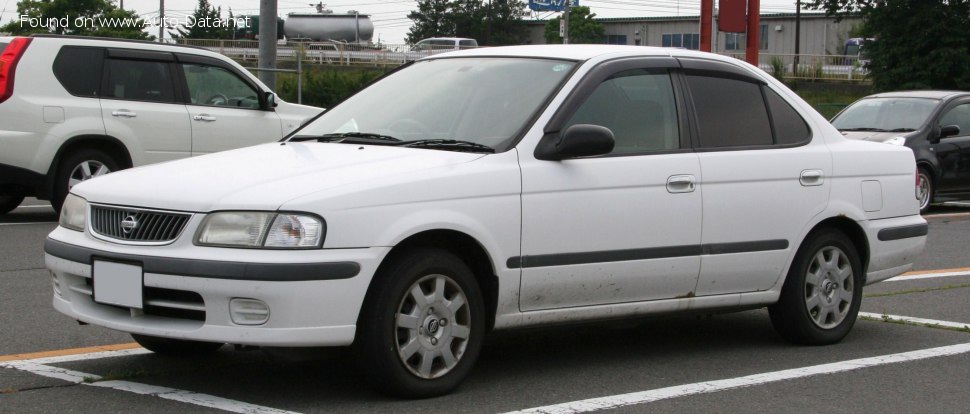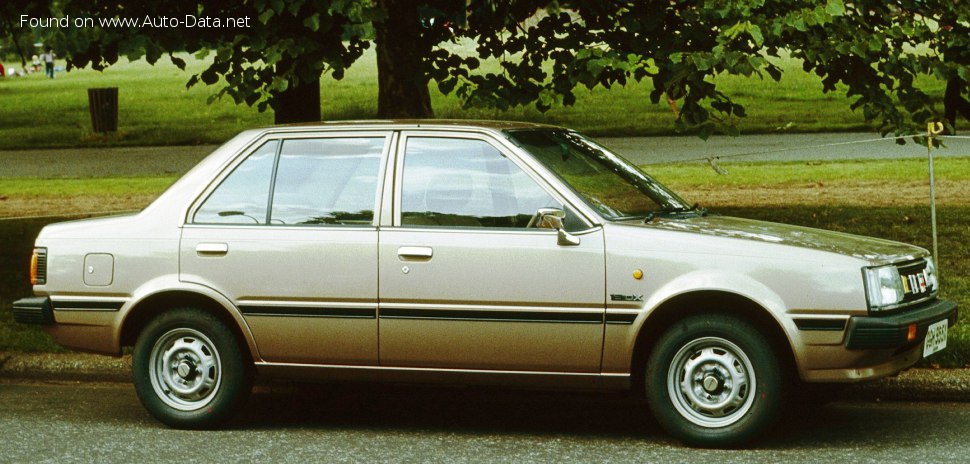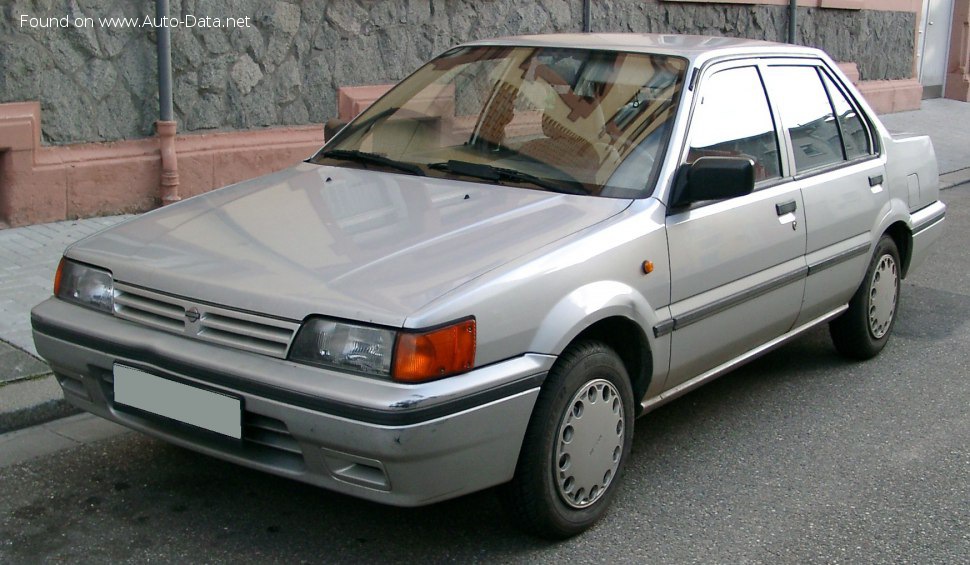
Introduction to the Nissan Sunny II (N13)
The Nissan Sunny II (N13) represents a significant chapter in the history of Nissan’s highly successful compact car lineage. Launched in 1988 and produced until 1991, the N13 generation built upon the Sunny’s established reputation for reliability, economy, and practicality. While known as the Sentra in North America, the Sunny badge held considerable weight in markets across Asia, Europe, and Oceania, serving as a cornerstone of Nissan’s global sales strategy. This particular variant, the 1.6 i 12V (90 Hp) sedan, was a popular choice, embodying the core values of the N13 series by offering a balanced blend of performance and fuel efficiency in a conventional, family-friendly package. It competed fiercely in the C-segment, a market crucial for volume sales and brand loyalty during the late 1980s and early 1990s.
The Nissan Sunny II (N13): A Global Compact Contender
The N13 generation of the Nissan Sunny was the seventh iteration of a model line that had been in continuous production since 1966. By the late 1980s, the compact car segment was intensely competitive, with manufacturers vying to offer vehicles that were not only affordable but also increasingly refined, safe, and efficient. The Nissan Sunny II (N13) was designed to meet these evolving demands, offering a more modern aesthetic and improved driving dynamics compared to its predecessor. Its design language was contemporary for its time, featuring smoother lines and a less boxy profile than many of its early 1980s counterparts, reflecting a global trend towards more aerodynamic vehicle designs.
The N13 Sunny was available in various body styles, including sedans, hatchbacks, and even a station wagon, catering to a diverse range of consumer needs. The sedan, in particular, was a perennial favorite, appealing to families and individuals seeking a dependable daily driver. Its robust construction and straightforward engineering contributed to its widespread appeal, especially in regions where harsh road conditions and long-term durability were paramount considerations. Nissan’s commitment to quality and reliability during this era cemented the Sunny’s status as a trusted vehicle across numerous international markets.
Powertrain and Performance of the 1.6 i 12V
Under the hood, the Nissan Sunny II (N13) 1.6 i 12V (90 Hp) featured a naturally aspirated internal combustion engine, a common and reliable configuration for its period. This 1.6-liter gasoline engine was designed with a 12-valve cylinder head, which was a technological step forward from earlier 8-valve designs, allowing for improved engine breathing and efficiency without the complexity or cost of a full 16-valve setup. The 12-valve architecture typically meant three valves per cylinder (two intake, one exhaust), optimizing airflow for better combustion and power delivery.
With an output of 90 horsepower, this variant of the Sunny N13 offered respectable performance for a compact sedan of its era. The power delivery was smooth and predictable, making it well-suited for both city driving and highway cruising. While not a performance car, its power-to-weight ratio was adequate for everyday commuting and family duties, providing sufficient acceleration for merging into traffic and maintaining cruising speeds. The naturally aspirated design contributed to its reputation for simplicity and durability, requiring less maintenance than more complex forced-induction systems.
The vehicle utilized a hydraulic power steering system, a standard feature in many cars of the late 1980s and early 1990s. This system provided a comfortable and assisted steering feel, reducing driver effort during low-speed maneuvers like parking, while still offering a decent level of road feedback at higher speeds. This combination of a reliable engine and user-friendly steering contributed to the Sunny’s reputation as an easy and pleasant car to drive, further enhancing its appeal to a broad demographic.
Design, Features, and Ergonomics
The Nissan Sunny II (N13) 1.6 i 12V (90 Hp) was offered in a sedan body type, adhering to the classic three-box design that was highly popular for its practicality and balanced aesthetics. The exterior design was characterized by clean, understated lines, a relatively low beltline for good visibility, and functional styling that prioritized utility over flamboyant flourishes. While not revolutionary, its design was modern enough to remain competitive against rivals like the Toyota Corolla and Honda Civic. Headlights and taillights were integrated seamlessly into the bodywork, and the overall silhouette aimed for a contemporary yet timeless appeal.
Inside, the N13 Sunny sedan reflected Nissan’s commitment to ergonomics and durability. The cabin was designed to be functional and straightforward, with controls that were logically placed and easy to operate. Materials, while not luxurious, were chosen for their hard-wearing properties, capable of withstanding years of daily use. Seating was comfortable for four adults, with adequate legroom and headroom for a compact car. Trunk space was generous for its class, making it a practical choice for families or individuals needing to transport luggage or groceries.
Features for the 1988-1991 period would have been relatively basic by modern standards but competitive for its time. Depending on the market and trim level, these could include a manual air conditioning system, a simple AM/FM radio with a cassette player, manual or power windows, and central locking. Safety features primarily revolved around seatbelts for all occupants, and the car’s inherent structural rigidity. Advanced safety systems like airbags or anti-lock brakes (ABS) were typically optional or reserved for higher-end models, and certainly not standard on a compact car of this price point in the late 1980s. The focus was on providing reliable, no-nonsense transportation.
Technical Specifications: Nissan Sunny II (N13) 1.6 i 12V (90 Hp)
| Category | Specification |
|---|---|
| General Information | |
| Brand | Nissan |
| Model | Sunny |
| Generation | Sunny II (N13) |
| Type (Engine) | 1.6 i 12V (90 Hp) |
| Start of Production | 1988 year |
| End of Production | 1991 year |
| Powertrain Architecture | Internal Combustion engine |
| Body type | Sedan |
| Performance Specs | |
| Fuel Type | Petrol (Gasoline) |
| Engine Power | 90 Hp |
| Engine Aspiration | Naturally aspirated engine |
| Drivetrain, Brakes and Suspension Specs | |
| Power Steering | Hydraulic Steering |
Legacy and Market Impact
The Nissan Sunny II (N13), particularly the 1.6 i 12V (90 Hp) sedan, carved out a significant legacy for itself as a highly reliable and economical compact car. In markets where it was sold as the Sunny, it was often lauded for its bulletproof dependability, low running costs, and straightforward mechanics, which made it easy and inexpensive to maintain. This reputation for robustness was a key selling point, especially in regions with varying road quality and access to specialized service centers. Owners appreciated its ability to consistently perform its duties without fuss, cementing Nissan’s image as a producer of durable vehicles.
In its primary markets, the N13 Sunny faced stiff competition from a host of well-established rivals. Key among these were the Toyota Corolla (E90 generation), which was arguably its most direct and formidable competitor, known for similar attributes of reliability and quality. Other significant rivals included the Honda Civic (EF generation), which often appealed to a slightly sportier demographic, the Mazda 323, the Opel Kadett (or Vauxhall Astra in the UK), and the Ford Escort. In some markets, it also contended with the Volkswagen Jetta (Mk2), though the Jetta often occupied a slightly more premium niche. The Sunny differentiated itself through a blend of competitive pricing, a strong dealer network, and its unwavering reputation for longevity.
The historical significance of the Nissan Sunny II (N13) lies in its role as a global workhorse. It was instrumental in building Nissan’s market share in developing economies and maintaining its presence in mature markets where compact cars were a staple. The N13 contributed to the evolution of the compact car segment, demonstrating that practical and affordable transportation could also offer a decent level of refinement and comfort. Its success paved the way for subsequent generations of Nissan compacts, influencing the design and engineering philosophies that would carry through to models like the later Sentra and Almera (Pulsar) in various parts of the world. Even today, many N13 Sunnys can still be found on the roads in certain regions, a testament to their enduring build quality and the foundational engineering that Nissan invested in this pivotal model.