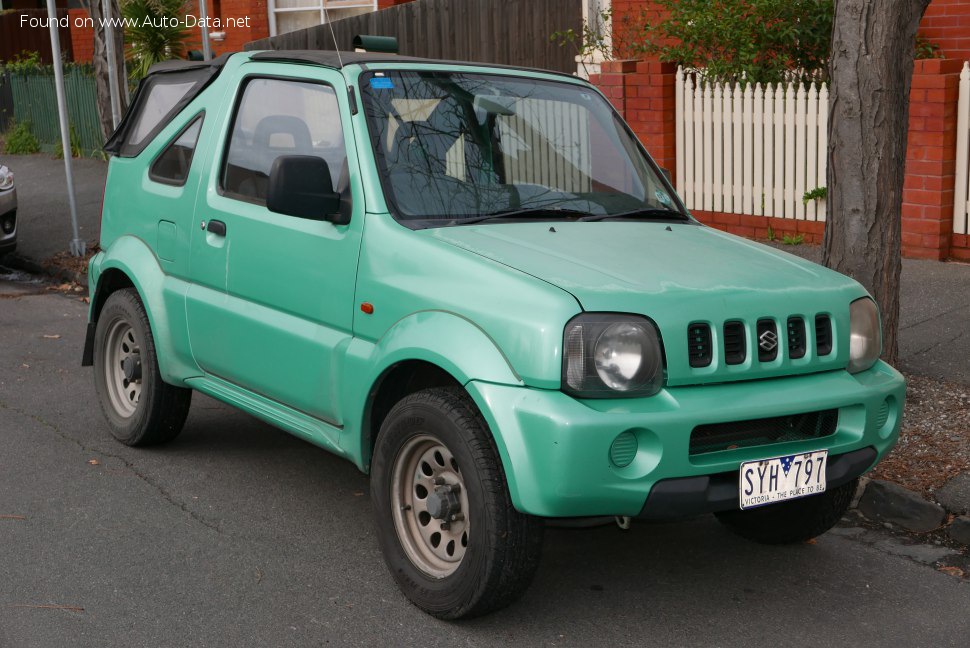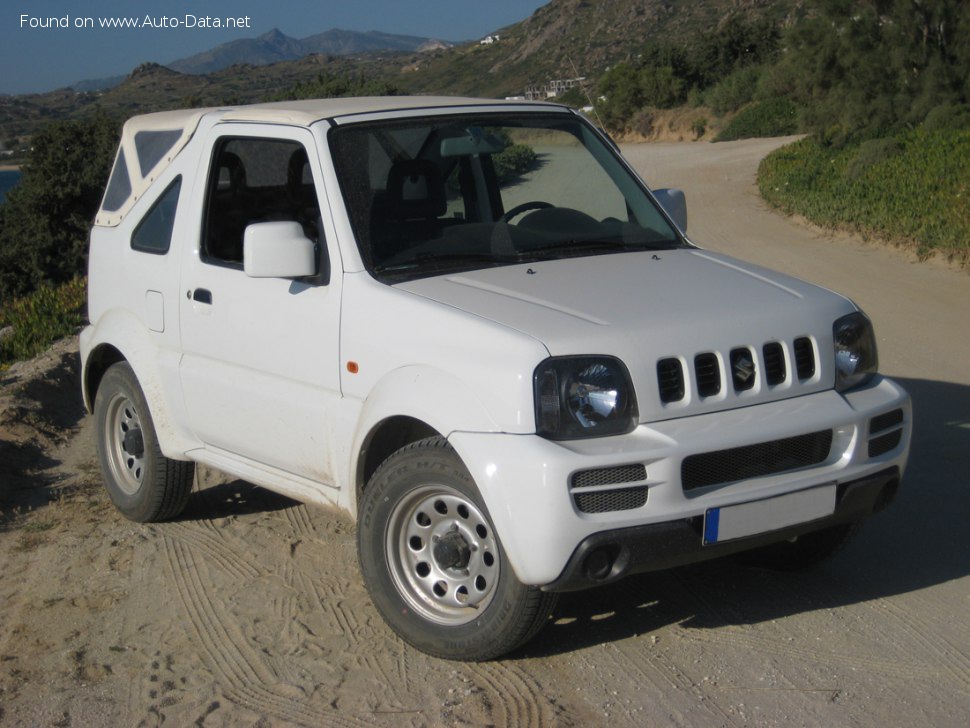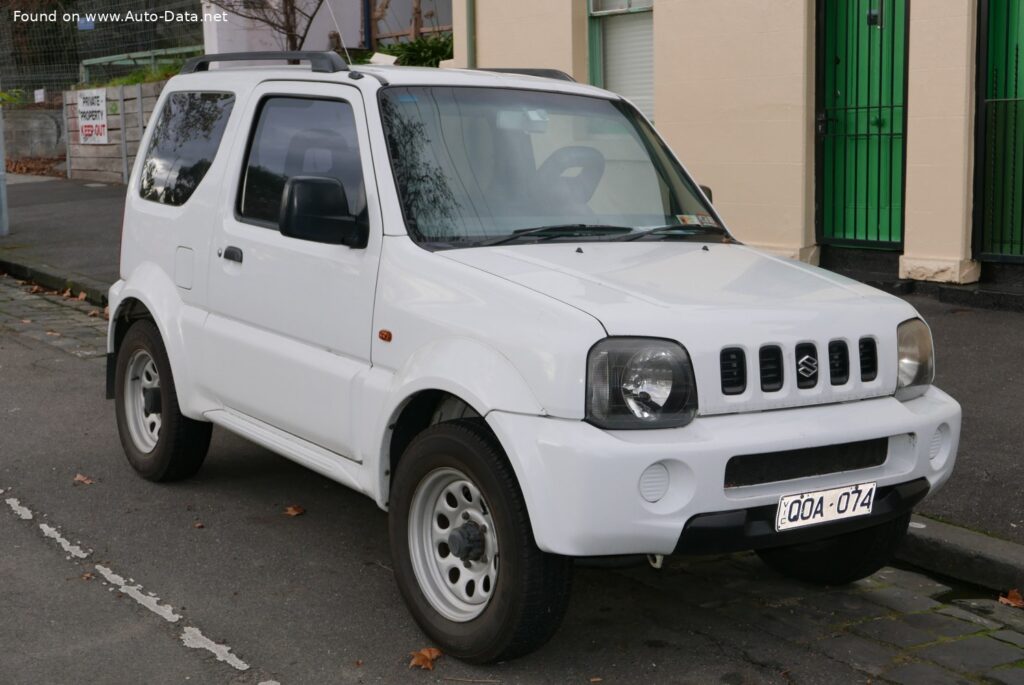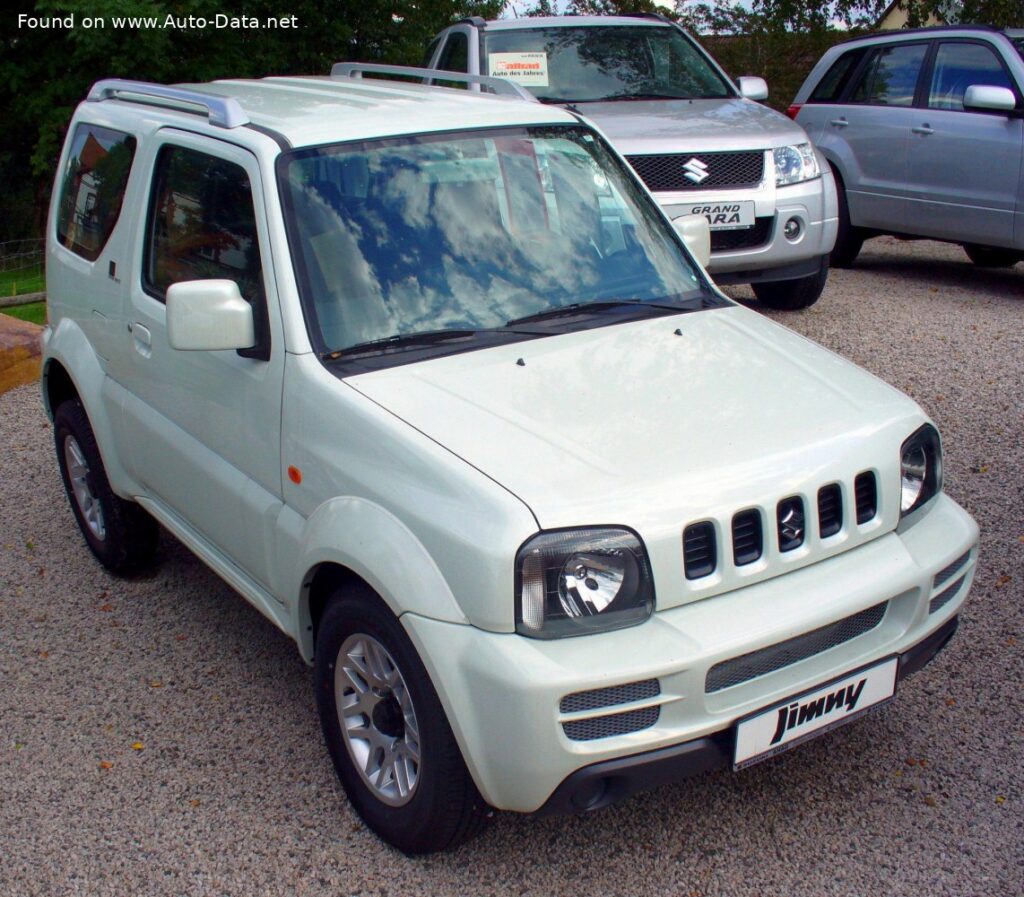
Suzuki Jimny III (facelift 2005) 1.3 VVT (85 Hp) 4WD: A Compact Off-Road Icon
The Suzuki Jimny III (facelift 2005) represents a significant iteration of Suzuki’s long-running and highly respected compact off-road vehicle lineage. First introduced globally in 1998, the third-generation Jimny continued the tradition of its predecessors, offering genuine four-wheel-drive capability in a diminutive package. The 2005 facelift brought a series of refinements, primarily focusing on powertrain updates and subtle aesthetic tweaks, to ensure the Jimny remained competitive and compliant with evolving emission standards in its primary markets, largely outside of North America. This particular variant, the 1.3 VVT (85 Hp) 4WD, was a core offering during its production run from 2005 to 2011, solidifying its reputation as a rugged, no-nonsense utility vehicle beloved by off-road enthusiasts and those seeking a practical, go-anywhere daily driver in regions like Europe, Asia, and Oceania.
Unlike many modern SUVs that prioritize on-road comfort and car-like handling, the Jimny III remained true to its roots, built on a robust ladder frame chassis with rigid axles and a part-time four-wheel-drive system. This construction underscored its serious off-road credentials, allowing it to tackle terrain far more challenging than its size might suggest. The 2005 update, while not a radical overhaul, ensured the Jimny continued to deliver reliable performance and maintain its unique niche in an increasingly crowded automotive landscape.
Engine and Performance of the Suzuki Jimny III (facelift 2005)
At the heart of the Suzuki Jimny III (facelift 2005) 1.3 VVT model was the M13A engine, a naturally aspirated 1.3-liter (1328 cm³ or 81.04 cu. in.) inline four-cylinder gasoline unit featuring Variable Valve Timing (VVT) and a Double Overhead Camshaft (DOHC) valvetrain. This engine, known for its reliability and efficiency, produced a modest but adequate 85 horsepower at 6000 rpm, translating to 64 horsepower per liter. Peak torque stood at 110 Nm (81.13 lb.-ft.) delivered at 4100 rpm. While these figures might seem modest by contemporary standards, they were perfectly suited to the Jimny’s lightweight construction and intended use, providing sufficient grunt for both urban commuting and challenging off-road excursions.
Power was routed through a five-speed manual transmission, offering direct control and engagement, which is often preferred by off-road drivers. The drivetrain architecture featured a permanent rear-wheel-drive setup, with the front wheels engaging through an electrically or mechanically operated clutch when the driver selected four-wheel drive. This part-time 4×4 system, coupled with a low-range transfer case (a feature not explicitly detailed in the provided data but standard for Jimny’s serious off-road capability), allowed the Jimny to maintain traction in diverse and demanding conditions.
Performance figures for the Jimny III (facelift 2005) reflected its utility-focused design rather than outright speed. It accelerated from 0 to 60 mph in a calculated 13.4 seconds (0-100 km/h in 14.1 seconds) and reached a maximum speed of 86.99 mph (140 km/h). Fuel economy, measured under the NEDC cycle, was respectable for an all-wheel-drive vehicle of its era: a combined 7.2 liters per 100 km (approximately 32.7 US mpg). CO2 emissions were rated at 171 g/km, meeting Euro 4 emission standards. The weight-to-power ratio of 12.5 kg/Hp (80.2 Hp/tonne) underscored its lightweight nature, contributing to its agile handling both on and off the pavement.
Design and Features
The design of the Suzuki Jimny III (facelift 2005) remained largely unchanged from its 1998 debut, retaining its iconic boxy, utilitarian aesthetic. This purposeful design was not merely stylistic; it contributed directly to the vehicle’s exceptional off-road prowess. The three-door off-road vehicle body type offered seating for four occupants, though the rear cargo space was compact, ranging from 3.99 cu. ft. (113 liters) to 11.44 cu. ft. (324 liters) with the rear seats folded.
Key to the Jimny’s capability were its compact dimensions: a length of 144.29 inches (3665 mm), width of 62.99 inches (1600 mm), and height of 67.13 inches (1705 mm). These small dimensions, combined with an 88.58-inch (2250 mm) wheelbase, resulted in very short front and rear overhangs. This translated into outstanding approach, departure, and ramp-over angles of 37°, 46°, and 31° respectively. A ground clearance of 7.48 inches (190 mm) further enhanced its ability to clear obstacles.
Underneath, the Jimny’s robust architecture included rigid axle suspension both front and rear, utilizing coil springs. This setup, while not offering the most refined on-road ride, provided maximum articulation and durability for off-road conditions. Steering was a cone worm with recirculating balls type, assisted by a hydraulic power steering system, offering precise control over rough terrain. Braking was handled by discs at the front and drums at the rear, supplemented by an Anti-lock Braking System (ABS) for improved safety. The vehicle rode on 205/70 R15 tires mounted on 6J x 15 wheel rims, a practical size for both on-road comfort and off-road grip.
Technical Specifications: Suzuki Jimny III (facelift 2005) 1.3 VVT (85 Hp) 4WD
| Category | Specification | Metric Value | US/Imperial Value |
|---|---|---|---|
General Information |
|||
| Brand | Suzuki | ||
| Model | Jimny | ||
| Generation | Jimny III (facelift 2005) | ||
| Type (Engine) | 1.3 VVT (85 Hp) 4WD | ||
| Start of Production | 2005 | ||
| End of Production | 2011 | ||
| Powertrain Architecture | Internal Combustion engine | ||
| Body Type | Off-road vehicle | ||
| Seats | 4 | ||
| Doors | 3 | ||
Performance Specs |
|||
| Fuel Consumption (Urban, NEDC) | 9.1 l/100 km | 25.8 US mpg | |
| Fuel Consumption (Extra Urban, NEDC) | 6.1 l/100 km | 38.6 US mpg | |
| Fuel Consumption (Combined, NEDC) | 7.2 l/100 km | 32.7 US mpg | |
| CO2 Emissions (NEDC) | 171 g/km | ||
| Fuel Type | Petrol (Gasoline) | ||
| Acceleration 0 – 60 mph (Calculated) | 13.4 sec | ||
| Acceleration 0 – 100 km/h | 14.1 sec | ||
| Maximum Speed | 140 km/h | 86.99 mph | |
| Emission Standard | Euro 4 | ||
| Weight-to-Power Ratio | 12.5 kg/Hp | 80.2 Hp/tonne | |
| Weight-to-Torque Ratio | 9.6 kg/Nm | 103.8 Nm/tonne | |
Engine Specs |
|||
| Power | 85 Hp @ 6000 rpm | ||
| Power per Liter | 64 Hp/l | ||
| Torque | 110 Nm @ 4100 rpm | 81.13 lb.-ft. @ 4100 rpm | |
| Engine Layout | Front, Longitudinal | ||
| Engine Model/Code | M13A | ||
| Engine Displacement | 1328 cm³ | 81.04 cu. in. | |
| Number of Cylinders | 4 | ||
| Engine Configuration | Inline | ||
| Cylinder Bore | 78 mm | 3.07 in. | |
| Piston Stroke | 69.5 mm | 2.74 in. | |
| Compression Ratio | 9.5:1 | ||
| Number of Valves per Cylinder | 4 | ||
| Fuel Injection System | Multi-port manifold injection | ||
| Engine Aspiration | Naturally aspirated engine | ||
| Valvetrain | DOHC | ||
| Engine Oil Capacity | 4 l | 4.23 US qt | |
| Coolant Capacity | 5.9 l | 6.23 US qt | |
Space, Volume, and Weights |
|||
| Kerb Weight | 1060 kg | 2336.9 lbs. | |
| Max. Weight (GVWR) | 1420 kg | 3130.56 lbs. | |
| Max Load | 360 kg | 793.66 lbs. | |
| Trunk (Boot) Space – Minimum | 113 l | 3.99 cu. ft. | |
| Trunk (Boot) Space – Maximum | 324 l | 11.44 cu. ft. | |
| Fuel Tank Capacity | 40 l | 10.57 US gal | |
| Permitted Trailer Load with Brakes (12%) | 1300 kg | 2866.01 lbs. | |
| Permitted Trailer Load without Brakes | 350 kg | 771.62 lbs. | |
| Permitted Towbar Download | 75 kg | 165.35 lbs. | |
Dimensions |
|||
| Length | 3665 mm | 144.29 in. | |
| Width | 1600 mm | 62.99 in. | |
| Height | 1705 mm | 67.13 in. | |
| Wheelbase | 2250 mm | 88.58 in. | |
| Front Track | 1355 mm | 53.35 in. | |
| Rear Track | 1365 mm | 53.74 in. | |
| Ride Height (Ground Clearance) | 190 mm | 7.48 in. | |
| Minimum Turning Circle (Turning Diameter) | 9.8 m | 32.15 ft. | |
| Approach Angle | 37° | ||
| Departure Angle | 46° | ||
| Ramp-over (Brakeover) Angle | 31° | ||
Drivetrain, Brakes, and Suspension Specs |
|||
| Drivetrain Architecture | The Internal combustion engine (ICE) drives the rear wheels permanently, and the front wheels are driven through an electrically or mechanically operated clutch if necessary. | ||
| Drive Wheel | All-wheel drive (4×4) | ||
| Number of Gears and Type of Gearbox | 5 gears, manual transmission | ||
| Front Suspension | Coil spring, Rigid axle suspension | ||
| Rear Suspension | Rigid axle suspension, Coil spring | ||
| Front Brakes | Disc | ||
| Rear Brakes | Drum | ||
| Assisting Systems | ABS (Anti-lock braking system) | ||
| Steering Type | Cone worm with recirculation balls | ||
| Power Steering | Hydraulic Steering | ||
| Tire Size | 205/70 R15 | ||
| Wheel Rims Size | 6J x 15 | ||
Legacy and Market Impact of the Suzuki Jimny III (facelift 2005)
The Suzuki Jimny III (facelift 2005), particularly the 1.3 VVT 4WD variant, cemented the model’s enduring legacy as a highly capable and surprisingly durable compact off-roader. While never officially sold in the United States in this generation, the Jimny carved out a significant niche for itself in markets across Europe, Asia, Australia, and South America. Its appeal stemmed from a unique combination of factors: genuine off-road credentials, compact dimensions, and relative affordability.
In its primary markets, the Jimny competed not so much with mainstream compact SUVs like the Honda CR-V or Toyota RAV4, which prioritized on-road comfort and car-like dynamics, but rather with more rugged, albeit often larger and more expensive, 4x4s. Its direct competitors were few and far between, perhaps including smaller versions of the Lada Niva in Eastern Europe or certain kei-car based off-roaders in Japan. The Jimny stood out by offering a robust ladder frame, solid axles, and a proper low-range transfer case – features typically found on much larger and pricier utility vehicles. This made it a favorite among farmers, utility workers, and off-road enthusiasts who needed a vehicle that could genuinely tackle rough terrain without breaking the bank or being cumbersome on narrow trails.
The 2005 facelift, with its updated M13A VVT engine, enhanced the Jimny’s appeal by offering improved efficiency and slightly more power, making it a more viable option for daily driving without compromising its core off-road abilities. Its reputation for reliability and ease of maintenance also contributed to its strong resale value and a dedicated cult following. Owners often modified their Jimnys with lift kits, larger tires, and aftermarket protection, further testament to its robust underlying architecture.
The Jimny’s compact size was a major advantage in congested urban environments and on tight, technical off-road trails. Its short wheelbase and minimal overhangs allowed it to navigate obstacles and tight turns with remarkable agility. This made it an ideal choice for adventurous individuals or those living in rural areas requiring a dependable vehicle for challenging conditions, from snowy mountain passes to muddy farm tracks.
Ultimately, the Suzuki Jimny III (facelift 2005) 1.3 VVT (85 Hp) 4WD was more than just a car; it was a testament to Suzuki’s commitment to building tough, functional vehicles. It proved that serious off-road capability didn’t require a large footprint or an exorbitant price tag. Its enduring popularity and the anticipation surrounding its successors (like the highly acclaimed fourth-generation Jimny) underscore its significant and lasting impact on the global automotive landscape, particularly within the niche of authentic, compact off-road vehicles.