The Vauxhall Insignia I Hatchback (facelift 2013): A Mid-Cycle Evolution of a European Workhorse
The Vauxhall Insignia I Hatchback (facelift 2013) represents a significant mid-cycle refresh of Vauxhall’s flagship D-segment (mid-size) vehicle, primarily targeting the competitive European and United Kingdom markets. Introduced in 2013 and produced until 2015, this iteration of the Insignia aimed to bolster its appeal through updated styling, enhanced technology, and refined powertrains, building upon the original Insignia’s foundation laid in 2008. While the Vauxhall brand itself is not sold in the United States, the Insignia shares its GM Epsilon II platform with several global models, including the Buick Regal, offering a glimpse into General Motors’ international engineering prowess. In its home markets, the Insignia served as a crucial model, offering a blend of executive presence, family practicality, and efficient performance, particularly in its diesel variants like the 2.0 CDTi ecoTEC (163 Hp) Automatic.
Positioned as a sophisticated alternative to mainstream competitors and a more accessible option than premium German marques, the Insignia I Hatchback facelift sought to deliver a compelling package for both private buyers and fleet operators. Its five-door hatchback body style provided a versatile blend of sedan-like aesthetics with enhanced cargo utility, a popular choice in its segment across Europe. This particular variant, equipped with the 2.0-liter CDTi ecoTEC engine and an automatic transmission, highlighted a focus on comfortable, efficient, and effortless long-distance driving.
Engine and Performance: The 2.0 CDTi ecoTEC Heart
At the core of the Vauxhall Insignia I Hatchback (facelift 2013)‘s appeal was its advanced 2.0 CDTi ecoTEC diesel engine. This 1,956 cubic centimeter (119.36 cubic inch) inline four-cylinder powerplant, designated A20DTH, was engineered for a balance of power, refinement, and fuel efficiency. Utilizing a Double Overhead Camshaft (DOHC) valvetrain with four valves per cylinder, a common rail diesel fuel injection system, and boosted by a turbocharger with an intercooler, the engine delivered a robust 163 horsepower at 4,000 revolutions per minute.
More impressive for everyday driving was its torque output: a substantial 258.15 lb.-ft. (350 Nm), available across a broad rev range from 1,750 to 2,500 rpm. This ample low-end torque ensured strong acceleration and flexible in-gear performance, making overtakes effortless and highway cruising remarkably relaxed. Mated to a smooth-shifting 6-speed automatic transmission, the powertrain directed power efficiently to the front wheels. The Insignia 2.0 CDTi ecoTEC could accelerate from 0 to 60 mph in a respectable 9.1 seconds, reaching a top speed of 129.87 mph (209 km/h), demonstrating its capability as a competent long-distance cruiser.
The “ecoTEC” designation underscored Vauxhall’s commitment to environmental performance. This engine achieved an impressive combined fuel economy of 44.4 US mpg (5.3 l/100 km), with extra-urban figures reaching 56 US mpg (4.2 l/100 km), making it a highly economical choice for commuters and travelers alike. Its CO2 emissions of 140 g/km met the stringent Euro 5 emission standard, further solidifying its credentials as an environmentally conscious option in its class. The inclusion of a particulate filter was standard, contributing to cleaner exhaust gases.
Design and Features: Refined Aesthetics and Practicality
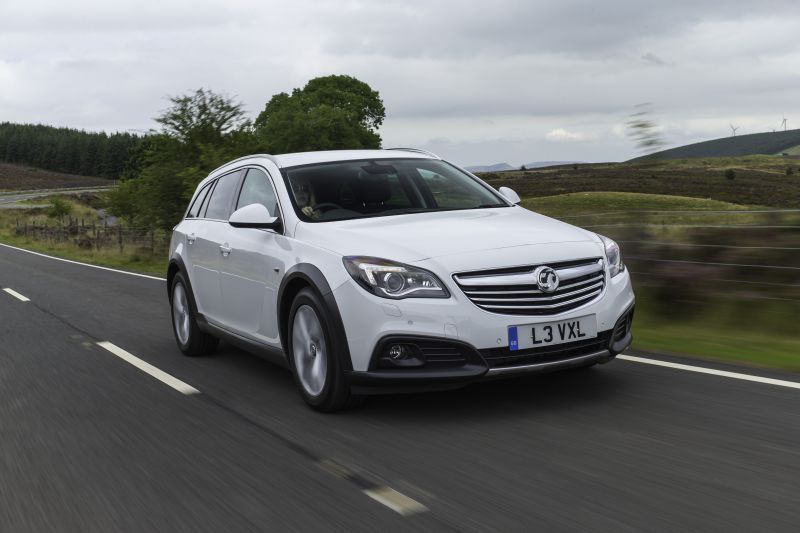
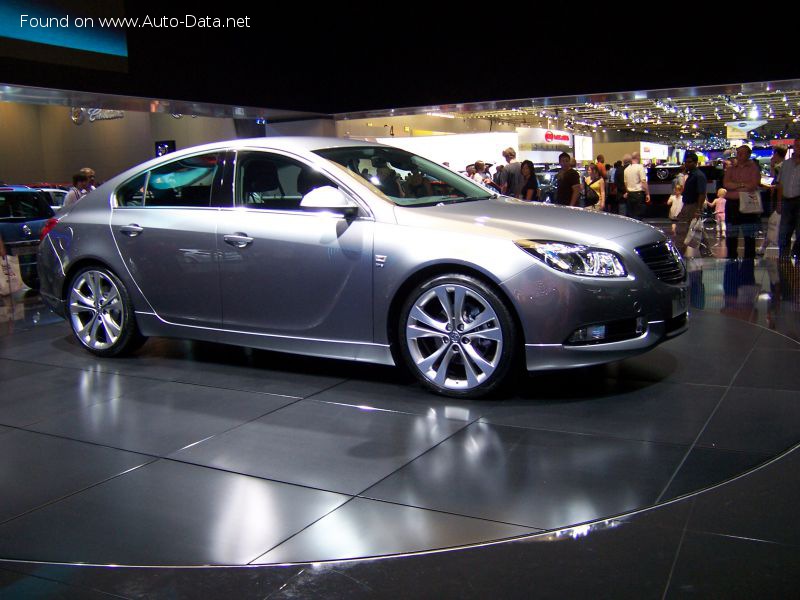
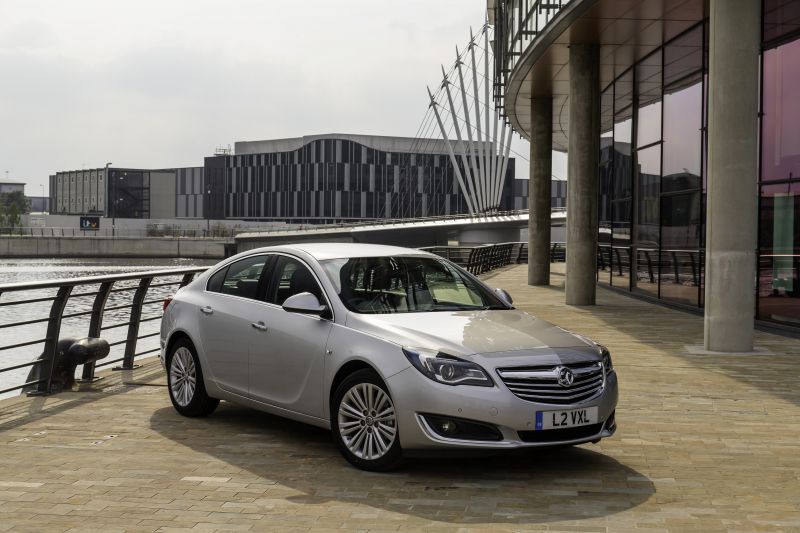
The 2013 facelift brought a refreshed aesthetic to the Vauxhall Insignia I Hatchback (facelift 2013), updating its exterior with subtle yet impactful changes that enhanced its premium appeal. The overall design retained its sleek, coupe-like profile, characterized by flowing lines and a distinctive “blade” motif along the side. The five-door hatchback body offered a practical solution for families and individuals needing versatile cargo space without compromising on style. With a length of 190.63 inches, a width of 73.07 inches (82.05 inches including mirrors), and a height of 58.98 inches, the Insignia commanded a substantial road presence.
Interior design received updates focused on improved ergonomics and material quality. The cabin comfortably accommodated five occupants, offering ample space for both front and rear passengers. The hatchback configuration was particularly beneficial for cargo, providing a minimum trunk space of 18.72 cubic feet (530 liters) which could expand to a generous 51.91 cubic feet (1,470 liters) with the rear seats folded, making it highly adaptable for various hauling needs. The fuel tank capacity of 18.49 US gallons (70 liters) further enhanced its long-distance touring capabilities, minimizing stops at the pump.
From a chassis perspective, the Insignia was engineered for a composed and comfortable ride. It featured an independent McPherson strut front suspension with coil springs and an anti-roll bar, paired with an independent multi-link rear suspension. This setup contributed to stable handling and good ride quality, absorbing road imperfections effectively. Braking duties were handled by ventilated discs at the front and solid discs at the rear, augmented by an Anti-lock Braking System (ABS) for enhanced safety and control. The vehicle rode on 215/60 R16 tires mounted on 16-inch wheel rims, providing a good balance of grip and comfort. The drivetrain architecture was front-wheel drive, a common and efficient layout for this segment.
Technical Specifications
| Category | Specification |
|---|---|
| General Information | |
| Brand | Vauxhall |
| Model | Insignia |
| Generation | Insignia I Hatchback (facelift 2013) |
| Type (Engine) | 2.0 CDTi ecoTEC (163 Hp) Automatic |
| Start of Production | 2013 year |
| End of Production | 2015 year |
| Powertrain Architecture | Internal Combustion engine |
| Body type | Hatchback |
| Seats | 5 |
| Doors | 5 |
| Performance Specs | |
| Fuel consumption (economy) – urban | 7.2 l/100 km (32.7 US mpg) |
| Fuel consumption (economy) – extra urban | 4.2 l/100 km (56 US mpg) |
| Fuel consumption (economy) – combined | 5.3 l/100 km (44.4 US mpg) |
| CO2 emissions | 140 g/km |
| Fuel Type | Diesel |
| Acceleration 0 – 60 mph | 9.1 sec |
| Acceleration 0 – 62 mph (0-100 km/h) | 9.6 sec |
| Maximum speed | 129.87 mph (209 km/h) |
| Emission standard | Euro 5 |
| Weight-to-power ratio | 10 kg/Hp (100.4 Hp/tonne) |
| Weight-to-torque ratio | 4.6 kg/Nm (215.7 Nm/tonne) |
| Engine Specs | |
| Power | 163 Hp @ 4000 rpm |
| Power per liter | 83.3 Hp/l |
| Torque | 258.15 lb.-ft. (350 Nm) @ 1750-2500 rpm |
| Engine layout | Front, Transverse |
| Engine Model/Code | A20DTH |
| Engine displacement | 119.36 cu. in. (1956 cm3) |
| Number of cylinders | 4 |
| Engine configuration | Inline |
| Cylinder Bore | 3.27 in. (83 mm) |
| Piston Stroke | 3.56 in. (90.4 mm) |
| Number of valves per cylinder | 4 |
| Fuel injection system | Diesel Commonrail |
| Engine aspiration | Turbocharger, Intercooler |
| Valvetrain | DOHC |
| Engine oil capacity | 4.76 US qt (4.5 l) |
| Coolant | 9.51 US qt (9 l) |
| Engine systems | Particulate filter |
| Space, Volume and Weights | |
| Kerb Weight | 3578.1 lbs. (1623 kg) |
| Max. weight | 4784.03 lbs. (2170 kg) |
| Max load | 1205.93 lbs. (547 kg) |
| Trunk (boot) space – minimum | 18.72 cu. ft. (530 l) |
| Trunk (boot) space – maximum | 51.91 cu. ft. (1470 l) |
| Fuel tank capacity | 18.49 US gal (70 l) |
| Permitted trailer load with brakes (12%) | 3527.4 lbs. (1600 kg) |
| Permitted trailer load without brakes | 1653.47 lbs. (750 kg) |
| Dimensions | |
| Length | 190.63 in. (4842 mm) |
| Width | 73.07 in. (1856 mm) |
| Width including mirrors | 82.05 in. (2084 mm) |
| Height | 58.98 in. (1498 mm) |
| Wheelbase | 107.76 in. (2737 mm) |
| Front overhang | 40.43 in. (1027 mm) |
| Rear overhang | 42.44 in. (1078 mm) |
| Minimum turning circle (turning diameter) | 37.4 ft. (11.4 m) |
| Drivetrain, Brakes and Suspension Specs | |
| Drivetrain Architecture | The Internal combustion engine (ICE) drives the front wheels of the vehicle. |
| Drive wheel | Front wheel drive |
| Number of gears and type of gearbox | 6 gears, automatic transmission |
| Front suspension | Independent, type McPherson with coil spring and anti-roll bar |
| Rear suspension | Independent multi-link suspension |
| Front brakes | Ventilated discs |
| Rear brakes | Disc |
| Assisting systems | ABS (Anti-lock braking system) |
| Tires size | 215/60 R16 |
| Wheel rims size | 16 |
Legacy and Market Impact
The Vauxhall Insignia I Hatchback (facelift 2013) played a pivotal role in Vauxhall’s product lineup during its production run. As the successor to the venerable Vectra, it was tasked with elevating the brand’s perception in the competitive D-segment, moving towards a more premium and sophisticated image. The facelifted model, in particular, was well-received for its improved interior quality, updated infotainment options (though specific details are not provided, it was a general trend for the facelift), and continued strong performance from its diesel engines.
In its primary markets, the Insignia competed fiercely with established rivals such as the Ford Mondeo, Volkswagen Passat, and to some extent, more premium offerings like the BMW 3 Series and Audi A4, especially for buyers looking for value. Its competitive strengths included its generous interior and cargo space, comfortable ride, and excellent fuel economy, particularly with the CDTi ecoTEC diesel engine. Fleet sales, a significant portion of the D-segment market in the UK and Europe, were a particular stronghold for the Insignia, owing to its low running costs and executive appearance.
While the Vauxhall Insignia was not directly available in the United States, its underlying platform, the GM Epsilon II, formed the basis for the Buick Regal, demonstrating the global engineering synergies within General Motors. The Insignia’s success in Europe, especially its ability to combine practicality with a refined driving experience, contributed to GM’s overall global strategy for mid-size vehicles. The 2.0 CDTi ecoTEC engine, while a common and popular choice in Europe due to favorable diesel taxation and fuel pricing, highlights a distinct market preference compared to the gasoline-dominated US automotive landscape.
Ultimately, the Insignia I Hatchback (facelift 2013) left a legacy as a robust, efficient, and well-rounded mid-size car that competently served its target audience. It solidified Vauxhall’s position as a serious contender in its segment and paved the way for future generations of the Insignia, which continued to build on its foundations of design, technology, and efficiency.