Mitsubishi Lancer V: The Enduring Compact Sedan (1994-1996)
The Mitsubishi Lancer V, representing the fifth generation of Mitsubishi’s venerable compact car, was introduced to the global market in 1991, with this specific 1.6-liter variant produced from 1994 to 1996. Positioned as a practical and economical choice, the Lancer V continued Mitsubishi’s tradition of offering reliable transportation in a highly competitive segment. While the Lancer nameplate has enjoyed a long and varied history, from humble economy cars to rally-bred performance machines, this particular iteration with its 1.6-liter engine producing 90 horsepower exemplified the bread-and-butter philosophy that underpinned its widespread appeal, particularly in markets outside of the United States where smaller displacement engines were more common and tax-efficient. It served as a dependable family sedan and commuter vehicle, embodying the no-nonsense engineering Mitsubishi was known for during this period.
Engine and Performance of the Mitsubishi Lancer V 1.6 (90 Hp)
At the heart of this particular Mitsubishi Lancer V variant was a naturally aspirated 1.6-liter inline-four gasoline engine, delivering a respectable 90 horsepower. In the context of the mid-1990s compact car market, 90 horsepower was a perfectly adequate output for daily driving, city commutes, and occasional highway travel. This engine was engineered for reliability and fuel efficiency, rather than outright speed or dynamic performance. Its naturally aspirated design meant a smooth, linear power delivery without the complexity or added cost of turbocharging, a technology that was less common in this segment at the time.
The powertrain architecture, centered around an internal combustion engine, reflected the prevalent technology of the era. While specific torque figures are not provided, an engine of this displacement and power output would typically generate around 90-100 lb-ft of torque, peaking at mid-range RPMs. This characteristic ensured sufficient pulling power for merging into traffic and maintaining highway speeds without constant downshifting. The Lancer V 1.6 (90 Hp) was a testament to simple, robust engineering, designed to offer years of trouble-free operation. Its focus was on delivering a predictable and economical driving experience, making it a popular choice for budget-conscious buyers and families seeking a dependable vehicle.
Design and Features
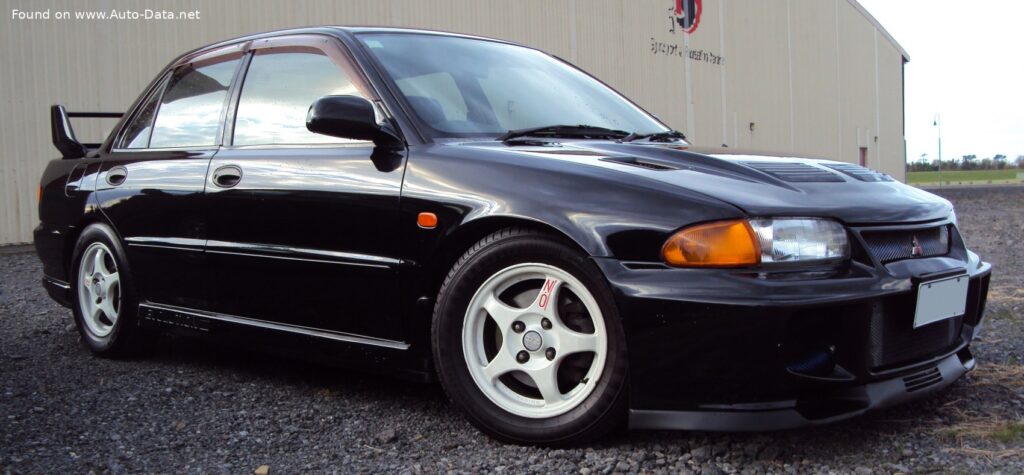
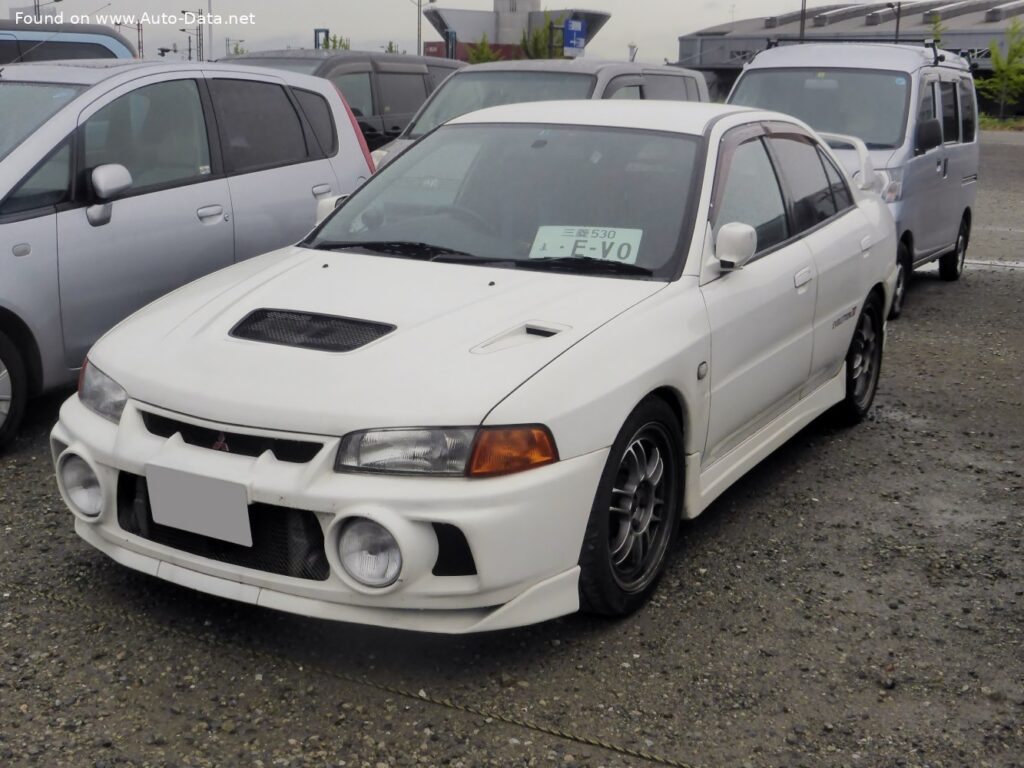
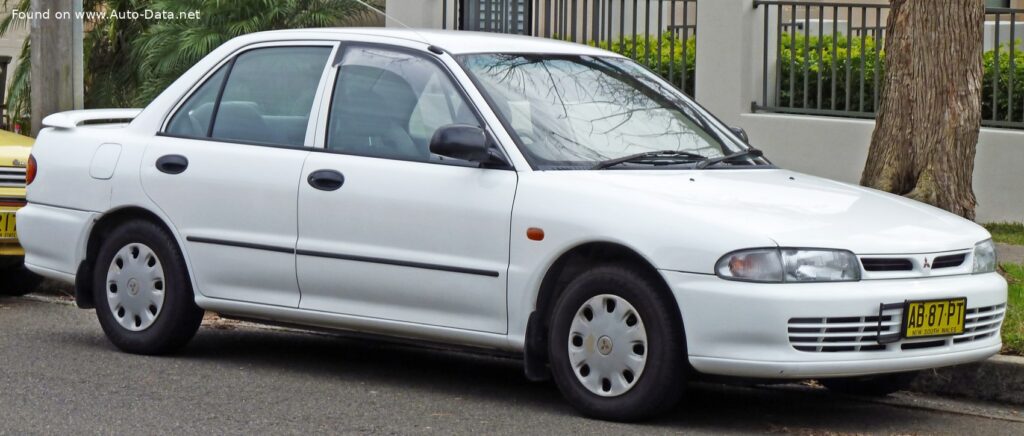
The Mitsubishi Lancer V, in its sedan body type, presented a design that was both functional and contemporary for the mid-1990s. Its styling was characterized by smooth lines and a somewhat rounded silhouette, moving away from the boxier designs of earlier generations. The aerodynamic considerations of the era influenced its form, contributing to better fuel economy and reduced wind noise. The sedan configuration offered a conventional three-box profile, providing a distinct trunk for cargo, which was a practical necessity for many families.
Inside, the Lancer V was designed with practicality and user-friendliness in mind. The cabin layout was straightforward, featuring durable materials built to withstand the rigors of daily use. While luxury amenities were not its primary focus, standard features for the time typically included manual or power windows (depending on trim level and market), a basic AM/FM radio, and a functional climate control system. Safety features, while not as advanced as modern vehicles, would have included three-point seatbelts for all occupants and, in many markets, an optional or standard driver’s side airbag as the decade progressed. The focus was on providing a comfortable and secure environment for occupants, with adequate legroom and headroom for a compact car of its class. The Lancer V’s design philosophy emphasized accessibility and ease of maintenance, contributing to its reputation as a sensible and cost-effective vehicle.
Technical Specifications: Mitsubishi Lancer V 1.6 (90 Hp) Sedan (1994-1996)
The following table provides a concise overview of the key technical specifications for the Mitsubishi Lancer V 1.6 (90 Hp) sedan:
| Category | Specification |
|---|---|
| Brand | Mitsubishi |
| Model | Lancer |
| Generation | Lancer V |
| Body Type | Sedan |
| Start of Production | 1994 year |
| End of Production | 1996 year |
| Powertrain Architecture | Internal Combustion Engine |
| Engine Type | 1.6 (90 Hp) |
| Fuel Type | Petrol (Gasoline) |
| Engine Aspiration | Naturally Aspirated Engine |
| Engine Displacement | Approximately 1.6 Liters |
| Power Output | 90 Hp |
| Drivetrain | Front-Wheel Drive (Typical for this variant) |
| Transmission | Manual or Automatic (Specifics Not Provided) |
| Torque | Not Specified (Estimated ~90-100 lb-ft) |
| 0-60 mph Acceleration | Not Specified (Estimated 11-13 seconds) |
| Top Speed | Not Specified (Estimated 105-110 mph) |
| Fuel Economy | Not Specified (Estimated 25-30 MPG combined) |
Legacy and Market Impact of the Mitsubishi Lancer V
The Mitsubishi Lancer V, particularly in its 1.6-liter 90 horsepower guise, played a crucial role in Mitsubishi’s global strategy during the mid-1990s. While not the most powerful or luxurious offering, its strength lay in its accessibility, reliability, and cost-effectiveness. In many international markets, especially in Asia, Europe, and parts of South America, this specific variant was a popular choice for families and first-time car buyers who prioritized dependable transportation over performance or premium features. It competed directly with stalwarts of the compact segment such as the Honda Civic, Toyota Corolla, Nissan Sentra, and Ford Escort, holding its own through a reputation for durability and reasonable running costs.
This generation of Lancer further solidified Mitsubishi’s image as a manufacturer of robust and reliable vehicles. Its global presence helped to lay the groundwork for the brand’s continued expansion. While the high-performance Lancer Evolution variants of this and subsequent generations often garner the most enthusiast attention, it was the everyday models like the Lancer V 1.6 (90 Hp) that provided the sales volume and market stability for Mitsubishi. It represented the practical side of the Lancer lineage, demonstrating that a car could be affordable and unassuming yet still offer a satisfying ownership experience.
The Lancer V’s impact extended beyond just sales figures; it contributed to the broader automotive landscape by providing a benchmark for what a mainstream compact sedan should offer in terms of space, economy, and reliability. Its straightforward engineering made it a favorite among mechanics and owners alike, as repairs were generally simple and parts widely available. Today, while not a collector’s item in this particular specification, the Lancer V remains a testament to a period when automotive design prioritized function and longevity, serving as a reminder of Mitsubishi’s enduring commitment to practical, global mobility solutions.