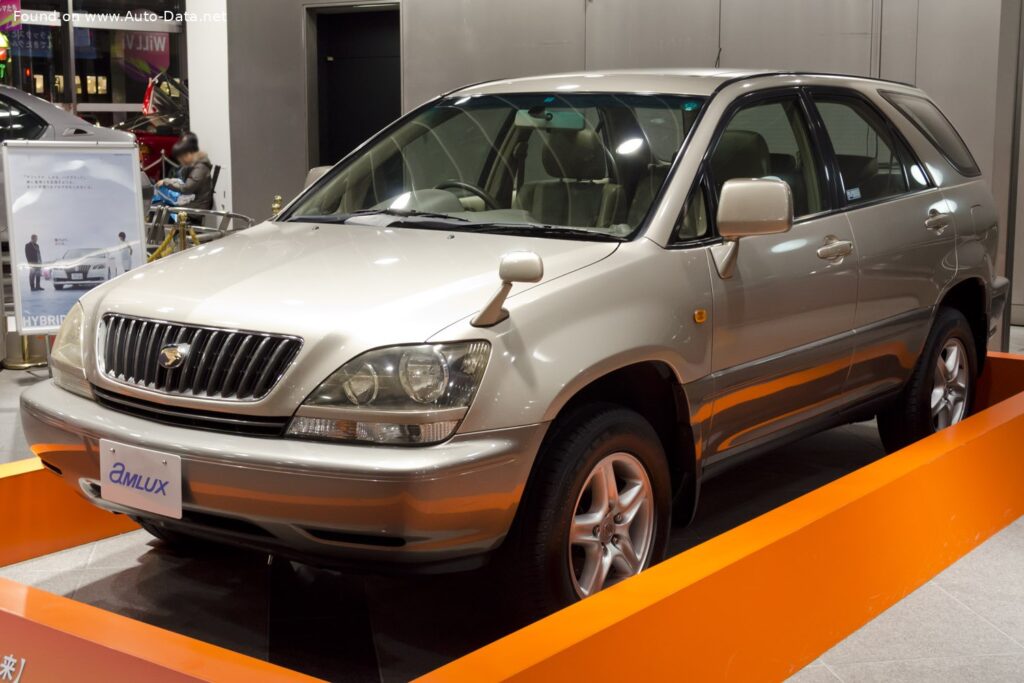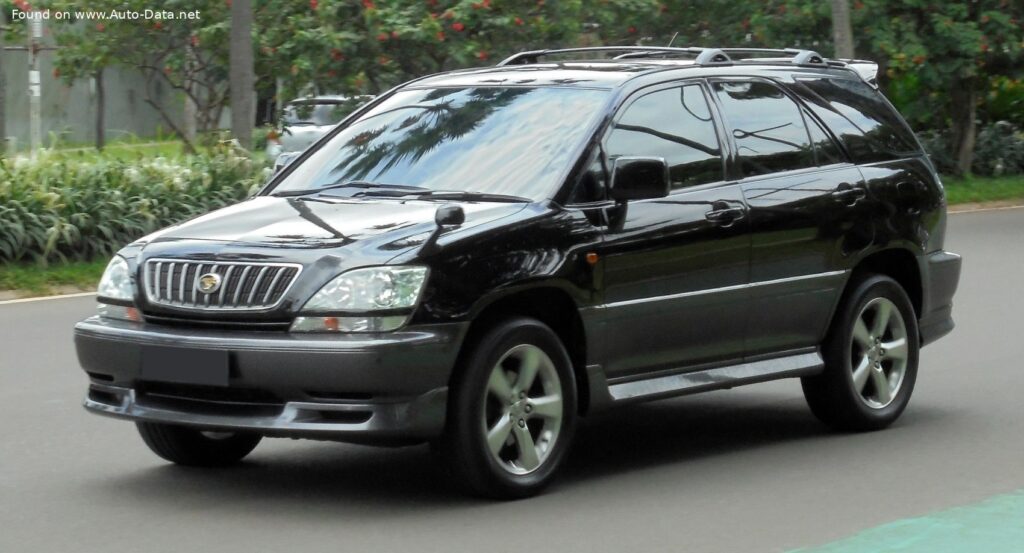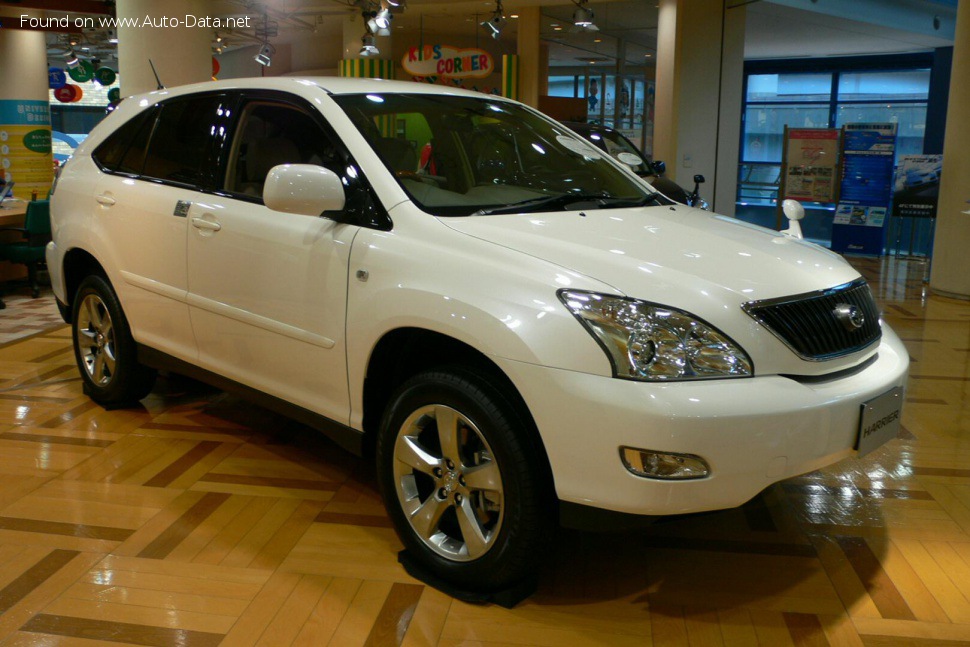
The Toyota Harrier II (XU30) 3.5 V6 24V (280 Hp) Automatic: A Pioneer in Luxury Crossovers
The
Toyota Harrier II (XU30) 3.5 V6 24V (280 Hp) Automatic
represents the second generation of Toyota’s mid-size luxury crossover SUV, a vehicle that played a pivotal role in shaping the modern automotive landscape. Produced from 2006 to 2013, the XU30 generation, while primarily marketed as the Toyota Harrier in Japan and other Asian regions, was globally recognized and sold in North America as the Lexus RX 330 and later the RX 350. This dual identity underscored its sophisticated engineering and premium positioning. The Harrier II (XU30) built upon the success of its predecessor, further refining the concept of a comfortable, car-like SUV that blended practicality with upscale amenities. This particular variant, equipped with the potent 3.5-liter V6 engine and an automatic transmission, offered a compelling combination of performance, luxury, and Toyota’s hallmark reliability, making it a highly desirable vehicle in its target markets.
Engine and Performance of the Toyota Harrier II (XU30)
At the heart of the
Toyota Harrier II (XU30)
3.5 V6 24V (280 Hp) Automatic lies Toyota’s renowned 2GR-FE engine, a naturally aspirated 3.5-liter V6 powerplant. This sophisticated engine, featuring DOHC (Dual Overhead Camshafts) and VVT-i (Variable Valve Timing with intelligence), was engineered for a harmonious blend of power, smoothness, and efficiency. It generated a robust 280 horsepower at 6200 rpm, providing ample power for both city driving and highway cruising. Torque output was equally impressive, peaking at 255.2 lb.-ft. (346 Nm) at 4700 rpm, ensuring strong acceleration and responsive throttle feel.
With an engine displacement of 3456 cubic centimeters (210.9 cu. in.) and a compression ratio of 10.8:1, the 2GR-FE utilized a multi-port manifold injection system to optimize fuel delivery and combustion. This powertrain allowed the Harrier to accelerate from 0 to 60 mph in a brisk 7.6 seconds, making it one of the quicker vehicles in its segment at the time. Its top speed was electronically limited to 124.27 mph (200 km/h), a respectable figure for a luxury crossover.
Power was transmitted to the front wheels via a smooth-shifting 4-speed automatic transmission. While a 4-speed might seem rudimentary by today’s standards, it was well-matched to the engine’s torque curve, providing seamless shifts and comfortable driving dynamics characteristic of luxury vehicles. Despite its performance capabilities, the Harrier II also offered reasonable fuel economy for its class and era. The combined fuel consumption was rated at 22.8 US mpg (10.3 l/100 km), with urban figures at 16.4 US mpg (14.3 l/100 km) and extra-urban at 28 US mpg (8.4 l/100 km). This balanced approach to performance and efficiency contributed significantly to its appeal.
Design and Features
The
Toyota Harrier II (XU30)
adopted a sophisticated and understated design that was both elegant and functional, a hallmark of Toyota’s approach to luxury. Classified as an SUV or Crossover, it featured a five-door, five-seat configuration, prioritizing passenger comfort and cargo versatility. Its exterior dimensions, measuring 186.22 inches in length, 72.64 inches in width, and 66.14 inches in height, provided a commanding road presence without being overly cumbersome. A generous wheelbase of 106.89 inches contributed to a stable ride and a spacious interior.
Inside, the Harrier II (XU30) offered a refined cabin with high-quality materials and thoughtful ergonomics. The focus was on comfort and convenience, with features that were advanced for its time. While specific luxury features like leather seating, premium audio systems, and advanced climate control would vary by trim, the overall design ethos was one of quiet luxury. Practicality was a strong suit, with a minimum trunk space of 15.54 cubic feet (440 liters) that could expand to an impressive 75.22 cubic feet (2130 liters) with the rear seats folded, making it highly adaptable for various cargo needs.
Safety features for the XU30 generation included standard Anti-lock Braking System (ABS), which was crucial for maintaining control during emergency stops. The vehicle utilized ventilated disc brakes at the front and disc brakes at the rear, ensuring strong stopping power. Steering was managed by a hydraulic rack-and-pinion system, providing precise and responsive control. The vehicle rode on 225/65 R17 tires mounted on 6.5 Jx17 ET35 wheel rims, offering a comfortable ride and confident handling. With a curb weight of 4012.41 lbs (1820 kg), the Harrier II felt substantial and secure on the road.
Technical Specifications: Toyota Harrier II (XU30) 3.5 V6 24V (280 Hp) Automatic
| Category | Specification |
|---|---|
| General Information | |
| Brand | Toyota |
| Model | Harrier |
| Generation | Harrier II (XU30) |
| Type (Engine) | 3.5 V6 24V (280 Hp) Automatic |
| Start of Production | 2006 |
| End of Production | 2013 |
| Powertrain Architecture | Internal Combustion Engine |
| Body Type | SUV, Crossover |
| Seats | 5 |
| Doors | 5 |
| Performance Specs | |
| Fuel Consumption (Urban) | 14.3 l/100 km | 16.4 US mpg |
| Fuel Consumption (Extra Urban) | 8.4 l/100 km | 28 US mpg |
| Fuel Consumption (Combined) | 10.3 l/100 km | 22.8 US mpg |
| Fuel Type | Petrol (Gasoline) |
| Acceleration 0 – 60 mph | 7.6 seconds |
| Maximum Speed | 200 km/h | 124.27 mph |
| Weight-to-Power Ratio | 6.5 kg/Hp | 153.8 Hp/tonne |
| Weight-to-Torque Ratio | 5.3 kg/Nm | 190.1 Nm/tonne |
| Engine Specs | |
| Power | 280 Hp @ 6200 rpm |
| Power per Liter | 81 Hp/l |
| Torque | 346 Nm @ 4700 rpm | 255.2 lb.-ft. @ 4700 rpm |
| Engine Layout | Front, Longitudinal |
| Engine Model/Code | 2GR-FE |
| Engine Displacement | 3456 cm³ | 210.9 cu. in. |
| Number of Cylinders | 6 |
| Engine Configuration | V-engine |
| Cylinder Bore | 94 mm | 3.7 in. |
| Piston Stroke | 83 mm | 3.27 in. |
| Compression Ratio | 10.8:1 |
| Valves per Cylinder | 4 |
| Fuel Injection System | Multi-port manifold injection |
| Engine Aspiration | Naturally aspirated engine |
| Valvetrain | DOHC, VVT-i |
| Engine Oil Capacity | 6.1 l | 6.45 US qt |
| Coolant Capacity | 8.4 l | 8.88 US qt |
| Space, Volume, and Weights | |
| Kerb Weight | 1820 kg | 4012.41 lbs. |
| Trunk (Boot) Space – Minimum | 440 l | 15.54 cu. ft. |
| Trunk (Boot) Space – Maximum | 2130 l | 75.22 cu. ft. |
| Fuel Tank Capacity | 72 l | 19.02 US gal |
| Dimensions | |
| Length | 4730 mm | 186.22 in. |
| Width | 1845 mm | 72.64 in. |
| Height | 1680 mm | 66.14 in. |
| Wheelbase | 2715 mm | 106.89 in. |
| Front Track | 1575 mm | 62.01 in. |
| Rear (Back) Track | 1560 mm | 61.42 in. |
| Ride Height (Ground Clearance) | 190 mm | 7.48 in. |
| Drivetrain, Brakes, and Suspension Specs | |
| Drivetrain Architecture | Front-wheel drive (ICE drives front wheels) |
| Drive Wheel | Front wheel drive |
| Number of Gears and Type of Gearbox | 4 gears, automatic transmission |
| Front Brakes | Ventilated discs |
| Rear Brakes | Disc |
| Assisting Systems | ABS (Anti-lock braking system) |
| Steering Type | Steering rack and pinion |
| Power Steering | Hydraulic Steering |
| Tires Size | 225/65 R17 |
| Wheel Rims Size | 6.5 Jx 17 ET35 |
Legacy and Market Impact
The
Toyota Harrier II (XU30)
, particularly in its 3.5 V6 24V (280 Hp) Automatic configuration, solidified its reputation as a benchmark in the luxury crossover segment. Its success in Japan and other Asian markets, coupled with the phenomenal performance of its Lexus RX counterpart in North America, demonstrated Toyota’s foresight in recognizing the burgeoning demand for SUVs that drove like cars but offered enhanced utility and a premium experience. The Harrier’s influence was profound, essentially defining the modern luxury crossover and inspiring numerous competitors from both domestic and international brands.
In its primary markets, the Harrier II competed with a range of vehicles, from more utilitarian SUVs to emerging luxury crossovers. Key competitors might have included the Honda CR-V (though often positioned slightly below in luxury), the Nissan Murano, and the Mitsubishi Outlander. However, its direct competition in the premium space often came from rebadged European models or even its own Lexus RX sibling, which often sported similar powertrains and platforms. The Harrier’s blend of Toyota’s legendary reliability, sophisticated engineering, and a comfortable, refined ride distinguished it from many rivals.
Historically, the XU30 generation Harrier is significant for several reasons. It showcased Toyota’s ability to seamlessly blend luxury and practicality, proving that an SUV didn’t need to be rugged or truck-like to be desirable. Its widespread adoption, particularly in affluent urban areas, demonstrated a shift in consumer preferences towards more refined and efficient utility vehicles. The 3.5-liter V6 engine variant, with its strong performance and smooth operation, was particularly well-regarded, further enhancing the model’s prestige. Even years after its production ceased, the Toyota Harrier II (XU30) remains a testament to Toyota’s engineering prowess and its enduring impact on the global automotive market, especially in the evolution of the luxury crossover segment. Its legacy continues to influence current-generation luxury SUVs, underscoring its role as a true pioneer.