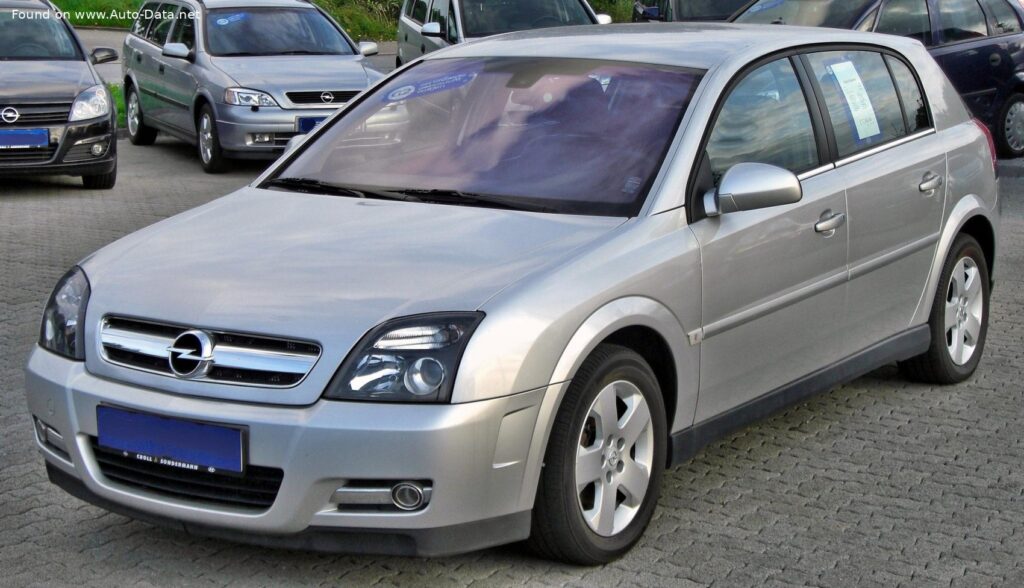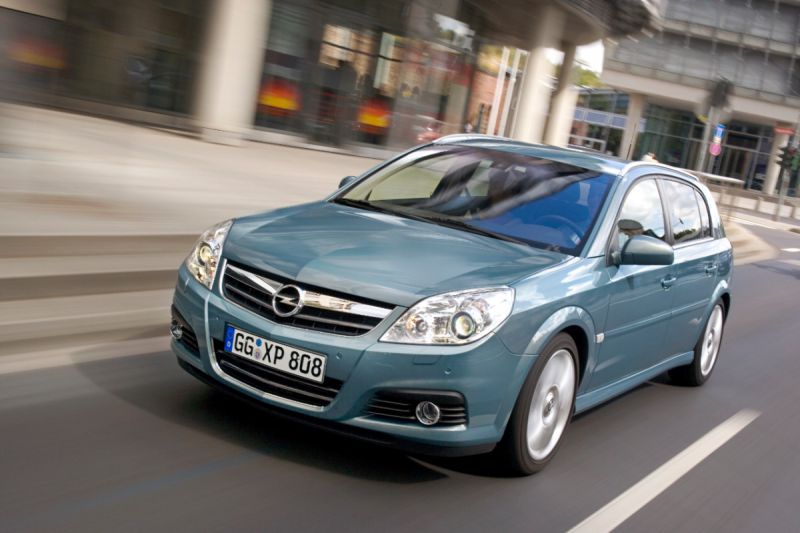
The Opel Signum (facelift 2005): A European Executive Hatchback with Diesel Prowess
The Opel Signum, particularly the facelifted model from 2005, represents a fascinating chapter in European automotive design and market strategy. Positioned by General Motors’ German subsidiary, Opel, as a premium executive-class vehicle, the Signum carved out a unique niche in a segment traditionally dominated by conventional sedans and station wagons. Unlike its more conventional Vectra C platform sibling, the Opel Signum (facelift 2005) adopted an extended wheelbase and a distinctive five-door hatchback body style, aiming to blend sedan comfort with the versatility of an estate or even a compact MPV. This specific variant, equipped with the robust and efficient 1.9 CDTI (150 Hp) diesel engine, was produced from 2005 until June 2008, serving as a testament to Opel’s innovative, albeit sometimes unconventional, approach to meeting the evolving demands of the European market.
While never officially sold in the United States, the Signum showcased European preferences for diesel engines, practical body styles beyond the traditional sedan, and a focus on interior flexibility. Its design philosophy centered on offering exceptional rear passenger comfort and adaptability, making it a compelling, albeit often misunderstood, contender in its home market. This article delves into the technical specifications, design philosophies, and market impact of this distinctive European offering, using American English terminology for clarity.
Engine and Performance: The Heart of the Opel Signum (facelift 2005)
At the core of this particular Signum model lies the 1.9 CDTI engine, a four-cylinder inline diesel powerplant that was a popular and well-regarded choice across various GM Europe models during its era. With an engine displacement of 1910 cubic centimeters (1.9 liters or 116.56 cubic inches), this unit delivered a respectable 150 horsepower at 4000 rpm, generating a significant 236.02 lb.-ft. (320 Nm) of torque at a low 2000 rpm. This ample torque, characteristic of modern diesel engines, provided strong pulling power and excellent drivability, especially in everyday driving scenarios and for highway cruising.
The “CDTI” designation stands for Common Rail Diesel Turbo Injection, indicating the use of a high-pressure common rail fuel injection system coupled with a turbocharger and intercooler. This sophisticated setup was crucial for achieving both impressive power output and commendable fuel efficiency. The 17.5:1 compression ratio further optimized combustion for diesel fuel. Power was efficiently managed through a 6-speed manual transmission, sending drive to the front wheels. This powertrain architecture, with its front, transverse engine layout, contributed to the car’s balanced weight distribution and predictable handling characteristics.
Performance figures for the 1.9 CDTI Signum were competitive for its class. It could accelerate from 0 to 60 mph in a brisk 10 seconds (or 0-100 km/h in 10.5 seconds), with a maximum speed of 129.87 mph (209 km/h). These numbers highlight its capability as a comfortable and capable long-distance cruiser on Europe’s autobahns and motorways. Fuel economy was a significant selling point for this diesel variant, with urban consumption rated at 30.2 US mpg and an impressive 46.1 US mpg on the extra-urban cycle, making it an economically sensible choice for many European drivers facing higher fuel prices.
Design and Features: A Focus on Versatility
The Opel Signum’s most distinguishing characteristic was its unique body style, a five-door hatchback that defied easy categorization. While it shared its platform with the Vectra C, its wheelbase was significantly extended to 111.42 inches (2830 mm), a dimension typically found in larger, more expensive executive sedans. This extension was primarily aimed at maximizing rear passenger space, offering legroom comparable to luxury vehicles. The facelift in 2005 brought subtle yet effective aesthetic updates, including a revised front grille, new headlights, and updated taillight clusters, bringing its appearance in line with Opel’s contemporary design language.
Inside, the Signum offered seating for five, but it was the rear seating arrangement that truly set it apart. Instead of a conventional bench, the Signum often featured two individual, highly adjustable rear seats that could slide, recline, and fold independently, along with a smaller central seat. This “FlexSpace” concept was designed to provide limousine-like comfort for two rear passengers or adaptable utility when needed. The trunk space was also generous and flexible, ranging from 12.89 cubic feet (365 liters) with all seats in place to a cavernous 49.79 cubic feet (1410 liters) with the rear seats folded, catering to a wide array of cargo needs.
Key features for a 2005 executive car in Europe included standard safety equipment like ABS (Anti-lock Braking System), multiple airbags (though not explicitly listed in the provided data, a given for this class and era), and power steering, specifically a hydraulic rack-and-pinion system. The car rode on 215/55 R16 tires mounted on 6.5J x 16-inch wheels, providing a comfortable and stable ride. Suspension duties were handled by coil springs at both the front and rear, while braking was managed by ventilated discs up front and solid discs at the rear.
With a length of 183.11 inches (4651 mm), a width of 70.79 inches (1798 mm), and a height of 57.48 inches (1460 mm), the Signum presented a substantial road presence. Its relatively low drag coefficient (Cd) of 0.32 contributed to its fuel efficiency and reduced wind noise at higher speeds.
Technical Specifications: Opel Signum (facelift 2005) 1.9 CDTI (150 Hp)
| Category | Specification | Value |
|---|---|---|
General Information |
||
| Brand | Opel | |
| Model | Signum | |
| Generation | Signum (facelift 2005) | |
| Type (Engine) | 1.9 CDTI (150 Hp) | |
| Start of Production | 2005 year | |
| End of Production | June, 2008 year | |
| Powertrain Architecture | Internal Combustion engine | |
| Body Type | Hatchback | 5 Doors |
| Seats | 5 | |
Performance Specifications |
||
| Fuel Consumption (Urban) | 30.2 US mpg (7.8 l/100 km) | |
| Fuel Consumption (Extra Urban) | 46.1 US mpg (5.1 l/100 km) | |
| Fuel Type | Diesel | |
| Acceleration 0 – 60 mph | 10 seconds | |
| Maximum Speed | 129.87 mph (209 km/h) | |
| Weight-to-Power Ratio | 10.4 kg/Hp | |
| Weight-to-Torque Ratio | 4.9 kg/Nm | |
Engine Specifications |
||
| Power | 150 Hp @ 4000 rpm | |
| Power per Liter | 78.5 Hp/l | |
| Torque | 236.02 lb.-ft. (320 Nm) @ 2000 rpm | |
| Engine Layout | Front, Transverse | |
| Engine Model/Code | Z19DTH | |
| Engine Displacement | 1.9 liters (1910 cm3 / 116.56 cu. in.) | |
| Number of Cylinders | 4 | Inline |
| Cylinder Bore | 3.23 in. (82 mm) | |
| Piston Stroke | 3.56 in. (90.4 mm) | |
| Compression Ratio | 17.5:1 | |
| Valves per Cylinder | 4 | |
| Fuel Injection System | Diesel Commonrail | |
| Engine Aspiration | Turbocharger, Intercooler | |
| Valvetrain | DOHC | |
| Engine Oil Capacity | 4.54 US qt (4.3 l) | |
| Coolant Capacity | 7.4 US qt (7 l) | |
Space, Volume, and Weights |
||
| Kerb Weight | 3450.23 lbs. (1565 kg) | |
| Max. Weight (Gross) | 4695.85 lbs. (2130 kg) | |
| Max Load | 1245.61 lbs. (565 kg) | |
| Trunk (Boot) Space – Minimum | 12.89 cu. ft. (365 l) | |
| Trunk (Boot) Space – Maximum | 49.79 cu. ft. (1410 l) | |
| Fuel Tank Capacity | 15.85 US gal (60 l) | |
Dimensions |
||
| Length | 183.11 in. (4651 mm) | |
| Width | 70.79 in. (1798 mm) | |
| Height | 57.48 in. (1460 mm) | |
| Wheelbase | 111.42 in. (2830 mm) | |
| Front Track | 60 in. (1524 mm) | |
| Rear Track | 60.04 in. (1525 mm) | |
| Drag Coefficient (Cd) | 0.32 | |
Drivetrain, Brakes, and Suspension |
||
| Drivetrain Architecture | Front wheel drive. Internal Combustion engine. | |
| Drive Wheel | Front wheel drive | |
| Number of Gears and Type of Gearbox | 6 gears, manual transmission | |
| Front Suspension | Coil spring | |
| Rear Suspension | Coil spring | |
| Front Brakes | Ventilated discs | |
| Rear Brakes | Disc | |
| Assisting Systems | ABS (Anti-lock braking system) | |
| Steering Type | Steering rack and pinion | |
| Power Steering | Hydraulic Steering | |
| Tire Size | 215/55 R16 | |
| Wheel Rims Size | 6.5J x 16 | |
Legacy and Market Impact
The Opel Signum, particularly the 2005 facelift with its 1.9 CDTI engine, occupied a unique and somewhat challenging position in the European automotive landscape. It was an attempt by Opel to redefine the executive car segment by offering a more versatile and family-friendly alternative to traditional three-box sedans, without fully committing to the minivan or SUV format. Its primary market was Europe, where there was a greater appreciation for diesel engines, efficient packaging, and flexible interiors. The Signum was often marketed towards business professionals who needed ample space for clients or equipment, or families seeking a comfortable long-distance cruiser with adaptable luggage and passenger configurations.
In terms of competition, the Signum faced rivals from various angles. More conventional executive cars like the Volkswagen Passat Variant (wagon) and Ford Mondeo Estate offered similar practicality in a more traditional package. Other unconventional executive-class vehicles, such as the Renault Vel Satis, also attempted to carve out a niche with distinctive styling and innovative interiors. While the Signum offered a compelling blend of space, comfort, and efficiency, its unconventional styling and unique market positioning meant it never achieved the widespread sales success of its more mainstream competitors. Its design, while innovative, was polarizing, and some buyers preferred the established aesthetics and segment definitions.
The decision not to sell the Signum in the United States was a logical one for General Motors. Opel was not a brand present in the American market, and GM already offered a diverse portfolio of vehicles through brands like Chevrolet, Pontiac, and Saturn. The American market generally favored traditional sedans, large SUVs, and minivans for family and executive transport, and a large, executive hatchback with a diesel engine would have been a tough sell in the mid-2000s. The Signum’s niche appeal in Europe would likely have been even narrower across the Atlantic.
Despite its limited production run and niche status, the Opel Signum (facelift 2005) 1.9 CDTI stands as an interesting example of European automotive engineering and market experimentation. It showcased Opel’s capability in developing strong, efficient diesel powertrains and its willingness to innovate with body styles and interior layouts. Its legacy is one of an intelligent, comfortable, and highly practical car that, perhaps, was a bit ahead of its time or simply too unconventional for the mass market. Today, it remains a testament to a period when manufacturers were actively exploring new ways to blend luxury, utility, and driving dynamics in a single package.