The Suzuki Jimny III (Facelift 2005) 1.5 DDiS (86 Hp) 4WD: A Compact Off-Road Icon
The Suzuki Jimny III (facelift 2005) 1.5 DDiS (86 Hp) 4WD represents a significant iteration of Suzuki’s enduring legacy in the compact off-road vehicle segment. Launched in 2005 as a refreshed version of the third-generation Jimny, this model continued to champion rugged simplicity and genuine off-road capability in a world increasingly dominated by soft-roader SUVs. While the Jimny nameplate has a celebrated history globally, this specific diesel-powered variant was primarily targeted at European and Asian markets, where its blend of fuel efficiency, compact dimensions, and go-anywhere attitude resonated strongly with consumers. It was never officially imported into the United States, a market that generally favors larger vehicles and where diesel passenger cars faced different regulatory and market acceptance challenges during its production run from 2005 to 2011.
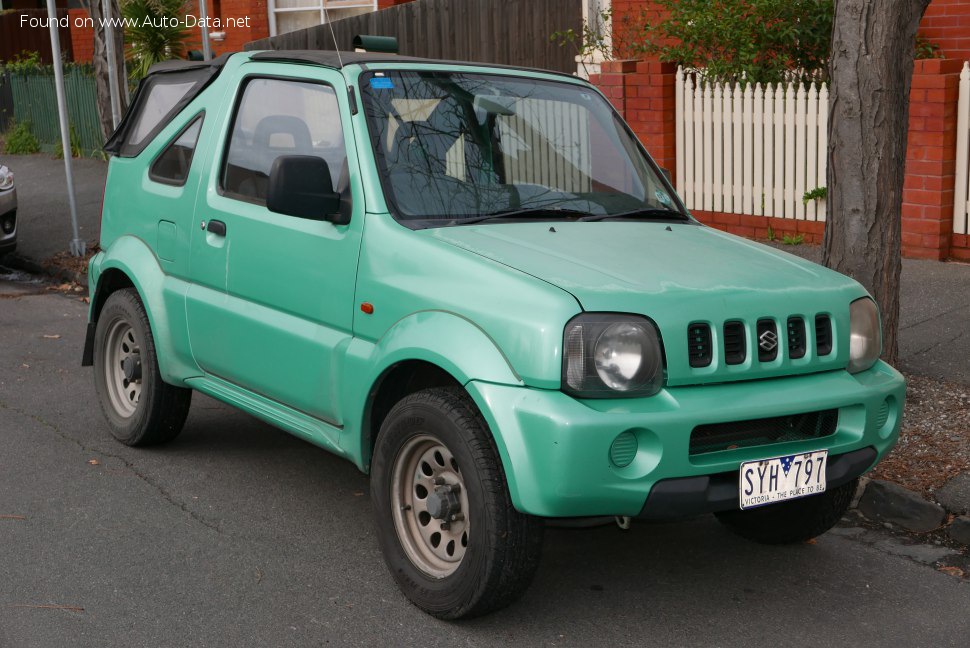
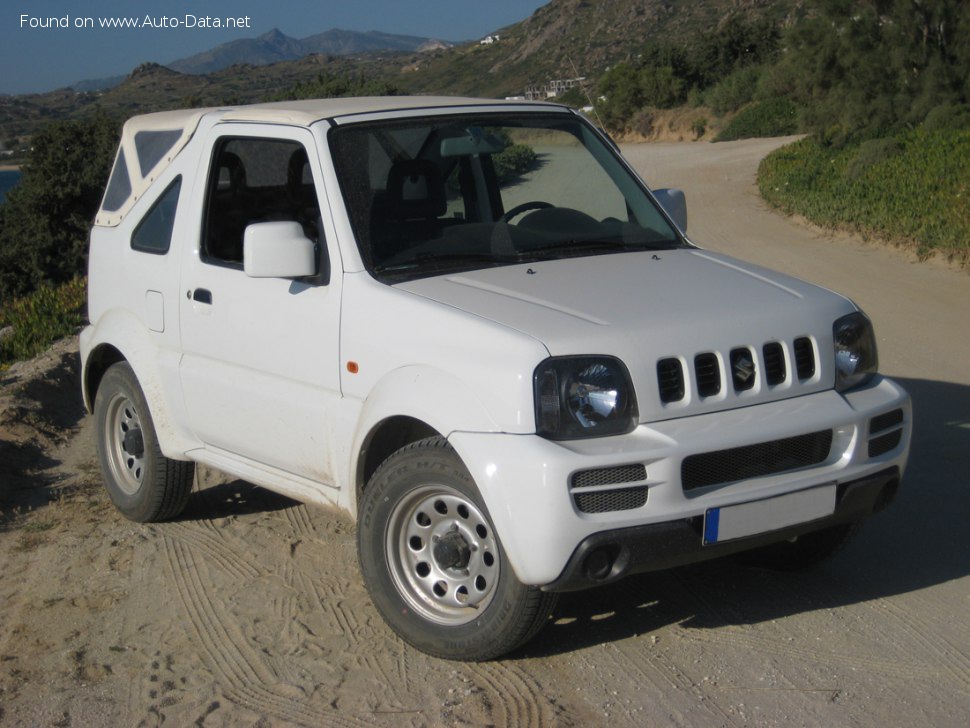
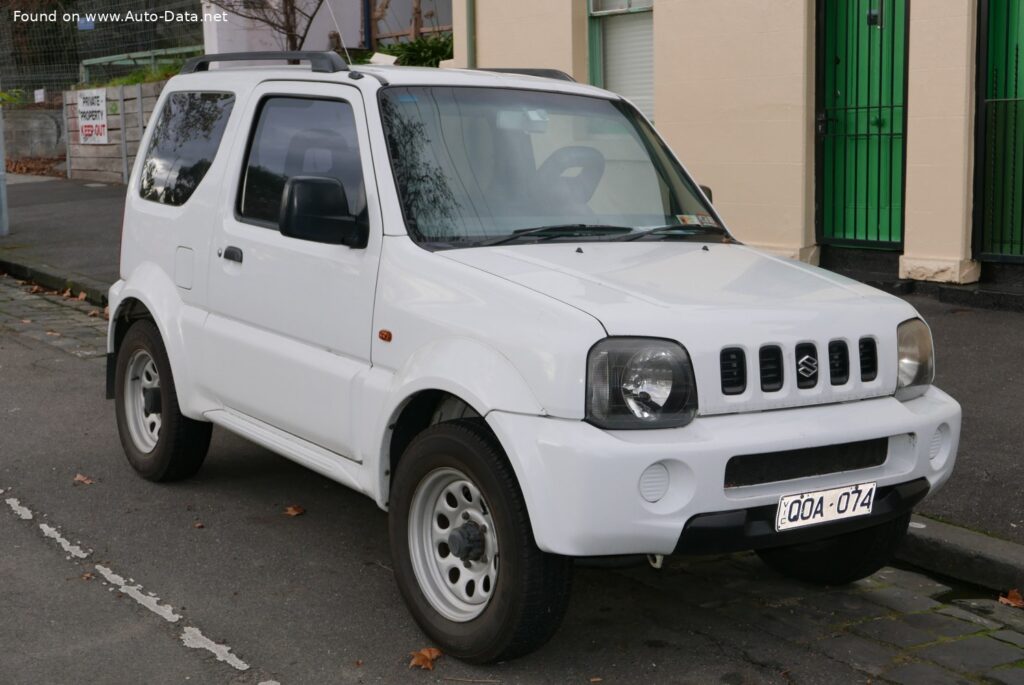
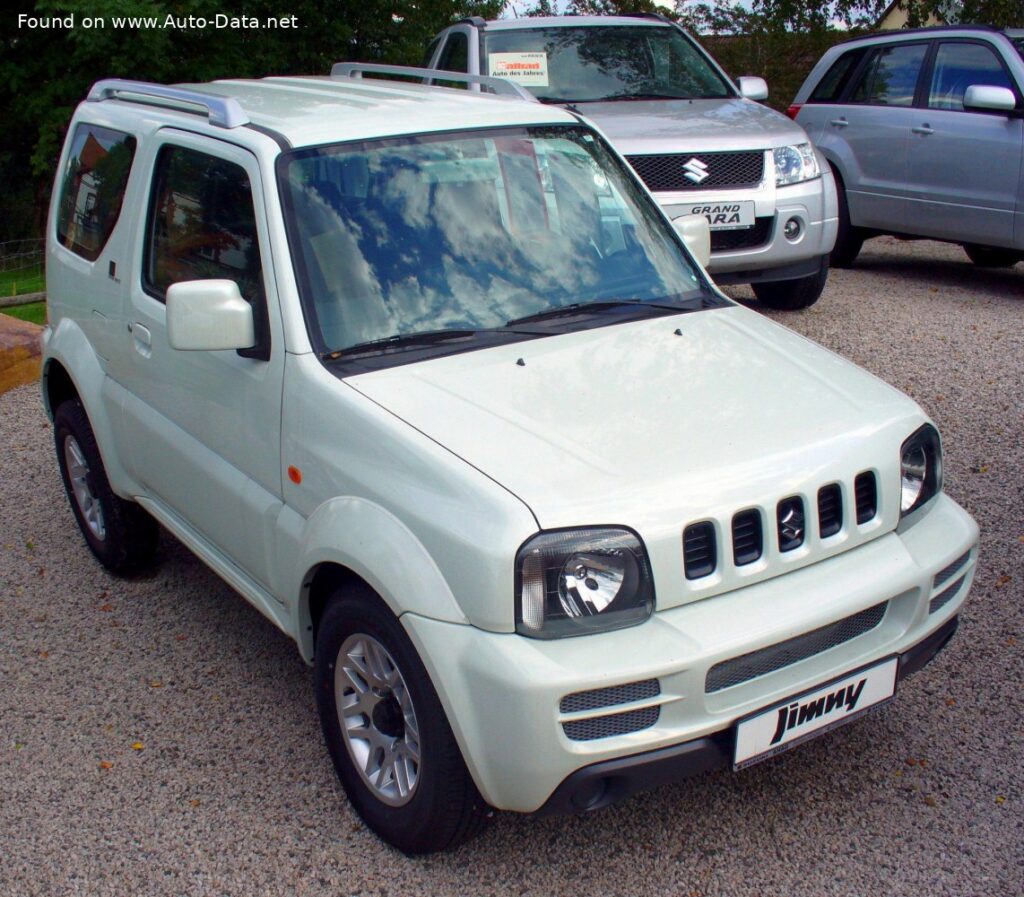
The Jimny III, in its facelifted 2005 guise, retained the core philosophy that has defined the model since its inception: a body-on-frame chassis, rigid axles, and a robust part-time four-wheel-drive system. This particular variant, powered by a 1.5-liter DDiS diesel engine, offered a compelling package for those seeking a highly capable utility vehicle that was also economical to run and maneuverable in tight urban or challenging natural environments. Its design, characterized by a utilitarian three-door body and seating for four, underscored its purpose as a practical, no-nonsense off-road machine, distinguishing it from more pavement-oriented crossovers.
Engine and Performance of the Suzuki Jimny III (facelift 2005)
Powertrain Architecture and Specifications
At the heart of the Suzuki Jimny III (facelift 2005) 1.5 DDiS (86 Hp) 4WD lies a K9K 266 engine, a 1.5-liter (1461 cm³ or 89.16 cu. in.) inline four-cylinder diesel unit. This engine is a testament to Suzuki’s commitment to offering efficient and torquey powerplants for its compact off-roaders. Featuring a common rail fuel injection system, a turbocharger, and an intercooler, the engine was designed to deliver a balance of power and fuel economy. It produces a modest but highly effective 86 horsepower at 3750 rpm, with a significant 147.51 lb.-ft. (200 Nm) of torque available at a low 1750 rpm. This low-end torque is crucial for off-road driving, providing the necessary grunt to overcome challenging terrains without excessive revving.
The engine’s layout is front, longitudinal, optimizing weight distribution and allowing for the robust drivetrain components. With a compression ratio of 17.9:1 and a SOHC (Single Overhead Camshaft) valvetrain with two valves per cylinder, the engine is engineered for durability and reliable performance. Mated to a 5-speed manual transmission, the powertrain architecture ensures direct control over power delivery, a feature highly valued by off-road enthusiasts.
Performance and Fuel Economy
Despite its off-road focus, the Jimny 1.5 DDiS offered respectable on-road performance for its class. It could accelerate from 0 to 60 mph in approximately 16.2 seconds, with a top speed of 90.1 mph (145 km/h). These figures reflect its utility-oriented design rather than outright speed, prioritizing climbing ability and traction.
Fuel efficiency was a strong selling point for this diesel variant, particularly in markets with high fuel prices. The combined NEDC (New European Driving Cycle) fuel consumption was rated at an impressive 38.6 US mpg (6.1 liters per 100 km). Urban driving yielded around 33.6 US mpg (7 liters per 100 km), while extra-urban cycles could achieve up to 42 US mpg (5.6 liters per 100 km). These figures, combined with CO2 emissions of 162 g/km, allowed the Jimny to meet Euro 4 emission standards, making it a relatively environmentally conscious choice for its time and segment. The fuel tank capacity of 10.57 US gallons (40 liters) provided a decent range for its intended use.
Design and Features
Rugged Body and Off-Road Prowess
The Jimny III’s design is unmistakably functional, adhering to the classic small off-road vehicle aesthetic. Its 3-door body, measuring 144.29 inches (3665 mm) in length, 62.99 inches (1600 mm) in width (70.08 inches or 1780 mm including mirrors), and 67.13 inches (1705 mm) in height, emphasizes compactness and maneuverability. The short wheelbase of 88.58 inches (2250 mm) is a key contributor to its exceptional agility off-road, allowing it to navigate tight trails and uneven terrain with ease.
The Jimny’s true strength lies in its dedicated off-road architecture. It features rigid axles both front and rear, suspended by coil springs. This configuration, while less refined on pavement than independent suspensions, provides superior articulation and durability in challenging conditions. Critical off-road dimensions include a generous ground clearance of 7.48 inches (190 mm), an impressive approach angle of 37°, a departure angle of 46°, and a ramp-over (brakeover) angle of 31°. These angles mean the Jimny can tackle steep inclines, descents, and crest obstacles that would leave many larger SUVs stranded. The minimum turning circle of 32.15 feet (9.8 meters) further enhances its agility in confined spaces.
Drivetrain and Safety
The Jimny’s drivetrain architecture is a robust part-time four-wheel-drive system. In standard operation, the internal combustion engine drives the rear wheels. When conditions demand, the front wheels can be engaged through an electrically or mechanically operated clutch, providing true 4×4 capability with a low-range transfer case for serious off-roading. This system offers the flexibility of two-wheel drive for fuel efficiency on paved roads and the traction of four-wheel drive when needed.
For braking, the Jimny employs disc brakes at the front and drum brakes at the rear, supplemented by an Anti-lock Braking System (ABS) for improved control during emergency stops. The steering system is a cone worm with recirculation balls, combined with hydraulic power steering, providing a direct and robust feel, essential for off-road control. The vehicle rides on 205/70 R15 tires mounted on 6J x 15 wheel rims, offering a good balance of on-road comfort and off-road grip.
Interior space is optimized for its compact footprint, offering seating for four. The trunk space ranges from a minimum of 3.99 cu. ft. (113 liters) to a maximum of 11.44 cu. ft. (324 liters) with the rear seats folded, reflecting its utility-first design. The Jimny’s maximum load capacity is 760.59 lbs. (345 kg), and it boasts a respectable towing capacity of 2866.01 lbs. (1300 kg) with brakes, highlighting its practical capabilities.
Technical Specifications
| Category | Specification | Value (US/Imperial) | Value (Metric) |
|---|---|---|---|
| General Information | |||
| Brand | Suzuki | ||
| Model | Jimny | ||
| Generation | Jimny III (facelift 2005) | ||
| Type (Engine) | 1.5 DDiS (86 Hp) 4WD | ||
| Production Start | 2005 | ||
| Production End | 2011 | ||
| Body Type | Off-road vehicle | ||
| Doors | 3 | ||
| Seats | 4 | ||
| Performance Specifications | |||
| Fuel Consumption (Urban) | NEDC | 33.6 US mpg | 7 l/100 km |
| Fuel Consumption (Extra Urban) | NEDC | 42 US mpg | 5.6 l/100 km |
| Fuel Consumption (Combined) | NEDC | 38.6 US mpg | 6.1 l/100 km |
| CO2 Emissions (NEDC) | 162 g/km | ||
| Fuel Type | Diesel | ||
| Acceleration 0-60 mph | 16.2 sec | ||
| Acceleration 0-100 km/h | 17 sec | ||
| Maximum Speed | 90.1 mph | 145 km/h | |
| Emission Standard | Euro 4 | ||
| Weight-to-Power Ratio | 74.5 Hp/tonne | 13.4 kg/Hp | |
| Weight-to-Torque Ratio | 173.2 Nm/tonne | 5.8 kg/Nm | |
| Engine Specifications | |||
| Power | @ 3750 rpm | 86 Hp | |
| Power per liter | 58.9 Hp/l | ||
| Torque | @ 1750 rpm | 147.51 lb.-ft. | 200 Nm |
| Engine Layout | Front, Longitudinal | ||
| Engine Model/Code | K9K 266 | ||
| Engine Displacement | 89.16 cu. in. | 1461 cm³ | |
| Number of Cylinders | 4 | ||
| Engine Configuration | Inline | ||
| Cylinder Bore | 2.99 in. | 76 mm | |
| Piston Stroke | 3.17 in. | 80.5 mm | |
| Compression Ratio | 17.9:1 | ||
| Valves per Cylinder | 2 | ||
| Fuel Injection System | Diesel Commonrail | ||
| Engine Aspiration | Turbocharger, Intercooler | ||
| Valvetrain | SOHC | ||
| Engine Oil Capacity | 4.23 US qt | 4 l | |
| Coolant Capacity | 7.4 US qt | 7 l | |
| Dimensions, Weight, and Volume | |||
| Kerb Weight | 2546.34 lbs. | 1155 kg | |
| Maximum Weight | 3306.93 lbs. | 1500 kg | |
| Maximum Load | 760.59 lbs. | 345 kg | |
| Trunk Space (Minimum) | 3.99 cu. ft. | 113 l | |
| Trunk Space (Maximum) | 11.44 cu. ft. | 324 l | |
| Fuel Tank Capacity | 10.57 US gal | 40 l | |
| Trailer Load (with brakes) | 12% | 2866.01 lbs. | 1300 kg |
| Trailer Load (without brakes) | 771.62 lbs. | 350 kg | |
| Towbar Download | 165.35 lbs. | 75 kg | |
| Length | 144.29 in. | 3665 mm | |
| Width | 62.99 in. | 1600 mm | |
| Width (incl. mirrors) | 70.08 in. | 1780 mm | |
| Height | 67.13 in. | 1705 mm | |
| Wheelbase | 88.58 in. | 2250 mm | |
| Front Track | 53.35 in. | 1355 mm | |
| Rear Track | 53.74 in. | 1365 mm | |
| Ride Height (Ground Clearance) | 7.48 in. | 190 mm | |
| Minimum Turning Circle | 32.15 ft. | 9.8 m | |
| Approach Angle | 37° | ||
| Departure Angle | 46° | ||
| Ramp-over Angle | 31° | ||
| Drivetrain, Brakes, and Suspension | |||
| Drivetrain Architecture | ICE drives rear wheels permanently, front wheels driven through electrically/mechanically operated clutch if necessary. | ||
| Drive Wheel | All-wheel drive (4×4) | ||
| Number of Gears | 5 | ||
| Gearbox Type | Manual transmission | ||
| Front Suspension | Coil spring, Rigid axle | ||
| Rear Suspension | Rigid axle, Coil spring | ||
| Front Brakes | Disc | ||
| Rear Brakes | Drum | ||
| Assisting Systems | ABS (Anti-lock braking system) | ||
| Steering Type | Cone worm with recirculation balls | ||
| Power Steering | Hydraulic Steering | ||
| Tire Size | 205/70 R15 | ||
| Wheel Rim Size | 6J x 15 | ||
Legacy and Market Impact
The Suzuki Jimny III (facelift 2005) 1.5 DDiS (86 Hp) 4WD cemented the model’s reputation as a small but mighty off-roader. In its primary markets of Europe, Japan, and other parts of Asia, the Jimny consistently carved out a unique niche. It appealed to a diverse demographic, from farmers and foresters needing a reliable, compact workhorse to outdoor enthusiasts seeking an affordable and capable vehicle for weekend adventures, and even urban dwellers who appreciated its diminutive size for navigating congested streets and tight parking spaces.
Its competitors were few and far between, as most manufacturers either moved towards larger SUVs or softer, car-based crossovers. The Lada Niva was perhaps its closest spiritual rival in terms of rugged, utilitarian design and off-road focus, but the Jimny generally offered better refinement and reliability. Other compact SUVs like the Daihatsu Terios or certain variants of the Fiat Panda 4×4 offered some off-road capability but rarely matched the Jimny’s dedicated ladder-frame chassis and robust axle setup.
The Jimny’s enduring appeal stems from its honest approach to off-roading. It doesn’t pretend to be a luxury SUV; instead, it delivers on its promise of genuine four-wheel-drive capability in a lightweight, nimble package. This philosophy has garnered it a cult following worldwide, with owners often modifying their Jimnys for even greater off-road prowess. The diesel engine, in particular, was a significant draw in regions where its superior torque and fuel economy were highly valued, especially for sustained off-road use or towing light trailers.
The absence of the Suzuki Jimny III (facelift 2005) 1.5 DDiS (86 Hp) 4WD from the U.S. market is largely due to a combination of factors. American consumers generally prefer larger vehicles, and the Jimny’s small stature, coupled with its basic interior and utilitarian focus, might not have resonated with mainstream buyers. Furthermore, the complexities of federalizing a small diesel engine for U.S. emissions standards, combined with potentially low sales volumes, likely made it an unfeasible venture for Suzuki during that era. However, its spiritual successors, like the current fourth-generation Jimny (known as Jimny Sierra in some markets), continue to generate significant interest globally, demonstrating the timeless appeal of a true compact off-road vehicle. The 2005 facelifted Jimny 1