Mitsubishi Lancer V 2.0 Diesel (68 Hp): A Global Compact Workhorse (1992-1996)
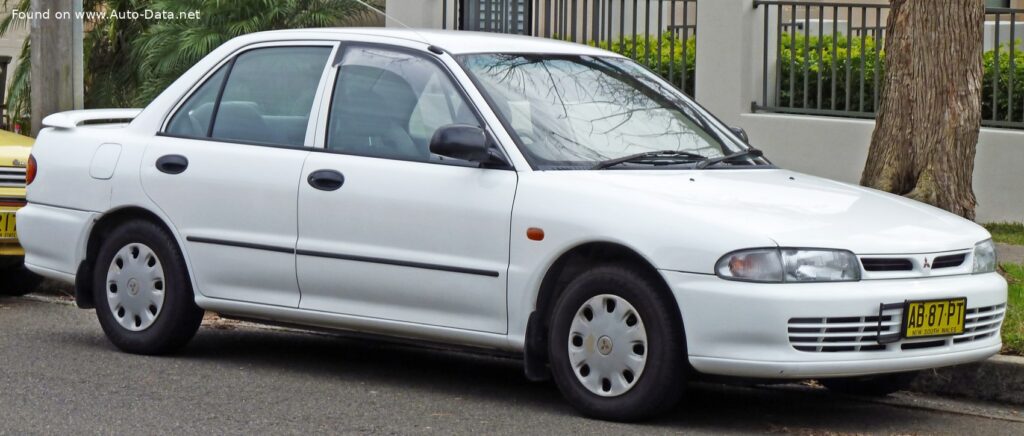
The Mitsubishi Lancer V 2.0 Diesel (68 Hp), produced between 1992 and 1996, represents the fifth generation of Mitsubishi’s enduring Lancer nameplate. This particular variant, a four-door sedan powered by a naturally aspirated diesel engine, was a cornerstone of Mitsubishi’s offerings in markets outside of the United States, particularly in Europe and Asia, where fuel efficiency and durability were paramount considerations for compact car buyers. While the Lancer name might evoke images of high-performance Evolution models for some American enthusiasts, this fifth-generation diesel variant showcased the Lancer’s more utilitarian and economical side, serving as a reliable and cost-effective daily driver for millions. It embodied the practical engineering and robust construction that Mitsubishi was known for during this era, positioning itself as a sensible choice in the highly competitive compact segment.
Engine and Performance of the Mitsubishi Lancer V 2.0 Diesel (68 Hp)
Under the hood, the Mitsubishi Lancer V 2.0 Diesel (68 Hp) was equipped with Mitsubishi’s 4D68 engine, a 1998 cubic centimeter (121.93 cubic inch) inline four-cylinder diesel unit. This powertrain architecture, featuring a front, transverse engine layout, was designed for maximum fuel economy and longevity rather than outright speed. The engine delivered a modest 68 horsepower at 4500 revolutions per minute (rpm) and a respectable 90.72 lb.-ft. of torque at 3000 rpm. For its time and segment, this torque output was a key characteristic of diesel engines, providing ample pulling power at lower engine speeds, which was ideal for city driving and carrying passengers or light cargo.
The 4D68 engine utilized a naturally aspirated design, meaning it did not employ a turbocharger, which was common for base-level diesel offerings of the early 1990s. Its OHC (Overhead Camshaft) valvetrain with two valves per cylinder and precombustion chamber injection system were standard technologies for diesel engines of the period, emphasizing reliability and a smooth, albeit not particularly refined, power delivery. With a high compression ratio of 22.4:1, the engine was optimized for diesel combustion efficiency.
Performance figures reflected its economical nature. The Lancer V 2.0 Diesel accelerated from 0 to 60 miles per hour in a measured 15.4 seconds, with a top speed of 99.42 mph. While these numbers might seem leisurely by today’s standards, they were perfectly adequate for the traffic conditions and speed limits of its primary markets. The true highlight of this powertrain was its fuel efficiency. It boasted a combined fuel consumption of 38.6 US miles per gallon (6.1 liters per 100 km), an impressive figure that made it a very attractive option for budget-conscious drivers and fleet operators. Power was sent to the front wheels via a durable 5-speed manual transmission, offering direct driver engagement and further contributing to its economical operation. The vehicle’s curb weight of 2358.95 lbs. (1070 kg) contributed to its nimble feel despite the modest power output.
Design and Features
The fifth-generation Mitsubishi Lancer, including the 2.0 Diesel variant, presented a clean, understated, and aerodynamically efficient design that was characteristic of early 1990s Japanese compact sedans. Its four-door sedan body style provided practical access for up to five occupants, making it a suitable family car or commuter vehicle.
Dimensionally, the Lancer V measured 168.31 inches in length, 66.54 inches in width, and 54.53 inches in height, with a wheelbase of 98.43 inches. These compact dimensions made it maneuverable in urban environments while offering a surprisingly spacious interior for its class. The trunk offered a respectable 11.3 cubic feet of storage, adequate for daily errands or weekend trips.
Inside, the Lancer V featured a straightforward and functional cabin layout, prioritizing ergonomics and durability. While lavish features were not its primary focus, it offered all the essentials expected of a compact car in its segment. The steering system utilized a precise rack and pinion setup with hydraulic power steering, providing a comfortable and predictable driving experience.
For safety and handling, the Lancer V 2.0 Diesel was equipped with a wishbone front suspension and a spring strut rear suspension, a common and effective setup for front-wheel-drive compacts, balancing ride comfort with stable handling. Braking duties were handled by ventilated discs at the front and reliable drum brakes at the rear. An Anti-lock Braking System (ABS) was available, likely as an optional feature, enhancing safety during emergency braking situations. The vehicle rode on 175/70 R13 tires, a common size for compact cars of the era, providing a good balance of grip and ride comfort. The overall design philosophy emphasized practicality, ease of maintenance, and long-term reliability, attributes highly valued in its target markets.
Technical Specifications
| Category | Specification | Value |
|---|---|---|
| General Information | ||
| Brand | Mitsubishi | |
| Model | Lancer | |
| Generation | Lancer V | |
| Type (Engine) | 2.0 Diesel (68 Hp) | |
| Start of Production | 1992 year | |
| End of Production | 1996 year | |
| Powertrain Architecture | Internal Combustion engine | |
| Body Type | Sedan | |
| Seats | 5 | |
| Doors | 4 | |
| Performance Specs | ||
| Fuel Consumption (combined) | 38.6 US mpg (6.1 l/100 km) | |
| Fuel Type | Diesel | |
| Acceleration 0 – 60 mph | 15.4 sec | |
| Maximum Speed | 99.42 mph (160 km/h) | |
| Weight-to-Power Ratio | 15.7 kg/Hp, 63.6 Hp/tonne | |
| Weight-to-Torque Ratio | 8.7 kg/Nm, 115 Nm/tonne | |
| Engine Specs | ||
| Power | 68 Hp @ 4500 rpm | |
| Power per Liter | 34 Hp/l | |
| Torque | 90.72 lb.-ft. @ 3000 rpm (123 Nm) | |
| Engine Layout | Front, Transverse | |
| Engine Model/Code | 4D68 | |
| Engine Displacement | 121.93 cu. in. (1998 cm3) | |
| Number of Cylinders | 4 | |
| Engine Configuration | Inline | |
| Cylinder Bore | 3.26 in. (82.7 mm) | |
| Piston Stroke | 3.66 in. (93 mm) | |
| Compression Ratio | 22.4:1 | |
| Number of Valves per Cylinder | 2 | |
| Fuel Injection System | Precombustion chamber injection | |
| Engine Aspiration | Naturally aspirated engine | |
| Valvetrain | OHC | |
| Engine Oil Capacity | 5.39 US qt (5.1 l) | |
| Coolant Capacity | 6.34 US qt (6 l) | |
| Space, Volume and Weights | ||
| Kerb Weight | 2358.95 lbs. (1070 kg) | |
| Max. Weight | 3483.3 lbs. (1580 kg) | |
| Max Load | 1124.36 lbs. (510 kg) | |
| Trunk (boot) Space – Minimum | 11.3 cu. ft. (320 l) | |
| Fuel Tank Capacity | 13.21 US gal (50 l) | |
| Dimensions | ||
| Length | 168.31 in. (4275 mm) | |
| Width | 66.54 in. (1690 mm) | |
| Height | 54.53 in. (1385 mm) | |
| Wheelbase | 98.43 in. (2500 mm) | |
| Front Track | 57.09 in. (1450 mm) | |
| Rear (Back) Track | 57.48 in. (1460 mm) | |
| Drivetrain, Brakes and Suspension Specs | ||
| Drivetrain Architecture | The Internal combustion engine (ICE) drives the front wheels of the vehicle. | |
| Drive Wheel | Front wheel drive | |
| Number of Gears and Type of Gearbox | 5 gears, manual transmission | |
| Front Suspension | Wishbone | |
| Rear Suspension | Spring Strut | |
| Front Brakes | Ventilated discs | |
| Rear Brakes | Drum | |
| Assisting Systems | ABS (Anti-lock braking system) | |
| Steering Type | Steering rack and pinion | |
| Power Steering | Hydraulic Steering | |
| Tires Size | 175/70 R13 | |
Legacy and Market Impact
The Mitsubishi Lancer V, and particularly its 2.0 Diesel (68 Hp) variant, carved out a significant niche for itself in the global compact car market, especially in regions where economic efficiency and robust reliability were highly prized. While the Lancer name achieved legendary status in the United States through its high-performance Evolution models, the standard Lancer, and especially its diesel versions, played a different but equally crucial role in Europe, Asia, and other markets.
In these markets, the Lancer V 2.0 Diesel was renowned as a dependable workhorse. Its naturally aspirated diesel engine, though not powerful, was incredibly durable and relatively simple to maintain, making it a favorite among taxi operators, fleet managers, and private buyers seeking a long-lasting, low-running-cost vehicle. Its fuel economy of nearly 40 US mpg was a major selling point, providing significant savings over gasoline alternatives, particularly during periods of rising fuel prices.
Competitors in its segment included a broad range of compact sedans and hatchbacks, many of which also offered diesel variants. Key rivals in Europe would have included the Volkswagen Jetta/Golf Diesel, Opel Astra, Ford Escort, and Peugeot 306. In Asian markets, it competed with the likes of the Toyota Corolla, Honda Civic sedan, and Nissan Sunny/Sentra, though fewer of these Japanese rivals offered diesel options in all markets. The Lancer V differentiated itself with Mitsubishi’s reputation for rugged engineering and reliability, often perceived as a more robust alternative to some of its competitors.
The Lancer V’s legacy is that of a quiet achiever. It wasn’t flashy, nor was it a performance icon, but it consistently delivered on its promise of affordable, dependable transportation. It contributed significantly to Mitsubishi’s global sales volumes and helped solidify the brand’s image for producing practical, well-engineered vehicles that could withstand the rigors of daily use. This generation of Lancer, particularly the diesel variant, serves as a testament to the diverse needs of global automotive markets and Mitsubishi’s ability to cater to them with tailored, efficient, and durable solutions. Its impact, though often overshadowed by its more famous performance siblings, was foundational to Mitsubishi’s presence in many international markets.