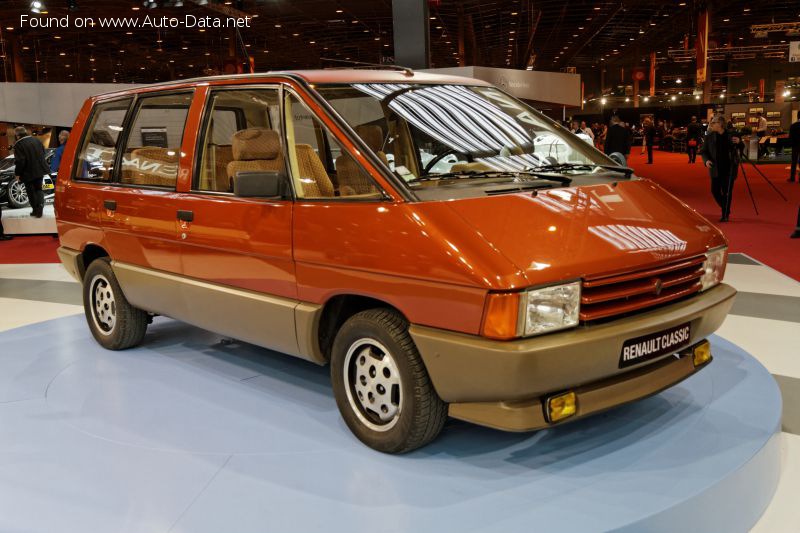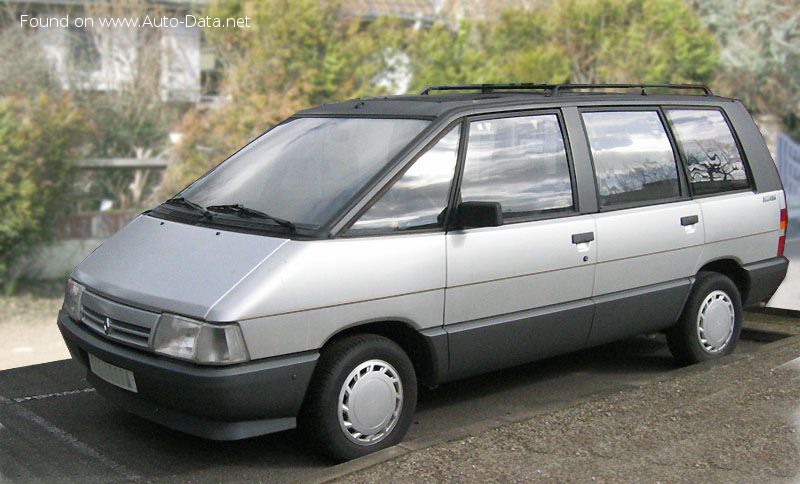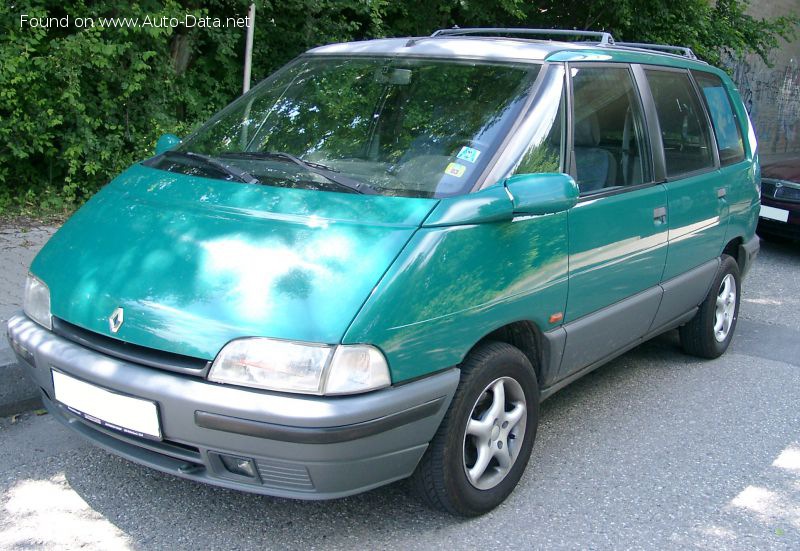
The Renault Espace IV (Phase II, 2006): A European Minivan Icon
The Renault Espace holds a significant place in automotive history, particularly in Europe, as a pioneer of the modern minivan (or Multi-Purpose Vehicle, MPV) segment. The fourth generation, known as the Espace IV, continued this legacy with its distinctive design, spacious interior, and focus on family versatility. This particular variant, the Renault Espace IV (Phase II, 2006) with the 2.0 dCi (150 Hp) engine, represents a mid-cycle refresh of the acclaimed fourth generation, produced between 2006 and 2008. While never officially sold in the United States, the Espace IV was a staple on European roads, embodying the continent’s preference for practical, fuel-efficient family transport. It offered a compelling blend of passenger comfort, flexible cargo solutions, and advanced diesel powertrain technology, setting a benchmark for the segment in its time.
The Espace IV (Phase II) emerged at a time when European consumers were increasingly demanding vehicles that could comfortably accommodate larger families and their luggage without sacrificing the driving dynamics or fuel economy of a smaller car. Renault, having virtually invented the concept of the modern MPV with the original Espace in 1984, was well-positioned to meet these demands. The Phase II facelift brought subtle but meaningful updates, refining the vehicle’s aesthetics and enhancing its technological offerings to keep it competitive in a burgeoning market. This 2.0 dCi iteration, with its robust diesel engine, was particularly popular, offering a blend of power and efficiency that was highly valued by European drivers.
Powertrain and Performance of the Renault Espace IV (Phase II, 2006)
Under the hood of the Renault Espace IV (Phase II, 2006) 2.0 dCi lies a capable and efficient powertrain engineered for the demands of European driving. This specific model is equipped with Renault’s M9R engine, a 1995 cubic centimeter (approximately 2.0-liter) inline four-cylinder diesel unit. Featuring a DOHC (Double Overhead Camshaft) valvetrain and a sophisticated Diesel Commonrail fuel injection system, this engine was at the forefront of diesel technology for its era. Further enhanced by a turbocharger and intercooler, it delivered a respectable 150 horsepower at 4000 rpm, paired with a substantial 250.77 lb.-ft. (340 Nm) of torque available at a low 2000 rpm. This torque-rich delivery made the Espace feel surprisingly responsive, especially in urban traffic and during highway cruising, despite its considerable size.
Performance figures for this seven-seater minivan were quite commendable for its class. The Espace IV (Phase II) 2.0 dCi could accelerate from 0 to 60 mph in a brisk 10.1 seconds, reaching a maximum speed of 120.55 mph (194 km/h). Power was sent to the front wheels via a smooth-shifting 6-speed manual transmission, offering drivers precise control and contributing to the vehicle’s overall efficiency.
Fuel economy was a key selling point for European diesel vehicles, and the Espace IV did not disappoint. It achieved a combined fuel consumption rating of 30.9 US mpg (7.6 liters per 100 km). Urban driving saw figures around 24.8 US mpg (9.5 l/100 km), while extra-urban (highway) driving improved significantly to 35.6 US mpg (6.6 l/100 km). These figures, combined with a generous 21.93 US gallon (83-liter) fuel tank, provided an impressive cruising range, ideal for long family trips across the continent. The vehicle also met the Euro 4 emission standard, reflecting its relatively clean operation for a diesel engine of that time, with CO2 emissions rated at 200 g/km.
The drivetrain architecture, with the internal combustion engine driving the front wheels, provided predictable handling and efficient packaging, maximizing interior space. The suspension system, featuring an independent McPherson type setup at the front and a semi-independent coil spring arrangement at the rear, was tuned for comfort, effectively soaking up road imperfections and ensuring a smooth ride for all occupants. Braking performance was handled by ventilated discs at the front and solid discs at the rear, augmented by an Anti-lock Braking System (ABS) for enhanced safety and control under hard braking.
Design and Interior Versatility
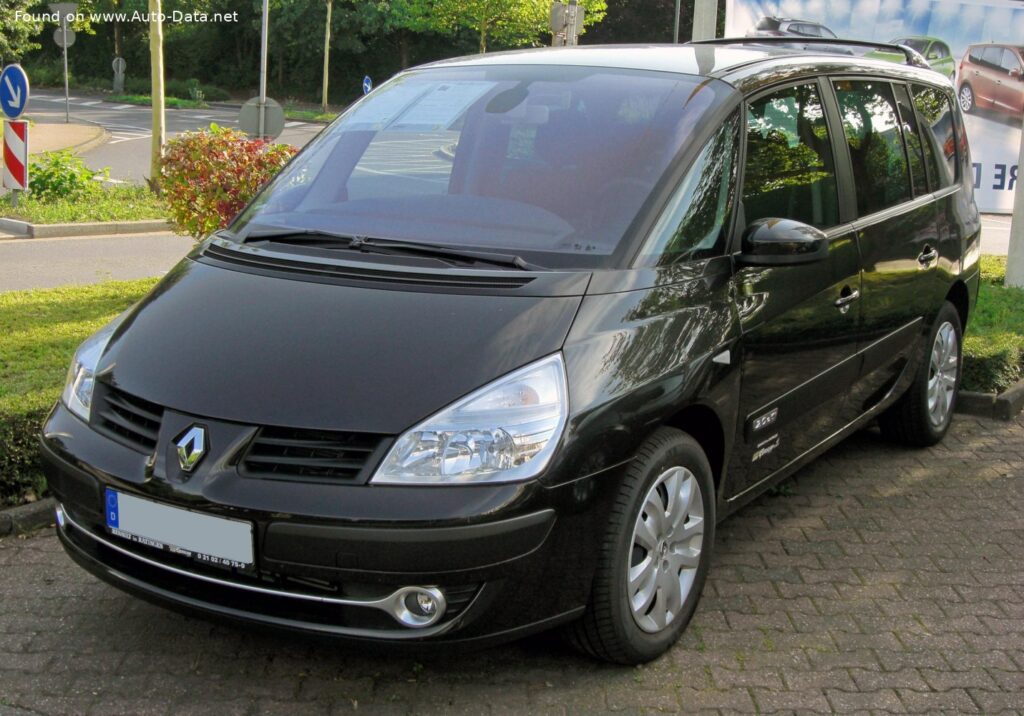
The design of the Renault Espace IV (Phase II, 2006) continued the sophisticated and somewhat avant-garde aesthetic introduced with the fourth generation. As a minivan or MPV, its primary focus was on maximizing interior space and flexibility, encased in a distinctive, aerodynamic silhouette. The Espace IV moved away from the more traditional boxy minivan shape, adopting a sleeker, more car-like appearance with a steeply raked windshield and a flowing roofline. The Phase II refresh brought subtle updates to the grille, headlights, and bumpers, giving it a more contemporary look.
Measuring 183.31 inches (4656 mm) in length, 73.23 inches (1860 mm) in width (74.57 inches including mirrors), and 68.03 inches (1728 mm) in height, the Espace IV was a substantial vehicle. Its generous 110.35-inch (2803 mm) wheelbase contributed significantly to its spacious interior and stable ride. The exterior design was characterized by large glass areas, enhancing visibility and creating an airy cabin environment.
The true brilliance of the Espace lay within its interior. Designed to be highly modular, it typically offered seating for seven passengers across three rows. The individual seats in the second and third rows could be easily removed, slid, or folded, allowing for numerous configurations to prioritize either passenger comfort or cargo capacity. With all seven seats in place, the trunk (boot) space was a respectable 10.28 cubic feet (291 liters). However, with the rear seats removed or folded, the cargo volume expanded dramatically to an impressive 101 cubic feet (2860 liters), transforming the Espace into a highly capable hauler. This versatility was a cornerstone of its appeal to European families and businesses alike.
Inside, the Espace featured a modern and ergonomic dashboard design, often incorporating a centrally mounted digital instrument cluster, a signature Renault trait for this generation. High-quality materials and thoughtful storage solutions were evident throughout the cabin. Standard features for a 2006 model in Europe would have included power windows, air conditioning, and a comprehensive audio system. Safety was also a priority, with the Espace featuring ABS (Anti-lock Braking System) as standard, along with a robust body structure and multiple airbags to protect occupants in the event of a collision. The comfortable seating, ample legroom, and significant headroom in all three rows ensured that even long journeys were pleasant for everyone aboard.
Technical Specifications
| Category | Specification |
|---|---|
| General Information | |
| Brand | Renault |
| Model | Espace |
| Generation | Espace IV (Phase II, 2006) |
| Type (Engine) | 2.0 dCi (150 Hp) |
| Start of Production | 2006 year |
| End of Production | 2008 year |
| Powertrain Architecture | Internal Combustion engine |
| Body type | Minivan, MPV |
| Seats | 7 |
| Doors | 5 |
| Performance Specs | |
| Fuel consumption (economy) – urban | 9.5 l/100 km (24.8 US mpg) |
| Fuel consumption (economy) – extra urban | 6.6 l/100 km (35.6 US mpg) |
| Fuel consumption (economy) – combined | 7.6 l/100 km (30.9 US mpg) |
| CO2 emissions | 200 g/km |
| Fuel Type | Diesel |
| Acceleration 0 – 60 mph | 10.1 sec |
| Acceleration 0 – 100 km/h | 10.6 sec |
| Maximum speed | 120.55 mph (194 km/h) |
| Emission standard | Euro 4 |
| Weight-to-power ratio | 12.7 kg/Hp, 78.9 Hp/tonne |
| Weight-to-torque ratio | 5.6 kg/Nm, 178.9 Nm/tonne |
| Engine Specs | |
| Power | 150 Hp @ 4000 rpm |
| Power per liter | 75.2 Hp/l |
| Torque | 250.77 lb.-ft. (340 Nm) @ 2000 rpm |
| Engine layout | Front, Transverse |
| Engine Model/Code | M9R |
| Engine displacement | 121.74 cu. in. (1995 cm3) |
| Number of cylinders | 4 |
| Engine configuration | Inline |
| Cylinder Bore | 3.31 in. (84 mm) |
| Piston Stroke | 3.54 in. (90 mm) |
| Compression ratio | 16:1 |
| Number of valves per cylinder | 4 |
| Fuel injection system | Diesel Commonrail |
| Engine aspiration | Turbocharger, Intercooler |
| Valvetrain | DOHC |
| Engine oil capacity | 6.97 US qt (6.6 l) |
| Space, Volume and Weights | |
| Kerb Weight | 4188.78 lbs. (1900 kg) |
| Max. weight | 5743.04 lbs. (2605 kg) |
| Max load | 1554.26 lbs. (705 kg) |
| Trunk (boot) space – minimum | 10.28 cu. ft. (291 l) |
| Trunk (boot) space – maximum | 101 cu. ft. (2860 l) |
| Fuel tank capacity | 21.93 US gal (83 l) |
| Max. roof load | 176.37 lbs. (80 kg) |
| Permitted trailer load with brakes (12%) | 4409.25 lbs. (2000 kg) |
| Permitted trailer load without brakes | 1653.47 lbs. (750 kg) |
| Permitted towbar download | 176.37 lbs. (80 kg) |
| Dimensions | |
| Length | 183.31 in. (4656 mm) |
| Width | 73.23 in. (1860 mm) |
| Width including mirrors | 74.57 in. (1894 mm) |
| Height | 68.03 in. (1728 mm) |
| Wheelbase | 110.35 in. (2803 mm) |
| Front track | 61.97 in. (1574 mm) |
| Rear (Back) track | 61.26 in. (1556 mm) |
| Ride height (ground clearance) | 4.72 in. (120 mm) |
| Minimum turning circle (turning diameter) | 37.07 ft. (11.3 m) |
| Drivetrain, Brakes and Suspension Specs | |
| Drivetrain Architecture | The Internal combustion engine (ICE) drives the front wheels of the vehicle. |
| Drive wheel | Front wheel drive |
| Number of gears and type of gearbox | 6 gears, manual transmission |
| Front suspension | Independent type McPherson |
| Rear suspension | Semi-independent, coil spring |
| Front brakes | Ventilated discs |
| Rear brakes | Disc |
| Assisting systems | ABS (Anti-lock braking system) |
| Steering type | Steering rack and pinion |
| Tires size | 225/60 R16 |
| Wheel rims size | 16 |
Legacy and Market Impact
The Renault Espace IV (Phase II, 2006) 2.0 dCi (150 Hp) stands as a testament to Renault’s enduring commitment to the large MPV segment in Europe. Building on a heritage that began with the groundbreaking first-generation Espace, the fourth generation, and particularly its Phase II iteration, solidified its reputation as a highly desirable family vehicle. While its absence from the North American market meant it never competed with models like the Chrysler Pacifica or Honda Odyssey, within Europe, the Espace was a formidable contender.
The Espace IV was known for its innovative approach to interior design, unparalleled modularity, and a focus on passenger comfort. Its ability to effortlessly transform from a seven-seater family hauler to a capacious cargo van set it apart. The 2.0 dCi engine, in particular, was lauded for its excellent balance of power, refinement, and impressive fuel economy, making it an economically sensible choice for long-distance travel, a common requirement for European families. This engine’s compliance with Euro 4 emission standards also highlighted Renault’s efforts towards environmental responsibility for the period.
In its primary European market, the Espace IV faced stiff competition from other well-established MPVs. Key rivals included the Ford Galaxy and its sportier sibling, the S-Max, both offering strong driving dynamics. Volkswagen’s Sharan, along with its badge-engineered counterparts like the SEAT Alhambra, also presented robust and practical alternatives. French competitors such as the Citroën C8 and Peugeot 807, which shared a platform, offered similar levels of space and comfort. Despite this crowded field, the Espace maintained a distinct identity, often perceived as the more stylish and technologically advanced option, thanks to its unique design cues and innovative features.
The legacy of the Espace IV is intertwined with the broader evolution of the automotive market. It represented the zenith of the traditional European MPV before the SUV craze began to truly dominate. As consumer preferences shifted towards crossovers and SUVs, the demand for large, dedicated minivans gradually declined. However, during its production run, the Espace IV was a symbol of practical luxury and sophisticated family transport. Its impact can still be seen in the design and functionality of many modern family vehicles, demonstrating how its innovations in space management and passenger comfort influenced subsequent generations of automotive design. For many European families, the Renault Espace IV (Phase II, 2006) remains a fondly remembered and highly capable vehicle that perfectly served their needs during a pivotal time for family motoring.