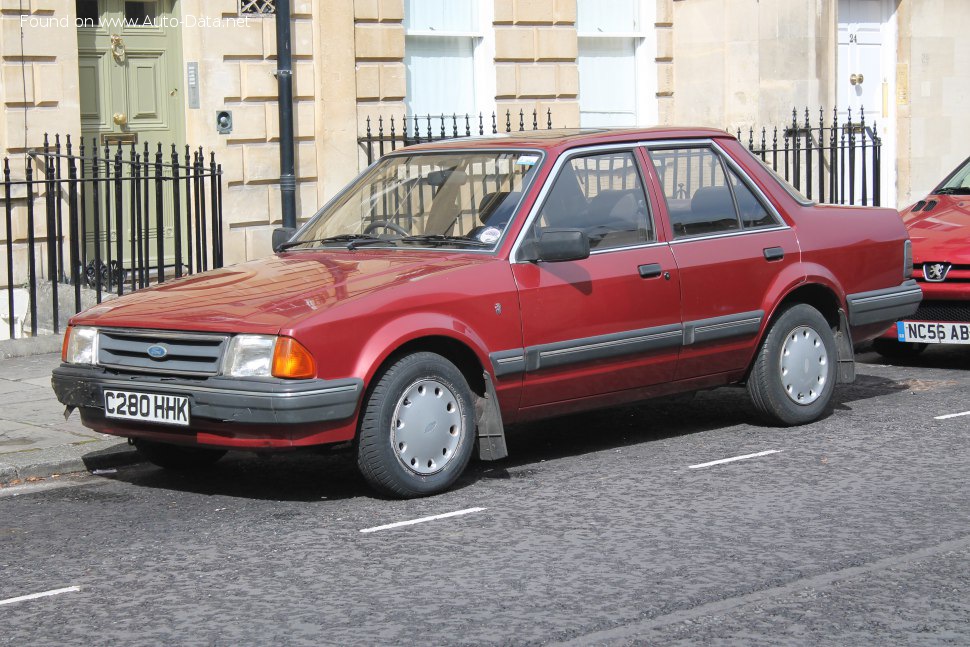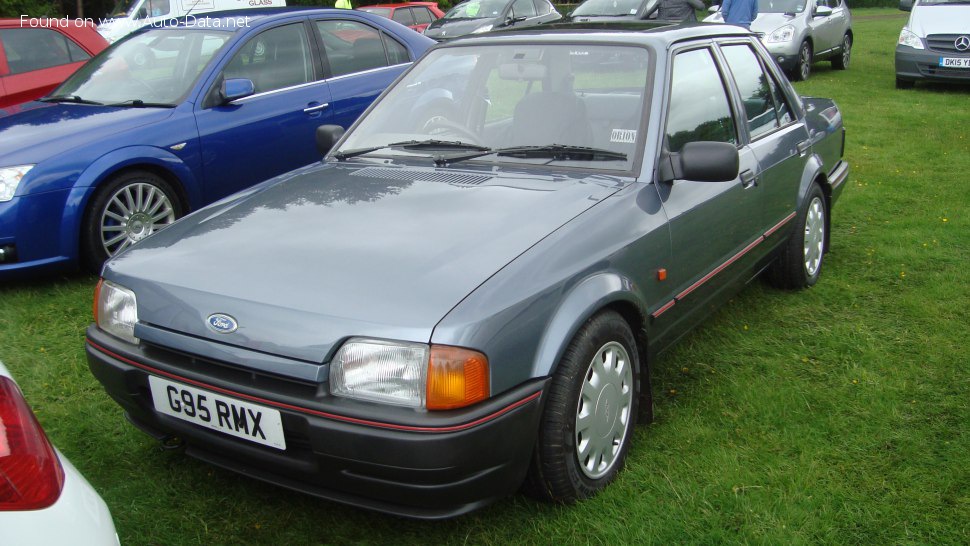
Introduction to the Ford Orion II (AFF)
The Ford Orion II (AFF), specifically the 1.6 D (54 Hp) variant, represents a significant chapter in Ford’s European automotive strategy during the mid-to-late 1980s. Launched in 1985 as the second generation of the Orion, this compact sedan was designed to appeal to buyers seeking a more traditional three-box design than the popular, but more utilitarian, Ford Escort hatchback upon which it was largely based. Positioned as a slightly more upscale and formal alternative to the Escort, the Orion aimed to capture a segment of the market that valued the security and aesthetics of a separate trunk.
While never officially sold in the United States, the Ford Orion II (AFF) played a crucial role in Ford of Europe’s product lineup, competing fiercely in the highly competitive European C-segment. The 1.6 D (54 Hp) model, in particular, was a testament to the era’s growing emphasis on fuel economy and low running costs, a common characteristic for many European vehicles. It offered a pragmatic solution for families and fleet operators who prioritized efficiency and durability over outright performance, a common demand in markets with higher fuel prices and taxation structures favoring diesel engines. Its production span from 1985 to 1990 saw it evolve with minor updates, consistently offering a reliable and economical transportation option.
Engine and Performance of the Ford Orion II (AFF) 1.6 D
At the heart of the Ford Orion II (AFF) 1.6 D model was a robust 1.6-liter naturally aspirated diesel engine. This powertrain architecture, an internal combustion engine, was engineered for longevity and exceptional fuel efficiency, traits highly valued in the European market. Producing a modest 54 horsepower (Hp), the engine was not designed for exhilarating acceleration or high-speed cruising. Instead, its primary focus was on delivering consistent, reliable power for daily commuting and long-distance travel, coupled with impressive mileage figures.
The naturally aspirated design meant the engine relied solely on atmospheric pressure to draw air into its cylinders, foregoing the complexity and added cost of turbocharging. While this limited its power output compared to contemporary gasoline engines or later turbocharged diesels, it contributed significantly to the engine’s renowned simplicity and durability. Such engines were less prone to mechanical issues and often had longer service lives, a major selling point for budget-conscious consumers and fleet operators. The 54 Hp output, combined with the inherent torque characteristics of a diesel engine, provided adequate grunt for navigating urban environments and maintaining reasonable speeds on European motorways, especially when paired with a well-matched manual transmission, which was standard for most variants. The diesel fuel type further underscored its economic credentials, offering lower per-mile costs compared to gasoline counterparts in many European countries during this period.
Design and Features of the Ford Orion II (AFF)
The design of the Ford Orion II (AFF) was quintessentially 1980s Ford, characterized by its clean, angular lines and functional aesthetic. As a sedan, it offered a distinct visual departure from its Escort hatchback sibling, providing a more formal and traditional silhouette. The three-box body type, with its clearly defined trunk, appealed to a demographic that preferred the perceived security and larger, more organized luggage capacity of a sedan. This design also contributed to a quieter cabin environment by isolating the passenger compartment from the trunk space.
Inside, the Orion II (AFF) prioritized practicality and durability. The cabin was designed to be spacious and comfortable for four adults, with materials chosen to withstand the rigors of daily use. While luxury features were scarce in the 1.6 D base models, the interior layout was ergonomic and straightforward, with all controls easily accessible. Standard features typically included basic heating and ventilation, a simple radio, and manual window winders. Safety features, typical for the era, were rudimentary compared to modern standards, primarily relying on the car’s structural integrity and basic seatbelts. However, its solid construction and predictable handling characteristics contributed to a sense of security for its occupants. The Orion’s design philosophy was rooted in providing reliable, no-nonsense transportation, making it a popular choice for families and business users across Europe. The car’s modest dimensions also made it agile and easy to maneuver in crowded European city streets, while still offering sufficient space for family trips.
Technical Specifications
Below is a detailed table of the technical specifications for the Ford Orion II (AFF) 1.6 D (54 Hp) model:
| Category | Specification |
|---|---|
| Brand | Ford |
| Model | Orion |
| Generation | Orion II (AFF) |
| Type (Engine) | 1.6 D (54 Hp) |
| Start of Production | 1985 year |
| End of Production | 1990 year |
| Powertrain Architecture | Internal Combustion engine |
| Body type | Sedan |
| Fuel Type | Diesel |
| Power | 54 Hp |
| Engine Aspiration | Naturally aspirated engine |
| Drivetrain | Internal Combustion engine |
Legacy and Market Impact
The Ford Orion II (AFF) 1.6 D (54 Hp) carved out a significant niche for Ford in the European market, establishing a reputation for reliability, fuel economy, and practical design. While it might not possess the iconic status of some of its more performance-oriented contemporaries, its impact was profound in its segment. The Orion successfully offered a compelling alternative to the Escort hatchback, catering to a demographic that preferred the traditional sedan body style for its perceived prestige, better trunk security, and often quieter cabin. This strategic positioning allowed Ford to broaden its appeal within the highly competitive compact car market.
In its primary European markets, the Orion faced stiff competition from rivals such as the Vauxhall Cavalier (Opel Ascona/Vectra), Volkswagen Jetta, Renault 9/11, and Peugeot 309. What set the Orion apart, particularly the diesel variants, was its reputation for robust engineering and low running costs. The 1.6 D (54 Hp) model became a favorite among fleet buyers, taxi operators, and families who logged significant mileage, thanks to its economical diesel engine and straightforward maintenance. Its unpretentious nature and focus on utility made it a workhorse for many, contributing to its strong sales performance throughout its production run.
The Orion’s historical significance lies in its role as a bridge product within Ford’s European lineup. It filled a gap between the compact Escort and the larger, more executive Sierra. While the Orion nameplate eventually faded, its legacy was absorbed back into the Escort and later the Focus lineage, as Ford moved towards more unified global platforms and design philosophies. Today, the Ford Orion II (AFF) is remembered as a testament to the era’s automotive engineering, a vehicle that prioritized durability and efficiency, embodying the practical spirit of 1980s European motoring. It remains a classic example of how a well-executed, if unassuming, vehicle can leave a lasting mark through sheer utility and widespread appeal in its intended market. Its continued presence on roads in some parts of Europe decades later speaks volumes about its inherent quality and the enduring appeal of its simple, reliable design.