The Mercedes-Benz SLK (R171) SLK 200 Kompressor (163 Hp): A Compact Luxury Roadster Refined
The Mercedes-Benz SLK (R171) represented the second generation of Mercedes-Benz’s compact luxury roadster, building upon the success of its predecessor, the R170. Launched in December 2003, this iteration brought significant advancements in design, technology, and driving dynamics, solidifying the SLK’s position in the competitive two-seater segment. The Mercedes-Benz SLK (R171) SLK 200 Kompressor (163 Hp), produced from 2003 to 2007, served as a crucial entry-level model, particularly popular in European and Asian markets where its blend of performance, efficiency, and Mercedes-Benz prestige offered an attractive proposition for discerning buyers seeking an open-top driving experience without the higher running costs of larger engine variants. While the SLK nameplate was globally recognized, the 200 Kompressor variant was specifically tailored to markets that favored smaller, forced-induction engines for tax and fuel efficiency reasons, making it a cornerstone of the R171 lineup in those regions.
The SLK (R171) Generation: A Leap Forward in Design and Engineering
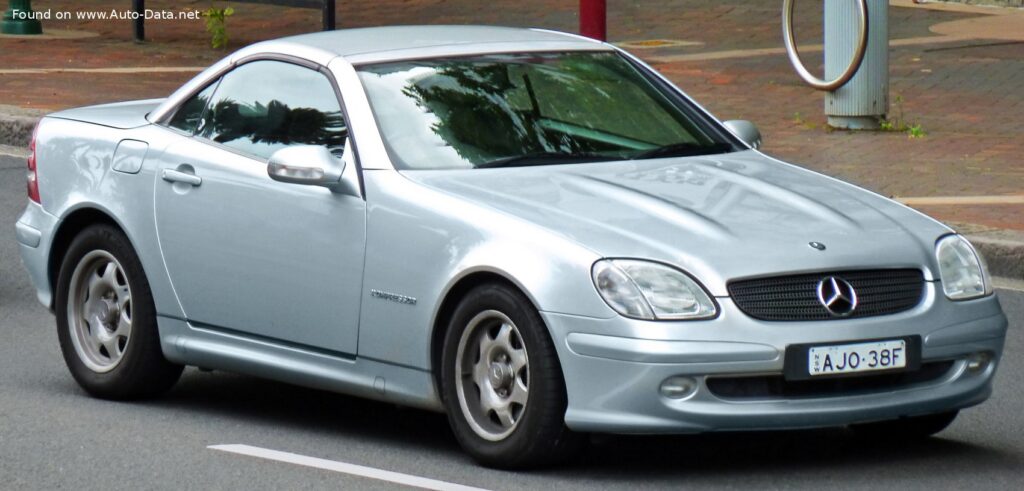
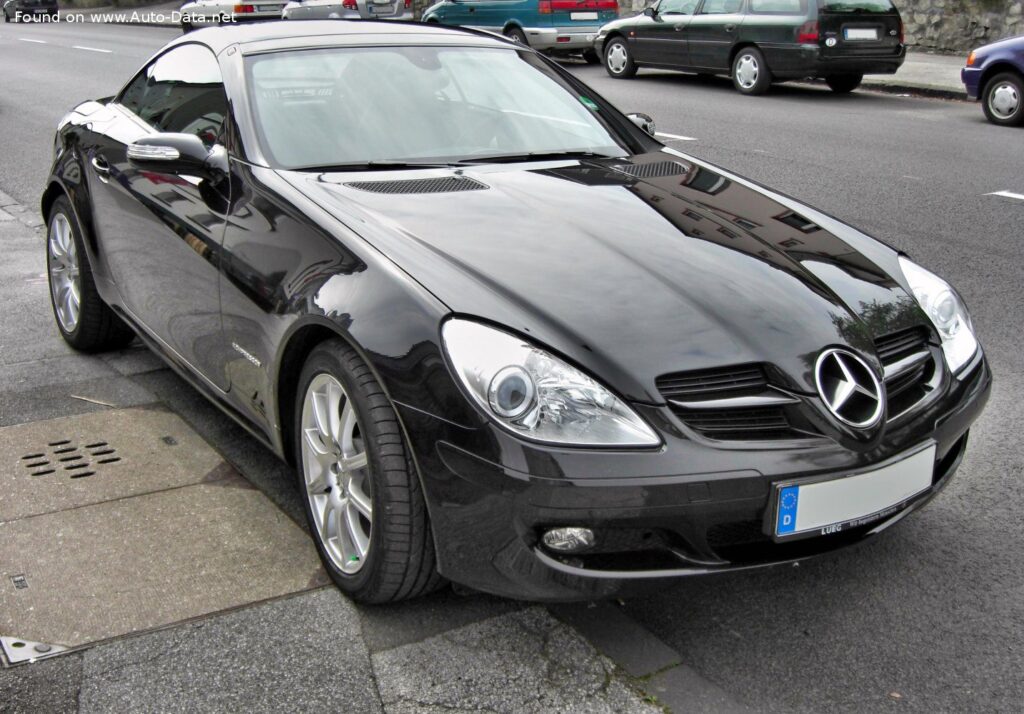
The R171 generation of the Mercedes-Benz SLK marked a significant departure from its predecessor, both aesthetically and mechanically. Its design language was heavily influenced by the McLaren-Mercedes SLR supercar, featuring a more pronounced arrow-shaped nose, swept-back headlights, and distinctive side vents, giving it a sportier and more aggressive stance. This updated styling moved the SLK away from the somewhat softer lines of the R170, injecting a sense of dynamic urgency that resonated with a broader audience. Beyond the visual enhancements, the R171 also introduced a host of engineering improvements, including a more rigid chassis, refined suspension geometry, and an enhanced version of Mercedes-Benz’s signature Vario-roof retractable hardtop. This innovative roof system, capable of transforming the car from a sleek coupe to an open-air roadster in mere seconds, remained a defining feature, offering the best of both worlds: the security and refinement of a fixed-head coupe with the exhilaration of a convertible.
Engine and Performance: Supercharged Agility
At the heart of the Mercedes-Benz SLK (R171) SLK 200 Kompressor (163 Hp) was the M 271.944 engine, a 1.8-liter (1796 cm3 or 109.6 cu. in.) inline-four cylinder unit. This powertrain was distinguished by its use of a supercharger with an intercooler, a technology Mercedes-Benz had successfully deployed in various models to enhance performance without significantly increasing displacement. The supercharger, often referred to as a “Kompressor” by Mercedes-Benz, provided instant throttle response and a broad torque curve, mitigating the typical lag associated with turbocharged engines of the era. This setup allowed the engine to produce a respectable 163 horsepower at 5500 rpm and 177.01 lb.-ft. of torque at a relatively low 3000 rpm, ensuring lively acceleration and flexible in-gear performance. The engine’s power per liter stood at 90.8 Hp/l, showcasing efficient power extraction for its size.
Paired with a crisp-shifting 6-speed manual transmission, the SLK 200 Kompressor delivered an engaging driving experience. Power was sent to the rear wheels, adhering to the classic sports car layout, which contributed to its balanced handling characteristics. Performance figures were competitive for its class, with the roadster capable of accelerating from 0 to 60 mph in a brisk 7.5 seconds and reaching a top speed of 141.67 mph (228 km/h). Fuel efficiency, particularly important in its primary markets, was rated at a combined 27 – 25.8 US mpg (8.7-9.1 l/100 km) on the NEDC cycle, with urban consumption ranging from 18.7 – 18.1 US mpg and extra-urban figures reaching 36.2 – 34.1 US mpg. With CO2 emissions between 209-218 g/km, the SLK 200 Kompressor met Euro 4 emission standards, reflecting Mercedes-Benz’s commitment to environmental considerations even in its performance-oriented models of the mid-2000s.
Design and Features: Luxury in a Compact Package
The R171 SLK’s exterior design was a clear evolution, projecting a more assertive and modern image. Its compact dimensions – 160.98 inches in length, 69.96 inches in width, and 51.02 inches in height – contributed to its agile feel and ease of maneuverability in urban environments. The drag coefficient (Cd) of 0.32 was respectable for a roadster, aiding both performance and fuel efficiency. The interior, though a two-seater, was crafted with Mercedes-Benz’s characteristic attention to detail and material quality. The cabin offered a driver-focused layout, with intuitive controls and supportive seating. Standard features for a Mercedes of this caliber included power windows, automatic climate control, a premium audio system, and a suite of passive and active safety features. The pivotal feature remained the Vario-roof, which seamlessly folded into the trunk, transforming the car from a secure coupe to an open-air convertible. This not only offered versatility but also enhanced the car’s aesthetic appeal, eliminating the need for a separate soft top.
Safety was a paramount concern for Mercedes-Benz, and the SLK (R171) was equipped with advanced systems for its time. While the data specifically lists ABS (Anti-lock Braking System), the vehicle would have also featured multiple airbags, electronic stability program (ESP), and traction control, all standard Mercedes-Benz safety technologies designed to protect occupants and assist the driver in maintaining control. Braking performance was strong, with ventilated discs measuring 288 mm at the front and solid discs measuring 278 mm at the rear, allowing for a 100 km/h to 0 stopping distance of 37 meters. The suspension setup, featuring an independent McPherson type at the front and an independent multi-link suspension at the rear, both with transverse stabilizers, ensured a comfortable ride quality balanced with sporty handling characteristics. Hydraulic power steering provided precise feedback, while 205/55 R 16 tires on 7 J x 16 H 2 wheels offered a good balance of grip and ride comfort.
Technical Specifications
| Category | Specification |
|---|---|
| Brand | Mercedes-Benz |
| Model | SLK |
| Generation | SLK (R171) |
| Type (Engine) | SLK 200 Kompressor (163 Hp) |
| Production Start | December, 2003 |
| Production End | December, 2007 |
| Powertrain Architecture | Internal Combustion engine |
| Body Type | Roadster |
| Seats | 2 |
| Doors | 2 |
| Fuel Consumption (Urban NEDC) | 18.7 – 18.1 US mpg (12.6-13 l/100 km) |
| Fuel Consumption (Extra Urban NEDC) | 36.2 – 34.1 US mpg (6.5-6.9 l/100 km) |
| Fuel Consumption (Combined NEDC) | 27 – 25.8 US mpg (8.7-9.1 l/100 km) |
| CO2 Emissions (NEDC) | 209-218 g/km |
| Fuel Type | Petrol (Gasoline) |
| Acceleration 0 – 60 mph | 7.5 sec |
| Acceleration 0 – 100 km/h | 7.9 sec |
| Maximum Speed | 141.67 mph (228 km/h) |
| Braking Distance 100 km/h – 0 | 37 m |
| Emission Standard | Euro 4 |
| Weight-to-Power Ratio | 8.1 kg/Hp, 124 Hp/tonne |
| Weight-to-Torque Ratio | 5.5 kg/Nm, 182.5 Nm/tonne |
| Power | 163 Hp @ 5500 rpm |
| Power per Liter | 90.8 Hp/l |
| Torque | 177.01 lb.-ft. @ 3000 rpm (240 Nm @ 3000 rpm) |
| Maximum Engine Speed | 6000 rpm |
| Engine Layout | Front, Longitudinal |
| Engine Model/Code | M 271.944 |
| Engine Displacement | 1.8 liters (1796 cm3 / 109.6 cu. in.) |
| Number of Cylinders | 4 |
| Engine Configuration | Inline |
| Cylinder Bore | 3.23 in. (82 mm) |
| Piston Stroke | 3.35 in. (85 mm) |
| Compression Ratio | 9.5:1 |
| Valves per Cylinder | 4 |
| Fuel Injection System | Multi-port manifold injection |
| Engine Aspiration | Supercharger, Intercooler |
| Valvetrain | DOHC |
| Engine Oil Capacity | 5.81 US qt (5.5 l) |
| Coolant Capacity | 8.45 US qt (8 l) |
| Kerb Weight | 2899.08 lbs. (1315 kg) |
| Maximum Weight | 3758.88 lbs. (1705 kg) |
| Maximum Load | 859.8 lbs. (390 kg) |
| Trunk (Boot) Space – Minimum | 7.35 cu. ft. (208 l) |
| Fuel Tank Capacity | 18.49 US gal (70 l) |
| Maximum Roof Load | 110.23 lbs. (50 kg) |
| Length | 160.98 in. (4089 mm) |
| Width | 69.96 in. (1777 mm) |
| Width Including Mirrors | 77.56 in. (1970 mm) |
| Height | 51.02 in. (1296 mm) |
| Wheelbase | 95.67 in. (2430 mm) |
| Front Track | 60.24 in. (1530 mm) |
| Rear Track | 60.67 in. (1541 mm) |
| Drag Coefficient (Cd) | 0.32 |
| Minimum Turning Circle | 34.48 ft. (10.51 m) |
| Drivetrain Architecture | Rear wheel drive |
| Drive Wheel | Rear wheel drive |
| Number of Gears & Gearbox Type | 6 gears, manual transmission |
| Front Suspension | Independent type McPherson, Transverse stabilizer |
| Rear Suspension | Independent multi-link suspension, Transverse stabilizer |
| Front Brakes | Ventilated discs, 288 mm |
| Rear Brakes | Disc, 278 mm |
| Assisting Systems | ABS (Anti-lock braking system) |
| Steering Type | Steering rack and pinion |
| Power Steering | Hydraulic Steering |
| Tires Size | 205/55 R 16 91 V |
| Wheel Rims Size | 7 J x 16 H 2 |
Legacy and Market Impact
The Mercedes-Benz SLK (R171) SLK 200 Kompressor (163 Hp) played a significant role in the luxury compact roadster market during its production years. It successfully combined the prestige of the Mercedes-Benz brand with the practicality of a retractable hardtop and the engaging driving dynamics expected of a two-seater sports car. While larger engine variants like the SLK 350 and the mighty SLK 55 AMG garnered more attention in performance circles, the 200 Kompressor offered an accessible entry point into the SLK lineup, making the dream of Mercedes-Benz open-top ownership attainable for a broader segment of the market, particularly in Europe and other regions where vehicle taxation and fuel costs favored smaller, efficient engines.
Its primary competitors included the BMW Z4 Roadster, which offered a more overtly sporty driving experience, the Audi TT Roadster, known for its distinctive design and quattro all-wheel drive, and the Porsche Boxster, which set the benchmark for mid-engine sports car dynamics. The SLK (R171), and specifically the 200 Kompressor, carved out its niche by emphasizing a blend of luxury, comfort, and sophisticated engineering, wrapped in a stylish, coupe-convertible package. It was often lauded for its robust build quality, refined ride, and the seamless operation of its Vario-roof. The car’s reputation for reliability and its strong resale value further cemented its position as a desirable option in the pre-owned market. The R171 generation, including the 200 Kompressor, is remembered as a well-rounded and influential model that helped define the modern luxury compact roadster segment, successfully blending everyday usability with the allure of open-top motoring and the unmistakable cachet of the three-pointed star.