body { font-family: Arial, sans-serif; line-height: 1.6; }
h2, h3 { color: #333; }
table { width: 100%; border-collapse: collapse; margin-top: 20px; }
th, td { border: 1px solid #ddd; padding: 8px; text-align: left; }
th { background-color: #f2f2f2; }
Volkswagen Polo II Coupe (86C) 1.3 G40 (113 Hp)
The Volkswagen Polo II Coupe (86C) 1.3 G40 (113 Hp) represents a fascinating chapter in the history of European hot hatches, a segment celebrated for delivering exhilarating performance in a compact, accessible package. Produced by the German automotive giant Volkswagen from 1990 to 1994, this particular iteration of the second-generation Polo stood out not just for its sporty “coupe” body style – a three-door hatchback in common parlance – but primarily for its sophisticated and unique supercharged powertrain. While the Volkswagen Polo itself was a ubiquitous sight across Europe, serving as a reliable and economical supermini, the G40 variant transformed it into a genuine performance contender, capable of challenging larger, more established sports cars of its era. This model was a distinctly European offering and was never officially imported into the United States market, yet its engineering prowess and impact on the global automotive landscape resonate with enthusiasts and experts worldwide. It embodied Volkswagen’s commitment to innovation, packing advanced forced induction technology into a small car, thereby creating a legend among enthusiasts for its distinctive character and impressive power-to-weight ratio.
The Genesis of a Pocket Rocket: The Polo II (86C) Generation
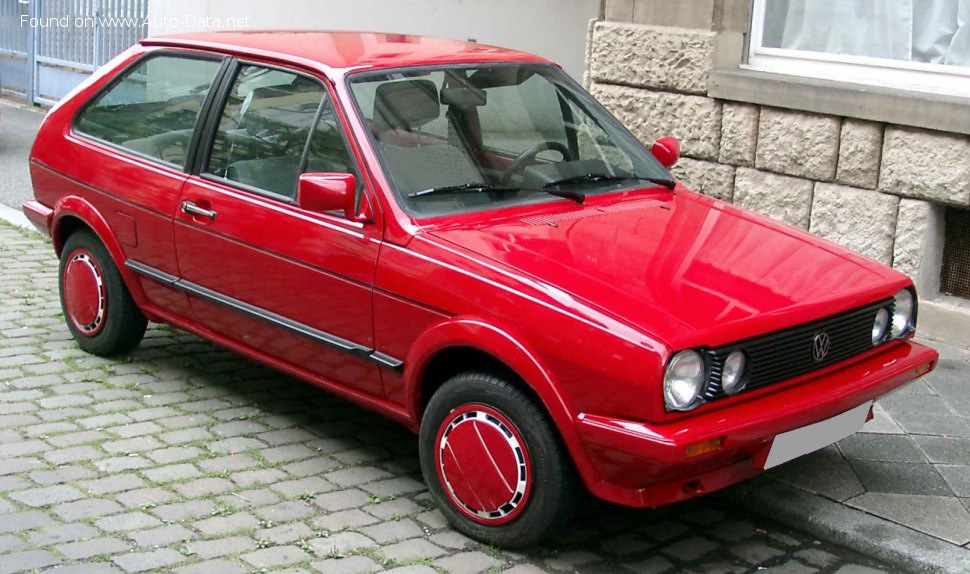
The second-generation Volkswagen Polo, internally designated 86C, debuted in 1981 and enjoyed a remarkably long production run until 1994. It was available in several body styles, including a conventional hatchback, a “wagon” variant known as the Derby or Classic, and the sportier “Coupe” version, which was effectively a three-door hatchback with a more raked rear profile. The G40 badge first appeared on a limited-production Polo GT G40 in 1987, but the more widely recognized and refined version, the 1.3 G40, arrived in 1990, building upon the experience gained from its predecessor. This iteration benefited from various refinements and was positioned as the flagship performance model in the Polo lineup, offering a blend of daily usability and genuine excitement. It was Volkswagen’s answer to the burgeoning demand for agile, high-performance superminis in the European market, a segment where driving dynamics and engine character were paramount.
Performance and Engineering of the Volkswagen Polo II Coupe (86C) 1.3 G40
The Heart of the Volkswagen Polo II Coupe (86C) 1.3 G40: The G-Lader Engine
At the core of the Volkswagen Polo II Coupe (86C) 1.3 G40‘s appeal was its highly distinctive powertrain. Unlike most performance cars of its size that relied on turbocharging or naturally aspirated high-revving engines, Volkswagen opted for a mechanical supercharger, specifically its proprietary “G-Lader” unit. The engine, designated PY, was a compact 1.3-liter (1272 cm3 or 77.62 cubic inches) inline-four cylinder. This front, transverse-mounted engine featured a Single Overhead Camshaft (SOHC) valvetrain with two valves per cylinder, a common and robust configuration for its time. However, it was the G-Lader that truly set it apart. This unique G-shaped scroll-type supercharger, coupled with an intercooler, provided instant boost without the turbo lag often associated with turbocharged engines of the era.
The result was an impressive output of 113 horsepower, which, for a car weighing just over 1,800 pounds (approximately 850 kg), translated into genuinely brisk acceleration. With 88.8 horsepower per liter, the engine was remarkably efficient in its power delivery for a non-turbocharged unit. The multi-port manifold injection system ensured precise fuel delivery, contributing to both performance and reasonable fuel economy for a performance car. This combination allowed the Polo G40 to achieve 0-60 mph times in the low 8-second range, with a top speed approaching 125 mph – figures that were highly competitive and often superior to many larger, more expensive cars of the early 1990s. The G-Lader’s characteristic whine became an auditory signature for the G40, further enhancing its unique driving experience.
Design and Features: Sporty Practicality
The exterior design of the Polo II Coupe (86C) 1.3 G40 retained the fundamentally boxy yet clean aesthetic of the second-generation Polo, but with subtle enhancements that hinted at its performance capabilities. The “Coupe” body style, with its sloping rear glass, offered a sportier profile than the standard hatchback. Specific G40 badging, unique alloy wheels, and sometimes a slightly lowered suspension differentiated it from its lesser siblings. The design was functional and aerodynamic, reflecting the prevailing design philosophies of the late 1980s and early 1990s, prioritizing efficiency and straightforward aesthetics over elaborate styling cues.
Inside, the G40 featured a driver-focused cockpit. While not luxurious, the interior was well-appointed for a car in its class. Sport seats with enhanced bolstering provided better support during spirited driving, and a unique steering wheel often adorned with the G40 logo reinforced its performance credentials. Instrumentation was clear and concise, providing essential information to the driver. Features for the era were relatively basic compared to modern vehicles, focusing on the driving experience rather than extensive electronic amenities. Power windows and a sunroof might have been optional, but the core appeal lay in its mechanical purity and direct feedback. Safety features were rudimentary by contemporary standards, typically including front seatbelts and a robust chassis structure, reflecting the regulatory environment of the time. The emphasis was squarely on mechanical grip, responsive steering, and potent acceleration.
Technical Specifications: Volkswagen Polo II Coupe (86C) 1.3 G40 (113 Hp)
| Category | Specification |
|---|---|
| General Information | |
| Brand | Volkswagen |
| Model | Polo |
| Generation | Polo II Coupe (86C) |
| Type (Engine) | 1.3 G40 (113 Hp) |
| Start of Production | 1990 year |
| End of Production | 1994 year |
| Powertrain Architecture | Internal Combustion Engine |
| Body type | Coupe |
| Performance Specs | |
| Fuel Type | Petrol (Gasoline) |
| Engine Specs | |
| Power | 113 Hp |
| Power per liter | 88.8 Hp/l |
| Engine Layout | Front, Transverse |
| Engine Model/Code | PY |
| Engine Displacement | 1272 cm3 (1.3 liters / 77.62 cu. in.) |
| Number of Cylinders | 4 |
| Engine Configuration | Inline |
| Number of Valves per Cylinder | 2 |
| Fuel Injection System | Multi-port manifold injection |
| Engine Aspiration | Supercharger, Intercooler |
| Valvetrain | SOHC |
| Engine Oil Capacity | 3.5 liters (3.7 US qt / 3.08 UK qt) |
| Coolant Capacity | 5.6 liters (5.92 US qt / 4.93 UK qt) |
Legacy and Market Impact in the European Hot Hatch Segment
The Volkswagen Polo II Coupe (86C) 1.3 G40 carved out a significant niche for itself in the highly competitive European hot hatch market. It was celebrated for its unique G-Lader supercharger, which delivered a driving experience distinct from its turbocharged and naturally aspirated rivals. Its reputation as a “pocket rocket” quickly grew among enthusiasts, who appreciated its lightweight chassis, agile handling, and the linear power delivery characteristic of supercharged engines.
In its primary market, the G40 competed against a formidable array of hot hatch icons. Key rivals included the Renault 5 GT Turbo, known for its raw, turbocharged power; the Peugeot 205 GTI, often considered the benchmark for driving dynamics; and the Ford Fiesta XR2i, another popular and accessible performance offering. While perhaps not as ubiquitous as the 205 GTI, the Polo G40 stood out for its technological sophistication and distinctive character. It appealed to a driver who sought something a little different, a car that combined Volkswagen’s renowned build quality with an innovative powertrain.
Historically, the 1.3 G40 played a crucial role in enhancing the Polo’s image from a humble economy car to a credible performance platform. It demonstrated Volkswagen’s engineering capability beyond the Golf GTI, proving that smaller cars could also be infused with significant performance. Today, the Polo G40 is considered a cult classic, highly sought after by collectors and enthusiasts who appreciate its rarity, unique engine technology, and the pure, unadulterated driving experience it offers. Maintaining the G-Lader supercharger can be a specialized task, contributing to its enthusiast appeal. Its legacy endures as a testament to an era when manufacturers experimented with diverse solutions to extract maximum performance from compact vehicles, leaving behind a car that remains an engaging and influential piece of automotive history.