
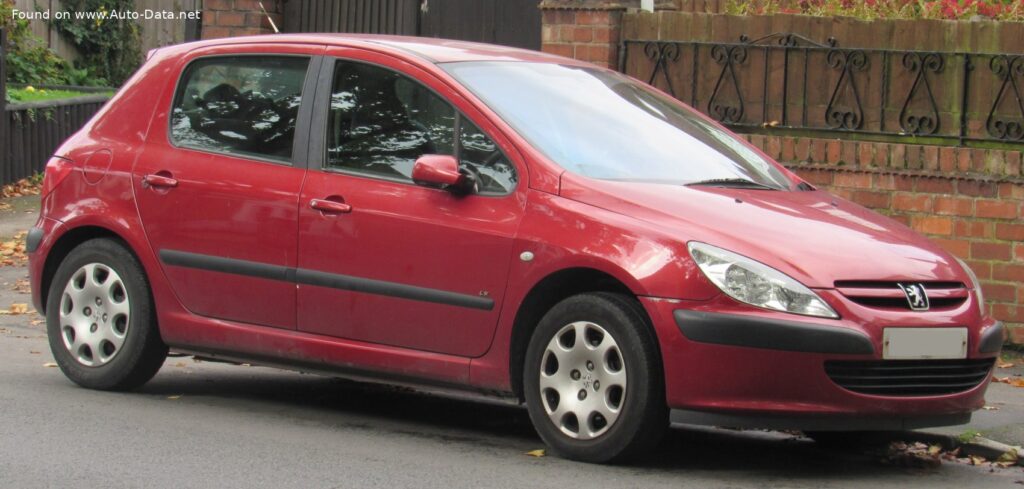
The Peugeot 307 1.4 HDi (68 Hp)
The Peugeot 307 1.4 HDi (68 Hp) represents a significant entry in the compact car segment, a highly competitive market in Europe during its production run from 2001 to 2005. Launched as the successor to the successful Peugeot 306, the 307 was designed to elevate Peugeot’s presence in the C-segment, offering a blend of practicality, comfort, and efficiency. While never officially sold in the United States, the 307 became a ubiquitous sight on European roads, celebrated for its “tall” design philosophy that maximized interior space and visibility. This particular variant, equipped with the 1.4-liter HDi diesel engine, epitomized the European focus on fuel economy and lower emissions, providing a pragmatic choice for urban commuters and small families seeking an economical daily driver.
The Peugeot 307 1.4 HDi (68 Hp) Powertrain and Performance
At the heart of this specific Peugeot 307 variant was its 1.4-liter (1398 cm3 or 85.31 cu. in.) HDi diesel engine, designated by the codes 8HZ DV4TD or 8HX DV4TD. This inline four-cylinder engine featured a SOHC (Single Overhead Camshaft) valvetrain with two valves per cylinder, a common and reliable configuration for efficiency. Crucially, it utilized a modern Diesel Commonrail fuel injection system, paired with a turbocharger and intercooler, which were advanced technologies for small-displacement diesel engines of its time. This setup allowed the engine to produce 68 horsepower at 4000 rpm, translating to a power per liter figure of 48.6 Hp/l. More impressively for a diesel, it delivered a healthy 118.01 lb.-ft. (160 Nm) of torque at a low 1750 rpm, providing accessible pulling power ideal for city driving and highway cruising.
Power was delivered to the front wheels via a 5-speed manual transmission, a standard offering for a vehicle in this class focused on driver engagement and fuel efficiency. While not a performance powerhouse, the 307 1.4 HDi was designed for economy. It achieved a 0-60 mph acceleration in a respectable 15.7 seconds (0-100 km/h in 16.5 seconds) and reached a maximum speed of 99.42 mph (160 km/h). Its true strength lay in its fuel economy, with a combined rating of 52.3 US mpg (4.5 l/100 km), an urban rating of 42.8 US mpg (5.5 l/100 km), and an extra-urban rating of 58.8 US mpg (4.0 l/100 km). These figures underscored its appeal as an economical vehicle in a market sensitive to fuel costs. Furthermore, its CO2 emissions were rated at 120 g/km, adhering to the Euro 3 emission standard prevalent during its early production years, making it a relatively environmentally conscious choice for its era.
Design and Features of the Peugeot 307
The Peugeot 307 marked a departure from its predecessor’s styling, adopting a taller, more monospace-like silhouette that became a signature of Peugeot’s design language in the early 2000s. This “tall car” concept, measuring 165.43 inches in length, 68.11 inches in width, and 59.53 inches in height, with a wheelbase of 102.68 inches, aimed to provide enhanced interior room and a commanding driving position. The car was offered in both 3-door and 5-door hatchback configurations, accommodating five occupants comfortably. The design was characterized by a large windshield and expansive glass areas, contributing to excellent outward visibility, a key safety and comfort feature.
Practicality was a cornerstone of the 307’s design. The trunk space ranged from a generous 12.01 cu. ft. (340 liters) with the rear seats up, expanding to a cavernous 46.9 cu. ft. (1328 liters) when the rear seats were folded, offering ample cargo capacity for families or active individuals. The vehicle’s kerb weight stood at 2599.25 lbs. (1179 kg), with a maximum permissible weight of 3701.56 lbs. (1679 kg) and a maximum load capacity of 1102.31 lbs. (500 kg). Safety features for the time included an ABS (Anti-lock Braking System) as standard, with ventilated disc brakes at the front and disc brakes at the rear. The steering system was a hydraulic rack and pinion setup, providing a conventional and reliable feel. The suspension featured an independent McPherson type at the front and a semi-independent, coil spring arrangement at the rear, balancing ride comfort with stable handling. The car rode on 195/65 R15 tires mounted on 15-inch wheel rims, contributing to its comfortable ride and predictable road manners.
Technical Specifications
| Category | Specification |
|---|---|
| Brand | Peugeot |
| Model | 307 |
| Generation | 307 |
| Type (Engine) | 1.4 HDi (68 Hp) |
| Start of Production | 2001 year |
| End of Production | 2005 year |
| Powertrain Architecture | Internal Combustion engine |
| Body type | Hatchback |
| Seats | 5 |
| Doors | 3-5 |
| Fuel consumption (economy) – urban | 42.8 US mpg (5.5 l/100 km) |
| Fuel consumption (economy) – extra urban | 58.8 US mpg (4.0 l/100 km) |
| Fuel consumption (economy) – combined | 52.3 US mpg (4.5 l/100 km) |
| CO2 emissions | 120 g/km |
| Fuel Type | Diesel |
| Acceleration 0 – 60 mph | 15.7 sec |
| Acceleration 0 – 100 km/h | 16.5 sec |
| Maximum speed | 99.42 mph (160 km/h) |
| Emission standard | Euro 3 |
| Weight-to-power ratio | 17.3 kg/Hp, 57.7 Hp/tonne |
| Weight-to-torque ratio | 7.4 kg/Nm, 135.7 Nm/tonne |
| Power | 68 Hp @ 4000 rpm |
| Power per liter | 48.6 Hp/l |
| Torque | 118.01 lb.-ft. (160 Nm) @ 1750 rpm |
| Engine layout | Front, Transverse |
| Engine Model/Code | 8HZ DV4TD, 8HX DV4TD |
| Engine displacement | 1.4 liters (1398 cm3 / 85.31 cu. in.) |
| Number of cylinders | 4 |
| Engine configuration | Inline |
| Cylinder Bore | 2.9 in. (73.7 mm) |
| Piston Stroke | 3.23 in. (82 mm) |
| Compression ratio | 17.9:1 |
| Number of valves per cylinder | 2 |
| Fuel injection system | Diesel Commonrail |
| Engine aspiration | Turbocharger, Intercooler |
| Valvetrain | SOHC |
| Engine oil capacity | 4.02 US qt (3.8 l) |
| Coolant | 6.34 US qt (6 l) |
| Kerb Weight | 2599.25 lbs. (1179 kg) |
| Max. weight | 3701.56 lbs. (1679 kg) |
| Max load | 1102.31 lbs. (500 kg) |
| Trunk (boot) space – minimum | 12.01 cu. ft. (340 l) |
| Trunk (boot) space – maximum | 46.9 cu. ft. (1328 l) |
| Fuel tank capacity | 15.85 US gal (60 l) |
| Permitted trailer load with brakes (12%) | 2513.27 lbs. (1140 kg) |
| Permitted trailer load without brakes | 1399.94 lbs. (635 kg) |
| Length | 165.43 in. (4202 mm) |
| Width | 68.11 in. (1730 mm) |
| Height | 59.53 in. (1512 mm) |
| Wheelbase | 102.68 in. (2608 mm) |
| Front track | 59.25 in. (1505 mm) |
| Rear (Back) track | 59.06 in. (1500 mm) |
| Ride height (ground clearance) | 4.72 in. (120 mm) |
| Drag coefficient (Cd) | 0.31 |
| Minimum turning circle (turning diameter) | 36.52 ft. (11.13 m) |
| Drivetrain Architecture | The Internal combustion engine (ICE) drives the front wheels of the vehicle. |
| Drive wheel | Front wheel drive |
| Number of gears and type of gearbox | 5 gears, manual transmission |
| Front suspension | Independent type McPherson |
| Rear suspension | Semi-independent, coil spring |
| Front brakes | Ventilated discs |
| Rear brakes | Disc |
| Assisting systems | ABS (Anti-lock braking system) |
| Steering type | Steering rack and pinion |
| Power steering | Hydraulic Steering |
| Tires size | 195/65 R15 |
| Wheel rims size | 15 |
Legacy and Market Impact
The Peugeot 307 was a critically acclaimed vehicle upon its launch, even earning the prestigious “European Car of the Year 2002” award. This accolade highlighted its innovative design, improved interior space, and refined driving dynamics compared to its predecessor. In the highly competitive European compact segment, the 307 faced formidable rivals such as the Volkswagen Golf, Opel Astra, Ford Focus, and Renault Mégane. The 1.4 HDi (68 Hp) variant specifically carved out its niche by offering exceptional fuel economy and low running costs, appealing to a broad demographic of buyers prioritizing practicality and affordability over outright performance.
The 307’s “tall car” design not only provided excellent visibility but also contributed to a more spacious and airy cabin feel, making it a popular choice for families. Its advanced diesel engine, with its common rail injection and turbocharging, showcased Peugeot’s commitment to diesel technology, which was a significant selling point in Europe. The car’s reputation for reliability and its comfortable, although not overtly sporty, ride quality further cemented its place in the market. While its production concluded in 2005 to make way for the 308, the Peugeot 307, particularly its economical HDi diesel versions, left a lasting legacy as a competent, practical, and highly efficient compact family car that perfectly met the demands of its European market.
