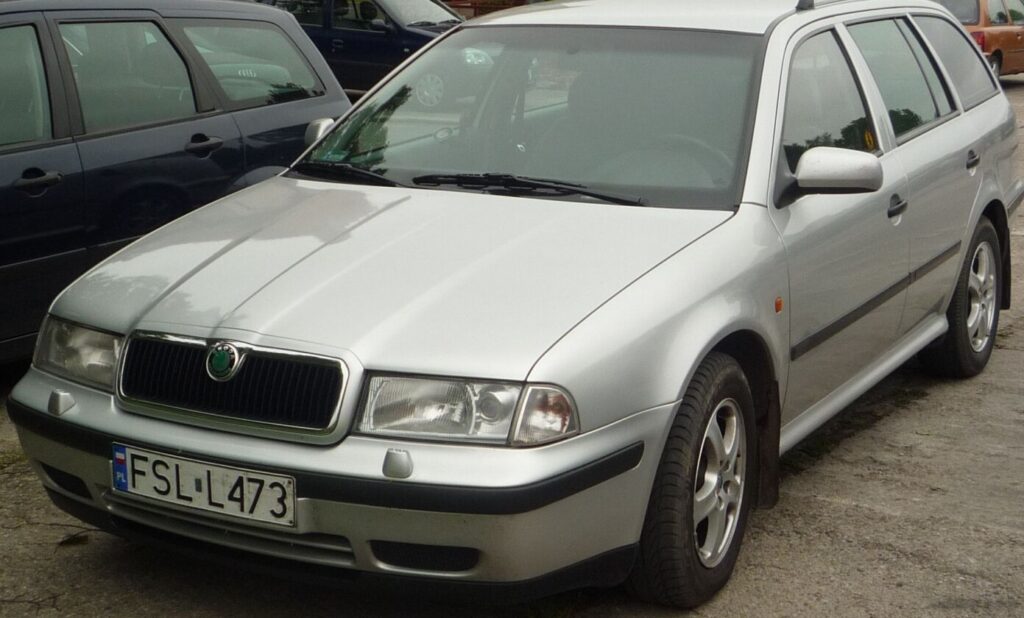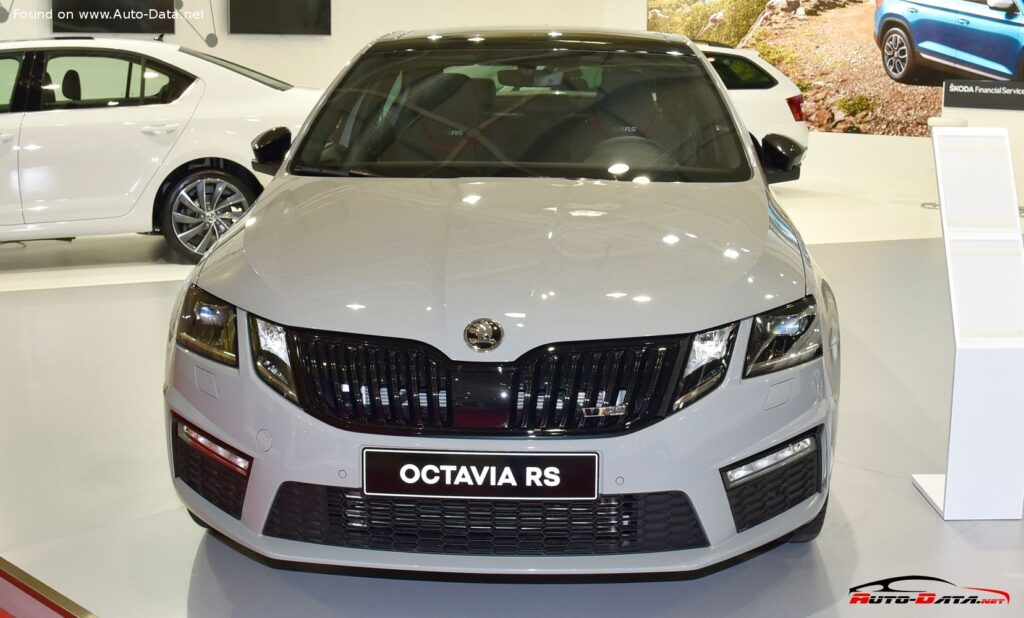
Skoda Octavia III (facelift 2017) RS 2.0 TDI (184 Hp)
The Skoda Octavia, a pivotal model in the Czech automaker’s portfolio, received a significant mid-cycle refresh for its third generation in 2017. Among the updated lineup, the Skoda Octavia III (facelift 2017) RS 2.0 TDI (184 Hp) stood out as a compelling offering, blending performance, practicality, and exceptional fuel economy. While Skoda vehicles are not sold in the United States, the Octavia RS carved a distinct niche within the European automotive landscape, particularly for buyers seeking a “warm” performance car with the added benefit of diesel efficiency. This particular variant, produced from 2017 to 2019, represented the pinnacle of diesel performance for the Octavia, offering a sporty driving experience without compromising on the brand’s renowned value and utility.
Positioned in the compact executive car segment, though often competing with larger family sedans and hatchbacks due to its generous dimensions, the Octavia RS TDI appealed to a broad demographic. It was a testament to Skoda’s strategy of delivering Volkswagen Group engineering with its own unique emphasis on spaciousness and smart features. The facelift brought updated styling cues and technological enhancements, ensuring the Octavia remained competitive in its highly contested European market.
Engine and Performance of the Skoda Octavia III (facelift 2017) RS 2.0 TDI (184 Hp)
At the heart of the Skoda Octavia III (facelift 2017) RS 2.0 TDI (184 Hp) was a robust and efficient 2.0-liter (1968 cm³ or 120.09 cu. in.) inline-four turbocharged diesel engine, designated with codes such as CUNA, CUPA, or DJGA. This unit, a staple within the Volkswagen Group, was engineered for a harmonious blend of power and economy. It produced a healthy 184 horsepower (Hp) at an unspecified RPM, translating to a power-per-liter figure of 93.5 Hp/l, impressive for a diesel powerplant of its era.
Crucially, the engine delivered a substantial 280.27 lb.-ft. (380 Nm) of torque, available across a broad rev range from 1750 to 3250 rpm. This wide torque band ensured excellent in-gear acceleration and effortless cruising, a hallmark of modern diesel engines. Power was channeled to the front wheels via a precise 6-speed manual transmission, offering an engaging driving experience for enthusiasts. The vehicle’s drivetrain architecture was straightforward: an internal combustion engine driving the front wheels.
Performance figures were commendable for a diesel family car. The Octavia RS 2.0 TDI could accelerate from 0 to 60 mph in a brisk 7.5 seconds (7.9 seconds for 0-100 km/h) and reach a top speed of 144.16 mph (232 km/h). Despite its sporting pretensions, fuel efficiency remained a strong suit. The combined fuel consumption was rated at an impressive 52.3 US mpg (4.5 l/100 km), with extra-urban figures reaching 57.4 US mpg (4.1 l/100 km). Urban driving yielded 44.4 US mpg (5.3 l/100 km). These figures, coupled with CO2 emissions of 119 g/km, allowed the Octavia RS TDI to meet the stringent Euro 6 emission standard, thanks in part to its particulate filter system and common rail fuel injection.
Design and Features
The Skoda Octavia III (facelift 2017) RS 2.0 TDI (184 Hp) retained its practical 5-door hatchback body type, a design choice that maximized cargo versatility. The facelift introduced several aesthetic updates, most notably a split headlight design that gave the front fascia a more assertive and modern appearance. Other subtle revisions to the grille and bumpers further sharpened its look, distinguishing it from the pre-facelift model.
Measuring 184.61 inches (4689 mm) in length, 71.42 inches (1814 mm) in width, and 57.01 inches (1448 mm) in height, the Octavia offered generous interior space for five occupants. The wheelbase of 105.51 inches (2680 mm) contributed to a stable ride and ample legroom. The hatchback configuration was a key selling point, providing a cavernous trunk space ranging from 20.84 cu. ft. (590 liters) with the rear seats up to an expansive 55.8 cu. ft. (1580 liters) when folded down. This made it an incredibly versatile vehicle, capable of handling both family duties and spirited drives.
Standard features for the RS model typically included sport seats, distinctive alloy wheels (17-inch wheels with 225/45 R17 tires were standard), and RS-specific interior trim. Safety was paramount, with features like ABS (Anti-lock Braking System) as standard, along with a comprehensive suite of airbags. The steering system utilized an electric power steering rack and pinion setup, providing precise and responsive handling. Ventilated disc brakes on both the front and rear axles ensured strong stopping power, crucial for a performance-oriented model. The vehicle’s kerb weight of 3020.33 lbs (1370 kg) contributed to its agile feel, while a maximum load capacity of 1194.91 lbs (542 kg) underscored its practicality.
Technical Specifications
| Category | Specification | US Equivalent |
|---|---|---|
| General Information | ||
| Brand | Skoda | |
| Model | Octavia | |
| Generation | Octavia III (facelift 2017) | |
| Type (Engine) | RS 2.0 TDI (184 Hp) | |
| Start of production | 2017 year | |
| End of production | 2019 year | |
| Powertrain Architecture | Internal Combustion engine | |
| Body type | Hatchback | |
| Seats | 5 | |
| Doors | 5 | |
| Performance Specifications | ||
| Fuel consumption (economy) – urban | 5.3 l/100 km | 44.4 US mpg |
| Fuel consumption (economy) – extra urban | 4.1 l/100 km | 57.4 US mpg |
| Fuel consumption (economy) – combined | 4.5 l/100 km | 52.3 US mpg |
| CO2 emissions | 119 g/km | |
| Fuel Type | Diesel | |
| Acceleration 0 – 60 mph | 7.5 sec | |
| Acceleration 0 – 100 km/h | 7.9 sec | |
| Maximum speed | 232 km/h | 144.16 mph |
| Emission standard | Euro 6 | |
| Weight-to-power ratio | 7.4 kg/Hp | 134.3 Hp/tonne |
| Weight-to-torque ratio | 3.6 kg/Nm | 277.4 Nm/tonne |
| Engine Specifications | ||
| Power | 184 Hp | |
| Power per liter | 93.5 Hp/l | |
| Torque | 380 Nm @ 1750-3250 rpm | 280.27 lb.-ft. @ 1750-3250 rpm |
| Engine layout | Front, Transverse | |
| Engine Model/Code | CUNA, CUPA, DJGA | |
| Engine displacement | 1968 cm³ | 2.0 Liters (120.09 cu. in.) |
| Number of cylinders | 4 | |
| Engine configuration | Inline | |
| Cylinder Bore | 81 mm | 3.19 in. |
| Piston Stroke | 95.5 mm | 3.76 in. |
| Compression ratio | 15.8:1 | |
| Fuel injection system | Diesel Commonrail | |
| Engine aspiration | Turbocharger, Intercooler | |
| Engine oil capacity | 4.6 l | 4.86 US qt |
| Engine systems | Particulate filter | |
| Space, Volume and Weights | ||
| Kerb Weight | 1370 kg | 3020.33 lbs. |
| Max. weight | 1912 kg | 4215.24 lbs. |
| Max load | 542 kg | 1194.91 lbs. |
| Trunk (boot) space – minimum | 590 l | 20.84 cu. ft. |
| Trunk (boot) space – maximum | 1580 l | 55.8 cu. ft. |
| Fuel tank capacity | 50 l | 13.21 US gal |
| Max. roof load | 75 kg | 165.35 lbs. |
| Permitted trailer load with brakes (12%) | 1600 kg | 3527.4 lbs. |
| Permitted trailer load without brakes | 720 kg | 1587.33 lbs. |
| Dimensions | ||
| Length | 4689 mm | 184.61 in. |
| Width | 1814 mm | 71.42 in. |
| Height | 1448 mm | 57.01 in. |
| Wheelbase | 2680 mm | 105.51 in. |
| Front track | 1535 mm | 60.43 in. |
| Rear (Back) track | 1544 mm | 60.79 in. |
| Minimum turning circle (turning diameter) | 10.59 m | 34.74 ft. |
| Drivetrain, Brakes and Suspension Specifications | ||
| Drivetrain Architecture | The Internal combustion engine (ICE) drives the front wheels of the vehicle. | |
| Drive wheel | Front wheel drive | |
| Number of gears and type of gearbox | 6 gears, manual transmission | |
| Front brakes | Ventilated discs | |
| Rear brakes | Ventilated discs | |
| Assisting systems | ABS (Anti-lock braking system) | |
| Steering type | Steering rack and pinion | |
| Power steering | Electric Steering | |
| Tires size | 225/45 R17 | |
| Wheel rims size | 17 | |
Legacy and Market Impact
The Skoda Octavia III (facelift 2017) RS 2.0 TDI (184 Hp) solidified Skoda’s reputation in Europe as a purveyor of practical, well-engineered, and subtly sporty vehicles. While not a full-blown performance car like its gasoline-powered RS counterpart, the diesel variant offered a compelling alternative for those prioritizing long-distance comfort and exceptional fuel economy without sacrificing dynamic capability. It successfully bridged the gap between a mundane family car and a true performance machine, delivering a “warm” hatchback experience that was both engaging and economical.
In the highly competitive European market, the Octavia RS TDI faced rivals such as the Volkswagen Golf GTD, its platform sibling, which offered a similar powertrain in a slightly smaller, more premium package. Other competitors included the Ford Focus ST diesel, Peugeot 308 GT BlueHDi, and Opel Astra BiTurbo CDTI. The Octavia RS distinguished itself with its superior interior and cargo space, offering near-D-segment (mid-size car) practicality at a C-segment (compact car) price point, making it an excellent value proposition.
Its historical significance lies in its contribution to the performance diesel segment, demonstrating that diesel engines could deliver both impressive torque and exhilarating acceleration while maintaining remarkable efficiency and meeting strict emission standards. The Octavia RS TDI was a testament to Skoda’s ability to leverage Volkswagen Group technology to create a distinct and highly appealing product, carving out a loyal following among drivers who valued understated performance, everyday usability, and low running costs. The model’s production run from 2017 to 2019 marked a period where performance diesels were still highly sought after in Europe, just before the broader shift towards electrification began to reshape the automotive landscape.