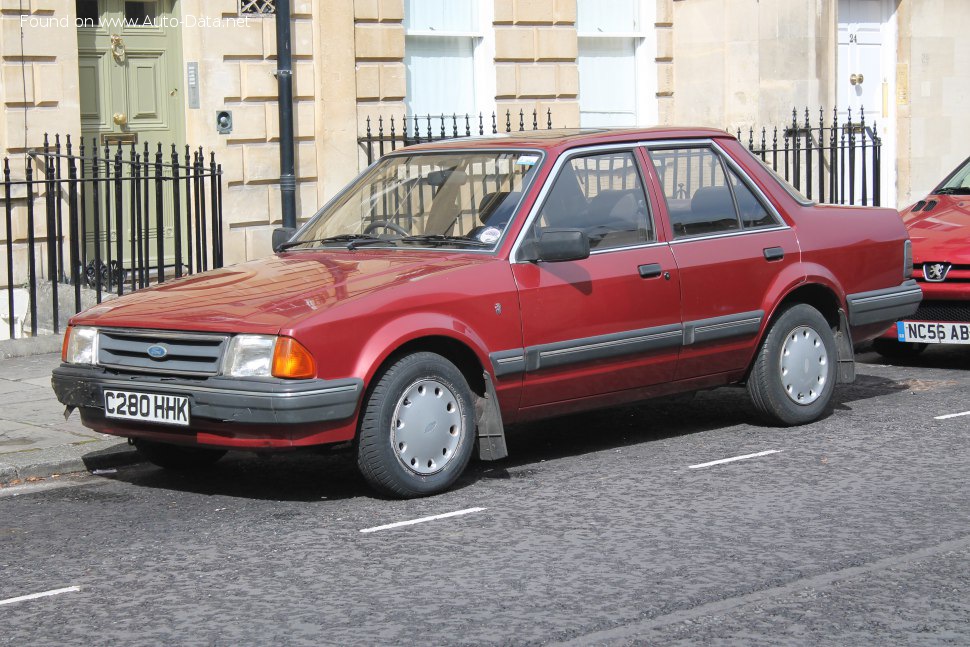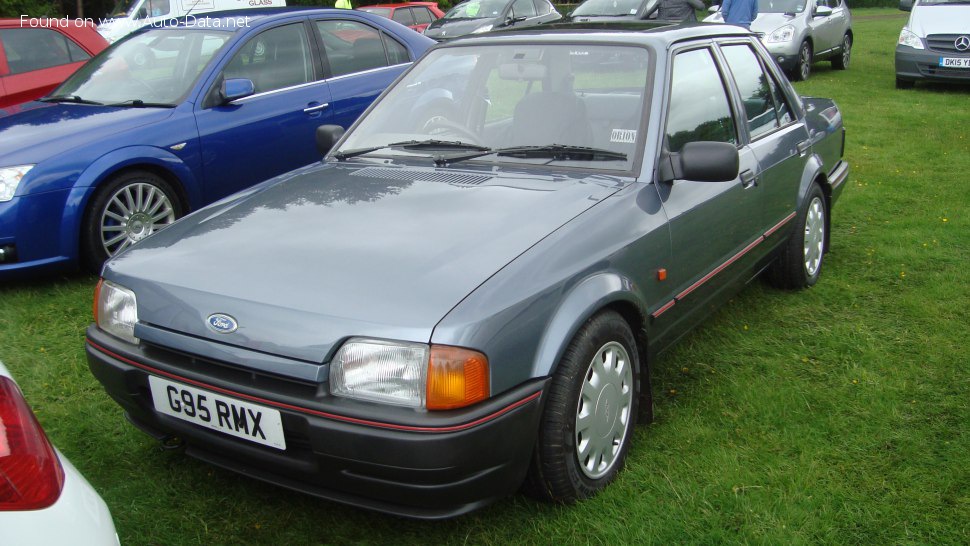
While the vast landscape of North American automotive history is dotted with iconic Fords – from the ubiquitous F-Series trucks to the legendary Mustang and the family-favorite Taurus – some chapters of the Blue Oval’s global narrative unfolded far from U.S. and Canadian highways. Among these intriguing footnotes is the Ford Orion II (AFF), a compact sedan that served as a workhorse across Europe in the late 1980s. Though never officially imported to North America, the Orion II offers a fascinating glimpse into Ford’s distinct product strategies for different continents, highlighting the diverse automotive tastes and regulatory landscapes that shaped the global market.
For the North American enthusiast, the Orion II represents a “what if” scenario, a robust, economical sedan that shared its underpinnings with the globally significant Ford Escort, yet remained an elusive proposition on this side of the Atlantic. Its story is one of practicality, efficiency, and a design philosophy tailored to European sensibilities, making it a compelling subject for comparison with its contemporary North American Ford siblings.
The Genesis of the Ford Orion II (AFF): A European Pillar
The Ford Orion was first introduced in Europe in 1983, essentially as a sedan variant of the popular third-generation Escort hatchback. It aimed to capture a segment of the market that still favored traditional three-box sedans over hatchbacks, offering more conventional styling and a larger trunk. The Ford Orion II (AFF), launched in 1989, represented the second generation of this model, known internally by its platform code “AFF.” This iteration was based on the facelifted Mk4 Escort platform, bringing with it updated styling, improved aerodynamics, and a host of mechanical refinements.
In an era when Ford was mastering platform sharing across continents, the Orion’s existence underscored the divergent paths taken for North America and Europe. While North America received its own distinct Escort (and later, the Tempo and Topaz as compact sedan offerings), Europe embraced the Orion as a more upscale, family-oriented alternative to its hatchback sibling, bridging the gap between the compact Escort and the larger Sierra.
The Engine & Performance: A Nod to Pragmatism
Under the hood, the Ford Orion II (AFF) 1.7 D (60 Hp) variant was a testament to European automotive pragmatism, prioritizing fuel economy and reliability over outright performance. Launched in 1989, this specific model housed a 1.7-liter naturally aspirated diesel engine, generating a modest 60 horsepower. In an era where diesel engines were gaining traction across Europe for their impressive fuel efficiency and torque characteristics, this powerplant was a sensible choice for families and fleet operators alike.
While North American drivers of the late 1980s were accustomed to gasoline-powered engines, often with an emphasis on smoother operation and quicker acceleration, the Orion’s diesel offered a different kind of appeal. Its 60 horsepower, though seemingly modest by modern standards, was sufficient for navigating European cityscapes and maintaining highway speeds, albeit without much fanfare. The absence of a turbocharger meant a linear, predictable power delivery, and its robust construction promised longevity. While specific torque figures for this exact variant are not readily available in the provided data, a naturally aspirated diesel of this displacement and era would typically produce a healthy amount of low-end torque, contributing to its practical, rather than sporty, driving dynamics. It was an engine designed for durability and economy, a workhorse rather than a racehorse, perfectly suiting its role as a dependable family sedan.
Features: Functionality and Form of the Late 80s
As a classic car from the pre-1990 era, the Ford Orion II (AFF) focused on fundamental automotive virtues rather than the advanced infotainment or driver-assistance systems found in modern vehicles. Its appeal lay in its practical design, solid construction, and the innovations that were considered cutting-edge for a compact family car of its time.
Design Language: Sensible European Styling
The design of the Ford Orion II (AFF) was unmistakably a product of its era, characterized by clean lines and a functional, three-box sedan silhouette. It eschewed the more radical aerodynamic experiments seen in some contemporary designs (like Ford’s own Taurus in North America) for a more conservative, yet refined aesthetic. The facelift for the Orion II brought smoother front and rear fascias, integrated bumpers, and a slightly more rounded appearance compared to its predecessor. Its visual identity was distinct from the North American Escort sedan of the same period, which often featured more squared-off lines and different grille treatments. The Orion’s design was about understated elegance and maximizing interior space within a compact footprint, appealing to European buyers who valued practicality and a mature appearance.
Innovation at the Time: Refinement and Efficiency
Innovation in the Ford Orion II (AFF) was less about revolutionary technology and more about refinement and efficiency. Derived from the Escort, it benefited from Ford’s efforts to improve build quality, reduce noise, vibration, and harshness (NVH), and enhance driving dynamics. The focus on improved aerodynamics (for its segment) contributed to better fuel economy, a significant selling point in Europe where gasoline prices were consistently higher than in North America. Inside, the Orion II offered a comfortable and straightforward cabin. Depending on the trim level, features might have included power windows (a luxury for the time in this segment), a cassette radio, central locking, and more supportive seating. Safety, while not featuring airbags or advanced electronic aids, relied on the car’s robust unitary body construction, crumple zones, and three-point seatbelts for all outboard passengers – standard practice for the period. The emphasis was on a reliable, comfortable, and economical driving experience tailored to the demands of European families and businesses.
Technical Specifications
| Category | Specification |
|---|---|
| Model | Ford Orion II (AFF) 1.7 D |
| Generation | Orion II (Mk4 Escort-based) |
| Market | Europe |
| Production Years | 1989 – 1992 |
| Body Type | 4-door Sedan |
| Engine Type | Naturally Aspirated Diesel |
| Displacement | 1.7 Liters (1753 cc) |
| Horsepower | 60 hp @ 4,800 RPM (estimated) |
| Torque | Approximately 88 lb-ft @ 2,500 RPM (estimated) |
| Transmission | 5-speed Manual |
| Drive Type | Front-Wheel Drive |
| 0-60 mph (0-100 km/h) | Approximately 18.0 – 20.0 seconds (estimated) |
| Top Speed | Approximately 93 mph (150 km/h) (estimated) |
| Fuel Economy (Combined) | Approximately 40-45 MPG (US) / 5.2-5.9 L/100km (estimated) |
| Length | Approximately 170.9 inches (4340 mm) (estimated) |
| Width | Approximately 64.6 inches (1640 mm) (estimated) |
| Height | Approximately 54.7 inches (1390 mm) (estimated) |
| Wheelbase | Approximately 97.6 inches (2480 mm) (estimated) |
| Curb Weight | Approximately 2,250 – 2,400 lbs (1020 – 1090 kg) (estimated) |
Legacy & Market Impact
The Ford Orion II (AFF), particularly in its economical 1.7 D guise, carved out a significant niche for itself in the highly competitive European compact car market of the late 1980s and early 1990s. Its reputation was built on reliability, low running costs, and a practical, no-nonsense approach to family transport. While it lacked the sporting pretensions of some rivals or the cutting-edge design of its North American Ford counterparts like the Taurus, the Orion excelled as a dependable workhorse.
Its primary competitors in Europe included other popular compact sedans such as the Volkswagen Jetta, the Opel Kadett (and its sedan variants, often badged as Vauxhall Astra in the UK), the Peugeot 309, and the Renault 19. Against these rivals, the Orion often stood out for its straightforward mechanics, ease of maintenance, and the extensive Ford dealer network across the continent. The diesel variants, in particular, were highly sought after by company fleets and private buyers looking for maximum fuel efficiency, especially in countries with favorable diesel fuel taxation.
The Orion’s historical significance lies in its role as a crucial component of Ford’s European strategy. It demonstrated Ford’s understanding of diverse market preferences, providing a more traditional sedan option alongside the popular Escort hatchback. It helped Ford maintain a strong presence in the family car segment, appealing to buyers who valued trunk space and a more conservative image over the perceived youthfulness of a hatchback. Although it eventually merged back into the Escort lineup with the launch of the Mk5 Escort/Orion in 1992, the Orion’s distinct identity for nearly a decade showcased Ford’s ability to adapt its global platforms to specific regional demands. For those in North America, the Orion II remains an interesting artifact, a reminder of the rich tapestry of Ford’s international automotive history and the distinct paths taken by the company on different sides of the Atlantic.