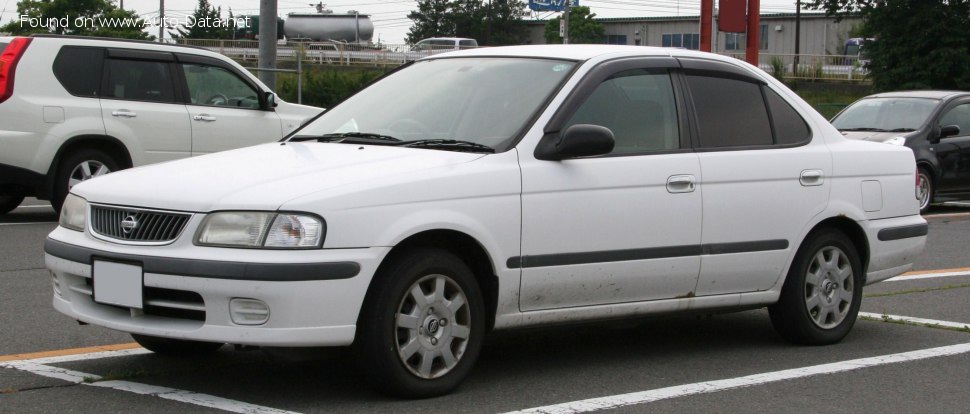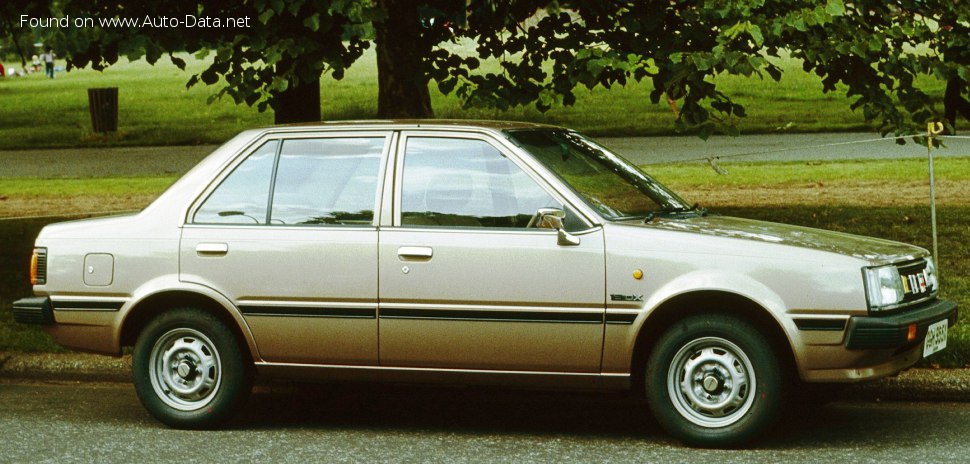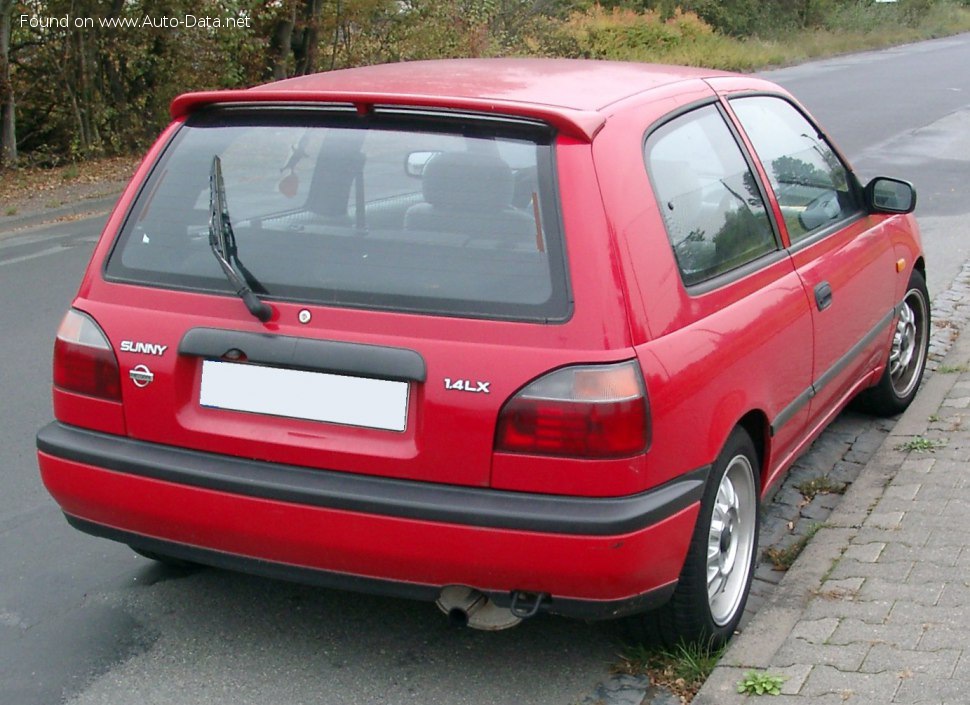
In the fiercely competitive North American automotive landscape of the early 1990s, Nissan cemented its reputation for producing reliable, economical, and surprisingly engaging compact cars. While many might recall the Sentra, its global sibling, the Nissan Sunny, represented a cornerstone of the brand’s compact offerings worldwide. The third generation of the Sunny Hatch, specifically the N14 chassis, brought a blend of practicality, efficiency, and a touch of sportiness to the segment, carving out its niche for drivers seeking an unpretentious yet capable daily companion. This particular variant, the 3-door 1.6 16V (110 Hp) model, offered a compelling package for those who valued a lively driving experience within a compact footprint.
The Nissan Sunny III Hatch (N14): A Compact Contender
The N14 generation of the Nissan Sunny, produced from 1990 to 1995, marked a significant evolution for the nameplate. In North America, this platform was predominantly known as the Nissan Sentra, becoming a household name for its dependability. The Sunny III Hatch (N14) 3 doors, however, represented a slightly sportier and more utilitarian take on the compact car, emphasizing cargo versatility and a youthful aesthetic. Its arrival coincided with a period when Japanese manufacturers were dominating the compact segment, offering superior build quality and engineering compared to many domestic rivals.
Design and Evolution
The N14 generation ushered in a more rounded, aerodynamic design language compared to its boxier predecessors. The 3-door hatchback, with its compact dimensions of 156.5 inches (3975 mm) in length and 66.54 inches (1690 mm) in width, exuded a purposeful, agile stance. The design was clean and uncluttered, prioritizing functionality without sacrificing a contemporary look for its time. A relatively low height of 54.92 inches (1395 mm) contributed to its sporty profile, while the short overhangs hinted at responsive handling. This design philosophy aimed to appeal to younger buyers or those seeking a practical secondary vehicle that was easy to maneuver in urban environments.
Powering the Drive: The Nissan Sunny III Hatch (N14) 3 doors 1.6 16V (110 Hp) Engine
Under the hood of this particular Sunny III Hatch lay a rather impressive powerplant for its class and era: a 1.6-liter (1596 cm³ or 97.39 cu. in.) 16-valve inline-four engine. This naturally aspirated unit, featuring a Double Overhead Camshaft (DOHC) valvetrain and multi-port manifold fuel injection, was a testament to Nissan’s engineering prowess. It delivered a respectable 110 horsepower at 6000 rpm, a figure that allowed the lightweight hatchback to feel surprisingly peppy. Torque stood at 147 Nm (108.42 lb-ft) peaking at 4000 rpm, providing adequate grunt for city driving and highway merging.
Mated exclusively to a 5-speed manual transmission, the front-wheel-drive architecture ensured efficient power delivery. With a curb weight of just 2072.35 lbs (940 kg), the engine’s power-to-weight ratio of 117 Hp/tonne (or 8.5 kg/Hp) meant that the Sunny felt nimble and responsive. The DOHC setup was a significant innovation for a mainstream compact car in the early 90s, contributing to better engine breathing and higher revving capability, translating into a more engaging driving experience than many of its competitors.
Interior and Practicality
Despite its compact exterior, the Sunny III Hatch (N14) offered a surprisingly versatile interior. Designed to seat five, the 3-door configuration prioritized front passenger comfort and easy access to the rear bench, though rear legroom was typical for the segment. The hatchback body style was a key selling point for practicality, offering a minimum trunk space of 9.89 cu. ft. (280 liters). With the rear seats folded down, this expanded significantly to 34.96 cu. ft. (990 liters), making it capable of hauling groceries, sports equipment, or even small furniture. This flexibility was crucial for North American buyers who often demanded utility from their compact vehicles.
Safety and Driving Dynamics
For its time, the N14 Sunny/Sentra platform incorporated respectable safety and driving dynamics features. The front suspension utilized a wishbone design, while the rear featured a spring strut setup, providing a balanced ride and handling. Braking was handled by ventilated discs at the front and drums at the rear, a common and effective combination for the class. Crucially, an Anti-lock Braking System (ABS) was available as an assisting system, a significant safety innovation for a compact car in the early 1990s. Steering was a hydraulic rack and pinion system, offering direct and communicative feedback to the driver, enhancing the car’s agile feel. The 175/65 R14 tires provided a good balance of grip and ride comfort.
Technical Specifications of the Nissan Sunny III Hatch (N14) 3 doors 1.6 16V (110 Hp)
| Category | Specification | North American Equivalent / Details |
|---|---|---|
General Information |
||
| Brand | Nissan | |
| Model | Sunny | N14 platform, largely known as Sentra in North America |
| Generation | Sunny III Hatch (N14) 3 doors | |
| Type (Engine) | 1.6 16V (110 Hp) | |
| Start of production | 1990 year | |
| End of production | 1992 year | |
| Powertrain Architecture | Internal Combustion engine | |
| Body type | Hatchback | 3 Doors |
| Seats | 5 | |
| Doors | 3 | |
Engine & Performance Specs |
||
| Fuel Type | Petrol (Gasoline) | |
| Power | 110 Hp @ 6000 rpm | |
| Power per litre | 68.9 Hp/l | |
| Torque | 147 Nm @ 4000 rpm | 108.42 lb-ft @ 4000 rpm |
| Engine layout | Front, Transverse | |
| Engine displacement | 1596 cm³ | 1.6 liters / 97.39 cu. in. |
| Number of cylinders | 4 | Inline configuration |
| Cylinder Bore | 76 mm | 2.99 in. |
| Piston Stroke | 88 mm | 3.46 in. |
| Compression ratio | 9.5:1 | |
| Number of valves per cylinder | 4 | Total 16 valves |
| Fuel injection system | Multi-port manifold injection | |
| Engine aspiration | Naturally aspirated engine | |
| Valvetrain | DOHC | Double Overhead Camshaft |
Space, Volume and Weights |
||
| Kerb Weight | 940 kg | 2072.35 lbs |
| Max. weight | 1505 kg | 3317.96 lbs (Gross Vehicle Weight) |
| Max load | 565 kg | 1245.61 lbs |
| Trunk (boot) space – minimum | 280 l | 9.89 cu. ft. |
| Trunk (boot) space – maximum | 990 l | 34.96 cu. ft. |
| Fuel tank capacity | 50 l | 13.21 US gal |
Dimensions |
||
| Length | 3975 mm | 156.5 in. |
| Width | 1690 mm | 66.54 in. |
| Height | 1395 mm | 54.92 in. |
| Wheelbase | 2430 mm | 95.67 in. |
| Front track | 1435 mm | 56.5 in. |
| Rear (Back) track | 1420 mm | 55.91 in. |
Drivetrain, Brakes and Suspension Specs |
||
| Drivetrain Architecture | The Internal combustion engine (ICE) drives the front wheels of the vehicle. | Front-wheel drive |
| Drive wheel | Front wheel drive | |
| Number of gears and type of gearbox | 5 gears, manual transmission | |
| Front suspension | Wishbone | Independent |
| Rear suspension | Spring Strut | |
| Front brakes | Ventilated discs | |
| Rear brakes | Drum | |
| Assisting systems | ABS (Anti-lock braking system) | Available |
| Steering type | Steering rack and pinion | |
| Power steering | Hydraulic Steering | |
| Tires size | 175/65 R14 | |
Market Legacy and North American Reception
The Nissan Sunny III Hatch (N14), while explicitly named “Sunny” in many global markets, found its most significant North American presence as the Nissan Sentra. The N14 Sentra platform, including its hatchback variants, was a direct competitor to popular compacts like the Honda Civic, Toyota Corolla, Ford Escort, and Chevrolet Cavalier. In the early 1990s, the compact segment was fiercely contested, with buyers prioritizing fuel economy, reliability, and affordability.
Upon its launch around 1990, a new compact hatchback like the Sentra (or its Sunny counterpart) would typically have carried a Manufacturer’s Suggested Retail Price (MSRP) ranging from approximately $10,000 to $13,000 USD, depending on trim levels and optional features like ABS or air conditioning. This pricing positioned it competitively against its rivals, offering a strong value proposition.
North American drivers generally received the N14 platform very well. Its reputation for bulletproof reliability, low running costs, and decent fuel efficiency quickly made it a popular choice for commuters, students, and small families. The 3-door hatchback, in particular, was appreciated for its blend of compact sportiness and practical cargo capacity. While not a performance icon in its 1.6L guise (the more powerful SE-R Sentra with the SR20DE engine filled that role), the 110 Hp 1.6 16V model offered a surprisingly lively and engaging driving experience for its class. Its DOHC engine, a relatively advanced feature for the segment at the time, contributed to its smooth power delivery and responsiveness.
Over time, the N14 Sentra/Sunny became known as an “unassuming hero” – a car that simply did its job, day in and day out, without fuss. Its robust engineering and straightforward mechanics meant many examples provided years of trouble-free service, becoming a common sight on North American roads. Today, well-maintained examples of the 3-door N14, especially those with the more powerful engines, have garnered a cult following among enthusiasts for their reliability, tunability, and simple, honest driving dynamics, cementing its place in Nissan’s rich automotive history.