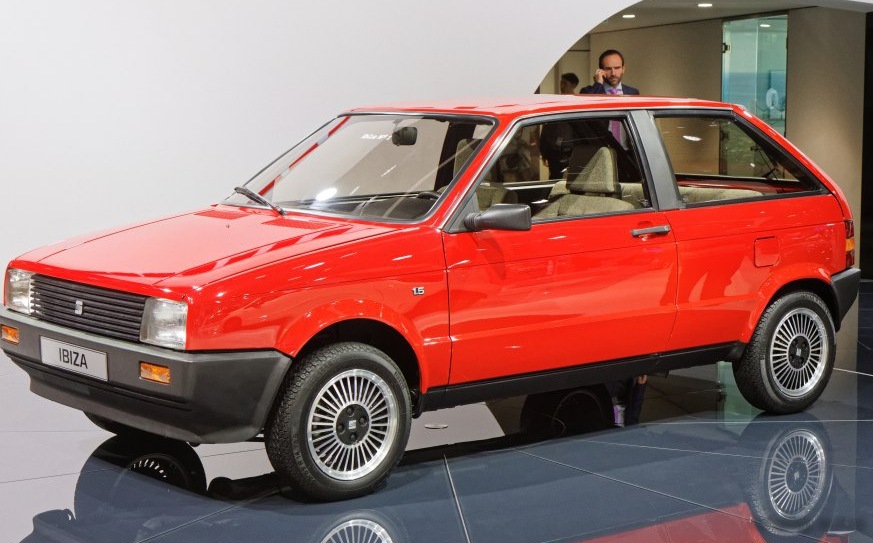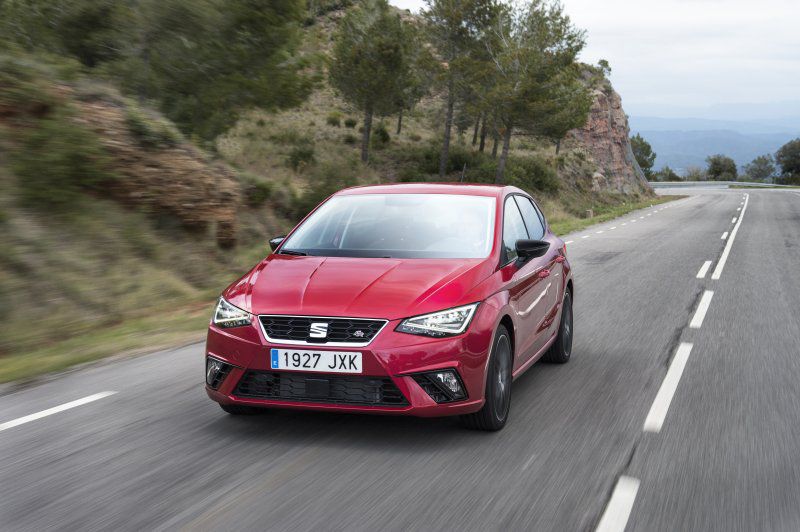
While the North American automotive landscape is dominated by familiar names and models, a rich tapestry of vehicles exists globally, many of which offer a fascinating glimpse into different market priorities and engineering philosophies. Among these is the Seat Ibiza V 1.0 MPI (75 Hp) Start&Stop, a prominent player in the highly competitive European subcompact segment. Though never officially sold on this side of the Atlantic, the Ibiza represents a key part of the Volkswagen Group’s global strategy, showcasing efficiency, practicality, and youthful design within a compact footprint. For North American enthusiasts, it serves as an intriguing case study of what a well-engineered, small-displacement hatchback can offer.
The Fifth Generation: Seat Ibiza V 1.0 MPI (75 Hp) Start&Stop
The fifth generation of the Seat Ibiza, launched in 2017, marked a significant evolution for the Spanish brand’s popular supermini. Built on the Volkswagen Group’s versatile MQB A0 platform—shared with other notable European compacts like the VW Polo and Skoda Fabia—the Ibiza V was designed to offer improved space, technology, and driving dynamics over its predecessors. The 1.0 MPI (Multi-Point Injection) variant, specifically the 75 Hp Start&Stop model, stood as an accessible entry point into the Ibiza lineup, prioritizing fuel economy and urban maneuverability.
Under the Hood: The 1.0 MPI Engine & Performance
At the heart of this particular Ibiza V variant was a naturally aspirated 1.0-liter, three-cylinder petrol (gasoline) engine. Codenamed CHYB, this compact powerplant delivered a modest 75 horsepower at 6200 rpm. Torque figures stood at 95 Nm, which translates to approximately 70.07 lb.-ft., available across a useful rev range of 3000 to 4300 rpm. Power was sent to the front wheels via a five-speed manual transmission, a common and engaging setup in European compacts.
For North American drivers accustomed to larger engines, these figures might seem diminutive. However, the 1.0 MPI engine was engineered with a clear purpose: efficiency and low running costs. The integration of a Start&Stop system further enhanced its eco-credentials by automatically shutting off the engine when the vehicle was stationary, then seamlessly restarting it when the driver released the brake or engaged the clutch. This contributed to its impressive combined fuel economy of 4.9 l/100 km (approximately 48 US mpg), making it an economical choice for city commutes and longer journeys alike.
Performance, while not exhilarating, was entirely adequate for its intended use. The Ibiza V 1.0 MPI (75 Hp) Start&Stop could accelerate from 0 to 60 mph in around 14 seconds, with a top speed of 103.77 mph. These figures underscored its role as a practical and efficient urban companion rather than a highway cruiser, perfectly suited to the congested streets and varied speed limits of European cities.
Features and Innovation
Despite its entry-level engine, the Seat Ibiza V, even in its more basic trims, benefitted from the inherent strengths of the MQB A0 platform. While specific infotainment and advanced driver-assistance systems (ADAS) would vary by trim level and optional packages, the 2017-2021 Ibiza generation generally offered a competitive suite for its segment.
For a modern car of its era (2010+), the Ibiza V typically featured an array of connectivity and safety elements. Standard safety equipment would include Anti-lock Braking System (ABS), a vital component for maintaining control during hard braking, along with multiple airbags. Higher trims or optional packages could introduce features like a touchscreen infotainment system with smartphone integration (Apple CarPlay and Android Auto), Bluetooth connectivity, and USB ports. While the 75 Hp model might not have been equipped with the most advanced ADAS features like adaptive cruise control or lane-keeping assist as standard, the platform allowed for such technologies to be integrated into the lineup, reflecting Seat’s commitment to modern safety and convenience.
The design language of the Ibiza V was characterized by sharp lines, a bold grille, and distinctive LED daytime running lights (where fitted), giving it a sporty and contemporary appearance that resonated with its youthful target demographic. Inside, the cabin was designed for practicality and comfort, offering good passenger space for a subcompact, particularly in the rear, and a respectable 355 liters (12.54 cu. ft.) of trunk space, expandable to 1165 liters (41.14 cu. ft.) with the rear seats folded down.
Technical Specifications
| Category | Specification | North American Equivalent |
|---|---|---|
| General Information | ||
| Brand | Seat | |
| Model | Ibiza | |
| Generation | Ibiza V | |
| Type (Engine) | 1.0 MPI (75 Hp) Start&Stop | |
| Production Start | 2017 year | |
| Production End | June, 2021 year | |
| Body Type | Hatchback | |
| Seats | 5 | |
| Doors | 5 | |
| Performance Specifications | ||
| Fuel Consumption (Urban) | 6.0 l/100 km | 39.2 US mpg |
| Fuel Consumption (Extra Urban) | 4.3 l/100 km | 54.7 US mpg |
| Fuel Consumption (Combined) | 4.9 l/100 km | 48 US mpg |
| CO2 Emissions | 112 g/km | |
| Fuel Type | Petrol (Gasoline) | |
| Acceleration 0 – 60 mph | 14 sec | |
| Maximum Speed | 167 km/h | 103.77 mph |
| Emission Standard | Euro 6 | |
| Weight-to-Power Ratio | 13.5 kg/Hp | 29.76 lbs/Hp |
| Engine Specifications | ||
| Power | 75 Hp @ 6200 rpm | |
| Torque | 95 Nm @ 3000-4300 rpm | 70.07 lb.-ft. @ 3000-4300 rpm |
| Engine Layout | Front, Transverse | |
| Engine Model/Code | CHYB | |
| Engine Displacement | 999 cm3 | 60.96 cu. in. |
| Number of Cylinders | 3 | |
| Engine Configuration | Inline | |
| Compression Ratio | 10.5:1 | |
| Valves per Cylinder | 4 | |
| Fuel Injection System | Multi-port manifold injection | |
| Engine Aspiration | Naturally aspirated engine | |
| Valvetrain | DOHC | |
| Engine Oil Capacity | 3.4 l | 3.59 US qt |
| Engine Systems | Start & Stop System | |
| Space, Volume and Weights | ||
| Kerb Weight | 1016 kg | 2239.9 lbs. |
| Max. Weight | 1610 kg | 3549.44 lbs. |
| Max Load | 594 kg | 1309.55 lbs. |
| Trunk (boot) Space (Min) | 355 l | 12.54 cu. ft. |
| Trunk (boot) Space (Max) | 1165 l | 41.14 cu. ft. |
| Fuel Tank Capacity | 40 l | 10.57 US gal |
| Dimensions | ||
| Length | 4059 mm | 159.8 in. |
| Width | 1780 mm | 70.08 in. |
| Width including mirrors | 1942 mm | 76.46 in. |
| Height | 1444 mm | 56.85 in. |
| Wheelbase | 2564 mm | 100.94 in. |
| Front Track | 1525 mm | 60.04 in. |
| Rear Track | 1505 mm | 59.25 in. |
| Minimum Turning Circle | 10.6 m | 34.78 ft. |
| Drivetrain, Brakes and Suspension | ||
| Drivetrain Architecture | Front wheel drive, Internal Combustion engine | |
| Drive Wheel | Front wheel drive | |
| Gearbox | 5 gears, manual transmission | |
| Front Suspension | Independent, McPherson with coil spring and anti-roll bar | |
| Rear Suspension | Semi-independent, coil spring | |
| Front Brakes | Ventilated discs | |
| Rear Brakes | Drum | |
| Assisting Systems | ABS (Anti-lock braking system) | |
| Steering Type | Steering rack and pinion | |
| Power Steering | Electric Steering | |
| Tires Size | 185/70 R14; 215/45 R17 | |
| Wheel Rims Size | 5J x 14; 7J x 17 | |
Market Legacy in North America and Beyond
The Seat Ibiza V 1.0 MPI (75 Hp) Start&Stop, like all Seat models, was not officially marketed or sold in the United States or Canada. This is primarily due to Volkswagen Group’s brand segmentation strategy, where VW itself serves as the mainstream brand in North America, while Audi covers the premium segment. Seat, positioned as a sportier, more youthful, and often more value-oriented brand within the VW Group, found its primary markets in Europe, Latin America, and parts of Asia.
In its home markets, the Ibiza V was a highly anticipated and well-received model. It directly competed with other European superminis such as the Ford Fiesta, Volkswagen Polo, Renault Clio, Peugeot 208, and Opel Corsa. Its launch pricing (MSRP) would have positioned it as an affordable yet stylish entry into the compact segment, appealing to young drivers, small families, and urban dwellers seeking a practical and efficient vehicle.