In the pantheon of Volkswagen’s compact cars, few models embody the spirit of practical, efficient motoring quite like the Polo. While its larger sibling, the Golf (known as the Rabbit in North America), carved out a significant niche on this continent, the Polo remained largely a European phenomenon, a testament to varying market preferences and regulatory landscapes. Yet, understanding models like the second-generation Polo, particularly a variant as focused on economy as the Volkswagen Polo II Coupe (86C) 1.4 D (48 Hp), offers a crucial glimpse into Volkswagen’s global engineering philosophy and the automotive landscape of the early 1990s.
The Polo II, often referred to by its internal code 86C, represented a significant evolution for Volkswagen’s supermini line. Introduced in 1981, the 86C platform spanned an impressive 13 years, undergoing a significant facelift in 1990 that brought it into the modern era with updated styling and mechanical refinements. Among its diverse powertrain offerings, the 1.4-liter diesel variant stood out as a beacon of fuel efficiency, reflecting a period when European motorists increasingly valued economy over outright performance, a trend that contrasted sharply with North American tastes.
The Volkswagen Polo II Coupe (86C) 1.4 D (48 Hp): A Global Efficiency Champion
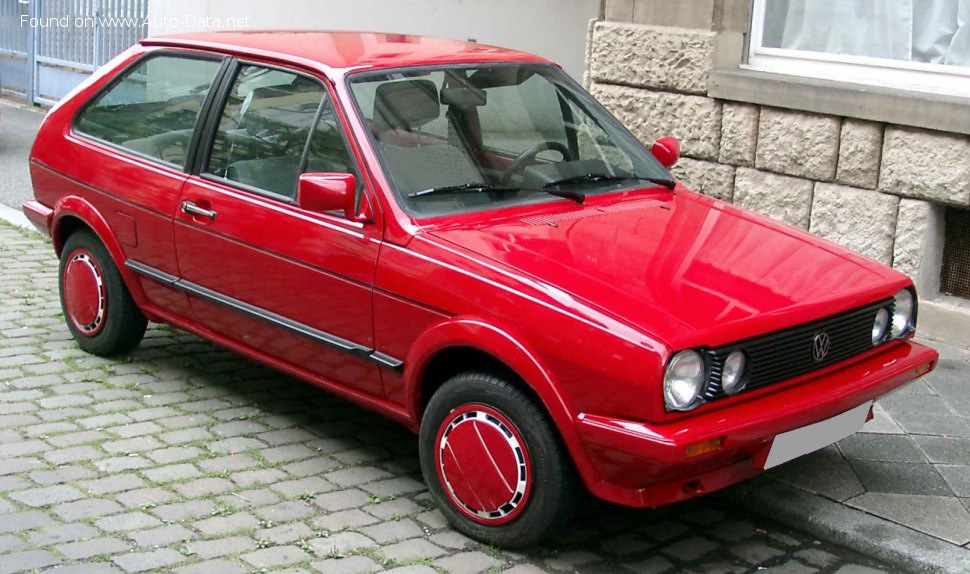
The second generation of the Volkswagen Polo, designated 86C, was a versatile platform offered in various body styles, including a traditional hatchback, a “wagon” (marketed as a coupé utility in some regions), and the more stylish “Coupe” which, despite its name, was essentially a three-door hatchback with a more raked rear window line, giving it a sportier profile. The 1990 refresh, often unofficially called the “Polo IIF” (Facelift), saw the 86C adopt a more rounded aesthetic, larger bumpers, and a revised interior, bringing it visually in line with Volkswagen’s contemporary offerings like the Golf III.
The Volkswagen Polo II Coupe (86C) 1.4 D (48 Hp) was a prime example of a vehicle engineered for maximum economy and durability. In an era before common rail injection and advanced turbocharging, this naturally aspirated diesel engine was a workhorse, designed to deliver reliable transportation with minimal fuel consumption.
Engine & Performance
At the heart of the Volkswagen Polo II Coupe (86C) 1.4 D (48 Hp) lay the robust 1.4-liter (1398 cc) naturally aspirated diesel engine, identified by its ‘1W’ engine code. This inline four-cylinder unit was an exercise in straightforward, no-frills engineering. It produced a modest 48 horsepower (Hp), a figure that, by today’s standards, seems diminutive. However, its strength was never intended to be raw speed. Instead, this engine was optimized for torque delivery at lower RPMs and exceptional fuel efficiency, traits highly valued in European markets with higher fuel prices and often congested urban environments.
While specific torque figures for this exact variant are not provided, naturally aspirated diesels of this displacement and era typically produced around 90-100 Newton-meters of torque, translating to approximately 66-74 lb-ft. This torque, available relatively low in the rev range, made the Polo 1.4 D surprisingly tractable around town, allowing for easy navigation of city traffic despite its low horsepower. Performance was decidedly leisurely, with 0-60 mph times likely in the high teens or early twenties, but its purpose was not acceleration; it was the ability to sip fuel and reliably cover long distances, a task at which it excelled.
Features and Design Language
As a compact car from the early 1990s, the Polo II Coupe’s features were focused more on practicality and robust construction than on luxury or high-tech gadgetry. Its appeal lay in its honest, functional design and Volkswagen’s reputation for quality engineering.
- Design Language: The Polo II Coupe, especially after the 1990 facelift, presented a clean, unpretentious design. The “Coupe” designation, while perhaps a stretch for a three-door hatchback, did convey a slightly more dynamic profile than its squarer hatchback sibling. Its lines were simple and purposeful, prioritizing interior space within a compact footprint. The design was unmistakably Volkswagen, sharing visual cues with the larger Golf, particularly in the frontal treatment. This understated aesthetic has aged relatively well, contributing to its charm as a classic.
- Innovation at the Time: Innovation in this segment for the Polo 86C was less about groundbreaking technology and more about refinement of established principles. Its unitary body construction, efficient packaging, and a well-sorted suspension (MacPherson struts at the front, torsion beam at the rear) provided a stable and predictable driving experience. For a small car, it offered a surprising amount of interior space and a relatively comfortable ride. The diesel engine itself, while not revolutionary, represented a commitment to alternative fuels and efficiency, a foresight that would become even more critical in the decades to follow.
- Collectibility: In North America, the Polo II Coupe is a rare sight and holds niche collectibility, primarily among dedicated Volkswagen enthusiasts or those interested in European-market imports. Its lack of official North American distribution means parts can be challenging to source. However, in Europe, the 86C generation, particularly well-preserved examples or specific performance variants (like the G40), enjoys a strong following among classic car aficionados due to its robust build, simple mechanics, and the sheer joy of driving a lightweight, uncomplicated vehicle. The 1.4 D, while not a performance icon, is appreciated for its historical significance as an incredibly economical daily driver.
Technical Specifications
Below is a detailed breakdown of the technical specifications for the Volkswagen Polo II Coupe (86C) 1.4 D (48 Hp):
| General Information | |
| Brand | Volkswagen |
| Model | Polo |
| Generation | Polo II Coupe (86C) |
| Type (Engine) | 1.4 D (48 Hp) |
| Start of production | 1990 year |
| End of production | 1994 year |
| Powertrain Architecture | Internal Combustion engine |
| Body type | Coupe (3-door hatchback) |
| Performance Specs | |
| Fuel Type | Diesel |
| Power | 48 Hp |
| Engine Model/Code | 1W |
| Engine aspiration | Naturally aspirated engine |
| Engine oil capacity | 3.5 l (3.7 US qt | 3.08 UK qt) |
| Coolant capacity | 5.6 l (5.92 US qt | 4.93 UK qt) |
Market Legacy
The market legacy of the Volkswagen Polo II Coupe (86C) 1.4 D (48 Hp), particularly in a North American context, is a tale of two continents. While the Polo was a cornerstone of Volkswagen’s European lineup for decades, becoming a bestseller and a household name, it was never officially imported into the United States or Canada. This decision was primarily driven by several factors:
- Market Preferences: North American consumers traditionally favored larger vehicles, and the compact car segment was already fiercely competitive with domestic offerings and Japanese imports. The Polo, even in its “Coupe” guise, was perceived as too small for the mainstream American and Canadian market.
- Emissions Regulations: Meeting stringent North American emissions standards, especially for a small, naturally aspirated diesel engine of that era, would have required significant engineering and cost, potentially making the car uncompetitive.
- Volkswagen’s Strategy: Volkswagen’s North American strategy during the late 1980s and early 1990s focused heavily on the Golf/Jetta platform, which offered a better balance of size, features, and powertrain options (including gasoline engines and later, more powerful TDI diesels) that resonated with the local market.
Therefore, direct launch pricing (MSRP) for the 1.4 D Polo Coupe in North America is non-existent. In Europe, however, it was positioned as an affordable, economical entry-level vehicle. Its competitors would have included other European superminis like the Ford Fiesta, Opel Corsa (Vauxhall Nova in the UK), Fiat Uno, and Renault Clio. It was generally well-received by European drivers who valued its low running costs, robust build quality, and practical size for urban environments.
The Polo’s absence from North American showrooms means it never competed directly with cars like the Geo Metro, Ford Festiva, or Honda Civic CRX of the era. Had it been imported, its 48 Hp diesel engine would have likely been seen as underpowered by many, despite its fuel economy advantages. Its legacy on this continent, therefore, is more conceptual: it represents a path not taken, a glimpse into Volkswagen’s global product strategy, and a testament to the diverse automotive needs and preferences across different regions of the world.
Today, the Volkswagen Polo has evolved significantly, growing in size, sophistication, and power. While modern Polos are still not standard fare in North America, the heritage of efficiency, thoughtful design, and solid engineering that defined models like the Polo II Coupe (86C) 1.4 D (48 Hp) continues to underpin Volkswagen’s global brand identity.