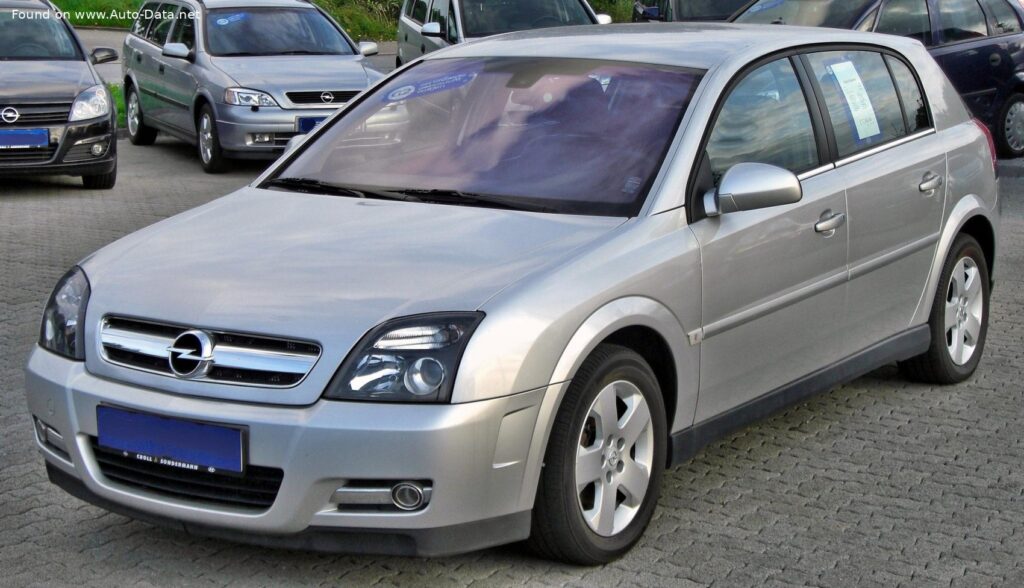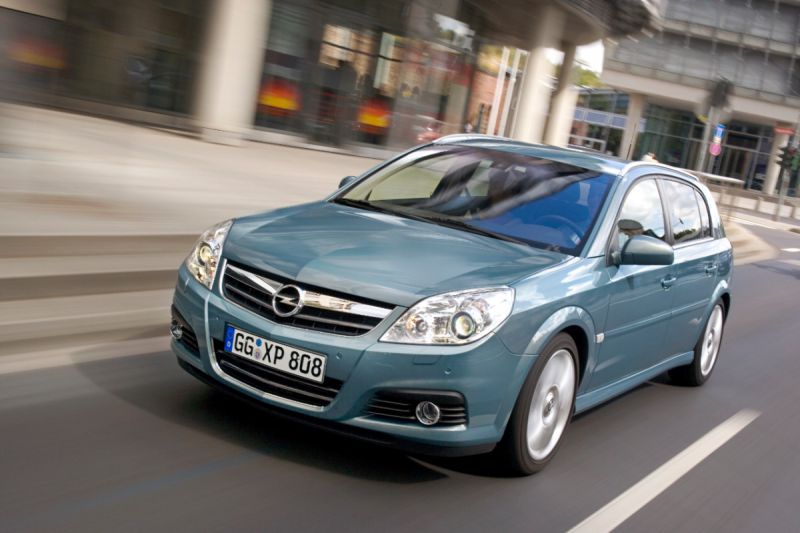
The Opel Signum, particularly the facelifted model introduced in 2005, represented a distinctive and ambitious venture by the German automaker Opel into the European executive car segment. Positioned above the traditional Vectra, the Opel Signum (facelift 2005) aimed to blend the spaciousness and practicality of a hatchback with the comfort and features typically found in larger, more premium sedans. While not sold in the United States, the Signum played a significant role in Opel’s European lineup, targeting a niche market of buyers seeking versatility without compromising on interior refinement and driving dynamics. This particular iteration, featuring the 2.2i 16V ECOTEC engine paired with an automatic transmission, offered a compelling balance of performance and efficiency for its time.
Overview: The Opel Signum (facelift 2005)
First introduced in 2003, the Opel Signum was based on the extended platform of the Opel Vectra C. Its design concept, often described as a “premium-hatchback” or “executive-hatchback,” sought to offer enhanced rear passenger comfort and cargo flexibility. The Opel Signum (facelift 2005), which commenced production in 2005 and continued until June 2008, brought a refreshed aesthetic and updated mechanicals to the model line. The facelift incorporated a more aggressive front fascia, including redesigned headlights and grille, aligning its appearance with Opel’s evolving design language seen in other models like the Astra H. The focus remained on delivering a versatile, comfortable, and well-equipped vehicle for the discerning European consumer.
Engine & Performance
Under the hood of the Opel Signum (facelift 2005) model detailed here lies the 2.2i 16V ECOTEC engine, an inline four-cylinder unit known for its balance of power and efficiency. This naturally aspirated engine, designated Z22YH, boasts a displacement of 2.2 liters (2198 cm³ or 134.13 cubic inches). It features a DOHC (Dual Overhead Camshaft) valvetrain with 4 valves per cylinder and utilizes a direct injection fuel system, a technology that was becoming increasingly prevalent for optimizing combustion and improving fuel economy in the mid-2000s. The engine produces a respectable 155 horsepower at 5600 rpm and generates 162.26 lb-ft (220 Nm) of torque at 3800 rpm.
Power is delivered to the front wheels via a 5-speed automatic transmission, providing smooth and convenient shifts. While not a performance-oriented vehicle, this powertrain combination allows the Signum to accelerate from 0 to 60 mph in a calculated 11.6 seconds, reaching a maximum speed of approximately 123 mph (198 km/h). The vehicle’s weight-to-power ratio stands at 9.9 kg/Hp (101 Hp/tonne), indicating a solid, if not exhilarating, performance profile for its class.
In terms of fuel economy, the 2.2i 16V ECOTEC engine offered competitive figures for its segment. The combined fuel consumption is rated at 25.8 US mpg (9.1 liters per 100 km), with urban consumption at 21.6 US mpg (10.9 l/100 km) and extra-urban at 36.2 US mpg (6.5 l/100 km). CO2 emissions are listed at 194 g/km, reflecting the environmental standards and expectations of the era.
Design & Features
The Opel Signum is characterized by its distinctive 5-door hatchback body type, which offered a compelling alternative to traditional sedans and station wagons in Europe. Measuring 183.11 inches (4651 mm) in length, 70.79 inches (1798 mm) in width, and 57.48 inches (1460 mm) in height, the Signum was substantial in stature. Its generous wheelbase of 111.42 inches (2830 mm), significantly longer than that of the standard Vectra sedan, was a key enabler of its unique interior packaging.
The interior design prioritized passenger comfort, particularly for those in the rear. The Signum featured a flexible rear seating arrangement, often configurable with two individual seats rather than a conventional bench, offering greater adjustability and luxury. This “FlexSpace” system allowed for independent sliding, reclining, and folding of the rear seats, enhancing both passenger comfort and cargo versatility. With the rear seats in place, the trunk capacity was 12.89 cubic feet (365 liters), expanding significantly to 49.79 cubic feet (1410 liters) with the seats folded down.
Standard features for the facelifted model included a hydraulic power steering system, ensuring precise and responsive handling. Safety was addressed with a comprehensive braking system comprising ventilated discs at the front and solid discs at the rear, complemented by an Anti-lock Braking System (ABS). The vehicle rode on 215/55 R16 tires fitted to 6.5J x 16-inch wheel rims, providing a comfortable and stable ride. The drag coefficient (Cd) of 0.32 was respectable for a vehicle of its size and shape, contributing to its highway efficiency.
Technical Specifications
| Category | Specification |
|---|---|
| Brand | Opel |
| Model | Signum |
| Generation | Signum (facelift 2005) |
| Engine Type | 2.2i 16V ECOTEC (155 Hp) Automatic |
| Production Start | 2005 year |
| Production End | June, 2008 year |
| Powertrain Architecture | Internal Combustion engine |
| Body type | Hatchback |
| Seats | 5 |
| Doors | 5 |
| Performance Specs | |
| Fuel consumption (urban) | 10.9 l/100 km / 21.6 US mpg |
| Fuel consumption (extra urban) | 6.5 l/100 km / 36.2 US mpg |
| Fuel consumption (combined) | 9.1 l/100 km / 25.8 US mpg |
| CO2 emissions | 194 g/km |
| Fuel Type | Petrol (Gasoline) |
| Acceleration 0 – 60 mph (Calculated) | 11.6 sec |
| Acceleration 0 – 100 km/h | 12.2 sec |
| Maximum speed | 198 km/h / 123.03 mph |
| Weight-to-power ratio | 9.9 kg/Hp (101 Hp/tonne) |
| Weight-to-torque ratio | 7 kg/Nm (143.3 Nm/tonne) |
| Engine Specs | |
| Power | 155 Hp @ 5600 rpm |
| Power per liter | 70.5 Hp/l |
| Torque | 220 Nm @ 3800 rpm (162.26 lb.-ft. @ 3800 rpm) |
| Engine layout | Front, Transverse |
| Engine Model/Code | Z22YH |
| Engine displacement | 2198 cm³ (2.2 l / 134.13 cu. in.) |
| Number of cylinders | 4 |
| Engine configuration | Inline |
| Cylinder Bore | 86 mm (3.39 in.) |
| Piston Stroke | 94.6 mm (3.72 in.) |
| Compression ratio | 12:1 |
| Number of valves per cylinder | 4 |
| Fuel injection system | Direct injection |
| Engine aspiration | Naturally aspirated engine |
| Valvetrain | DOHC |
| Engine oil capacity | 5 l (5.28 US qt) |
| Coolant capacity | 7.1 l (7.5 US qt) |
| Space, Volume and Weights | |
| Kerb Weight | 1535 kg (3384.1 lbs) |
| Max. weight | 2050 kg (4519.48 lbs) |
| Max load | 515 kg (1135.38 lbs) |
| Trunk (boot) space – minimum | 365 l (12.89 cu. ft.) |
| Trunk (boot) space – maximum | 1410 l (49.79 cu. ft.) |
| Fuel tank capacity | 60 l (15.85 US gal) |
| Dimensions | |
| Length | 4651 mm (183.11 in.) |
| Width | 1798 mm (70.79 in.) |
| Height | 1460 mm (57.48 in.) |
| Wheelbase | 2830 mm (111.42 in.) |
| Front track | 1535 mm (60.43 in.) |
| Rear (Back) track | 1525 mm (60.04 in.) |
| Drag coefficient (Cd) | 0.32 |
| Drivetrain, Brakes and Suspension Specs | |
| Drivetrain Architecture | Front wheel drive (Internal Combustion engine drives front wheels) |
| Drive wheel | Front wheel drive |
| Number of gears and type of gearbox | 5 gears, automatic transmission |
| Front suspension | Coil spring |
| Rear suspension | Coil spring |
| Front brakes | Ventilated discs |
| Rear brakes | Disc |
| Assisting systems | ABS (Anti-lock braking system) |
| Steering type | Steering rack and pinion |
| Power steering | Hydraulic Steering |
| Tires size | 215/55 R16 |
| Wheel rims size | 6.5J x 16 |
Legacy & Market Impact
The Opel Signum, particularly the Opel Signum (facelift 2005), holds a unique place in Opel’s history. It was an innovative attempt to carve out a new segment, offering a more luxurious and versatile experience than a standard D-segment sedan or estate, without venturing into the premium brands like BMW or Mercedes-Benz. Its primary competitors in the European market included established players such as the Ford Mondeo, Volkswagen Passat, and Renault Laguna, all of which offered more traditional body styles. The Signum’s closest conceptual rivals might have been vehicles like the Renault Vel Satis, another unconventional executive car that prioritized interior space and comfort.
Despite its clever packaging and comfortable interior, the Signum never achieved the widespread commercial success Opel had hoped for. Its unconventional “hatchback-executive” styling and positioning proved difficult for many buyers to categorize, leading to mixed market reception. While praised for its spacious rear passenger area and flexible cargo solutions, its exterior design was often considered polarizing. The 2.2i 16V ECOTEC engine, while competent, also faced increasing competition from more powerful and efficient diesel engines that dominated the European executive car market at the time.
Ultimately, the Signum’s production ended in 2008, with Opel shifting its focus to more conventional models and the burgeoning SUV segment. Its legacy is one of ambition and innovation, demonstrating Opel’s willingness to experiment with new concepts. While not a sales success, the Signum remains an interesting footnote in automotive history, representing a period when manufacturers explored diverse approaches to meet evolving consumer demands for space, comfort, and versatility within the mainstream market.