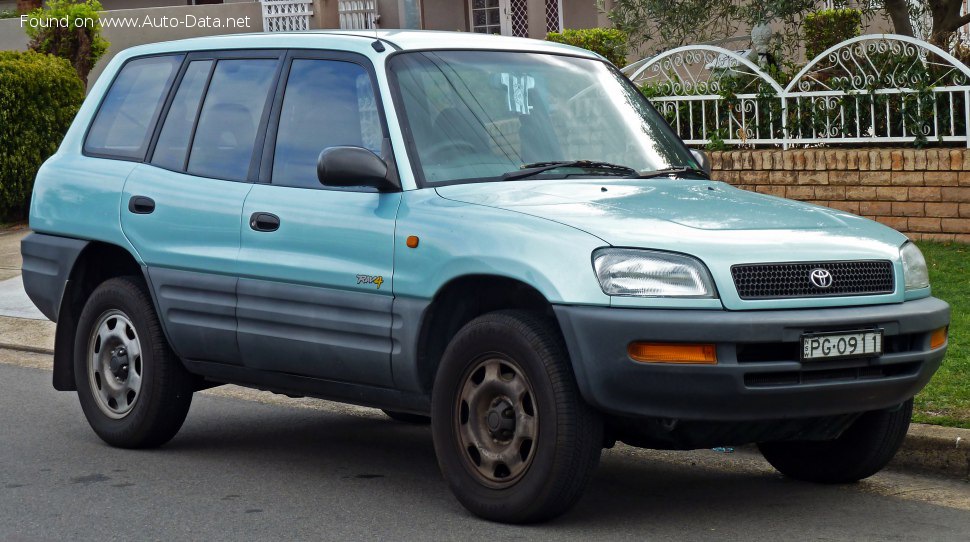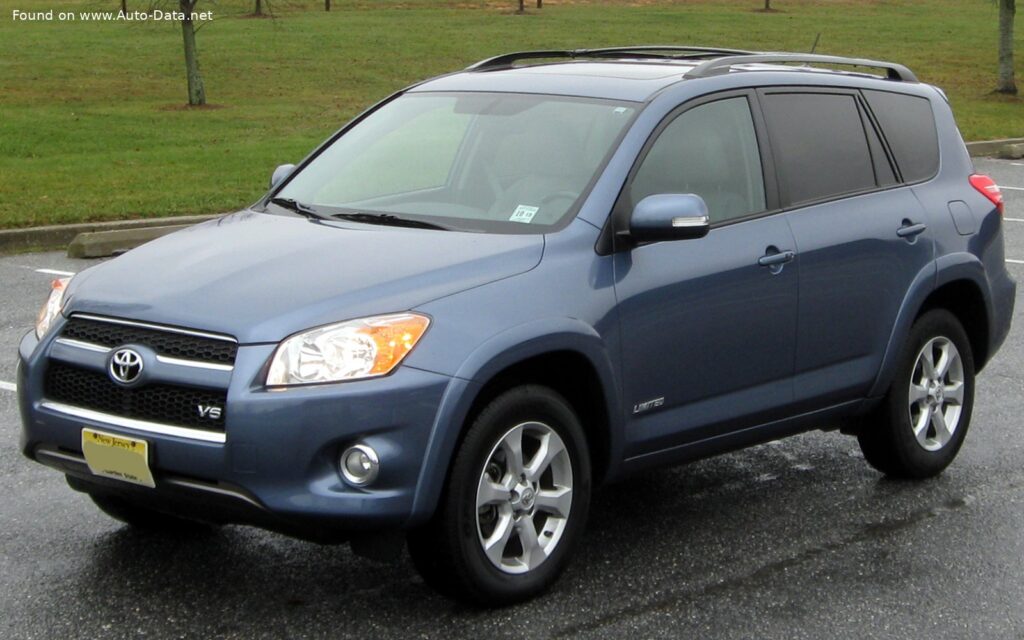
As an international automotive expert, I present a detailed analysis of the Toyota RAV4 III (XA30, facelift 2008) Long 2.5 VVT-i (179 Hp) 4WD ECT, a pivotal model in the compact SUV segment.
Introduction to the Toyota RAV4 III (XA30, facelift 2008) Long 2.5 VVT-i (179 Hp) 4WD ECT
The Toyota RAV4, an acronym for “Recreational Activity Vehicle: 4-wheel drive,” has consistently been a trailblazer in the compact SUV segment since its inception. The third generation, internally designated XA30, marked a significant departure from its predecessors, growing in size and sophistication to appeal to a broader global audience. Introduced in 2005, the XA30 series received a notable refresh in 2008, which is the focus of this article. This facelifted model, particularly the long-wheelbase variant equipped with the 2.5-liter VVT-i engine and a four-speed automatic transmission, represents a crucial period for the RAV4, cementing its reputation for reliability, practicality, and all-weather capability.
Positioned as a versatile five-door, five-seat SUV, the
Toyota RAV4 III (XA30, facelift 2008) Long 2.5 VVT-i (179 Hp) 4WD ECT
aimed to blend the comfort and handling of a passenger car with the utility and elevated driving position of an SUV. It competed fiercely in a burgeoning market segment, offering a compelling package for families and individuals seeking a capable yet economical vehicle for both urban commutes and light off-road adventures. The 2008 facelift brought subtle but impactful styling updates and refined powertrain options, further enhancing its appeal in markets worldwide, including the highly competitive North American landscape.
Engine and Performance of the Toyota RAV4 III (XA30, facelift 2008) Long
At the heart of the 2008 facelifted Toyota RAV4 Long 2.5 VVT-i (179 Hp) 4WD ECT lies Toyota’s robust and proven 2AR-FE engine. This naturally aspirated 2.5-liter inline-four cylinder gasoline unit features a Double Overhead Camshaft (DOHC) design with Toyota’s Variable Valve Timing with intelligence (VVT-i) system. This advanced valvetrain technology optimizes valve timing for both intake and exhaust, enhancing power delivery across the rev range while also improving fuel efficiency and reducing emissions. With a displacement of 2494 cm³ (152.19 cubic inches), the engine generates a healthy 179 horsepower at 6000 rpm, providing ample power for daily driving and highway cruising. Torque output stands at 171.85 lb.-ft. (233 Nm) at 4000 rpm, ensuring responsive acceleration and sufficient pulling power, especially when combined with the vehicle’s all-wheel-drive system.
Power is channeled to all four wheels via an Electronically Controlled Transmission (ECT), a four-speed automatic gearbox. While some competitors were moving towards five or six-speed automatics, Toyota’s four-speed unit was lauded for its smooth shifts and proven durability. The all-wheel-drive (4WD) system provides enhanced traction and stability, particularly beneficial in adverse weather conditions or on unpaved roads. Fuel economy figures for this powertrain were competitive for its class: approximately 21 US mpg in urban settings and 27 US mpg on the highway. With a curb weight ranging from 3,494 to 3,567 pounds, the RAV4 offered a respectable weight-to-power ratio of 8.9 kg/Hp (112.9 Hp/tonne), contributing to its agile feel and confident performance.
Design and Features
The 2008 facelift of the Toyota RAV4 III Long retained the practical and understated aesthetic of the XA30 generation while introducing subtle refinements. As a five-door SUV, it offered a commanding road presence with its elevated stance and functional design cues. The “Long” designation specifically referred to its extended wheelbase, which provided greater interior volume and enhanced passenger comfort compared to the standard XA30 model available in some markets. The exterior updates included revised front and rear fascias, updated grille designs, and new wheel options, giving it a fresher, more contemporary look.
Inside, the RAV4 was designed with practicality and user-friendliness in mind. The five-seat configuration provided comfortable seating for adults, with ample headroom and legroom. The interior materials were durable and well-assembled, reflecting Toyota’s commitment to quality. Cargo versatility was a key strength, with a minimum trunk space of 12.29 cubic feet, which could expand dramatically to an impressive 73 cubic feet with the rear seats folded down, making it highly capable for hauling luggage, sports equipment, or larger items. Key features for the era included available automatic climate control, a multi-information display, and an optional premium audio system. Safety was also a priority, with standard Anti-lock Braking System (ABS), a suite of airbags, and a robust chassis providing a secure driving environment. The independent McPherson strut front suspension and double wishbone rear suspension contributed to a comfortable ride and stable handling dynamics, further supported by the rack-and-pinion steering system.
Technical Specifications
| Category | Specification |
|---|---|
| Brand | Toyota |
| Model | RAV4 |
| Generation | RAV4 III (XA30, facelift 2008) Long |
| Type (Engine) | 2.5 VVT-i (179 Hp) 4WD ECT |
| Start of Production | 2008 year |
| End of Production | 2012 year |
| Powertrain Architecture | Internal Combustion engine |
| Body type | SUV |
| Seats | 5 |
| Doors | 5 |
| Performance Specs | |
| Fuel consumption (economy) – urban | 11.2 l/100 km (21 US mpg) |
| Fuel consumption (economy) – extra urban | 8.7 l/100 km (27 US mpg) |
| Fuel Type | Petrol (Gasoline) |
| Weight-to-power ratio | 8.9 kg/Hp, 112.9 Hp/tonne |
| Weight-to-torque ratio | 6.8 kg/Nm, 147 Nm/tonne |
| Engine Specs | |
| Power | 179 Hp @ 6000 rpm |
| Power per liter | 71.8 Hp/l |
| Torque | 233 Nm @ 4000 rpm (171.85 lb.-ft. @ 4000 rpm) |
| Engine layout | Front, Transverse |
| Engine Model/Code | 2AR-FE |
| Engine displacement | 2494 cm³ (152.19 cu. in.) |
| Number of cylinders | 4 |
| Engine configuration | Inline |
| Cylinder Bore | 90 mm (3.54 in.) |
| Piston Stroke | 98 mm (3.86 in.) |
| Compression ratio | 10.4:1 |
| Number of valves per cylinder | 4 |
| Fuel injection system | Multi-port manifold injection |
| Engine aspiration | Naturally aspirated engine |
| Valvetrain | DOHC, VVT-i |
| Engine oil capacity | 4.4 l (4.65 US qt) |
| Coolant | 6.8 l (7.19 US qt) |
| Space, Volume and Weights | |
| Kerb Weight | 1585-1618 kg (3494.33 – 3567.08 lbs.) |
| Max. weight | 2057-2207 kg (4534.91 – 4865.6 lbs.) |
| Max load | 472-589 kg (1040.58 – 1298.52 lbs.) |
| Trunk (boot) space – minimum | 348 l (12.29 cu. ft.) |
| Trunk (boot) space – maximum | 2067 l (73 cu. ft.) |
| Fuel tank capacity | 60 l (15.85 US gal) |
| Permitted trailer load without brakes | 680 kg (1499.14 lbs.) |
| Dimensions | |
| Length | 4620 mm (181.89 in.) |
| Width | 1816-1854 mm (71.5 – 72.99 in.) |
| Height | 1684-1745 mm (66.3 – 68.7 in.) |
| Wheelbase | 2660 mm (104.72 in.) |
| Front track | 1560 mm (61.42 in.) |
| Rear (Back) track | 1560 mm (61.42 in.) |
| Ride height (ground clearance) | 190 mm (7.48 in.) |
| Minimum turning circle (turning diameter) | 10.6-11.2 m (34.78 – 36.75 ft.) |
| Approach angle | 29° |
| Departure angle | 25° |
| Drivetrain, Brakes and Suspension Specs | |
| Drive wheel | All wheel drive (4×4) |
| Number of gears and type of gearbox | 4 gears, automatic transmission ECT |
| Front suspension | Independent, type McPherson with coil spring and anti-roll bar |
| Rear suspension | Double wishbone |
| Front brakes | Ventilated discs, 274-300 mm |
| Rear brakes | Disc, 284 mm |
| Assisting systems | ABS (Anti-lock braking system) |
| Steering type | Steering rack and pinion |
| Tires size | 215/70 R16; 225/65 R17 |
| Wheel rims size | 6.5J x 16; 7J x 17 |
Legacy and Market Impact
The Toyota RAV4 III (XA30) generation, particularly in its facelifted 2008 Long 2.5 VVT-i 4WD ECT configuration, left an indelible mark on the compact SUV market. It solidified the RAV4’s position as a segment leader, renowned for its bulletproof reliability, low running costs, and strong resale value—hallmarks of the Toyota brand. Its expanded dimensions and more refined driving dynamics made it a formidable competitor against rivals such as the Honda CR-V, Ford Escape, Nissan Rogue, and Subaru Forester. In the North American market, where compact SUVs were rapidly gaining popularity, the RAV4 consistently ranked among the top sellers, appealing to a wide demographic from young families to empty-nesters.
The 2.5-liter engine, introduced with the facelift, was a significant upgrade, offering a better balance of power and efficiency compared to the previous 2.4-liter unit. While the four-speed automatic transmission was seen by some as a slight drawback when newer competitors offered five or six speeds, its reliability and smooth operation were undeniable assets. The RAV4’s all-wheel-drive system, coupled with a respectable ground clearance of 7.48 inches and decent approach/departure angles, provided a credible degree of capability for light off-road excursions or navigating snowy conditions, reinforcing its “Recreational Activity Vehicle” moniker.
Its legacy is characterized by its enduring popularity and its role in shaping consumer expectations for compact SUVs: a vehicle that is practical, comfortable, efficient, and capable, without being overly rugged or unwieldy. The XA30 generation, culminating in the facelifted 2008-2012 models, paved the way for future RAV4 iterations to build upon a foundation of proven engineering and market relevance, ensuring that the RAV4 remains a cornerstone of Toyota’s global lineup and a benchmark in its class.