<!DOCTYPE html>
<html lang=”en”>
<head>
<meta charset=”UTF-8″>
<meta name=”viewport” content=”width=device-width, initial-scale=1.0″>
<title>Seat Ibiza V 1.0 MPI EVO (80 Hp) – Expert Analysis</title>
</head>
<body>
<h2>The Seat Ibiza V 1.0 MPI EVO (80 Hp): A European Subcompact Stalwart</h2>
<p>
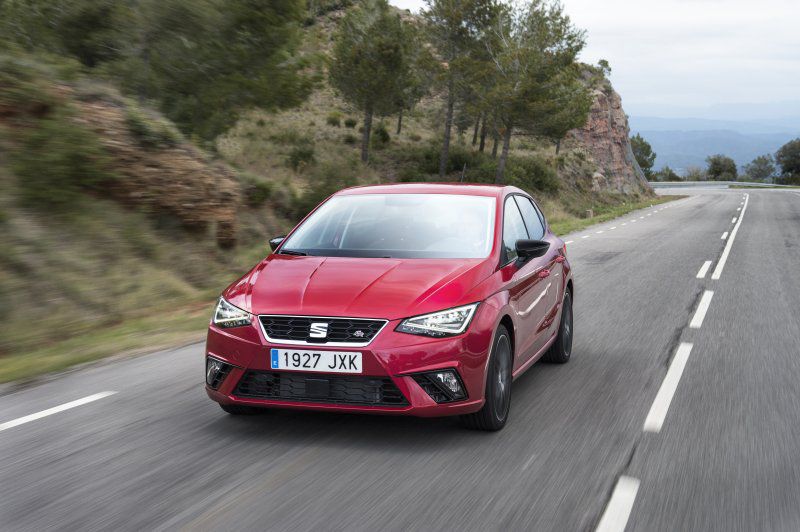
The <strong>Seat Ibiza V 1.0 MPI EVO (80 Hp)</strong> represents a key offering in the highly competitive European subcompact, or supermini, segment. Produced by the Spanish automaker Seat, a subsidiary of the Volkswagen Group, the fifth-generation Ibiza, internally designated as the Ibiza V, made its debut in 2017, with this specific 1.0 MPI EVO (80 Hp) variant being available from 2019 to June 2021. As a model not officially sold in the United States, the Ibiza is a cornerstone of Seat’s product lineup across Europe and other international markets, celebrated for its blend of practicality, youthful styling, and the robust engineering prowess inherited from its Volkswagen Group parentage. This particular iteration, with its naturally aspirated 1.0-liter engine, was positioned as an accessible and economical choice for urban drivers and young families, embodying Seat’s commitment to delivering dynamic yet efficient vehicles.
</p>
<p>
The Ibiza V is built on the Volkswagen Group’s MQB A0 platform, a modular architecture shared with other popular models like the Volkswagen Polo and Skoda Fabia. This foundation allows for impressive interior packaging, enhanced driving dynamics, and the integration of modern technologies. The 1.0 MPI EVO (80 Hp) model, while not designed for outright performance, focused on delivering reliable, fuel-efficient transportation, making it a popular choice in markets where vehicle size and running costs are paramount considerations. Its existence underscores a different philosophy compared to the larger, more powerful vehicles often favored in the North American market, prioritizing maneuverability, low emissions, and affordability in dense urban environments.
</p>
<h2>Engine and Performance: The Heart of the Seat Ibiza V 1.0 MPI EVO (80 Hp)</h2>
<p>
At the core of the <strong>Seat Ibiza V 1.0 MPI EVO (80 Hp)</strong> is a compact yet capable 1.0-liter (999 cm<sup>3</sup> or 60.96 cubic inches) three-cylinder naturally aspirated gasoline engine, identified by the engine code DSGD. This inline-three configuration is designed for efficiency and compact packaging, producing a modest 80 horsepower at 6250 revolutions per minute (rpm). Torque output stands at 93 Newton-meters (68.59 lb.-ft.) delivered at 3750 rpm, providing sufficient grunt for city driving and maintaining momentum on open roads. The engine’s layout is front-transverse, driving the front wheels, a common and efficient setup for subcompact vehicles.
</p>
<p>
Fuel delivery is handled by a multi-port manifold injection system, optimized for precise fuel metering and combustion efficiency. With a compression ratio of 11.5:1 and four valves per cylinder, the engine is designed to extract maximum energy from each drop of gasoline. Despite being naturally aspirated, it incorporates modern features like a Start & Stop System, which contributes to its commendable fuel economy and reduced emissions, particularly in stop-and-go urban traffic. It also includes a particulate filter to meet stringent European emission standards.
</p>
<p>
Performance figures for this variant emphasize its utilitarian nature. The Ibiza V 1.0 MPI EVO (80 Hp) accelerates from 0 to 60 miles per hour in approximately 14 seconds, with a top speed of 105.63 mph (170 km/h). While these figures might seem modest by American standards, they are perfectly adequate for the car’s intended use within European driving conditions, where high-speed highway cruising is less common and fuel efficiency is a primary concern. The engine is paired with a smooth-shifting 5-speed manual transmission, offering drivers direct control and further contributing to the vehicle’s fuel-saving capabilities.
</p>
<p>
Fuel economy is a strong suit for this model. The combined WLTP fuel consumption is rated between 40.6 and 42.8 US mpg (5.5-5.8 l/100 km), with the older NEDC combined cycle showing an even better 50 US mpg (4.7 l/100 km). Urban consumption is reported at 42.8 US mpg (5.5 l/100 km), and extra-urban figures reach 54.7 US mpg (4.3 l/100 km). These figures highlight the vehicle’s design for economical operation. Emissions are kept in check, with CO2 output ranging from 125-130 g/km (WLTP) and 107 g/km (NEDC), allowing it to comply with the Euro 6 DG emission standard, a crucial factor in European markets with strict environmental regulations.
</p>
<h2>Design and Features: Practicality Meets Modern European Style</h2>
<p>
The Seat Ibiza V 1.0 MPI EVO (80 Hp) showcases a contemporary design aesthetic that is both sporty and practical, fitting perfectly within the supermini segment. It features a five-door hatchback body style, offering easy access to both front and rear seating for its five occupants. With overall dimensions of 159.8 inches (4059 mm) in length, 70.08 inches (1780 mm) in width (76.46 inches or 1942 mm including mirrors), and 56.85 inches (1444 mm) in height, the Ibiza is compact enough for agile urban navigation yet substantial enough to provide a comfortable ride. The wheelbase of 100.94 inches (2564 mm) contributes to both stability and interior space.
</p>
<p>
Inside, the Ibiza V is designed with user-friendliness in mind. The trunk space is generous for its class, offering a minimum of 12.54 cubic feet (355 liters) with the rear seats up, expanding to a cavernous 41.14 cubic feet (1165 liters) when the rear seats are folded down. This flexibility makes it highly adaptable for various cargo needs, from weekly groceries to weekend luggage. The fuel tank capacity of 10.57 US gallons (40 liters) provides a respectable cruising range, complementing its fuel-efficient engine.
</p>
<p>
Underpinning the Ibiza V’s ride and handling are a well-engineered chassis and suspension system. The front features an independent McPherson strut setup with coil springs and an anti-roll bar, ensuring precise steering and good body control. The rear employs a semi-independent suspension with coil springs, a cost-effective and space-efficient solution common in this segment, balancing comfort with stability. Braking performance is handled by ventilated discs at the front and solid discs at the rear, complemented by an Anti-lock Braking System (ABS) for enhanced safety during emergency stops. The steering system is a rack and pinion type with electric power steering, providing light and responsive feedback, ideal for city driving and parking maneuvers.
</p>
<p>
The Ibiza V offers a range of tire and wheel options, from 185/65 R15 tires on 5.5J x 15 wheels to larger 215/40 R18 tires on 7J x 18 wheels, allowing for different levels of grip, comfort, and aesthetic appeal. The vehicle’s curb weight of 2257.53 lbs (1024 kg) is relatively light, contributing to its agility and fuel economy, while its maximum permissible weight is 3549.44 lbs (1610 kg), indicating a substantial payload capacity of 1291.91 lbs (586 kg).
</p>
<h2>Technical Specifications: Seat Ibiza V 1.0 MPI EVO (80 Hp)</h2>
<table border=”1″ style=”width:100%; border-collapse: collapse;”>
<thead>
<tr>
<th style=”padding: 8px; text-align: left; background-color: #f2f2f2;”>Category</th>
<th style=”padding: 8px; text-align: left; background-color: #f2f2f2;”>Specification</th>
</tr>
</thead>
<tbody>
<tr>
<td style=”padding: 8px; border: 1px solid #ddd;”><h3>General Information</h3></td>
<td style=”padding: 8px; border: 1px solid #ddd;”></td>
</tr>
<tr>
<td style=”padding: 8px; border: 1px solid #ddd;”>Brand</td>
<td style=”padding: 8px; border: 1px solid #ddd;”>Seat</td>
</tr>
<tr>
<td style=”padding: 8px; border: 1px solid #ddd;”>Model</td>
<td style=”padding: 8px; border: 1px solid #ddd;”>Ibiza</td>
</tr>
<tr>
<td style=”padding: 8px; border: 1px solid #ddd;”>Generation</td>
<td style=”padding: 8px; border: 1px solid #ddd;”>Ibiza V</td>
</tr>
<tr>
<td style=”padding: 8px; border: 1px solid #ddd;”>Type (Engine)</td>
<td style=”padding: 8px; border: 1px solid #ddd;”>1.0 MPI EVO (80 Hp)</td>
</tr>
<tr>
<td style=”padding: 8px; border: 1px solid #ddd;”>Production Start</td>
<td style=”padding: 8px; border: 1px solid #ddd;”>2019</td>
</tr>
<tr>
<td style=”padding: 8px; border: 1px solid #ddd;”>Production End</td>
<td style=”padding: 8px; border: 1px solid #ddd;”>June 2021</td>
</tr>
<tr>
<td style=”padding: 8px; border: 1px solid #ddd;”>Powertrain Architecture</td>
<td style=”padding: 8px; border: 1px solid #ddd;”>Internal Combustion Engine</td>
</tr>
<tr>
<td style=”padding: 8px; border: 1px solid #ddd;”>Body Type</td>
<td style=”padding: 8px; border: 1px solid #ddd;”>Hatchback</td>
</tr>
<tr>
<td style=”padding: 8px; border: 1px solid #ddd;”>Seats</td>
<td style=”padding: 8px; border: 1px solid #ddd;”>5</td>
</tr>
<tr>
<td style=”padding: 8px; border: 1px solid #ddd;”>Doors</td>
<td style=”padding: 8px; border: 1px solid #ddd;”>5</td>
</tr>
<tr>
<td style=”padding: 8px; border: 1px solid #ddd;”><h3>Performance Specifications</h3></td>
<td style=”padding: 8px; border: 1px solid #ddd;”></td>
</tr>
<tr>
<td style=”padding: 8px; border: 1px solid #ddd;”>Combined Fuel Consumption (WLTP)</td>
<td style=”padding: 8px; border: 1px solid #ddd;”>40.6 – 42.8 US mpg (5.5-5.8 l/100 km)</td>
</tr>
<tr>
<td style=”padding: 8px; border: 1px solid #ddd;”>CO2 Emissions (WLTP)</td>
<td style=”padding: 8px; border: 1px solid #ddd;”>125-130 g/km</td>
</tr>
<tr>
<td style=”padding: 8px; border: 1px solid #ddd;”>Fuel Consumption (Urban)</td>
<td style=”padding: 8px; border: 1px solid #ddd;”>42.8 US mpg (5.5 l/100 km)</td>
</tr>
<tr>
<td style=”padding: 8px; border: 1px solid #ddd;”>Fuel Consumption (Extra Urban)</td>
<td style=”padding: 8px; border: 1px solid #ddd;”>54.7 US mpg (4.3 l/100 km)</td>
</tr>
<tr>
<td style=”padding: 8px; border: 1px solid #ddd;”>Fuel Consumption (Combined NEDC)</td>
<td style=”padding: 8px; border: 1px solid #ddd;”>50 US mpg (4.7 l/100 km)</td>
</tr>
<tr>
<td style=”padding: 8px; border: 1px solid #ddd;”>CO2 Emissions (NEDC)</td>
<td style=”padding: 8px; border: 1px solid #ddd;”>107 g/km</td>
</tr>
<tr>
<td style=”padding: 8px; border: 1px solid #ddd;”>Fuel Type</td>
<td style=”padding: 8px; border: 1px solid #ddd;”>Petrol (Gasoline)</td>
</tr>
<tr>
<td style=”padding: 8px; border: 1px solid #ddd;”>Acceleration 0-60 mph</td>
<td style=”padding: 8px; border: 1px solid #ddd;”>14 seconds</td>
</tr>
<tr>
<td style=”padding: 8px; border: 1px solid #ddd;”>Maximum Speed</td>
<td style=”padding: 8px; border: 1px solid #ddd;”>105.63 mph (170 km/h)</td>
</tr>
<tr>
<td style=”padding: 8px; border: 1px solid #ddd;”>Emission Standard</td>
<td style=”padding: 8px; border: 1px solid #ddd;”>Euro 6 DG</td>
</tr>
<tr>
<td style=”padding: 8px; border: 1px solid #ddd;”>Weight-to-Power Ratio</td>
<td style=”padding: 8px; border: 1px solid #ddd;”>12.8 kg/Hp</td>
</tr>
<tr>
<td style=”padding: 8px; border: 1px solid #ddd;”><h3>Engine Specifications</h3></td>
<td style=”padding: 8px; border: 1px solid #ddd;”></td>
</tr>
<tr>
<td style=”padding: 8px; border: 1px solid #ddd;”>Power</td>
<td style=”padding: 8px; border: 1px solid #ddd;”>80 Hp @ 6250 rpm</td>
</tr>
<tr>
<td style=”padding: 8px; border: 1px solid #ddd;”>Torque</td>
<td style=”padding: 8px; border: 1px solid #ddd;”>68.59 lb.-ft. (93 Nm) @ 3750 rpm</td>
</tr>
<tr>
<td style=”padding: 8px; border: 1px solid #ddd;”>Engine Layout</td>
<td style=”padding: 8px; border: 1px solid #ddd;”>Front, Transverse</td>
</tr>
<tr>
<td style=”padding: 8px; border: 1px solid #ddd;”>Engine Model/Code</td>
<td style=”padding: 8px; border: 1px solid #ddd;”>DSGD</td>
</tr>
<tr>
<td style=”