
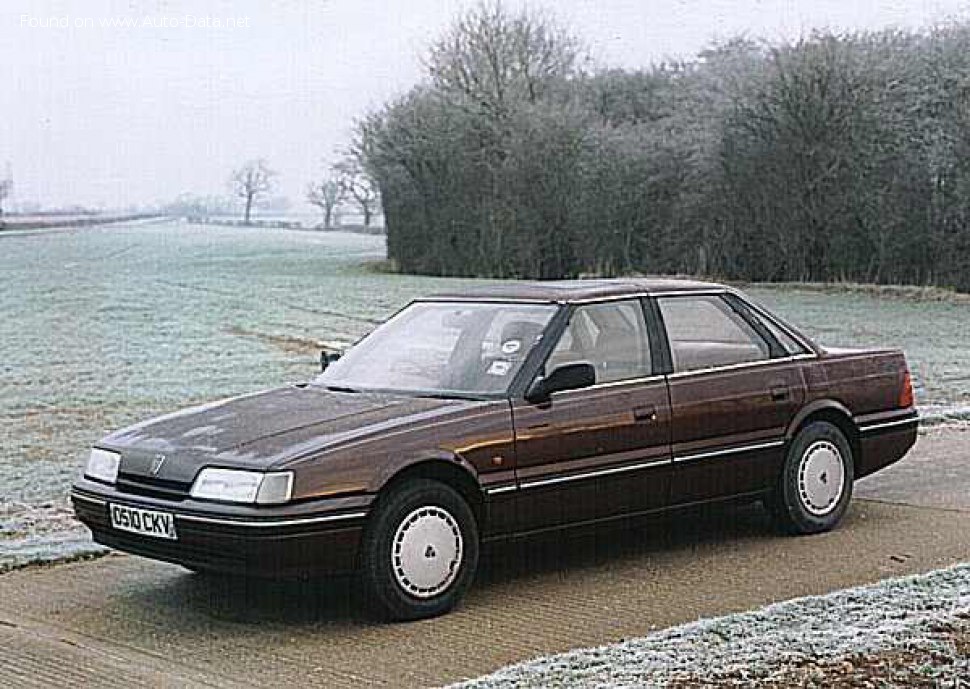
The Rover 800 820 SI (XS): A British Executive Sedan of the Late 1980s
The Rover 800 series represented a pivotal moment for the British automaker Rover, marking its ambitious return to the executive car segment with a vehicle designed to compete with established European rivals. Launched in 1986, the 800 series was the result of the collaborative “Project XX” with Honda, sharing its platform with the first-generation Honda Legend (marketed as the Acura Legend in North America). This partnership was crucial for Rover, providing access to modern engineering and manufacturing techniques. The particular model under focus, the Rover 800 820 SI (XS), produced between 1988 and 1991, featured a 133 horsepower four-cylinder engine, serving as a well-regarded entry point into the premium sedan lineup.
Positioned above the smaller Rover Montego and below more exclusive luxury offerings, the 800 series aimed to blend traditional British comfort and styling cues with Japanese reliability and build quality. While the Rover 800 found its primary market in Europe and other Commonwealth nations, a version was sold in the United States as the Sterling 825 and later 827, attempting to establish a new luxury marque. The 820 SI (XS) variant, specifically, offered a compelling balance of performance and efficiency for buyers in its home markets, appealing to those seeking a refined executive sedan without the higher running costs associated with the V6 models.
Engine and Performance: The M16i Heart of the Rover 800 820 SI (XS)
Under the hood of the Rover 800 820 SI (XS) lay the M16i engine, a 2.0-liter, naturally aspirated, four-cylinder gasoline (petrol) unit. This engine was a development of Rover’s own M-series engine family, which itself evolved from the earlier O-series. The ’16i’ designation typically indicated a 16-valve, fuel-injected configuration, a modern setup for the late 1980s that contributed to improved power output, fuel efficiency, and emissions compared to older carbureted designs. With a peak power output of 133 horsepower, the M16i provided respectable performance for a car of its size and class, enabling comfortable cruising and adequate acceleration for everyday driving scenarios.
The engine’s naturally aspirated nature meant a linear power delivery, characteristic of engines from this era, without the sudden surge associated with turbochargers. This translated into a smooth and predictable driving experience, well-suited to the executive sedan’s intended purpose of comfortable long-distance travel. The engine’s oil capacity was 4.5 liters (4.76 US quarts), and its coolant capacity stood at 10 liters (10.57 US quarts), indicating a robust cooling system designed to maintain optimal operating temperatures. While not a performance powerhouse, the 133 Hp M16i engine in the 820 SI (XS) offered a refined and economical option within the Rover 800 range, especially when compared to the larger V6 engines that were also available in the series.
Design and Features: Executive Comfort and Late-80s Styling
The Rover 800 series, including the 820 SI (XS), adopted a contemporary “wedgy” sedan body style that was fashionable in the late 1980s. Its design language was a blend of European executive car aesthetics and subtle British styling cues, aiming for an understated elegance. The collaboration with Honda heavily influenced the overall proportions and interior packaging, ensuring a spacious and comfortable cabin for both front and rear passengers. The sedan body type was a classic choice for the executive segment, offering a formal appearance and a generous trunk capacity suitable for business travel or family excursions.
Inside, the 820 SI (XS) would have featured a comfortable interior with quality materials, typical of Rover’s aspirations for the executive market. While specific features are not detailed in the provided data, a model designated ‘SI’ (Sport Injection, or sometimes Super Injection) would generally imply a mid-to-high trim level for the four-cylinder variant. This would likely include power windows, central locking, a quality audio system, and comfortable seating with good lumbar support. Air conditioning would have been a common option or standard on higher trims. The dashboard layout was ergonomic for its time, with clear instrumentation and accessible controls, prioritizing driver comfort and ease of use. Safety features, while not as comprehensive as modern vehicles, would have included seatbelts for all occupants and a robust body structure designed to meet the safety standards of the period.
Technical Specifications
Below is a detailed breakdown of the technical specifications for the Rover 800 820 SI (XS) (133 Hp) sedan.
| Category | Specification |
|---|---|
| Brand | Rover |
| Model | 800 |
| Generation | 800 |
| Type (Engine) | 820 SI (XS) (133 Hp) |
| Start of Production | 1988 year |
| End of Production | 1991 year |
| Powertrain Architecture | Internal Combustion engine |
| Body type | Sedan |
| Fuel Type | Petrol (Gasoline) |
| Power | 133 Hp |
| Engine Model/Code | M16i |
| Engine Aspiration | Naturally aspirated engine |
| Engine Oil Capacity | 4.5 l (4.76 US qt | 3.96 UK qt) |
| Engine Oil Specification | Specific data not available |
| Coolant Capacity | 10 l (10.57 US qt | 8.8 UK qt) |
| Drivetrain | Internal Combustion engine |
Legacy and Market Impact of the Rover 800
The Rover 800 series, including the Rover 800 820 SI (XS), faced a challenging market upon its introduction. In its primary European markets, it competed fiercely with established executive sedans such as the Ford Granada/Scorpio, Vauxhall Carlton/Opel Omega, and entry-level offerings from BMW (3 Series, 5 Series) and Mercedes-Benz (190E, E-Class). Rover’s strategy was to offer a compelling blend of British luxury and Honda reliability, aiming to carve out a niche against these formidable rivals.
The car’s reputation was somewhat mixed. While praised for its comfortable ride, spacious interior, and the refinement of its engines (especially the Honda V6 units), the early models, particularly the Sterling variants exported to the US, suffered from a perception of build quality issues and electrical problems. This somewhat tarnished the brand’s image, especially in the crucial North American market where the Sterling failed to gain significant traction against the likes of Acura, Lexus, and established European luxury brands. However, in its home market and other Commonwealth countries, the Rover 800 was generally well-received, particularly the later iterations which saw improvements in build quality and reliability.
The 820 SI (XS) variant, with its 133 Hp M16i engine, represented a sensible choice for many buyers. It offered a good balance between performance and running costs, making it a popular option for company car fleets and private buyers who valued economy without sacrificing the executive feel. Its mechanical impact was significant for Rover, showcasing their ability to produce a modern, competitive large sedan, even if it relied heavily on external collaboration. The 800 series ultimately laid some groundwork for future Rover models, but it also highlighted the company’s ongoing struggles to achieve consistent, world-class quality and establish a strong independent identity in the global automotive landscape. Despite its challenges, the Rover 800 remains an important chapter in British automotive history, representing a bold attempt to reclaim a segment dominated by foreign manufacturers.
