
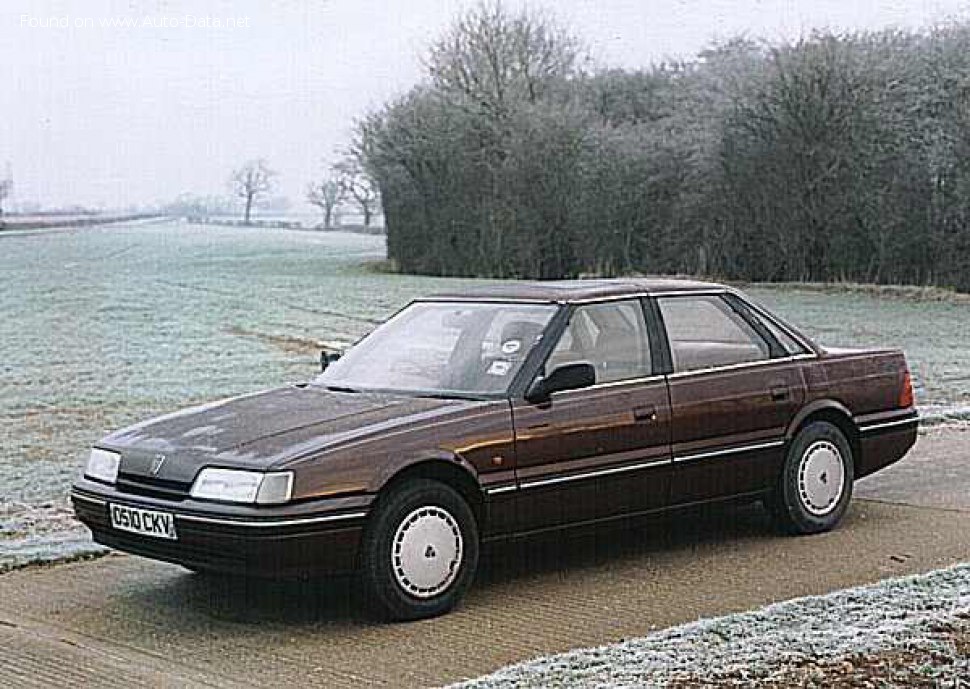
Introduction to the Rover 800 820 Sport
The Rover 800 Series represented the British automaker’s ambitious foray into the executive car segment, a crucial offering for the company throughout the late 1980s and 1990s. The model line, developed in collaboration with Honda, aimed to blend traditional British luxury and styling with modern Japanese engineering reliability. The second generation, often referred to by its internal code R17, received a significant facelift in 1991, refining its aesthetics and addressing some of the earlier criticisms. Within this refreshed lineup, the Rover 800 820 Sport, produced between 1994 and 1996, stood out as a performance-oriented variant designed to appeal to buyers seeking a more dynamic driving experience alongside the expected comforts of a premium sedan.
While the Rover brand enjoyed a strong presence in its home market of the United Kingdom and across Europe, the 800 Series was not widely sold in the United States under the Rover badge. Instead, its Honda Legend counterpart (marketed as the Acura Legend in the US) filled that niche. Consequently, the Rover 800 820 Sport carved its reputation primarily in European markets, where it competed against established players from Germany and Sweden, offering a distinctive British alternative. This particular iteration, with its potent 197 horsepower engine, aimed to elevate the 800’s performance credentials, distinguishing it from more sedate variants in the range.
The Rover 800 820 Sport: Engineering and Pedigree
Engine & Performance
At the core of the Rover 800 820 Sport‘s appeal was its powertrain, specifically the T16T engine. This 2.0-liter, four-cylinder internal combustion engine was a development of Rover’s well-regarded T-series engine family, known for its robust construction and adaptability. Generating an impressive 197 horsepower, the 820 Sport was a formidable performer for its era and segment. The engine’s high output, as per the specifications provided, was achieved through a naturally aspirated setup, indicating a highly tuned and efficient design for a 2.0-liter unit of its time. This power was delivered to the front wheels, a common configuration for executive sedans in this class, offering predictable handling characteristics.
The T16T engine utilized petrol (gasoline) as its fuel source, a standard for performance vehicles. The engineering focus was on delivering strong acceleration and a responsive driving feel, complementing the executive sedan’s comfortable ride. The engine’s robust design also contributed to its reliability, a key factor for discerning buyers in the mid-1990s. Maintenance specifications for the engine included an oil capacity of 4.5 liters (4.76 US quarts) and a coolant capacity of 8.5 liters (8.98 US quarts), reflecting typical requirements for a four-cylinder engine of this displacement.
Design & Features
The Rover 800 820 Sport presented itself as a sophisticated sedan, embodying the “new traditionalist” design philosophy that Rover adopted in the 1990s. The R17 facelift brought a more assertive and recognizably British aesthetic to the 800 Series, departing from the earlier model’s closer visual ties to its Honda Legend sibling. Key design elements included a more prominent grille, revised headlamps, and a generally softer, more rounded profile that aimed for a timeless elegance. The “Sport” designation typically implied subtle enhancements to the exterior, such as specific alloy wheel designs, a slightly more aggressive stance, and potentially body-colored trim, all designed to underscore its performance capabilities without being overtly ostentatious.
Inside, the 800 Series was renowned for its emphasis on passenger comfort and luxury. The 820 Sport variant would have featured high-quality materials, likely including leather upholstery, real wood veneer trim, and plush carpeting, creating an inviting and upscale cabin environment. Standard features for an executive car of this vintage would have included power windows, central locking, power-adjustable mirrors, and an advanced climate control system. Given its mid-1990s production, safety features such as anti-lock braking systems (ABS) would have been standard or a widely available option, contributing to the vehicle’s overall safety profile. The sedan body type offered ample space for five occupants and a generous trunk, making it practical for both executive transport and family use.
Technical Specifications
| Category | Specification |
|---|---|
| Brand | Rover |
| Model | 800 |
| Generation | 800 |
| Type (Engine) | 820 Sport (197 Hp) |
| Start of Production | 1994 year |
| End of Production | 1996 year |
| Powertrain Architecture | Internal Combustion engine |
| Body Type | Sedan |
| Fuel Type | Petrol (Gasoline) |
| Power | 197 Hp |
| Engine Model/Code | T16T |
| Engine Aspiration | Naturally aspirated engine |
| Engine Oil Capacity | 4.5 l (4.76 US qt | 3.96 UK qt) |
| Coolant Capacity | 8.5 l (8.98 US qt | 7.48 UK qt) |
Legacy & Market Impact
The Rover 800 Series, and particularly performance variants like the 820 Sport, played a significant role in Rover’s strategy to maintain relevance in the competitive European executive car market. In its primary markets, the 800 Series faced stiff competition from formidable rivals such as the Ford Scorpio, Vauxhall Omega (Opel Omega in mainland Europe), Volvo 850, and entry-level variants of the BMW 5 Series and Mercedes-Benz E-Class. The 820 Sport specifically aimed to carve out a niche by offering a blend of British luxury and a surprisingly potent performance package, often at a more accessible price point than its German counterparts.
Despite its merits, the Rover 800 Series often struggled with a perception battle against its more established German and Swedish competitors. While praised for its comfortable ride, luxurious interiors, and the distinctive character of its British styling, it sometimes faced scrutiny regarding long-term reliability and build quality compared to benchmarks set by its rivals. However, the 820 Sport, with its powerful T16T engine, garnered a reputation among enthusiasts for its engaging driving dynamics and brisk acceleration, making it a “sleeper” performance sedan for those in the know.
The period from 1994 to 1996 marked the twilight years of the Rover 800 Series before its eventual replacement by the Rover 75. The 820 Sport therefore represents a particular moment in Rover’s history, showcasing the brand’s efforts to inject performance into its executive offering during a critical juncture for the company. It stands as a testament to Rover’s engineering capabilities and its enduring commitment to offering a distinctive British alternative in a market increasingly dominated by global players. Today, the Rover 800 820 Sport is recognized by classic car enthusiasts as an interesting piece of British automotive heritage, appreciated for its blend of executive comfort and unexpected performance.
