The Renault Espace IV (Phase II, 2006): A European Minivan Icon
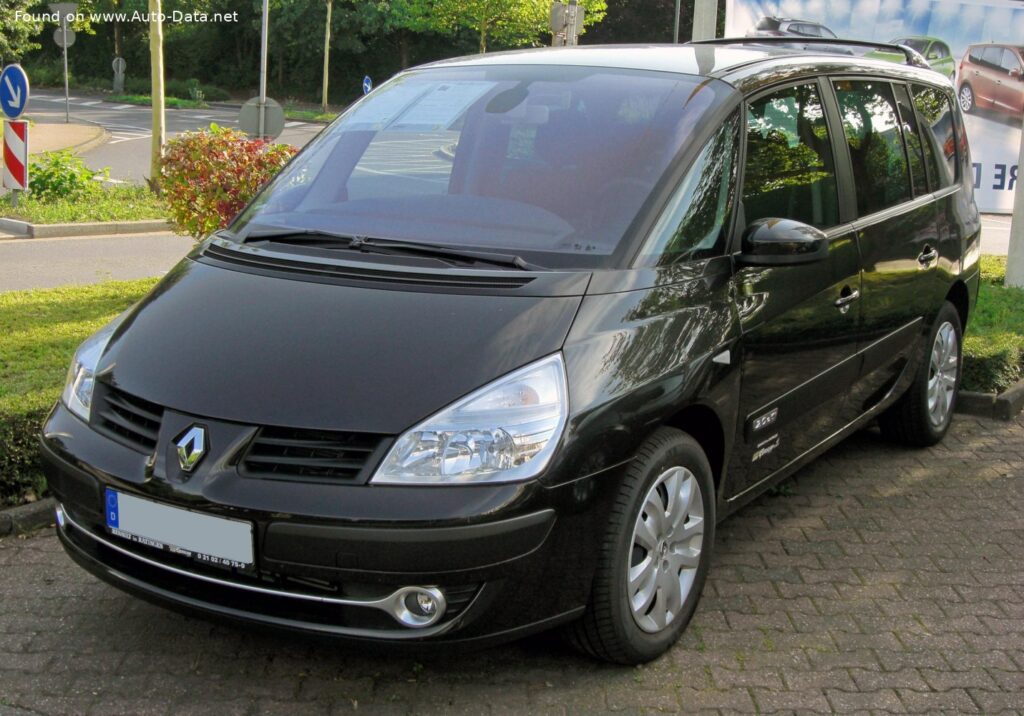
The Renault Espace IV (Phase II, 2006) represents a significant iteration of one of Europe’s pioneering and most successful multi-purpose vehicles (MPVs), a segment often referred to as minivans in the United States. Introduced in 2006 as a mid-cycle refresh (Phase II) of the fourth-generation Espace, this model continued to set benchmarks for family transportation in its primary European market. While the Espace nameplate holds little recognition in North America, where the minivan segment was largely dominated by domestic and Japanese manufacturers, the Espace was a household name across the Atlantic, synonymous with spaciousness, versatility, and innovative design. The 2006 Phase II update brought subtle aesthetic enhancements, updated interior features, and refined powertrains, including the robust 2.0-liter Turbo 16V engine paired with an automatic transmission, which offered a compelling blend of performance and practicality for the discerning European family.
Evolution and Market Context of the Renault Espace IV (Phase II, 2006)
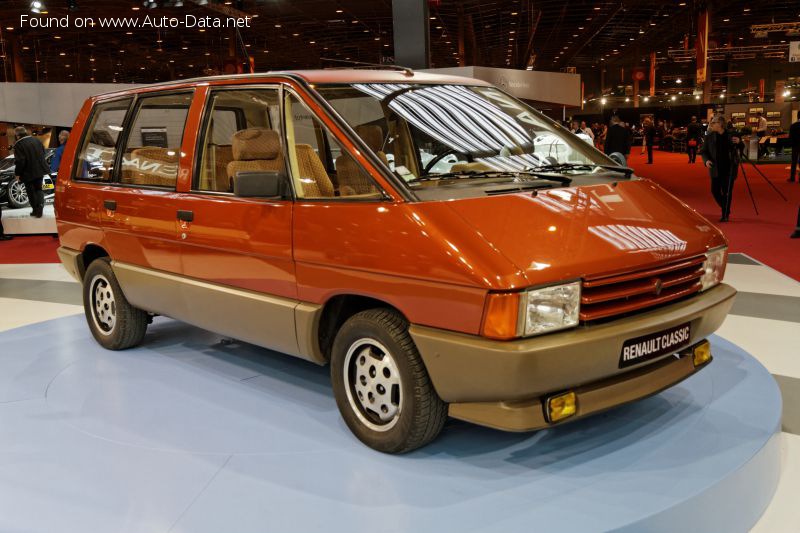
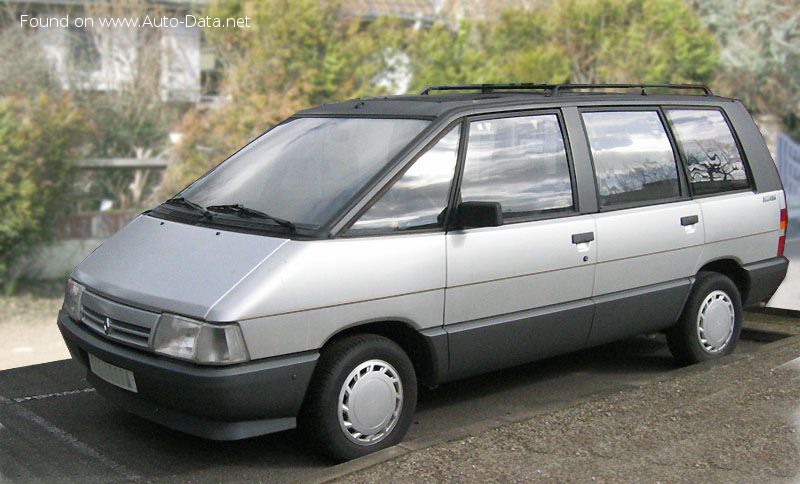
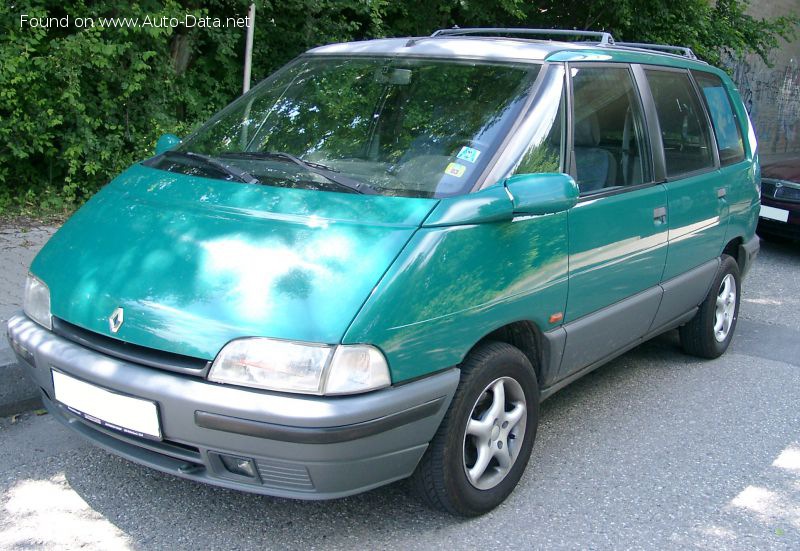
The Espace lineage began in 1984, often credited with inventing the modern European MPV. By the time the fourth generation arrived in 2002, the Espace had matured into a sophisticated, premium offering. The Phase II refresh, launched in 2006, aimed to keep the model competitive in an increasingly crowded segment. This era saw European manufacturers focusing heavily on diesel engines for fuel efficiency, but the 2.0-liter Turbo 16V gasoline engine offered a smoother, quieter, and more responsive alternative, particularly appealing to drivers who prioritized performance and refinement. The Espace IV was known for its distinct, almost futuristic styling, large panoramic glass areas, and a spacious, highly configurable interior designed to comfortably accommodate up to seven passengers. Its role was to serve as a flagship family vehicle, offering a superior alternative to traditional station wagons and early SUVs.
Engine and Performance: The 2.0 Turbo 16V Heart of the Renault Espace IV (Phase II, 2006)
Under the hood of the Renault Espace IV (Phase II, 2006), specifically the 2.0 Turbo 16V variant, resided a sophisticated and proven powertrain. The F4R engine code denotes a 1998 cubic centimeter (approximately 2.0-liter) inline four-cylinder engine, configured with 16 valves (4 valves per cylinder) and a Double Overhead Camshaft (DOHC) valvetrain. This particular unit benefited from turbocharging and an intercooler, significantly boosting its output and responsiveness compared to naturally aspirated counterparts.
The engine produced a healthy 170 horsepower at 5000 revolutions per minute (rpm), providing ample power for a vehicle of its size and intended purpose. Torque output was equally impressive, peaking at 270 Newton-meters (199.14 pound-feet) at a relatively low 3250 rpm. This broad torque band ensured strong pulling power from low engine speeds, crucial for effortless city driving and confident highway overtaking, even when the Espace was fully loaded with passengers and cargo. Power was delivered to the front wheels via a smooth-shifting 5-speed automatic transmission, a popular choice for minivan buyers seeking convenience and comfort.
In terms of performance, the Espace 2.0 Turbo 16V Automatic was capable of accelerating from 0 to 60 miles per hour in a respectable 10.1 seconds, with a top speed of 122.41 mph. While not a sports car, these figures demonstrated that the Espace was more than capable of keeping up with traffic and offered a dynamic driving experience for an MPV. Fuel economy, measured on the European combined cycle, was approximately 9.9 liters per 100 kilometers, translating to about 23.8 US miles per gallon. This was a reasonable figure for a turbocharged gasoline engine in a vehicle of this size and weight during its production era. The engine complied with the Euro 4 emission standard, reflecting its adherence to the environmental regulations of the mid-2000s.
Design and Features: Form Meets Function
The design of the Espace IV (Phase II, 2006) maintained the distinctive, aerodynamic silhouette that characterized the fourth generation. As a minivan or MPV, its primary design objective was to maximize interior space and versatility. The body type featured five doors and could comfortably seat seven passengers, a key selling point for large families. Its exterior dimensions, with a length of 183.31 inches, a width of 73.23 inches (74.57 inches including mirrors), and a height of 68.03 inches, provided a substantial road presence while ensuring a spacious cabin. The long wheelbase of 110.35 inches contributed to a stable ride and generous interior volume.
Inside, the Espace was a masterclass in modularity. Its individual rear seats could be slid, folded, or even removed entirely, allowing for a vast array of seating and cargo configurations. With the rear seats in place, trunk space was a respectable 10.28 cubic feet, expanding dramatically to an impressive 101 cubic feet with the rear seats removed or folded, transforming the Espace into a formidable cargo hauler. The elevated driving position, large glass areas, and optional panoramic sunroof created an airy and light-filled cabin, enhancing the sense of space and outward visibility.
Features for the 2006 model year included a focus on comfort and convenience. While specific trim levels varied, typical amenities for a vehicle in this class included automatic climate control, a sophisticated infotainment system for the era, and numerous storage compartments throughout the cabin. Safety was also a priority, with the Espace IV having achieved high ratings in European crash tests. Standard safety features included an Anti-lock Braking System (ABS) with electronic brake-force distribution, and a comprehensive array of airbags, though specific counts would vary by market and trim. The vehicle’s substantial curb weight of 4023.44 pounds and robust chassis contributed to a feeling of solidity and security on the road.
Technical Specifications: Renault Espace IV (Phase II, 2006) 2.0 Turbo 16V (170 Hp) Automatic
| Category | Specification |
|---|---|
| General Information | |
| Brand | Renault |
| Model | Espace |
| Generation | Espace IV (Phase II, 2006) |
| Type (Engine) | 2.0 Turbo 16V (170 Hp) Automatic |
| Production Start | 2006 |
| Production End | 2010 |
| Powertrain Architecture | Internal Combustion Engine |
| Body Type | Minivan, MPV |
| Seats | 7 |
| Doors | 5 |
| Performance Specifications | |
| Fuel Consumption (Urban) | 14.1 l/100 km (16.7 US mpg) |
| Fuel Consumption (Extra Urban) | 7.5 l/100 km (31.4 US mpg) |
| Fuel Consumption (Combined) | 9.9 l/100 km (23.8 US mpg) |
| CO2 Emissions | 234 g/km |
| Fuel Type | Petrol (Gasoline) |
| Acceleration 0-60 mph | 10.1 sec |
| Maximum Speed | 197 km/h (122.41 mph) |
| Emission Standard | Euro 4 |
| Weight-to-Power Ratio | 10.7 kg/Hp (93.2 Hp/tonne) |
| Weight-to-Torque Ratio | 6.8 kg/Nm (147.9 Nm/tonne) |
| Engine Specifications | |
| Power | 170 Hp @ 5000 rpm |
| Power per Liter | 85.1 Hp/l |
| Torque | 270 Nm @ 3250 rpm (199.14 lb.-ft. @ 3250 rpm) |
| Engine Layout | Front, Transverse |
| Engine Model/Code | F4R |
| Engine Displacement | 1998 cm3 (2.0 Liters / 121.93 cu. in.) |
| Number of Cylinders | 4 |
| Engine Configuration | Inline |
| Cylinder Bore | 82.7 mm (3.26 in.) |
| Piston Stroke | 93 mm (3.66 in.) |
| Compression Ratio | 9.8:1 |
| Valves per Cylinder | 4 |
| Fuel Injection System | Multi-port manifold injection |
| Engine Aspiration | Turbocharger, Intercooler |
| Valvetrain | DOHC |
| Engine Oil Capacity | 5.4 l (5.71 US qt) |
| Engine Oil Specification | Not specified in data |
| Coolant Capacity | 9.3 l (9.83 US qt) |
| Space, Volume, and Weights | |
| Kerb Weight | 1825 kg (4023.44 lbs.) |
| Max. Weight | 2535 kg (5588.72 lbs.) |
| Max Load | 710 kg (1565.28 lbs.) |
| Trunk (Boot) Space – Minimum | 291 l (10.28 cu. ft.) |
| Trunk (Boot) Space – Maximum | 2860 l (101 cu. ft.) |
| Fuel Tank Capacity | 83 l (21.93 US gal) |
| Max. Roof Load | 80 kg (176.37 lbs.) |
| Permitted Trailer Load with Brakes (12%) | 2000 kg (4409.25 lbs.) |
| Permitted Trailer Load without Brakes | 750 kg (1653.47 lbs.) |
| Permitted Towbar Download | 80 kg (176.37 lbs.) |
| Dimensions | |
| Length | 4656 mm (183.31 in.) |
| Width | 1860 mm (73.23 in.) |
| Width Including Mirrors | 1894 mm (74.57 in.) |
| Height | 1728 mm (68.03 in.) |
| Wheelbase | 2803 mm (110.35 in.) |
| Front Track | 1574 mm (61.97 in.) |
| Rear Track | 1556 mm (61.26 in.) |
| Ride Height (Ground Clearance) | 120 mm (4.72 in.) |
| Minimum Turning Circle | 11.3 m (37.07 ft.) |
| Drivetrain, Brakes, and Suspension | |
| Drivetrain Architecture | Front-wheel drive, Internal Combustion Engine |
| Drive Wheel | Front-wheel drive |
| Number of Gears and Type of Gearbox | 5 gears, automatic transmission |
| Front Suspension | Independent type McPherson |
| Rear Suspension | Semi-independent, coil spring |
| Front Brakes | Ventilated discs |
| Rear Brakes | Disc |
| Assisting Systems | ABS (Anti-lock Braking System) |
| Steering Type | Steering rack and pinion |
| Tire Size | 225/60 R16 |
| Wheel Rims Size | 16 inches |
Legacy and Market Impact in Europe
The Renault Espace IV, particularly the Phase II models from 2006 to 2010, solidified its reputation as a benchmark in the European MPV segment. It was praised for its comfortable ride, refined engines, and innovative interior versatility. The 2.0 Turbo 16V Automatic variant, while not the most fuel-efficient option compared to its diesel siblings, offered a compelling blend of smooth power delivery and quiet operation, making it a desirable choice for families prioritizing refinement and a relaxed driving experience.
In its primary European market, the Espace faced stiff competition from other well-established MPVs such as the Ford Galaxy, Volkswagen Sharan, Citroën C8, and Peugeot 807. Despite the competition, the Espace maintained a strong following due to its distinct styling, perceived quality, and Renault’s long-standing leadership in the MPV segment. Its ability to effortlessly transform from a seven-seater family hauler to a cavernous cargo van gave it a practical edge that many rivals struggled to match. The premium feel and extensive features list also allowed it to compete with more upscale offerings.
Historically, the Espace played a pivotal role in shaping the European automotive landscape. The fourth generation, with its more car-like driving dynamics and higher level of sophistication, helped transition the MPV from a purely utilitarian vehicle to a more aspirational family car. While the global market eventually shifted towards SUVs, leading to a decline in traditional MPV sales, the Espace IV remains a testament to Renault’s ingenuity and commitment to family transportation. Its legacy is one of innovation, comfort, and adaptability, proving that a family vehicle could be both practical and stylish. For the American market, the Espace serves as an interesting case study of a highly successful vehicle in a different automotive culture, showcasing design and engineering priorities distinct from those prevalent in the United States.