Introduction to the Volkswagen Polo III (6N/6KV) 1.0 (60 Hp)
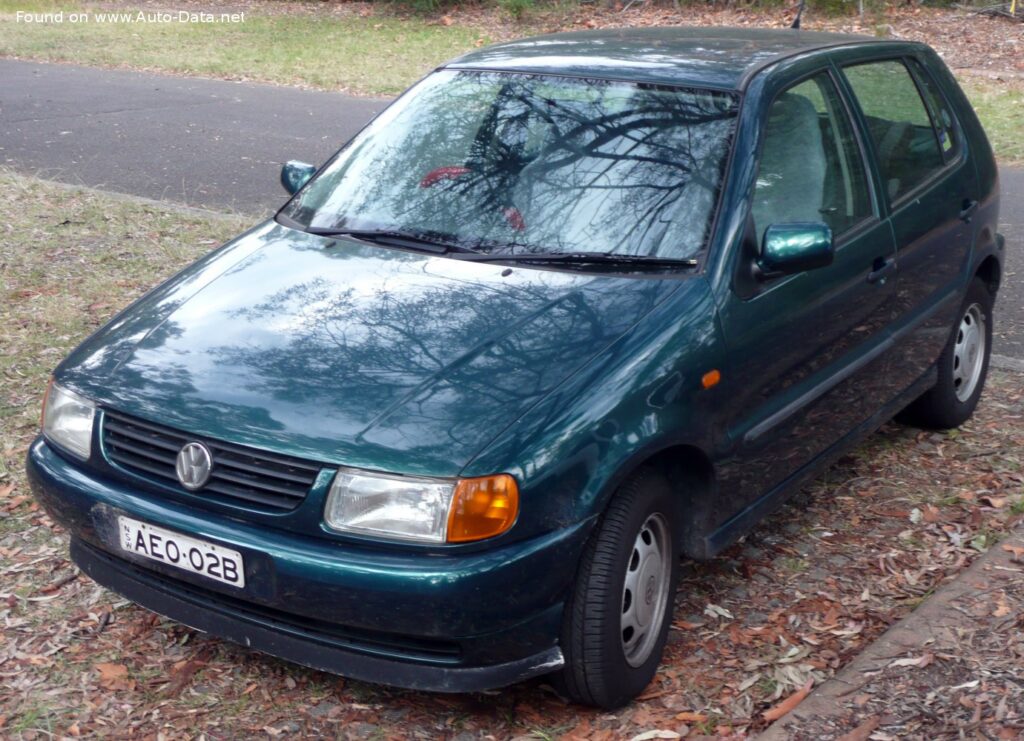
The Volkswagen Polo III, internally designated as the 6N and 6KV for different body styles, represented a significant evolution for Volkswagen’s popular supermini (also known as a subcompact car in the US market) when it was introduced in 1994. The specific variant, the Volkswagen Polo III (6N/6KV) 1.0 (60 Hp), produced between 1997 and 2000, was a cornerstone of the lineup, particularly in its primary European market. This generation of the Polo was praised for its improved build quality, refined driving dynamics, and a more sophisticated design compared to its predecessors, bringing a touch of premium feel to the budget-conscious segment. While the Polo was never officially sold in the United States, it played a crucial role in Volkswagen’s global strategy, offering an affordable, efficient, and practical vehicle tailored for the bustling urban environments and diverse road networks of Europe and beyond. The 1.0-liter engine, while modest in output, was designed to deliver exceptional fuel economy and manageable performance for city commuting, aligning perfectly with the needs of its target demographic.
Engine and Performance of the Volkswagen Polo III (6N/6KV) 1.0 (60 Hp)
At the heart of the Volkswagen Polo III (6N/6KV) 1.0 (60 Hp) lies a compact yet capable internal combustion engine. This powerplant is a naturally aspirated, 1.0-liter (999 cm3 or 60.96 cubic inches) inline-four configuration, featuring two valves per cylinder and a compression ratio of 10.2:1. It utilizes a multi-port manifold injection system to precisely deliver fuel, contributing to both its efficiency and smooth operation. The engine is mounted transversely at the front of the vehicle, driving the front wheels through a standard 5-speed manual transmission, a common and reliable setup for vehicles in this class.
The engine produces 60 horsepower (Hp) at 4700 revolutions per minute (rpm), with a power per liter output of 60.1 Hp/l. Torque figures stand at a respectable 85.56 lb.-ft. (116 Nm) delivered at a low 2800 rpm, indicating that the engine is designed for accessible pulling power in everyday driving scenarios rather than outright speed. This characteristic makes it well-suited for urban environments where quick acceleration from a standstill and responsiveness at lower speeds are often more valuable than high-end performance.
In terms of performance metrics, the Polo 1.0 (60 Hp) accelerates from 0 to 60 mph in 14.2 seconds, with a top speed of 99.42 mph (160 km/h). While these figures may not suggest a performance-oriented vehicle, they are entirely adequate for its intended purpose as an economical city car. Fuel efficiency was a key selling point for this model, with an urban consumption rating of 27.7 US mpg (8.5 l/100 km) and an impressive extra-urban (highway) consumption of 47 US mpg (5 l/100 km). These figures underscore the vehicle’s commitment to economical motoring, making it an attractive option for drivers seeking to minimize running costs. The vehicle’s weight-to-power ratio of 15.2 kg/Hp (approximately 33.5 lbs/Hp) and a weight-to-torque ratio of 7.8 kg/Nm (approximately 17.2 lbs/lb.-ft.) highlight its lightweight construction and efficient use of the available power.
Design and Features
The Volkswagen Polo III (6N/6KV) adopted a more rounded and contemporary design language compared to its boxier predecessors, aligning with the aesthetic trends of the late 1990s. The 1.0 (60 Hp) variant was primarily offered in a versatile hatchback body type, available with either three or five doors, providing flexibility for different consumer needs. Its compact dimensions—146.26 inches (3715 mm) in length, 65.16 inches (1655 mm) in width, and 55.91 inches (1420 mm) in height—made it highly maneuverable and easy to park in congested city streets, a critical attribute for the European market. The wheelbase measured 94.49 inches (2400 mm), contributing to a stable ride for its size.
Inside, the Polo III offered seating for five occupants, a testament to its efficient packaging. Despite its compact exterior, the interior was designed to maximize usable space. The trunk (boot) provided a minimum capacity of 8.65 cubic feet (245 liters), which could be expanded significantly to 34.43 cubic feet (975 liters) by folding down the rear seats, offering considerable versatility for carrying luggage or groceries. The fuel tank capacity was 11.89 US gallons (45 liters), providing a decent range given the car’s excellent fuel economy.
In terms of features, the Polo III (6N/6KV) 1.0 (60 Hp) benefited from Volkswagen’s commitment to solid engineering and essential functionality. For its era, safety was addressed with the inclusion of an Anti-lock Braking System (ABS) as an assisting system, enhancing braking control and preventing wheel lock-up during emergency stops. The vehicle utilized a robust suspension setup, with coil springs at both the front and rear, providing a comfortable yet composed ride. Braking was handled by ventilated discs at the front for effective heat dissipation and traditional drum brakes at the rear, a cost-effective and reliable solution for a car of this segment. Steering was managed by a hydraulic rack and pinion system, offering tactile feedback to the driver. The car came equipped with 175/65 R13 T tires on 13-inch wheel rims, a practical choice balancing grip, comfort, and affordability.
Technical Specifications
| Category | Specification |
|---|---|
| Brand | Volkswagen |
| Model | Polo |
| Generation | Polo III (6N/6KV) |
| Type (Engine) | 1.0 (60 Hp) |
| Start of Production | 1997 |
| End of Production | 2000 |
| Powertrain Architecture | Internal Combustion Engine |
| Body Type | Hatchback |
| Seats | 5 |
| Doors | 3-5 |
| Performance Specs | |
| Fuel Consumption (Urban) | 8.5 l/100 km (27.7 US mpg) |
| Fuel Consumption (Extra Urban) | 5 l/100 km (47 US mpg) |
| Fuel Type | Petrol (Gasoline) |
| Acceleration 0 – 60 mph | 14.2 sec |
| Maximum Speed | 99.42 mph (160 km/h) |
| Weight-to-Power Ratio | 15.2 kg/Hp (approx. 33.5 lbs/Hp) |
| Weight-to-Torque Ratio | 7.8 kg/Nm (approx. 17.2 lbs/lb.-ft.) |
| Engine Specs | |
| Power | 60 Hp @ 4700 rpm |
| Power per Liter | 60.1 Hp/l |
| Torque | 85.56 lb.-ft. (116 Nm) @ 2800 rpm |
| Engine Layout | Front, Transverse |
| Engine Displacement | 999 cm3 (60.96 cu. in.) |
| Number of Cylinders | 4 |
| Engine Configuration | Inline |
| Cylinder Bore | 2.64 in. (67.1 mm) |
| Piston Stroke | 2.78 in. (70.6 mm) |
| Compression Ratio | 10.2:1 |
| Number of Valves per Cylinder | 2 |
| Fuel Injection System | Multi-port manifold injection |
| Engine Aspiration | Naturally aspirated engine |
| Space, Volume and Weights | |
| Kerb Weight | 2006.21 lbs. (910 kg) |
| Max. Weight | 3086.47 lbs. (1400 kg) |
| Max Load | 1080.27 lbs. (490 kg) |
| Trunk (boot) Space – Minimum | 8.65 cu. ft. (245 l) |
| Trunk (boot) Space – Maximum | 34.43 cu. ft. (975 l) |
| Fuel Tank Capacity | 11.89 US gal (45 l) |
| Dimensions | |
| Length | 146.26 in. (3715 mm) |
| Width | 65.16 in. (1655 mm) |
| Height | 55.91 in. (1420 mm) |
| Wheelbase | 94.49 in. (2400 mm) |
| Front Track | 53.19 in. (1351 mm) |
| Rear (Back) Track | 54.49 in. (1384 mm) |
| Drivetrain, Brakes and Suspension Specs | |
| Drivetrain Architecture | Front-wheel drive, Internal Combustion Engine |
| Drive Wheel | Front wheel drive |
| Number of Gears and Type of Gearbox | 5 gears, manual transmission |
| Front Suspension | Coil spring |
| Rear Suspension | Coil spring |
| Front Brakes | Ventilated discs |
| Rear Brakes | Drum |
| Assisting Systems | ABS (Anti-lock braking system) |
| Steering Type | Steering rack and pinion |
| Power Steering | Hydraulic Steering |
| Tires Size | 175/65 R13 T |
| Wheel Rims Size | 13 inches |
Legacy and Market Impact of the Volkswagen Polo III (6N/6KV)
The Volkswagen Polo III (6N/6KV) 1.0 (60 Hp), and indeed the entire third generation of the Polo, significantly cemented Volkswagen’s reputation in the highly competitive European supermini segment. While not available in the US, its impact across the Atlantic was substantial. It was perceived as a more mature and refined offering than many of its rivals, often borrowing design cues and engineering principles from its larger sibling, the Golf. This elevated perception contributed to its strong sales performance and enduring popularity.
Its primary market competitors included other European stalwarts such as the Ford Fiesta, Opel Corsa (Vauxhall Corsa in the UK), Renault Clio, Peugeot 206, and Fiat Punto. Against these rivals, the Polo III distinguished itself with its robust build quality, perceived reliability, and a slightly more upscale interior feel, even in its more basic 1.0-liter guise. The 60 Hp variant, specifically, was a key volume seller due to its optimal balance of purchase price, running costs, and adequate performance for daily commuting. It was an ideal choice for first-time car buyers, small families, and urban dwellers who prioritized economy and practicality.
Historically, the Polo III represented a period of significant growth and diversification for Volkswagen’s small car lineup. It demonstrated Volkswagen’s ability to produce a compact vehicle that didn’t compromise on the brand’s core values of engineering integrity and user-friendliness. The 1.0-liter engine, while modest, showcased the era’s advancements in making small engines more efficient and refined, contributing to lower emissions and fuel consumption, a growing concern in the late 1990s. Its legacy is one of a dependable, economical, and well-engineered supermini that played a vital role in making quality German engineering accessible to a broader audience, thereby strengthening Volkswagen’s global brand presence, even if its direct presence wasn’t felt in every market. The Polo III laid foundational groundwork for subsequent generations, which continued to evolve and maintain the model’s strong standing in the international automotive landscape.