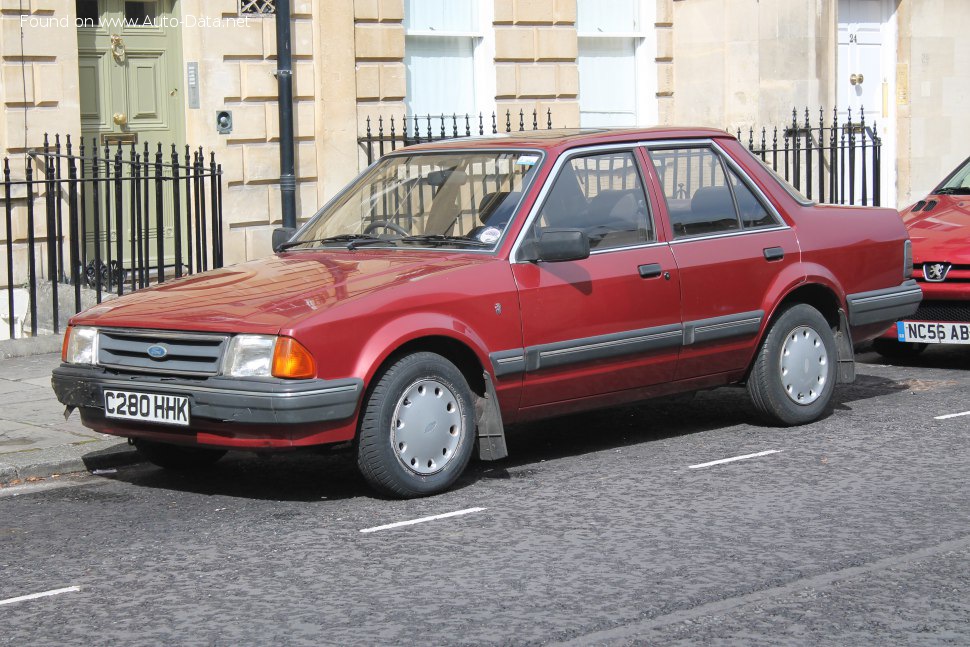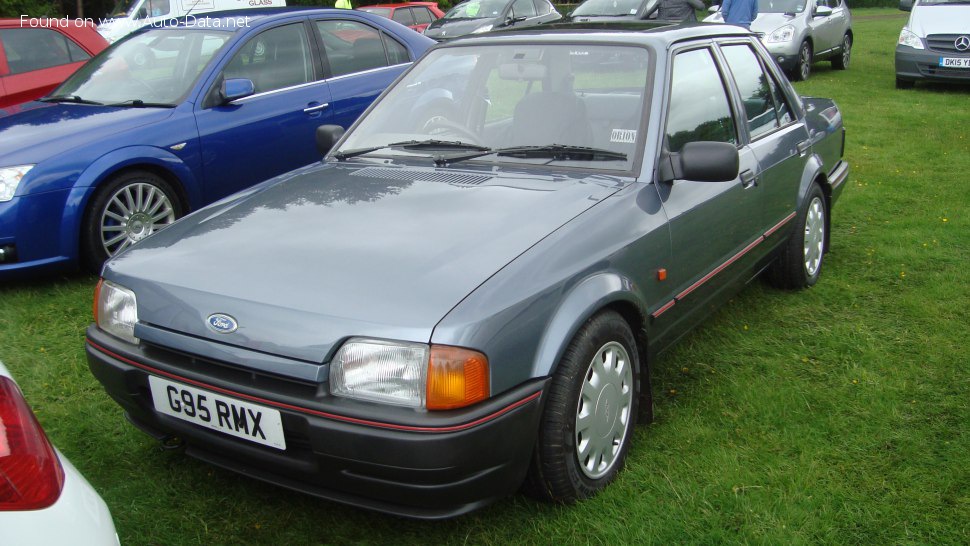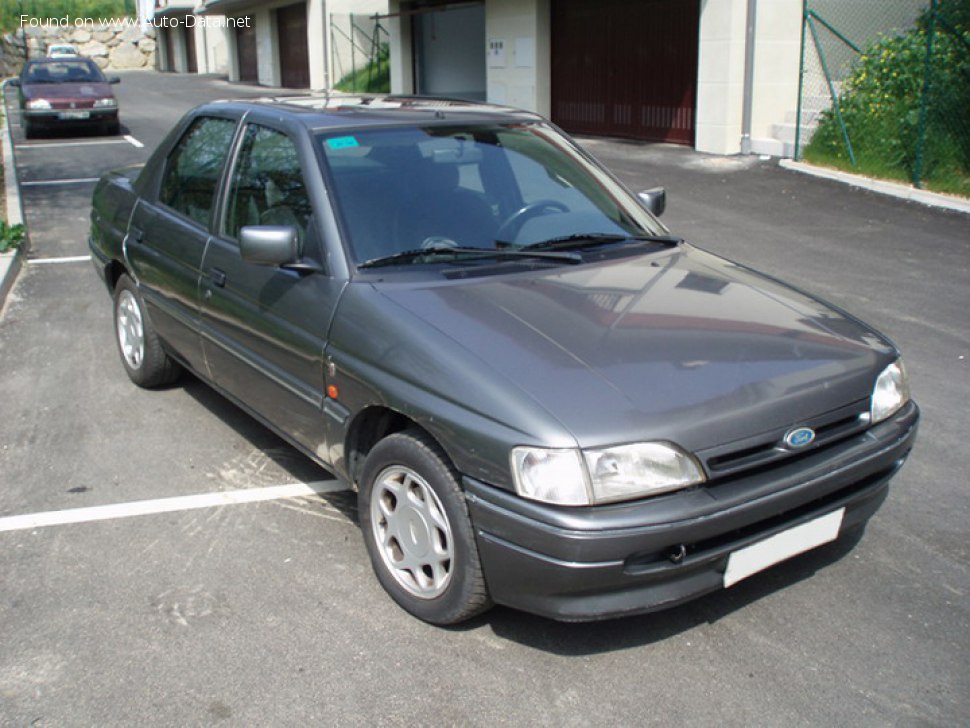
Introduction to the Ford Orion III (GAL) 1.6 i 16V (90 Hp)
The Ford Orion, a nameplate synonymous with a traditional sedan offering within Ford’s European lineup, represented a crucial pillar in the compact family car segment. The third generation, known internally as the Orion III (GAL), was introduced in 1992, building upon the foundations laid by its predecessor, the second-generation Orion. This particular variant, the Ford Orion III (GAL) 1.6 i 16V (90 Hp), offered a blend of practicality, economical motoring, and a more conventional three-box sedan design compared to its hatchback sibling, the Ford Escort. Primarily aimed at European markets where sedans of this size enjoyed significant popularity, the Orion III served as a sensible choice for families and fleet buyers seeking reliability and straightforward transportation. It was never officially sold in the United States, making it a distinctly European Ford product, though it shared many mechanical components with its global counterparts, reflecting Ford’s ‘world car’ philosophy.
Positioned as a more formal alternative to the Escort, the Orion III (GAL) targeted a demographic that favored the added trunk security and classic sedan aesthetics over the hatchback’s versatility. Its production run was relatively brief, spanning from 1992 to 1993, coinciding with the broader evolution of Ford’s compact car strategy in Europe. The 1.6 i 16V (90 Hp) model was a mid-range offering, providing a good balance of performance and fuel efficiency for the era, suitable for both urban commuting and longer journeys.
Engine and Performance: The Heart of the Ford Orion III (GAL)
Powertrain Architecture and the 1.6 i 16V (90 Hp)
At the core of the Ford Orion III (GAL) 1.6 i 16V (90 Hp) was a robust and well-proven internal combustion engine. This specific variant was equipped with a 1.6-liter (approximately 97.6 cubic inches) inline-four gasoline engine, designated by engine codes LUJ or LUK. In an era where multi-valve technology was becoming more prevalent, the 16-valve configuration was a key highlight, allowing for improved breathing and combustion efficiency compared to older 8-valve designs. This design choice contributed to a more refined power delivery and better fuel economy.
The engine produced a respectable 90 horsepower (Hp), which was a competitive figure for a naturally aspirated 1.6-liter unit in the early 1990s C-segment. Being a naturally aspirated engine, it delivered its power smoothly and predictably, without the lag associated with early turbocharged units. This made the Orion 1.6 i 16V an easy car to drive in various conditions, from bustling city streets to open highways. While not a performance powerhouse, its 90 Hp was more than adequate for daily driving, allowing for comfortable cruising and reasonable acceleration for overtaking maneuvers.
Fueling the engine was standard unleaded gasoline, a common requirement for multi-valve engines of the period. The engine oil capacity was specified at 3.5 liters (approximately 3.7 US quarts), a typical volume for a compact four-cylinder engine, ensuring adequate lubrication and cooling for reliable operation. The emphasis on reliability and low running costs was paramount for vehicles in this segment, and Ford’s powertrain strategy for the Orion III reflected this commitment.
Design and Features of the Ford Orion III (GAL)
A Classic Sedan Form Factor
The Ford Orion III (GAL) maintained the classic three-box sedan body type that had defined its predecessors. Unlike the more versatile but less formal hatchback form of the Escort, the Orion offered a distinct trunk separate from the passenger compartment. This design was particularly favored in many European countries for its perceived prestige, better noise insulation from the rear, and enhanced security for luggage. The exterior styling was clean and understated, reflecting the prevailing automotive design trends of the early 1990s, characterized by smoother lines and a reduction in sharp angles compared to the 1980s.
While specific trim levels and optional features are not detailed in the provided data, a typical 1992-1993 European compact sedan like the Orion III would have offered a functional and ergonomic interior. Features would likely have included cloth upholstery, manual window winders on base models (though power windows were available on higher trims), and a basic radio/cassette player. Safety features, while not as advanced as modern vehicles, would have included seatbelts for all occupants and potentially an optional driver’s airbag on later models or higher trims, reflecting the increasing focus on passive safety during this period. The dashboard layout would have been straightforward, with clear instrumentation and logically placed controls, prioritizing ease of use and driver familiarity.
The Orion’s design emphasized practicality, with a spacious cabin for its class and a generous trunk capacity, making it a viable option for small families. The overall aesthetic was one of conservative elegance, designed to appeal to buyers who valued durability and conventional styling over flashy trends. Its body structure was shared extensively with the Escort, meaning it benefited from Ford’s established manufacturing processes and parts commonality, which helped in terms of serviceability and cost of ownership.
Technical Specifications
Below is a detailed breakdown of the technical specifications for the Ford Orion III (GAL) 1.6 i 16V (90 Hp):
| Category | Specification |
|---|---|
| Brand | Ford |
| Model | Orion |
| Generation | Orion III (GAL) |
| Type (Engine) | 1.6 i 16V (90 Hp) |
| Start of Production | 1992 year |
| End of Production | 1993 year |
| Powertrain Architecture | Internal Combustion engine |
| Body type | Sedan |
| Fuel Type | Petrol (Gasoline) |
| Power | 90 Hp |
| Engine Model/Code | LUJ, LUK |
| Engine Aspiration | Naturally aspirated engine |
| Engine Oil Capacity | 3.5 l (3.7 US qt | 3.08 UK qt) |
| Drivetrain | Internal Combustion engine |
Legacy and Market Impact
The Ford Orion III (GAL) 1.6 i 16V (90 Hp) played a significant, albeit understated, role in the European compact car market during its short production run. As a direct competitor to other popular C-segment sedans like the Opel/Vauxhall Astra sedan (known as the F-generation), the Volkswagen Vento (Jetta in North America and some other markets), and the Renault 19 Chamade, the Orion offered a compelling package for buyers who valued tradition and practicality. Its main strength lay in its robust mechanicals, shared with the incredibly popular Escort, which translated into readily available parts and straightforward maintenance.
In terms of reputation, the Orion was generally regarded as a reliable and economical family car. It wasn’t known for groundbreaking innovation or thrilling performance, but rather for its dependable nature and sensible approach to motoring. Its appeal was to a conservative buyer base that appreciated Ford’s widespread dealer network and the proven track record of its compact car platforms. The 1.6 i 16V engine, in particular, was seen as a good compromise between performance and running costs, making it a popular choice for both private owners and company car fleets.
The Orion’s market impact was largely defined by its ability to capture a segment of buyers who specifically preferred a sedan over a hatchback. While the Escort hatchback dominated sales figures, the Orion successfully carved out its niche, proving that there was still a strong demand for a conventional sedan in Europe. However, as tastes evolved and Ford sought to streamline its global product portfolio, the Orion nameplate was eventually discontinued. Its legacy was ultimately absorbed into the broader Ford Focus range, which launched in 1998. The Focus, with its more radical ‘New Edge’ design and superior driving dynamics, replaced both the Escort and the Orion, offering sedan, hatchback, and wagon variants under a single, globally recognized nameplate.
Today, the Ford Orion III (GAL) is remembered as a workhorse of the early 1990s European roads. While it may not command the collector interest of some more exotic vehicles, it represents a significant chapter in Ford’s European history, embodying the practical, no-nonsense approach to family transport that characterized the brand for decades. Its mechanical simplicity and enduring reliability mean that examples can still be found on the roads, a testament to its fundamental engineering and build quality.