Introduction to the Toyota Harrier III (XU60, facelift 2017)
The Toyota Harrier III (XU60, facelift 2017) represents a pivotal moment in the evolution of Toyota’s mid-size luxury SUV offerings. While perhaps less familiar to the average American consumer under the Harrier nameplate, the vehicle has a rich history and a significant presence in its primary markets, particularly Japan and parts of Asia. The Harrier line itself originated in 1997, sharing its platform with the Lexus RX, often serving as the Toyota-branded equivalent in regions where Lexus was not yet established or where a more mainstream luxury offering was desired. The XU60 generation, launched in 2013 and subsequently updated with a significant facelift in 2017, firmly established the Harrier as a distinct, premium SUV within Toyota’s lineup, moving away from its direct Lexus RX platform sharing in this iteration to carve out its own identity focused on sophisticated design, advanced technology, and exceptional efficiency.
The 2017 facelift brought a refreshed aesthetic, enhanced interior features, and refined powertrain options, further cementing its appeal in the competitive mid-size SUV segment. This particular variant, the 2.5 (197 Hp) Hybrid E-Four e-CVT, stands out as a testament to Toyota’s leadership in hybrid technology, offering a compelling blend of power, all-wheel-drive capability, and remarkable fuel economy. It was produced from 2017 to 2020, showcasing Toyota’s commitment to hybrid powertrains as a core component of its strategy for environmentally conscious and performance-driven vehicles. The Toyota Harrier III (XU60, facelift 2017), in this hybrid configuration, epitomizes the brand’s engineering prowess, delivering a refined driving experience coupled with practical utility.
Powertrain and Performance of the Toyota Harrier III (XU60, facelift 2017) 2.5 (197 Hp) Hybrid E-Four e-CVT
At the heart of the Toyota Harrier III (XU60, facelift 2017) 2.5 (197 Hp) Hybrid E-Four e-CVT lies a sophisticated Full Hybrid Electric Vehicle (FHEV) powertrain architecture. This system ingeniously combines a conventional internal combustion engine with two electric motors and an electronic continuously variable transmission (e-CVT) to deliver a seamless and efficient driving experience. The primary internal combustion engine is a 2.5-liter, 2493 cubic centimeter (152.13 cu. in.) 2AR-FXE inline-four cylinder unit, featuring DOHC valvetrain and multi-port manifold injection. Notably, this specific variant of the 2AR-FXE is equipped with a turbocharger and intercooler, enhancing its output to 152 horsepower at 5700 rpm and generating 151.94 lb.-ft. of torque between 4400-4800 rpm. This is a robust output for an engine of its size, contributing significantly to the vehicle’s dynamic capabilities.
Complementing the gasoline engine are two potent electric motors. The first electric motor (model 2JM), driving the front wheels, produces a substantial 143 horsepower and 199.14 lb.-ft. of torque. The second electric motor (model 2FM), dedicated to powering the rear wheels, contributes an additional 68 horsepower and 102.52 lb.-ft. of torque. This innovative E-Four all-wheel-drive system allows for independent control of the front and rear wheels, optimizing traction and stability in various driving conditions, from slippery roads to spirited cornering. The combined system power output of the Toyota Harrier Hybrid is an impressive 197 horsepower, providing ample acceleration and confident highway cruising.
Power delivery to all four wheels is managed by an advanced e-CVT automatic transmission, which ensures smooth, stepless acceleration and optimal efficiency by continuously adjusting gear ratios. The hybrid system is supported by a durable Nickel-metal hydride (NiMH) battery technology, known for its reliability and proven track record in Toyota’s hybrid vehicles. This sophisticated powertrain achieves an exceptional fuel economy rating of 4.6 liters per 100 kilometers, translating to an outstanding 51.1 US miles per gallon in combined driving conditions. With a curb weight ranging from 3902.18 to 3990.37 pounds, the Harrier Hybrid boasts a favorable weight-to-power ratio of 9 kg/Hp, underscoring its efficient performance for a mid-size SUV.
Design, Features, and Technology
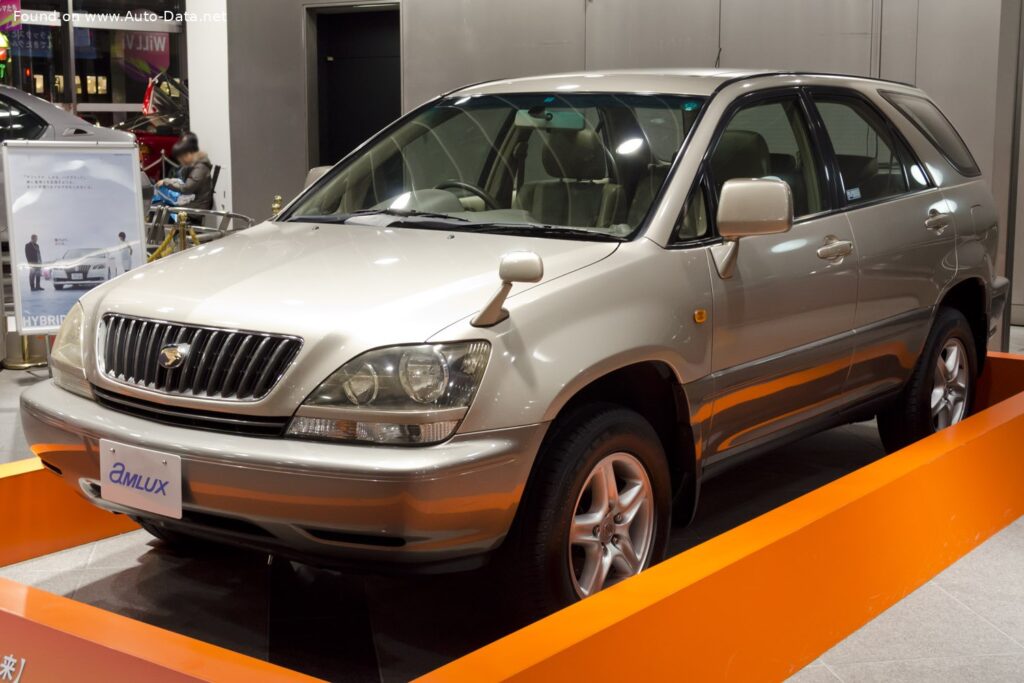
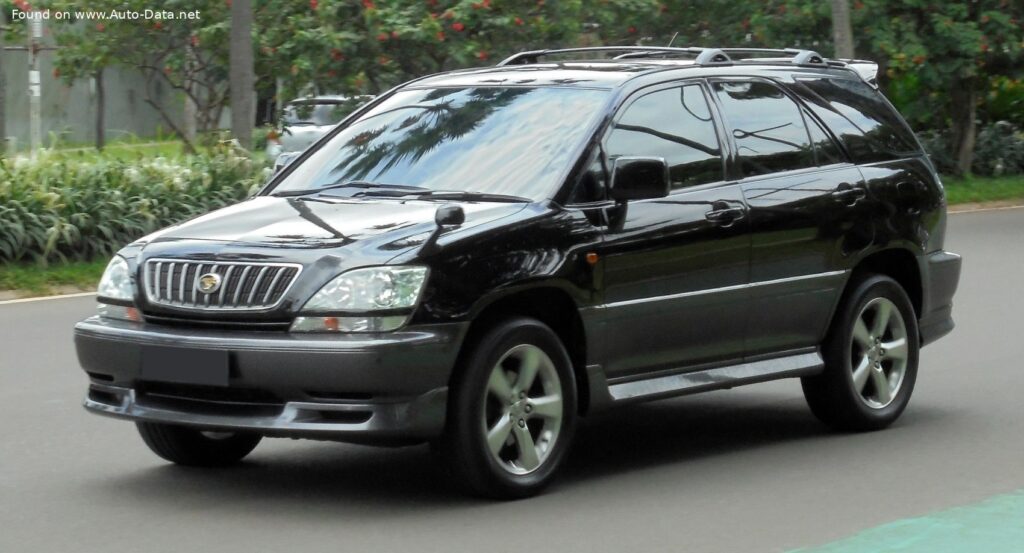
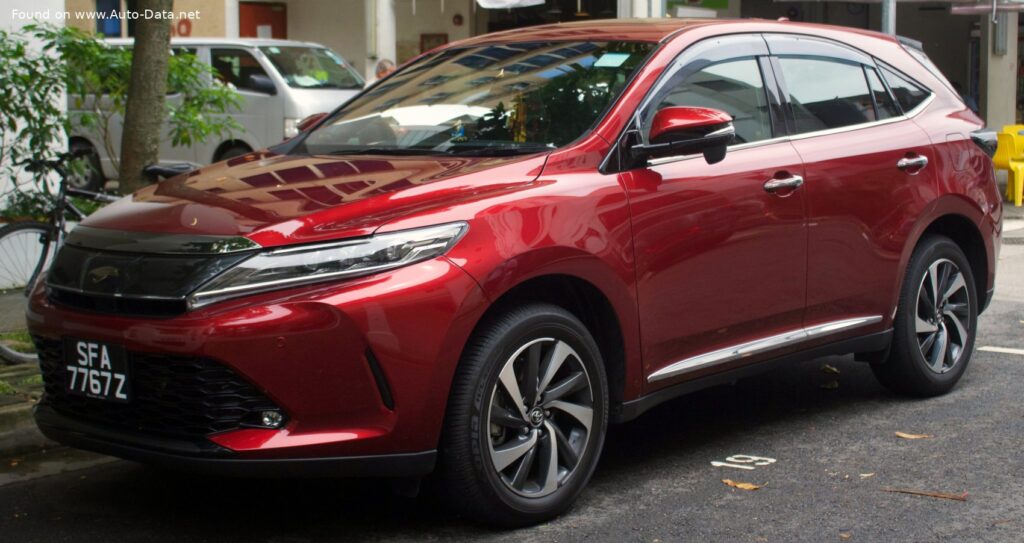
The design of the Toyota Harrier III (XU60, facelift 2017) is characterized by its sleek, modern, and distinctly premium aesthetic, setting it apart from more utilitarian SUVs. As a five-door, five-seat SUV, it strikes a balance between practical utility and sophisticated style. The facelift in 2017 brought sharper lines, a more aggressive front fascia, and refined lighting signatures, contributing to its strong visual presence. Measuring 186.02 inches in length, 72.24 inches in width, and 66.54 inches in height, with a wheelbase of 104.72 inches, the Harrier offers a spacious and comfortable cabin for its occupants, without being overly cumbersome for urban environments.
Inside, the Harrier III typically features a well-appointed interior with high-quality materials and thoughtful ergonomics, reflecting its premium positioning. While specific luxury features can vary by trim, the overall design emphasizes comfort and convenience. The vehicle’s architecture includes an independent McPherson front suspension and a double wishbone rear suspension, providing a balanced ride quality that absorbs road imperfections while maintaining composure during dynamic maneuvers. The ride height of 6.89 inches offers a good balance for both urban driving and light off-road excursions.
Safety and driver assistance technologies are also a significant focus for a modern vehicle like the 2017 Harrier. The standard Anti-lock Braking System (ABS) ensures controlled stopping power, complemented by ventilated disc brakes at the front and disc brakes at the rear. The steering system is a precise rack and pinion setup, enhanced by electric power steering, which provides effortless maneuverability at low speeds and a more direct feel at higher velocities. The vehicle rides on either 225/65 R17 or 235/55 R18 tires, mounted on 7J x 17 ET39 or 7.5J x 18 ET45 wheel rims, respectively, offering a blend of comfort and grip. The combination of its advanced hybrid powertrain, E-Four all-wheel drive, and refined chassis design culminates in a sophisticated and technologically advanced SUV that delivers on both performance and efficiency expectations.
Technical Specifications
| Category | Specification |
|---|---|
| General Information | |
| Brand | Toyota |
| Model | Harrier |
| Generation | Harrier III (XU60, facelift 2017) |
| Type (Engine) | 2.5 (197 Hp) Hybrid E-Four e-CVT |
| Start of Production | 2017 year |
| End of Production | 2020 year |
| Powertrain Architecture | FHEV (Full Hybrid Electric Vehicle) |
| Body type | SUV |
| Seats | 5 |
| Doors | 5 |
| Performance Specs | |
| Fuel Consumption (combined) | 4.6 l/100 km (51.1 US mpg) |
| Fuel Type | Petrol (Gasoline) |
| Weight-to-power ratio | 9 kg/Hp, 111.3 Hp/tonne |
| Weight-to-torque ratio | 8.6 kg/Nm, 116.4 Nm/tonne |
| Electric Cars and Hybrids Specs | |
| Battery technology | Nickel-metal hydride (NiMH) |
| Electric motor 1 Power | 143 Hp |
| Electric motor 1 Torque | 270 Nm (199.14 lb.-ft.) |
| Electric motor 1 Model/Code | 2JM |
| Electric motor 1 Type | Synchronous |
| Electric motor 2 Power | 68 Hp |
| Electric motor 2 Torque | 139 Nm (102.52 lb.-ft.) |
| Electric motor 2 Model/Code | 2FM |
| Electric motor 2 Type | Synchronous |
| System power | 197 Hp |
| Internal Combustion Engine Specs | |
| Power | 152 Hp @ 5700 rpm |
| Power per liter | 61 Hp/l |
| Torque | 206 Nm (151.94 lb.-ft.) @ 4400-4800 rpm |
| Engine layout | Front, Transverse |
| Engine Model/Code | 2AR-FXE |
| Engine displacement | 2493 cm3 (152.13 cu. in.) |
| Number of cylinders | 4 |
| Engine configuration | Inline |
| Cylinder Bore | 90 mm (3.54 in.) |
| Piston Stroke | 98 mm (3.86 in.) |
| Number of valves per cylinder | 4 |
| Fuel injection system | Multi-port manifold injection |
| Engine aspiration | Turbocharger, Intercooler |
| Valvetrain | DOHC |
| Engine oil capacity | 4.4 l (4.65 US qt) |
| Coolant capacity | 6.7 l (7.08 US qt) |
| Space, Volume and Weights | |
| Kerb Weight | 1770-1810 kg (3902.18 – 3990.37 lbs.) |
| Max. weight | 2085 kg (4596.64 lbs.) |
| Max load | 275-315 kg (606.27 – 694.46 lbs.) |
| Fuel tank capacity | 56 l (14.79 US gal) |
| Dimensions | |
| Length | 4725 mm (186.02 in.) |
| Width | 1835 mm (72.24 in.) |
| Height | 1690 mm (66.54 in.) |
| Wheelbase | 2660 mm (104.72 in.) |
| Front track | 1560-1570 mm (61.42 – 61.81 in.) |
| Rear (Back) track | 1560-1570 mm (61.42 – 61.81 in.) |
| Ride height (ground clearance) | 175 mm (6.89 in.) |
| Minimum turning circle | 11.4 m (37.4 ft.) |
| Drivetrain, Brakes and Suspension Specs | |
| Drivetrain Architecture | Internal combustion engine (ICE) drives front wheels, one electric motor drives front wheels, one electric motor drives rear wheels. Ability for running in full electric or mixed mode. |
| Drive wheel | All wheel drive (4×4) |
| Number of gears and type of gearbox | Automatic transmission CVT |
| Front suspension | Independent type McPherson |
| Rear suspension | Double wishbone |
| Front brakes | Ventilated discs |
| Rear brakes | Disc |
| Assisting systems | ABS (Anti-lock braking system) |
| Steering type | Steering rack and pinion |
| Power steering | Electric Steering |
| Tires size | 225/65 R17 102H; 235/55 R18 100H |
| Wheel rims size | 7J x 17 ET39; 7.5J x 18 ET45 |
Legacy and Market Standing
The Toyota Harrier III (XU60, facelift 2017) built upon a strong legacy established by its predecessors, distinguishing itself as a highly regarded mid-size luxury SUV in its primary markets. Unlike its earlier generations that were often rebadged as the Lexus RX in North America, the XU60 generation, particularly after the 2017 facelift, solidified the Harrier’s independent identity as a premium, sophisticated offering within the Toyota brand itself. Its reputation is anchored in Toyota’s renowned reliability, exceptional build quality, and pioneering hybrid technology. The 2.5 (197 Hp) Hybrid E-Four e-CVT variant particularly showcased Toyota’s engineering prowess, offering a compelling blend of powerful performance, superior fuel efficiency, and confident all-wheel-drive capability.
In markets like Japan and various Asian countries, the Harrier competed effectively against a range of rivals. Its primary competitors would have included other popular mid-size SUVs such as the Honda CR-V Hybrid, Nissan X-Trail (Rogue in the US) Hybrid, and Mazda CX-5, as well as premium offerings like the Subaru Forester and potentially even entry-level luxury SUVs from European brands that sought to capture the growing demand for refined and efficient family vehicles. The Harrier stood out with its distinctive styling, which was often perceived as more upscale and elegant than many of its direct competitors, coupled with the undeniable advantage of Toyota’s mature and highly efficient hybrid system.
The historical significance of the Toyota Harrier III (XU60, facelift 2017) lies in its role in popularizing luxury-oriented hybrid SUVs and demonstrating that efficiency did not have to come at the expense of style or performance. It contributed to Toyota’s global leadership in hybrid vehicle sales and technology, showcasing how a full-hybrid electric vehicle could deliver a premium driving experience. Its advanced E-Four all-wheel-drive system further solidified its appeal, offering enhanced traction and stability without compromising its impressive fuel economy. Although not directly sold in the United States under the Toyota Harrier nameplate in this specific form, its influence and the technologies it championed have undoubtedly shaped the broader automotive landscape, particularly in the SUV and hybrid segments, reflecting Toyota’s enduring commitment to innovation and environmental responsibility. The Harrier remains a symbol of aspirational yet practical motoring in its native markets.