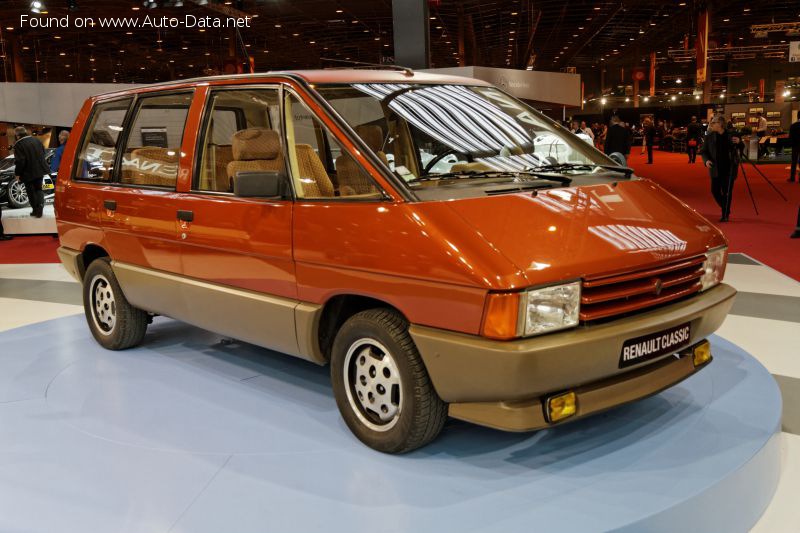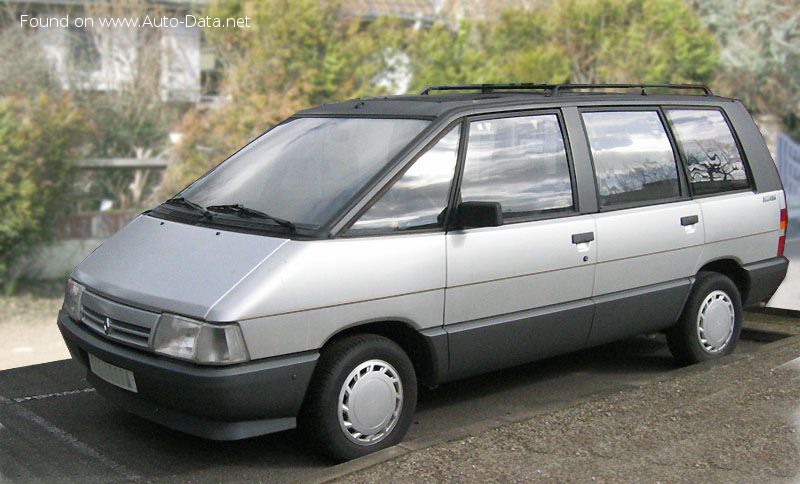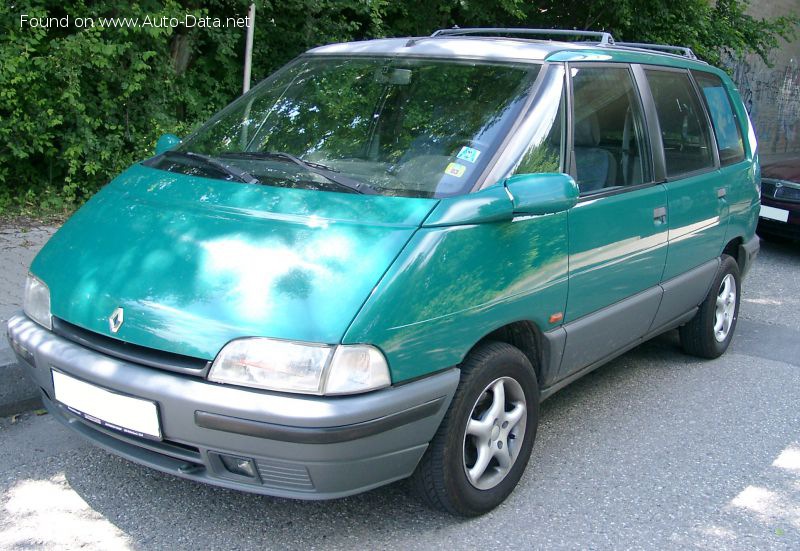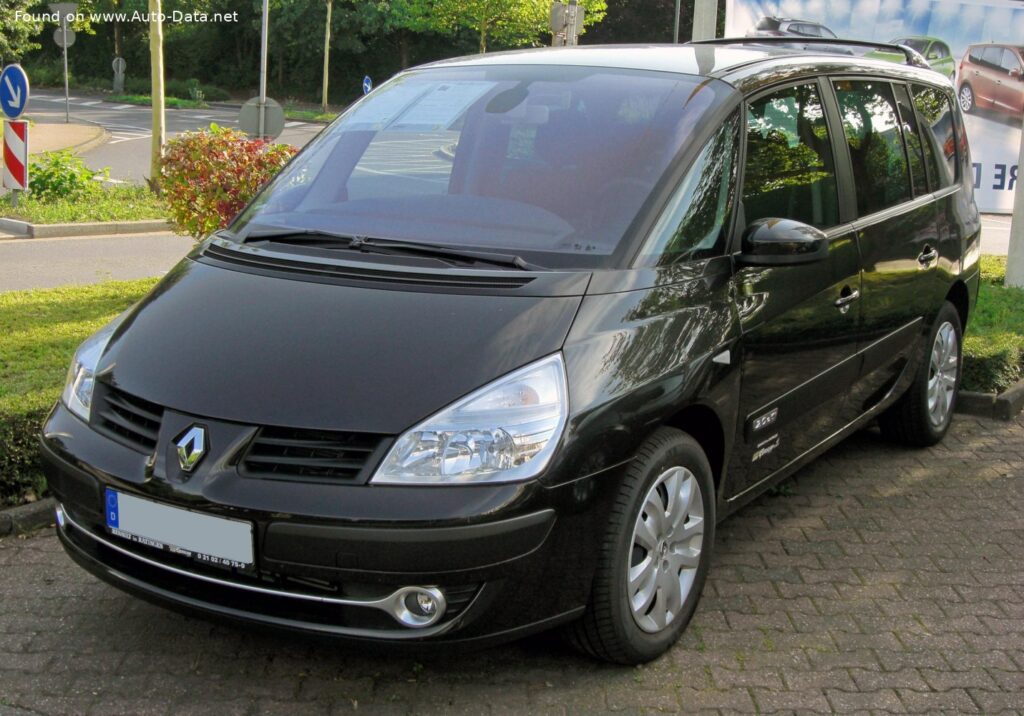
The Renault Espace IV (Phase II, 2006): A European Minivan Icon
The Renault Espace IV, specifically the Phase II model introduced in 2006, represents a significant chapter in the history of the multi-purpose vehicle (MPV) segment, particularly within the European market. As a pioneer in the minivan category, the Espace series, first launched in 1984, consistently pushed boundaries in design, practicality, and family-oriented transportation. The Phase II refresh of the fourth generation aimed to update the vehicle’s aesthetics, enhance its technological offerings, and refine its powertrain options to maintain its competitive edge.
The Renault Espace IV (Phase II, 2006) was a large, sophisticated minivan, not offered in the United States, but a staple on European roads. It was designed to offer generous interior space, flexible seating arrangements for up to seven passengers, and a comfortable, refined driving experience suitable for long-distance travel. This particular variant, equipped with the robust 3.0 dCi V6 (181 Hp) Automatic engine, epitomized the Espace’s premium aspirations, blending strong performance with respectable fuel economy for its class, a crucial consideration for European consumers.
Engine and Performance: The 3.0 dCi V6 Powertrain
At the heart of this particular Renault Espace IV (Phase II, 2006) model was a potent 3.0-liter dCi V6 diesel engine, designated with the internal code P9X. This engine delivered a respectable 181 horsepower at 4000 rpm, providing ample motivation for the substantial minivan. More impressively, it generated a robust 295.02 lb-ft of torque at a low 1800 rpm, a characteristic trait of diesel engines that proved highly beneficial for hauling passengers and cargo, as well as for confident highway cruising and effortless overtaking.
Power was delivered to the front wheels through a smooth 5-speed automatic transmission, prioritizing comfort and ease of driving, especially in urban environments or during long journeys. This combination allowed the Espace to accelerate from 0 to 60 mph in a calculated 10.4 seconds, with a top speed of 130.49 mph. While not a performance car, these figures were more than adequate for a family-oriented vehicle of its size and purpose. The V6 configuration, combined with a common rail fuel injection system, turbocharger, and intercooler, ensured a refined power delivery and efficient combustion, meeting the Euro 4 emission standard prevalent at the time.
Fuel economy was a key selling point for diesel engines in Europe. The 3.0 dCi V6 Espace achieved a combined fuel consumption of 25 US mpg (9.4 l/100 km), with highway figures reaching an impressive 30.9 US mpg (7.6 l/100 km). Despite its size and V6 engine, this made it a relatively economical choice for families covering significant distances, especially when compared to gasoline-powered alternatives.
Design and Features: Practicality Meets European Style
The Renault Espace IV (Phase II, 2006) maintained the distinctive, futuristic design language of the fourth generation, characterized by its sleek, aerodynamic profile and large glass areas. As a minivan or MPV, its primary function was to maximize interior space and versatility. The Espace offered a 5-door configuration and standard seating for seven, with individual, removable, and reconfigurable seats that allowed for numerous interior layouts. This modularity was a hallmark of the Espace, enabling owners to prioritize passenger comfort or cargo capacity as needed.
Measuring 183.31 inches in length, 73.23 inches in width (74.57 inches including mirrors), and 68.03 inches in height, the Espace was a substantial vehicle, providing a commanding road presence. Its long 110.35-inch wheelbase contributed significantly to interior volume and ride comfort. Cargo capacity was impressive, ranging from a minimum of 10.28 cubic feet (291 liters) with all seats in place, expanding to a cavernous 101 cubic feet (2860 liters) when the rear seats were removed, making it exceptionally practical for large families or those needing to transport bulky items.
Standard features for a vehicle of its class in 2006 would typically include power windows, air conditioning, and a comprehensive infotainment system. Safety was also a priority, with the inclusion of an Anti-lock Braking System (ABS) as standard, along with multiple airbags and a robust chassis designed to protect occupants. The suspension system featured an independent McPherson setup at the front and a semi-independent coil spring design at the rear, tuned to provide a comfortable ride quality that absorbed road imperfections, a crucial factor for a family hauler.
Technical Specifications for the Renault Espace IV (Phase II, 2006) 3.0 dCi V6 (181 Hp) Automatic
| Category | Specification |
|---|---|
| Brand | Renault |
| Model | Espace |
| Generation | Espace IV (Phase II, 2006) |
| Type (Engine) | 3.0 dCi V6 (181 Hp) Automatic |
| Production Start | 2006 |
| Production End | 2010 |
| Powertrain Architecture | Internal Combustion Engine |
| Body Type | Minivan, MPV |
| Seats | 7 |
| Doors | 5 |
| Performance Specs | |
| Fuel Consumption (Urban) | 12.5 l/100 km (18.8 US mpg) |
| Fuel Consumption (Extra Urban) | 7.6 l/100 km (30.9 US mpg) |
| Fuel Consumption (Combined) | 9.4 l/100 km (25 US mpg) |
| CO2 Emissions | 248 g/km |
| Fuel Type | Diesel |
| Acceleration 0-60 mph | 10.4 sec |
| Maximum Speed | 210 km/h (130.49 mph) |
| Emission Standard | Euro 4 |
| Weight-to-Power Ratio | 10.6 kg/Hp (94 Hp/tonne) |
| Weight-to-Torque Ratio | 4.8 kg/Nm (207.8 Nm/tonne) |
| Engine Specs | |
| Power | 181 Hp @ 4000 rpm |
| Power per Liter | 61.2 Hp/l |
| Torque | 400 Nm @ 1800 rpm (295.02 lb-ft @ 1800 rpm) |
| Engine Layout | Front, Transverse |
| Engine Model/Code | P9X |
| Engine Displacement | 2958 cm³ (180.51 cu. in.) |
| Number of Cylinders | 6 |
| Engine Configuration | V-engine |
| Cylinder Bore | 87.5 mm (3.44 in) |
| Piston Stroke | 82 mm (3.23 in) |
| Compression Ratio | 18.5:1 |
| Valves per Cylinder | 4 |
| Fuel Injection System | Diesel Commonrail |
| Engine Aspiration | Turbocharger, Intercooler |
| Valvetrain | DOHC |
| Engine Oil Capacity | 7.3 l (7.71 US qt) |
| Engine Oil Specification | Not specified in data |
| Coolant Capacity | 9.5 l (10.04 US qt) |
| Space, Volume and Weights | |
| Kerb Weight | 1925 kg (4243.9 lbs) |
| Max. Weight | 2625 kg (5787.13 lbs) |
| Max. Load | 700 kg (1543.24 lbs) |
| Trunk Space (Minimum) | 291 l (10.28 cu. ft.) |
| Trunk Space (Maximum) | 2860 l (101 cu. ft.) |
| Fuel Tank Capacity | 83 l (21.93 US gal) |
| Max. Roof Load | 80 kg (176.37 lbs) |
| Permitted Trailer Load (with brakes 12%) | 2000 kg (4409.25 lbs) |
| Permitted Trailer Load (without brakes) | 750 kg (1653.47 lbs) |
| Permitted Towbar Download | 80 kg (176.37 lbs) |
| Dimensions | |
| Length | 4656 mm (183.31 in) |
| Width | 1860 mm (73.23 in) |
| Width Including Mirrors | 1894 mm (74.57 in) |
| Height | 1728 mm (68.03 in) |
| Wheelbase | 2803 mm (110.35 in) |
| Front Track | 1574 mm (61.97 in) |
| Rear Track | 1556 mm (61.26 in) |
| Ride Height (Ground Clearance) | 120 mm (4.72 in) |
| Minimum Turning Circle | 11.3 m (37.07 ft) |
| Drivetrain, Brakes and Suspension Specs | |
| Drivetrain Architecture | Front-wheel drive with Internal Combustion Engine |
| Drive Wheel | Front wheel drive |
| Number of Gears and Type | 5 gears, automatic transmission |
| Front Suspension | Independent type McPherson |
| Rear Suspension | Semi-independent, coil spring |
| Front Brakes | Ventilated discs |
| Rear Brakes | Disc |
| Assisting Systems | ABS (Anti-lock braking system) |
| Steering Type | Steering rack and pinion |
| Tires Size | 225/55 R17 |
| Wheel Rims Size | 17 inch |
Legacy and Market Impact in Europe
The Renault Espace holds a unique and revered position in European automotive history. It wasn’t just another minivan; it was arguably the progenitor of the modern MPV, having effectively created the segment when the first generation launched. The Espace IV, particularly in its Phase II iteration, continued this legacy by offering a compelling blend of space, comfort, and advanced features that resonated strongly with European families.
In its primary market, the Espace faced stiff competition from rivals like the Ford Galaxy, Volkswagen Sharan, and the Citroën C8/Peugeot 807 twins, all vying for dominance in the family transportation sector. However, the Espace distinguished itself with its distinctive styling, a focus on interior modularity, and a generally comfortable ride. The availability of powerful and efficient diesel engines, such as the 3.0 dCi V6, allowed it to cater to a demographic that valued both performance and long-distance economy, often for extended family vacations across the continent.
While the minivan segment eventually faced pressure from the rising popularity of SUVs, the Espace IV remained a strong contender throughout its production run from 2006 to 2010. Its impact was significant, influencing how other manufacturers approached family vehicle design and interior flexibility. The Renault Espace IV (Phase II, 2006) with its 3.0 dCi V6 engine stands as a testament to Renault’s commitment to innovation and its understanding of the specific needs of European consumers for a versatile, comfortable, and capable family vehicle, even if its unique blend of attributes meant it never crossed the Atlantic to the American market.