
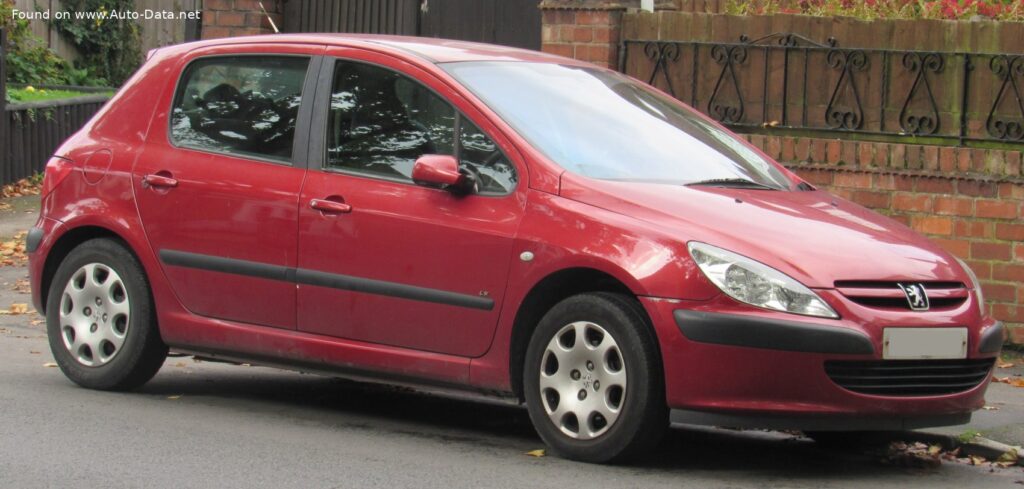
The Peugeot 307 2.0 HDi (107 Hp): A European Compact Car Stalwart
The
Peugeot 307 2.0 HDi (107 Hp)
, produced between 2001 and 2005, represents a significant chapter in Peugeot’s history within the highly competitive European C-segment (compact car) market. Launched as the successor to the successful Peugeot 306, the 307 aimed to elevate standards in terms of interior space, safety, and perceived quality. While Peugeot vehicles were not widely available in the United States during this era, the 307 was a ubiquitous sight on European roads, renowned for its distinctive “tall car” design and the efficiency of its HDi (High-pressure Direct injection) diesel powertrains. This particular variant, equipped with the 2.0-liter common-rail turbodiesel engine, offered a compelling blend of fuel economy and usable torque, making it a popular choice for families and commuters across the continent. It embodied Peugeot’s strategy of offering sophisticated, comfortable, and practical vehicles tailored to European preferences.
Engine and Performance of the Peugeot 307 2.0 HDi (107 Hp)
At the heart of the
Peugeot 307 2.0 HDi (107 Hp)
lies the RHS DW10ATED4 engine, a robust 2.0-liter (1997 cm³, or 121.86 cubic inches) inline-four common-rail turbodiesel unit. This powertrain was a cornerstone of Peugeot’s diesel offerings, celebrated for its efficiency and strong low-end torque delivery. It generated a respectable 107 horsepower at 4000 rpm, which, while not a figure that would turn heads in the American market accustomed to larger engines, was more than adequate for European driving conditions and vehicle size. More importantly, the engine produced a healthy 184.39 lb.-ft. (250 Nm) of torque at a low 1750 rpm. This characteristic torque curve made the 307 2.0 HDi feel sprightly in urban traffic and capable on highways, minimizing the need for frequent downshifts.
Power was delivered to the front wheels via a smooth-shifting 5-speed manual transmission, a common and reliable setup for compact cars of this period. Performance figures include an acceleration time from 0 to 60 mph in a calculated 10.4 seconds, with 0-62 mph (0-100 km/h) achieved in 10.9 seconds. The vehicle could reach a maximum speed of 116.82 mph (188 km/h). These figures positioned the 307 as a competent performer within its class, offering a good balance of acceleration and cruising capability.
One of the most compelling aspects of the 2.0 HDi engine was its fuel efficiency. The combined fuel consumption was rated at an impressive 45.2 US mpg (5.2 l/100 km), with extra-urban driving yielding an even more remarkable 56 US mpg (4.2 l/100 km). Even in urban settings, it managed 33.6 US mpg (7 l/100 km). These figures highlight the economic benefits of diesel power, a key factor for European consumers facing higher fuel prices. The engine also met Euro 3 emission standards, with CO2 emissions of 138 g/km, reflecting its relatively clean operation for its time.
Design and Features of the Peugeot 307
The Peugeot 307, available in both 3-door and 5-door hatchback configurations, marked a departure from the styling of its predecessor. Its design was characterized by a taller, more upright stance, earning it the moniker “tall car” and contributing to a significantly more spacious and airy cabin. This design philosophy aimed to blend the practicality of an MPV (Multi-Purpose Vehicle) with the footprint of a traditional compact hatchback. The overall length of 165.43 inches (4202 mm), width of 68.11 inches (1730 mm), and height of 59.53 inches (1512 mm) provided a substantial road presence for its segment. The generous 102.68-inch (2608 mm) wheelbase further contributed to interior volume and ride comfort.
Inside, the 307 offered seating for five, with a focus on ergonomics and improved material quality compared to previous Peugeot models. The higher seating position provided excellent visibility, a desirable trait in both city driving and on longer journeys. Luggage capacity was practical, ranging from 12.04 cubic feet (341 liters) with all seats in place, expanding to a substantial 46.9 cubic feet (1328 liters) when the rear seats were folded, showcasing its versatility as a family vehicle.
From a technical standpoint, the 307 featured a front-wheel-drive architecture with a straightforward yet effective suspension setup, utilizing spring struts at both the front and rear. Braking performance was handled by ventilated discs at the front and solid discs at the rear, complemented by an Anti-lock Braking System (ABS) for enhanced safety. Steering was a hydraulic rack and pinion system, providing a direct and communicative feel. Standard tire size was 205/55 R16 on 16-inch wheel rims, striking a good balance between comfort and grip. The vehicle’s drag coefficient (Cd) of 0.31 was competitive for its class, aiding in fuel efficiency and reducing wind noise.
Technical Specifications: Peugeot 307 2.0 HDi (107 Hp)
| Category | Specification |
|---|---|
| General Information | |
| Brand | Peugeot |
| Model | 307 |
| Generation | 307 |
| Type (Engine) | 2.0 HDi (107 Hp) |
| Production Start | 2001 year |
| Production End | 2005 year |
| Powertrain Architecture | Internal Combustion engine |
| Body type | Hatchback |
| Seats | 5 |
| Doors | 3-5 |
| Performance Specifications | |
| Fuel consumption (economy) – urban | 7 l/100 km (33.6 US mpg) |
| Fuel consumption (economy) – extra urban | 4.2 l/100 km (56 US mpg) |
| Fuel consumption (economy) – combined | 5.2 l/100 km (45.2 US mpg) |
| CO2 emissions | 138 g/km |
| Fuel Type | Diesel |
| Acceleration 0 – 60 mph (Calculated) | 10.4 sec |
| Acceleration 0 – 62 mph (0-100 km/h) | 10.9 sec |
| Maximum speed | 116.82 mph (188 km/h) |
| Emission standard | Euro 3 |
| Weight-to-power ratio | 12 kg/Hp, 83.7 Hp/tonne |
| Weight-to-torque ratio | 5.1 kg/Nm, 195.5 Nm/tonne |
| Engine Specifications | |
| Power | 107 Hp @ 4000 rpm |
| Power per liter | 53.6 Hp/l |
| Torque | 184.39 lb.-ft. (250 Nm) @ 1750 rpm |
| Engine layout | Front, Transverse |
| Engine Model/Code | RHS DW10ATED4 |
| Engine displacement | 1997 cm³ (121.86 cu. in.) |
| Number of cylinders | 4 |
| Engine configuration | Inline |
| Cylinder Bore | 3.35 in. (85 mm) |
| Piston Stroke | 3.46 in. (88 mm) |
| Compression ratio | 17.6:1 |
| Number of valves per cylinder | 4 |
| Fuel injection system | Diesel Commonrail |
| Engine aspiration | Turbocharger, Intercooler |
| Valvetrain | SOHC |
| Engine oil capacity | 5.07 US qt (4.8 l) |
| Coolant | 8.77 US qt (8.3 l) |
| Space, Volume, and Weights | |
| Kerb Weight | 2819.71 lbs. (1279 kg) |
| Max. weight | 3922.02 lbs. (1779 kg) |
| Max load | 1102.31 lbs. (500 kg) |
| Trunk (boot) space – minimum | 12.04 cu. ft. (341 l) |
| Trunk (boot) space – maximum | 46.9 cu. ft. (1328 l) |
| Fuel tank capacity | 15.85 US gal (60 l) |
| Permitted trailer load with brakes (12%) | 2954.19 lbs. (1340 kg) |
| Permitted trailer load without brakes | 1444.03 lbs. (655 kg) |
| Dimensions | |
| Length | 165.43 in. (4202 mm) |
| Width | 68.11 in. (1730 mm) |
| Height | 59.53 in. (1512 mm) |
| Wheelbase | 102.68 in. (2608 mm) |
| Front track | 59.25 in. (1505 mm) |
| Rear (Back) track | 59.06 in. (1500 mm) |
| Ride height (ground clearance) | 4.72 in. (120 mm) |
| Drag coefficient (Cd) | 0.31 |
| Minimum turning circle (turning diameter) | 36.52 ft. (11.13 m) |
| Drivetrain, Brakes, and Suspension | |
| Drivetrain Architecture | Front-wheel drive, Internal Combustion engine |
| Drive wheel | Front wheel drive |
| Number of gears and type of gearbox | 5 gears, manual transmission |
| Front suspension | Spring Strut |
| Rear suspension | Spring Strut |
| Front brakes | Ventilated discs |
| Rear brakes | Disc |
| Assisting systems | ABS (Anti-lock braking system) |
| Steering type | Steering rack and pinion |
| Power steering | Hydraulic Steering |
| Tires size | 205/55 R16 |
| Wheel rims size | 16 inches |
Legacy and Market Impact of the Peugeot 307
The Peugeot 307, particularly the 2.0 HDi (107 Hp) variant, left a significant mark on the European compact car segment during its production run. It quickly became a best-seller in several European countries, competing head-to-head with established rivals such as the Volkswagen Golf, Ford Focus, Opel Astra (Vauxhall Astra in the UK), and Renault Mégane. Its success was largely attributed to its compelling combination of stylish design, spacious and versatile interior, strong safety features (it was one of the first in its class to offer up to six airbags and scored well in Euro NCAP crash tests), and the impressive fuel economy and torque of its HDi diesel engines.
The “tall car” concept, while initially a point of discussion, proved to be a practical advantage, offering occupants more headroom and a commanding view of the road, which resonated well with families. This design trend influenced subsequent compact car designs across the industry. The 307’s comfortable ride quality and refined diesel engine made it an excellent choice for both urban commutes and long-distance touring, solidifying Peugeot’s reputation for producing comfortable and efficient vehicles.
Despite some initial reports of electrical issues in early models, the 307 matured into a reliable and popular choice. Its impact on Peugeot’s brand image was considerable, demonstrating the manufacturer’s ability to innovate and compete effectively in a fiercely contested market. The 307 even served as the basis for the 307 CC (Coupe Cabriolet) and 307 SW (Station Wagon), further expanding its appeal and market reach. Its legacy continues in the form of its successor, the Peugeot 308, which built upon the foundation of design, efficiency, and practicality established by the 307. For many European drivers, the
Peugeot 307 2.0 HDi (107 Hp)
remains a memorable and practical workhorse, embodying the best of European compact car engineering from the early 2000s.
