
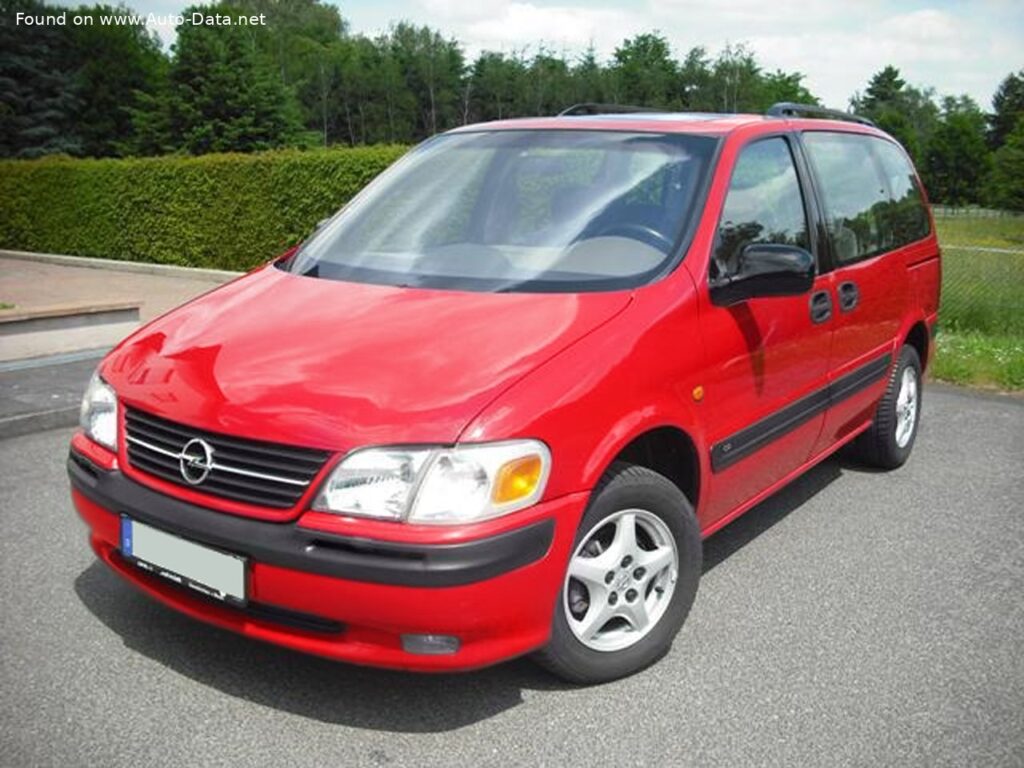
The Opel Sintra 2.2 DTI (116 Hp): A European Minivan’s Brief Stint
The Opel Sintra represents a significant, albeit short-lived, chapter in Opel’s history within the competitive European minivan segment. Launched in September 1998, the Sintra was Opel’s attempt to capture a share of the burgeoning market for multi-purpose vehicles (MPVs) that prioritized passenger comfort and cargo flexibility. As a rebadged variant of General Motors’ U-platform minivan, it shared its fundamental architecture with North American models such as the Chevrolet Venture, Pontiac Trans Sport (later Montana), and Oldsmobile Silhouette. However, the Sintra was specifically tailored for European tastes, offering a distinct design and powertrain options like the efficient Opel Sintra 2.2 DTI (116 Hp) diesel engine, which was a critical offering for its intended market. This generation of the Sintra was produced for a remarkably brief period, concluding in June 1999, making it a noteworthy case study in automotive market dynamics.
Engine & Performance: The 2.2 DTI Heartbeat
Under the hood, the Opel Sintra 2.2 DTI (116 Hp) was equipped with a robust 2.2-liter (2198 cm3 or 134.13 cu. in.) inline four-cylinder diesel engine, designated X22DTH. This powerplant was a pragmatic choice for the European market, where diesel engines were highly favored for their fuel efficiency and substantial torque output, especially in larger family vehicles. Featuring direct injection and boosted by a turbocharger with an intercooler, the engine delivered a respectable 116 horsepower at 3800 rpm. More importantly for a minivan designed to haul passengers and cargo, it produced a healthy 191.77 lb.-ft. (260 Nm) of torque available from a low 1900 rpm. This low-end torque was crucial for effortless acceleration and highway cruising, even when the vehicle was fully laden.
Power was sent to the front wheels via a standard 5-speed manual transmission, a common and reliable setup for European vehicles of its class. While not designed for blistering speed, the Sintra 2.2 DTI could accelerate from 0 to 60 mph in a calculated 13.8 seconds (0-100 km/h in 14.5 seconds) and reach a top speed of 108.74 mph (175 km/h). These figures were competitive for a family minivan of its era, prioritizing practical performance over outright sportiness. Fuel economy was a strong suit for the diesel, with urban consumption rated at 23.5 US mpg (10 l/100 km) and extra-urban figures reaching an impressive 34.6 US mpg (6.8 l/100 km), making it an economical choice for long-distance family travel. With a 18.49 US gallon (70 liter) fuel tank, the Sintra offered a substantial cruising range.
Design & Features: Practicality for the European Family
The Opel Sintra adopted the classic minivan silhouette, optimized for interior space and passenger accessibility. It featured a 5-door configuration, including dual sliding rear doors that facilitated easy entry and exit in tight parking spaces – a highly valued feature for families with young children. With a generous length of 183.86 inches (4670 mm), a width of 72.05 inches (1830 mm), and a height of 70.08 inches (1780 mm), the Sintra offered substantial interior volume. Its 112.2-inch (2850 mm) wheelbase contributed to a stable ride and allowed for a spacious 7-seat configuration, making it ideal for larger families or carpooling.
The interior design focused on practicality and versatility. The seating could be configured in multiple ways, allowing for various combinations of passengers and cargo. With all seats in place, the trunk offered a respectable 16.24 cu. ft. (460 liters) of space. However, when the rear seats were removed or folded, the cargo capacity expanded dramatically to an cavernous 132.96 cu. ft. (3765 liters), transforming the minivan into a highly capable cargo hauler.
Standard features for the era included a hydraulic power steering system with rack and pinion steering, enhancing maneuverability for a vehicle of its size. Safety was addressed with ventilated disc brakes at the front and disc brakes at the rear, complemented by an Anti-lock Braking System (ABS), which was becoming increasingly standard in family vehicles by the late 1990s. The suspension system utilized coil springs at both the front and rear, aiming for a comfortable and composed ride characteristic of family-oriented vehicles. The Sintra rode on 205/65 R15 tires mounted on 6J x 15 wheel rims.
Technical Specifications: Opel Sintra 2.2 DTI (116 Hp)
| Category | Specification | US Equivalent |
|---|---|---|
| General Information | ||
| Brand | Opel | |
| Model | Sintra | |
| Generation | Sintra | |
| Engine Type | 2.2 DTI (116 Hp) | |
| Production Start | September, 1998 | |
| Production End | June, 1999 | |
| Powertrain Architecture | Internal Combustion Engine | |
| Body Type | Minivan | |
| Seats | 7 | |
| Doors | 5 | |
| Performance Specs | ||
| Fuel Consumption (Urban) | 10 l/100 km | 23.5 US mpg |
| Fuel Consumption (Extra Urban) | 6.8 l/100 km | 34.6 US mpg |
| Fuel Type | Diesel | |
| Acceleration 0 – 60 mph | 13.8 sec | |
| Acceleration 0 – 100 km/h | 14.5 sec | |
| Maximum Speed | 175 km/h | 108.74 mph |
| Weight-to-Power Ratio | 15 kg/Hp | 66.9 Hp/tonne |
| Weight-to-Torque Ratio | 6.7 kg/Nm | 149.9 Nm/tonne |
| Engine Specs | ||
| Power | 116 Hp @ 3800 rpm | |
| Power per liter | 52.8 Hp/l | |
| Torque | 260 Nm @ 1900 rpm | 191.77 lb.-ft. @ 1900 rpm |
| Engine Layout | Front, Transverse | |
| Engine Model/Code | X22DTH | |
| Engine Displacement | 2198 cm3 | 134.13 cu. in. |
| Number of Cylinders | 4 | |
| Engine Configuration | Inline | |
| Cylinder Bore | 86 mm | 3.39 in. |
| Piston Stroke | 94.6 mm | 3.72 in. |
| Compression Ratio | 18.5:1 | |
| Valves per Cylinder | 4 | |
| Fuel Injection System | Direct injection | |
| Engine Aspiration | Turbocharger, Intercooler | |
| Engine Oil Capacity | 5.5 l | 5.81 US qt |
| Coolant Capacity | 5.9 l | 6.23 US qt |
| Space, Volume and Weights | ||
| Kerb Weight | 1735 kg | 3825.02 lbs. |
| Max. Weight (Gross) | 2430 kg | 5357.23 lbs. |
| Max Load | 695 kg | 1532.21 lbs. |
| Trunk (Boot) Space – Minimum | 460 l | 16.24 cu. ft. |
| Trunk (Boot) Space – Maximum | 3765 l | 132.96 cu. ft. |
| Fuel Tank Capacity | 70 l | 18.49 US gal |
| Dimensions | ||
| Length | 4670 mm | 183.86 in. |
| Width | 1830 mm | 72.05 in. |
| Height | 1780 mm | 70.08 in. |
| Wheelbase | 2850 mm | 112.2 in. |
| Front Track | 1560 mm | 61.42 in. |
| Rear Track | 1610 mm | 63.39 in. |
| Drivetrain, Brakes and Suspension Specs | ||
| Drivetrain Architecture | Internal combustion engine drives the front wheels. | |
| Drive Wheel | Front-wheel drive | |
| Gearbox Type | 5 gears, manual transmission | |
| Front Suspension | Coil spring | |
| Rear Suspension | Coil spring | |
| Front Brakes | Ventilated discs | |
| Rear Brakes | Disc | |
| Assisting Systems | ABS (Anti-lock braking system) | |
| Steering Type | Steering rack and pinion | |
| Power Steering | Hydraulic Steering | |
| Tires Size | 205/65 R15 | |
| Wheel Rims Size | 6J x 15 | |
Legacy & Market Impact of the Opel Sintra
The Opel Sintra’s legacy in the European market is complex and, in many respects, defined by its relatively brief production run. Entering a highly competitive segment dominated by established players like the Ford Galaxy/Volkswagen Sharan/SEAT Alhambra trio and the Renault Espace, the Sintra faced an uphill battle. While its American roots gave it a distinctive size and interior volume compared to some European competitors, this also proved to be a double-edged sword.
The Sintra struggled to gain significant traction, and its reputation was unfortunately marred by several factors. Critically, it performed poorly in Euro NCAP safety tests, receiving a disappointing two-star rating for adult occupant protection in 1999, which was a significant concern for family buyers. This, combined with reports of questionable build quality and reliability issues, led to a rapid decline in consumer confidence. Despite offering practical features, a spacious interior, and economical diesel powertrains like the 2.2 DTI, the Sintra simply couldn’t overcome these perceived shortcomings.
Its swift discontinuation after less than two years of production underscores the challenges it faced. The Sintra’s failure to resonate with European consumers ultimately led Opel to withdraw from the large minivan segment until the introduction of the Zafira, a more compact and successful MPV based on the Astra platform. Today, the Opel Sintra 2.2 DTI (116 Hp) and its siblings are largely remembered as a footnote in Opel’s history, an ambitious but ultimately unsuccessful attempt to introduce a North American-style minivan to the discerning European market. Its story serves as a reminder that even with significant investment and a global platform, market success hinges on a confluence of factors including design, quality, safety, and brand perception.
