The Mitsubishi Lancer VIII 1.6i 16V (98 Hp): A Global Compact Sedan
The eighth-generation Mitsubishi Lancer, specifically the 1.6i 16V (98 Hp) variant produced between 2007 and 2009, represented Mitsubishi’s commitment to the global compact sedan market. While better known in North America for its sportier Ralliart and high-performance Evolution models, this particular iteration of the Lancer served as a pragmatic and economical daily driver in its primary markets, particularly across Europe, Asia, and other international regions where fuel efficiency and affordability were paramount. This generation, often referred to as the Lancer VIII, debuted with a more aggressive and modern design language, moving away from the more conservative styling of its predecessors, yet maintaining Mitsubishi’s reputation for reliability and robust engineering.
Positioned as a mainstream offering, the Mitsubishi Lancer VIII 1.6i 16V (98 Hp) aimed to compete in the highly competitive C-segment, providing a balance of practical space, adequate performance for its class, and commendable fuel economy. It was designed to cater to families and individuals seeking a dependable, no-frills sedan capable of navigating urban environments and longer journeys with ease.
Engine and Performance: The Heart of the Mitsubishi Lancer VIII
Under the hood of the Mitsubishi Lancer VIII 1.6i 16V (98 Hp) resided Mitsubishi’s venerable 4G18 engine, a 1.6-liter (1584 cubic centimeters or 96.66 cubic inches) naturally aspirated inline-four cylinder unit. This engine featured a SOHC (Single Overhead Camshaft) valvetrain with 16 valves, allowing for efficient breathing and improved power delivery. Fuel was delivered via a multi-port manifold injection system, a common and reliable setup for its era, ensuring consistent performance and fuel atomization.
The 4G18 engine generated a respectable 98 horsepower at 5000 revolutions per minute (rpm), providing sufficient motivation for the Lancer’s compact dimensions. Torque output stood at 110.63 lb.-ft. (150 Nm) at 4000 rpm, ensuring reasonable low-end pull for city driving and highway cruising. Power was transmitted to the front wheels through a five-speed manual transmission, a choice that emphasized driver engagement and allowed for optimal control over the engine’s power band, while also contributing to better fuel efficiency compared to automatic options of the time.
Performance figures for the 1.6i 16V variant were modest but competitive for its segment. The Lancer could accelerate from 0 to 60 miles per hour in approximately 11.2 seconds, with a top speed of 113.71 mph (183 km/h). These numbers underscored its role as a practical commuter rather than a performance-oriented vehicle. Where the Lancer truly shined, however, was in its fuel economy. With a combined fuel consumption rating of 35.1 US miles per gallon (6.7 liters per 100 km), it offered excellent economy for budget-conscious buyers, particularly in regions with higher fuel prices. Urban driving returned 26.7 US mpg, while extra-urban cycles could achieve an impressive 42.8 US mpg, highlighting its efficiency on longer trips.
Design and Features: Practicality Meets Modern Aesthetics
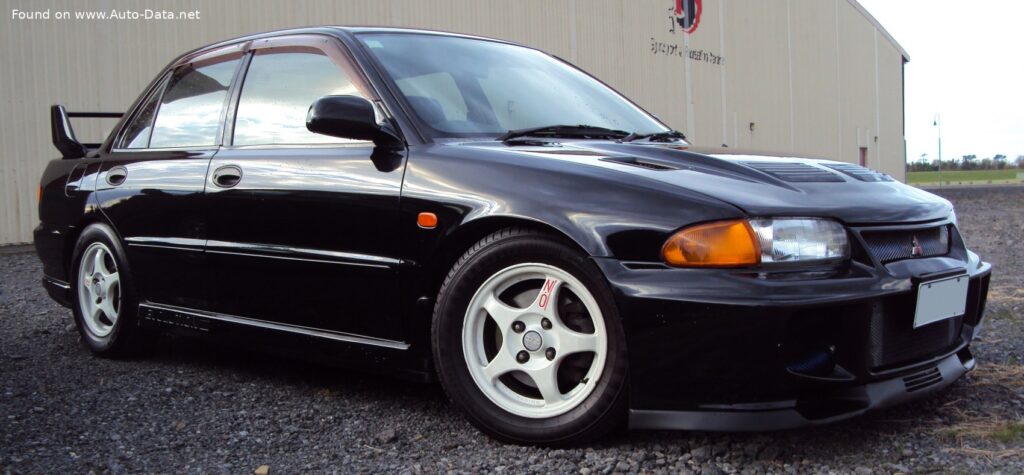
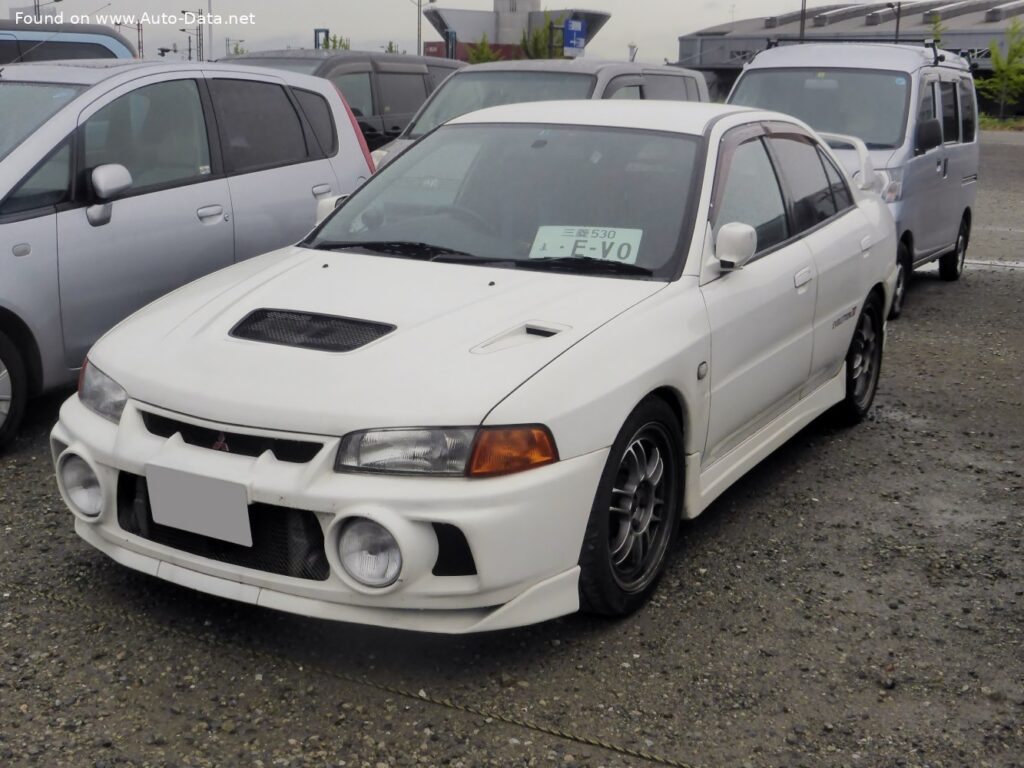
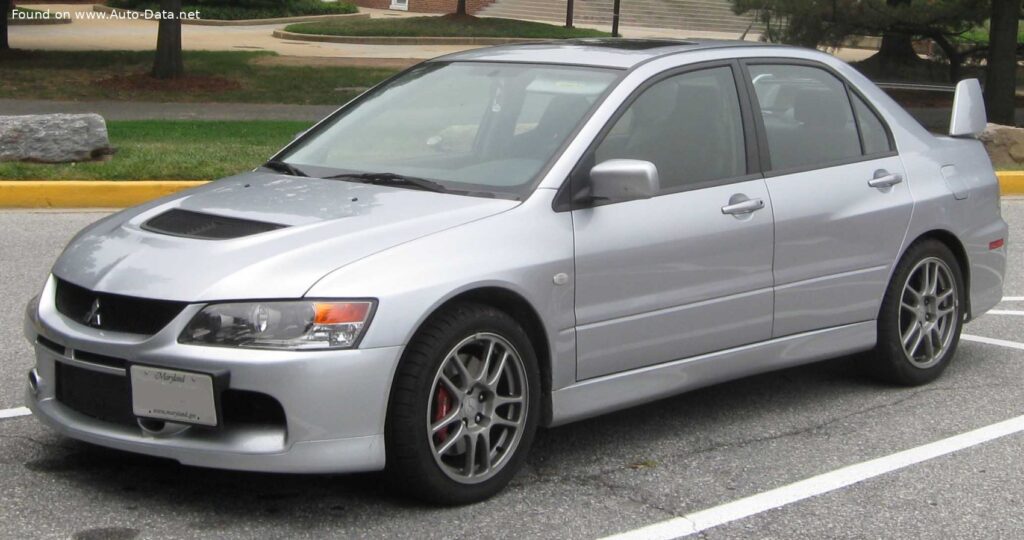
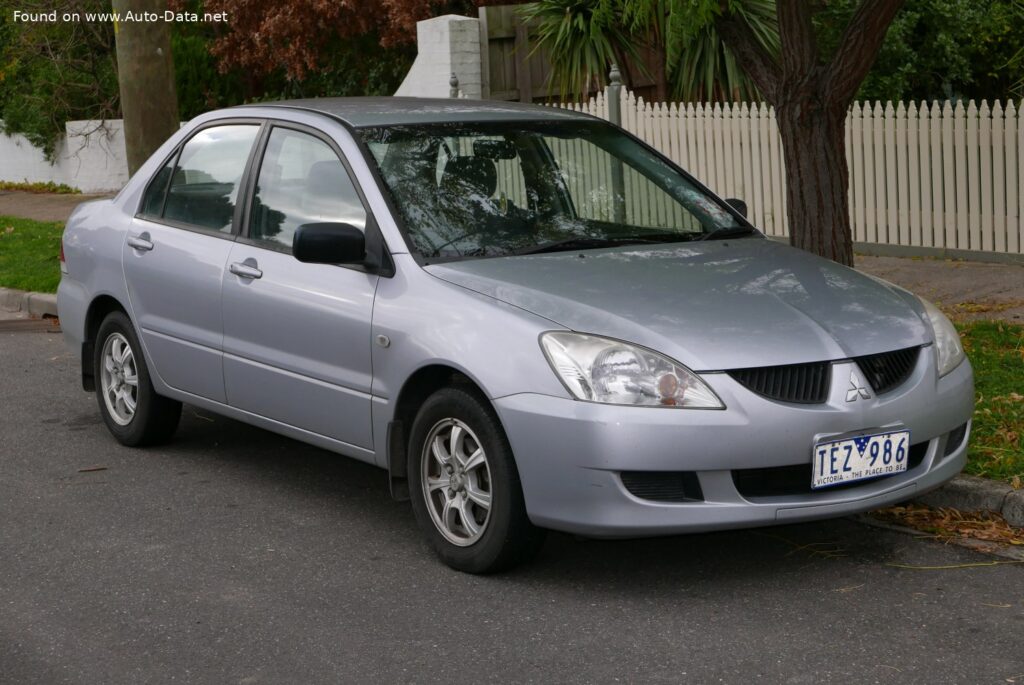
The Mitsubishi Lancer VIII introduced a significant design evolution, adopting a more assertive and contemporary aesthetic that was a departure from the more understated lines of the seventh generation. The 1.6i 16V variant, while not featuring the aggressive body kits of its sportier siblings, still benefited from the new platform’s sharp lines and a more aerodynamic profile. It was presented exclusively as a four-door sedan, offering seating for five occupants, a standard configuration for the compact segment.
Dimensions of the Lancer VIII were well-suited for its class: a length of 176.38 inches (4480 mm), a width of 66.73 inches (1695 mm), and a height of 56.89 inches (1445 mm). Its wheelbase of 102.36 inches (2600 mm) provided a stable ride and contributed to a reasonably spacious cabin for its size. The front and rear tracks, both measuring 57.87 inches (1470 mm), ensured a balanced stance on the road.
Inside, the Lancer emphasized functionality and durability. The cabin design was straightforward, with controls logically placed for ease of use. While not luxurious, the materials were chosen for their hard-wearing properties, reflecting the car’s utilitarian purpose. Standard features for the 2007-2009 model years typically included power windows, air conditioning, and a basic audio system, providing the essential comforts expected in a modern compact sedan.
Safety was also a consideration, with the Lancer VIII featuring an Anti-lock Braking System (ABS) as standard, enhancing control during emergency braking maneuvers. The suspension setup comprised a spring strut system at the front and a transverse stabilizer at the rear, a conventional yet effective combination designed to offer a comfortable ride while maintaining adequate handling characteristics. Braking duties were handled by ventilated discs at the front and solid discs at the rear, providing reliable stopping power. The steering system was a hydraulic rack and pinion setup, offering direct feedback to the driver, a characteristic often appreciated by enthusiasts.
Technical Specifications
| Feature | Specification |
|---|---|
| Brand | Mitsubishi |
| Model | Lancer |
| Generation | Lancer VIII |
| Type (Engine) | 1.6i 16V (98 Hp) |
| Production Years | 2007 – 2009 |
| Powertrain Architecture | Internal Combustion engine |
| Body Type | Sedan |
| Seats | 5 |
| Doors | 4 |
| Fuel Consumption (Urban) | 8.8 l/100 km (26.7 US mpg) |
| Fuel Consumption (Extra Urban) | 5.5 l/100 km (42.8 US mpg) |
| Fuel Consumption (Combined) | 6.7 l/100 km (35.1 US mpg) |
| Fuel Type | Petrol (Gasoline) |
| Acceleration 0-60 mph | 11.2 sec |
| Maximum Speed | 183 km/h (113.71 mph) |
| Power | 98 Hp @ 5000 rpm |
| Torque | 150 Nm (110.63 lb.-ft.) @ 4000 rpm |
| Engine Layout | Front, Transverse |
| Engine Model/Code | 4G18 |
| Engine Displacement | 1584 cm³ (1.6 liters / 96.66 cu. in.) |
| Number of Cylinders | 4 |
| Engine Configuration | Inline |
| Cylinder Bore | 76 mm (2.99 in.) |
| Piston Stroke | 87.3 mm (3.44 in.) |
| Compression Ratio | 10:1 |
| Valves per Cylinder | 4 |
| Fuel Injection System | Multi-port manifold injection |
| Engine Aspiration | Naturally aspirated |
| Valvetrain | OHC |
| Engine Oil Capacity | 3.3 l (3.49 US qt) |
| Coolant Capacity | 5 l (5.28 US qt) |
| Kerb Weight | 1185 kg (2612.48 lbs.) |
| Max. Weight | 1750 kg (3858.09 lbs.) |
| Max Load | 565 kg (1245.61 lbs.) |
| Trunk (Boot) Space – Minimum | 430 l (15.19 cu. ft.) |
| Fuel Tank Capacity | 50 l (13.21 US gal) |
| Length | 4480 mm (176.38 in.) |
| Width | 1695 mm (66.73 in.) |
| Height | 1445 mm (56.89 in.) |
| Wheelbase | 2600 mm (102.36 in.) |
| Front Track | 1470 mm (57.87 in.) |
| Rear Track | 1470 mm (57.87 in.) |
| Drivetrain Architecture | Front wheel drive (ICE drives front wheels) |
| Drive Wheel | Front wheel drive |
| Gearbox Type | 5 gears, manual transmission |
| Front Suspension | Spring Strut |
| Rear Suspension | Transverse stabilizer |
| Front Brakes | Ventilated discs |
| Rear Brakes | Disc |
| Assisting Systems | ABS (Anti-lock braking system) |
| Steering Type | Steering rack and pinion |
| Power Steering | Hydraulic Steering |
| Tires Size | 195/60 R15 |
| Wheel Rims Size | 6J x 15 |
Legacy and Market Impact
The Mitsubishi Lancer VIII 1.6i 16V (98 Hp) carved out a significant niche for itself in the international automotive landscape, particularly outside of North America. Its reputation was built on a foundation of Mitsubishi’s renowned reliability, affordability, and practical design. In markets where compact sedans were the backbone of personal transportation, this Lancer variant offered a compelling package against fierce competition.
Competitors in its primary markets included established players like the Toyota Corolla, Honda Civic, Ford Focus sedan, Opel Astra sedan, and Volkswagen Jetta (or Bora in some regions). The Lancer differentiated itself with a distinctive design, a robust powertrain, and a competitive price point. While its performance figures were not class-leading, its impressive fuel economy and low running costs made it an attractive option for first-time buyers, small families, and fleet operators.
The Lancer VIII, including the 1.6i variant, played a crucial role in Mitsubishi’s global strategy during its production run. It served as a volume seller, underpinning the brand’s presence in numerous countries and providing a practical counterpoint to the halo Lancer Evolution models. Its enduring legacy is that of a dependable workhorse, a car that consistently delivered on its promise of reliable, economical transportation without unnecessary frills. It represented a period where Mitsubishi was still a strong contender in the mainstream compact segment, offering a globally relevant product that met the diverse needs of drivers around the world.