
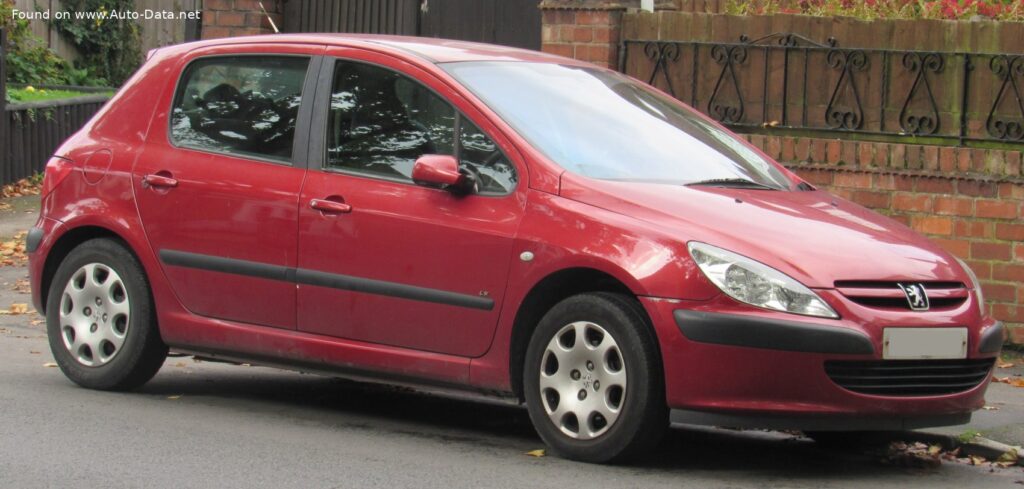
The Peugeot 307: An Overview of the 2.0 HDI (90 Hp) Generation
The Peugeot 307 2.0 HDI (90 Hp) represents a pivotal model in the French automaker’s lineup, launched in 2001 and produced through 2005. As a key player in the highly competitive European C-segment, or compact car class, the 307 was designed to succeed the popular 306, bringing with it a fresh design philosophy and a strong emphasis on practicality and efficiency. This generation of the Peugeot 307 was particularly notable for its “tallboy” design, which offered enhanced interior space and visibility, challenging established segment leaders like the Volkswagen Golf and Ford Focus.
The 2.0 HDI (High-Pressure Direct Injection) variant, specifically with 90 horsepower, was a cornerstone of the 307’s powertrain offerings in Europe, embodying Peugeot’s long-standing expertise in diesel engine technology. While not officially sold in the United States market, the Peugeot 307, particularly in its diesel configurations, played a significant role in defining the compact hatchback segment across Europe and other international markets, offering a compelling blend of fuel economy, low emissions for its time, and a comfortable driving experience. This article delves into the specifics of this influential model, highlighting its engineering, design, and market impact.
Powertrain and Performance of the Peugeot 307 2.0 HDI
At the heart of the Peugeot 307 2.0 HDI (90 Hp) lies a robust and efficient diesel engine, designated with the model code RHY DW10TD. This 1997 cubic centimeter (approximately 2.0-liter) inline-four engine was a testament to Peugeot’s commitment to advancing diesel technology for mainstream passenger cars. Featuring a common rail direct injection system, coupled with a turbocharger and intercooler, this powertrain delivered a respectable 90 horsepower at 4000 rpm. More significantly, it produced a healthy 151.2 lb.-ft. of torque at a low 1900 rpm, providing excellent tractability and responsiveness in everyday driving conditions.
The engine’s design, with two valves per cylinder and a Single Overhead Camshaft (SOHC) valvetrain, prioritized durability and cost-effective maintenance alongside efficiency. Its compression ratio of 17.6:1 was typical for a diesel engine of its era, optimizing fuel combustion. Power was delivered to the front wheels via a smooth-shifting 5-speed manual transmission, a common and reliable setup for compact cars during this period.
In terms of performance, the 307 2.0 HDI (90 Hp) was not built for outright speed but rather for practical, economical motoring. It could accelerate from 0 to 60 mph in a calculated 12.2 seconds, with a top speed of 111.23 mph. These figures were competitive within its segment for a diesel variant and perfectly adequate for highway cruising and urban commuting. Where this powertrain truly excelled was in its fuel economy. The combined cycle fuel consumption was an impressive 45.2 US mpg (5.2 liters per 100 km), making it a highly economical choice for drivers in markets where diesel fuel was prevalent and favored. Furthermore, its CO2 emissions of 138 g/km and Euro 3 emission standard compliance reflected a conscious effort towards environmental responsibility, a growing concern even in the early 2000s.
Design and Features of the Peugeot 307
The design of the Peugeot 307 marked a significant departure from its predecessor, embracing a more upright and spacious “tallboy” aesthetic. This hatchback, available in both 3-door and 5-door configurations, offered seating for five occupants. Its exterior dimensions – a length of 165.43 inches, width of 68.11 inches, and height of 59.53 inches – contributed to a substantial road presence for a compact car, while the 102.68-inch wheelbase promised a comfortable ride and generous interior volume. The elevated roofline not only improved headroom for all passengers but also offered a commanding driving position and enhanced outward visibility, which was a key selling point. The drag coefficient (Cd) of 0.31 was respectable for a car of its segment and design, contributing to its fuel efficiency.
Inside, the Peugeot 307 prioritized ergonomics and practicality. The trunk space was ample for its class, ranging from 12.04 cubic feet with all seats in place to a cavernous 46.9 cubic feet with the rear seats folded down, demonstrating its versatility for families and cargo hauling. The fuel tank capacity of 15.85 US gallons provided an excellent driving range, especially when combined with the diesel engine’s efficiency.
Underneath its stylish skin, the 307 featured a well-engineered chassis. The front suspension utilized a Wishbone setup, known for its ability to provide a good balance between ride comfort and handling precision. At the rear, a Trailing arm suspension system contributed to a stable and predictable ride. Braking duties were handled by ventilated discs at the front and solid discs at the rear, complemented by an Anti-lock Braking System (ABS) as a standard safety feature, which was a crucial active safety technology for vehicles of this era. Steering was managed by a hydraulic rack and pinion system, offering direct feedback to the driver. The car rode on 195/65 R15 tires mounted on 15-inch wheel rims, providing a comfortable and compliant ride quality.
Technical Specifications
| Category | Specification | Value |
|---|---|---|
General Information |
||
| Brand | Peugeot | |
| Model | 307 | |
| Generation | 307 | |
| Engine Type | 2.0 HDI (90 Hp) | |
| Production Start | 2001 | |
| Production End | 2005 | |
| Powertrain Architecture | Internal Combustion Engine | |
| Body Type | Hatchback | |
| Seats | 5 | |
| Doors | 3-5 | |
Performance Specifications |
||
| Fuel Consumption (Urban) | 34.1 US mpg (6.9 l/100 km) | |
| Fuel Consumption (Extra Urban) | 54.7 US mpg (4.3 l/100 km) | |
| Fuel Consumption (Combined) | 45.2 US mpg (5.2 l/100 km) | |
| CO2 Emissions | 138 g/km | |
| Fuel Type | Diesel | |
| Acceleration 0-60 mph | 12.2 sec | |
| Maximum Speed | 111.23 mph (179 km/h) | |
| Emission Standard | Euro 3 | |
| Weight-to-Power Ratio | 13.8 kg/Hp | |
| Weight-to-Torque Ratio | 6.1 kg/Nm | |
Engine Specifications |
||
| Power | 90 Hp @ 4000 rpm | |
| Power per Liter | 45.1 Hp/l | |
| Torque | 151.2 lb.-ft. @ 1900 rpm (205 Nm) | |
| Engine Layout | Front, Transverse | |
| Engine Model/Code | RHY DW10TD | |
| Engine Displacement | 121.86 cu. in. (1997 cm3) | |
| Number of Cylinders | 4 | Inline |
| Cylinder Bore | 3.35 in. (85 mm) | |
| Piston Stroke | 3.46 in. (88 mm) | |
| Compression Ratio | 17.6:1 | |
| Valves per Cylinder | 2 | |
| Fuel Injection System | Diesel Commonrail | |
| Engine Aspiration | Turbocharger, Intercooler | |
| Valvetrain | SOHC | |
| Engine Oil Capacity | 5.07 US qt (4.8 l) | |
| Coolant Capacity | 8.77 US qt (8.3 l) | |
Dimensions, Weight, and Volume |
||
| Kerb Weight | 2740.35 lbs. (1243 kg) | |
| Max. Weight | 3842.66 lbs. (1743 kg) | |
| Max Load | 1102.31 lbs. (500 kg) | |
| Trunk Space (Minimum) | 12.04 cu. ft. (341 l) | |
| Trunk Space (Maximum) | 46.9 cu. ft. (1328 l) | |
| Fuel Tank Capacity | 15.85 US gal (60 l) | |
| Permitted Trailer Load (with brakes) | 2866.01 lbs. (1300 kg) | |
| Permitted Trailer Load (without brakes) | 1444.03 lbs. (655 kg) | |
| Length | 165.43 in. (4202 mm) | |
| Width | 68.11 in. (1730 mm) | |
| Height | 59.53 in. (1512 mm) | |
| Wheelbase | 102.68 in. (2608 mm) | |
| Front Track | 59.25 in. (1505 mm) | |
| Rear Track | 59.06 in. (1500 mm) | |
| Ride Height (Ground Clearance) | 4.72 in. (120 mm) | |
| Drag Coefficient (Cd) | 0.31 | |
| Minimum Turning Circle | 36.52 ft. (11.13 m) | |
Drivetrain, Brakes, and Suspension |
||
| Drivetrain Architecture | Front Wheel Drive | |
| Drive Wheel | Front Wheel Drive | |
| Gearbox Type | 5 gears, manual transmission | |
| Front Suspension | Wishbone | |
| Rear Suspension | Trailing arm | |
| Front Brakes | Ventilated discs | |
| Rear Brakes | Disc | |
| Assisting Systems | ABS (Anti-lock braking system) | |
| Steering Type | Steering rack and pinion | |
| Power Steering | Hydraulic Steering | |
| Tires Size | 195/65 R15 | |
| Wheel Rims Size | 15 inches | |
Legacy and Market Impact of the Peugeot 307
The Peugeot 307, particularly its 2.0 HDI variants, carved out a significant niche in the European compact car market, a segment known for its fierce competition. Upon its launch, the 307 was lauded for its innovative design, which effectively blended the practicality of a minivan with the driving dynamics of a traditional hatchback. This unique approach, combined with Peugeot’s reputation for comfortable rides and robust diesel engines, quickly earned it widespread acclaim. A testament to its initial impact, the Peugeot 307 was awarded the coveted European Car of the Year title in 2002, a prestigious recognition that underscored its overall excellence and forward-thinking design.
In its primary markets, the 307 competed directly with formidable rivals such as the Volkswagen Golf, Ford Focus, Renault Mégane, and Opel Astra. Against these competitors, the 307 stood out with its “tallboy” architecture, offering superior interior space, particularly headroom, and a more elevated driving position that many drivers found appealing. The 2.0 HDI (90 Hp) engine was a significant factor in its success, providing a compelling balance of performance and exceptional fuel economy, which was crucial in regions with high fuel prices and a strong preference for diesel vehicles. Its low running costs and respectable reliability for the era made it a popular choice for both private buyers and fleet operators.
While the Peugeot 307 faced some criticisms regarding build quality and electrical issues in its early production years, these were largely addressed through subsequent updates. Its fundamental strengths – comfort, practicality, and the efficiency of its HDI engines – ensured its continued popularity throughout its production run. The 307 helped solidify Peugeot’s position as a leader in the compact segment and a pioneer in common rail diesel technology, paving the way for future successful models. Its legacy is one of innovation in packaging and a strong embrace of diesel power, leaving an indelible mark on the European automotive landscape before being succeeded by the Peugeot 308. For an international automotive expert, the 307 remains a significant example of how European manufacturers adapted to evolving consumer demands for space, efficiency, and comfort in the compact class.
