The Vauxhall Insignia I Saloon 2.8i Turbo ecoTEC (260 Hp) AWD Automatic: A European Executive Contender
The Vauxhall Insignia I Saloon represents a significant chapter in the history of General Motors’ European operations, serving as the flagship sedan for the British Vauxhall brand and its continental sibling, Opel. Launched in 2008, the first-generation Insignia was a pivotal model, replacing the long-running Vectra and aiming to elevate the brand’s perception in the highly competitive mid-size (D-segment) market. This particular variant, the Vauxhall Insignia I Saloon 2.8i Turbo ecoTEC (260 Hp) AWD Automatic, stood at the apex of the range, offering a potent blend of performance, luxury, and all-weather capability within a stylish, executive-oriented package.
While the Vauxhall brand itself is primarily recognized in the United Kingdom, the Insignia was a global effort, sold as the Opel Insignia across mainland Europe and rebadged for other markets, most notably as the Buick Regal in North America. This particular powertrain, featuring a turbocharged V6 engine and all-wheel drive, was designed to compete with premium offerings from brands like Audi, BMW, and Mercedes-Benz, albeit at a more accessible price point. Its production run from 2008 to 2013 solidified its reputation as a sophisticated and capable family sedan, blending dynamic design with advanced engineering for its time.
Engine and Performance: Power and Precision in the Vauxhall Insignia I Saloon
Under the hood of the Vauxhall Insignia I Saloon 2.8i Turbo ecoTEC AWD Automatic lay a formidable 2.8-liter (2792 cubic inches) V6 engine, designated with the A28NET code. This powerplant was a testament to GM’s engineering prowess, featuring a turbocharger and intercooler to produce a robust 260 horsepower at 5500 RPM. Torque figures were equally impressive, peaking at 258.15 lb.-ft. (350 Nm) across a broad range from 1900 to 4500 RPM, ensuring strong acceleration and flexible everyday driving.
The “ecoTEC” designation, typically associated with efficiency, in this context highlighted the engine’s advanced design, including a DOHC (Dual Overhead Camshaft) valvetrain with 4 valves per cylinder and a multi-port manifold injection system, all aimed at optimizing combustion and reducing emissions for a performance engine of its size. Power was channeled through a sophisticated 6-speed automatic transmission to an intelligent all-wheel-drive (AWD) system, providing enhanced traction and stability, especially in challenging road conditions.
Performance metrics underscore the Insignia’s capabilities. It could sprint from 0 to 60 mph in a brisk 6.4 seconds (0-100 km/h in 6.7 seconds), reaching an electronically limited top speed of 155.34 mph (250 km/h). Despite its performance focus, the vehicle adhered to Euro 5 emission standards, reflecting efforts towards environmental responsibility. Fuel economy, while not its primary selling point, was rated at a combined 20.3 US mpg (11.6 l/100 km), with urban figures at 13.1 US mpg (17.9 l/100 km) and extra-urban at 29.8 US mpg (7.9 l/100 km). These figures, while modest by today’s standards for a V6, were competitive for a turbocharged AWD sedan in its class during its production years.
Design and Features of the Insignia I Saloon
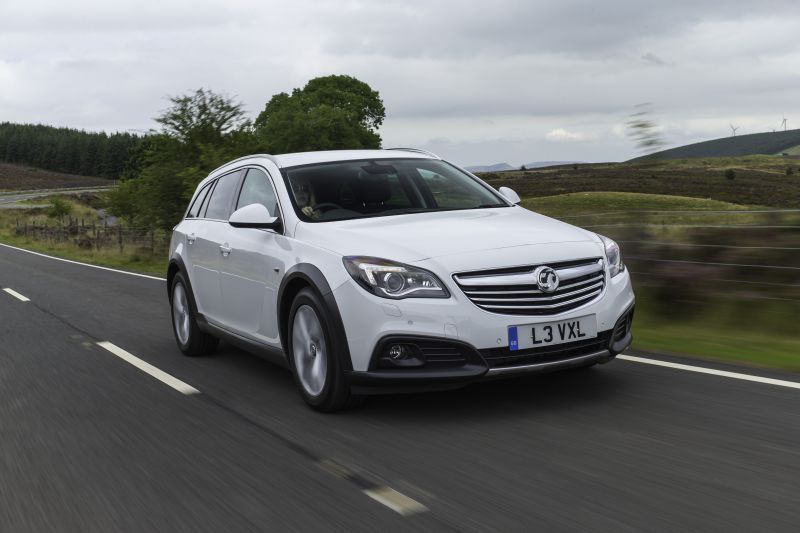
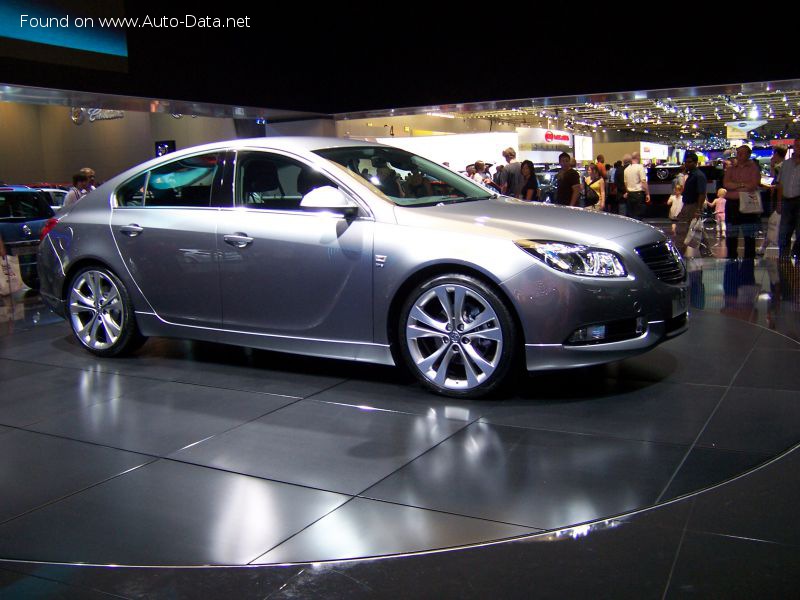
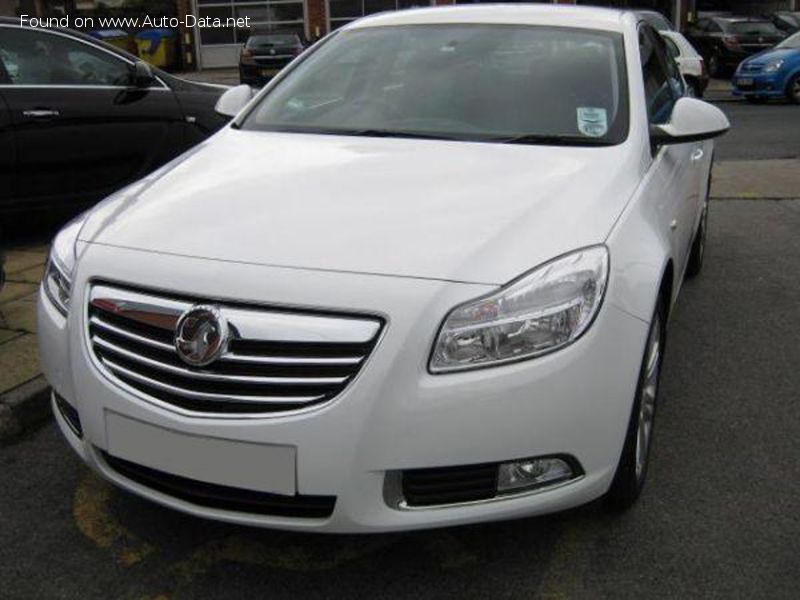
The first-generation Vauxhall Insignia made a strong visual statement with its “fluidic sculpture” design language, characterized by flowing lines, a muscular stance, and a distinctive front fascia. As a four-door sedan (Saloon in European parlance), it offered seating for five occupants, emphasizing comfort and practicality for families and business users. The car’s dimensions—190.16 inches (4830 mm) long, 73.07 inches (1856 mm) wide (82.05 inches including mirrors), and 58.98 inches (1498 mm) tall—placed it firmly in the mid-size executive segment.
The interior was designed with a focus on ergonomics and perceived quality, featuring a driver-centric cockpit and ample space. The trunk offered a respectable 17.3 cubic feet (490 liters) of cargo capacity, expandable to 35.67 cubic feet (1010 liters) with the rear seats folded, making it practical for long trips or larger loads. The drag coefficient (Cd) of 0.27 was excellent for a sedan of its size, contributing to both fuel efficiency and reduced wind noise at higher speeds.
Suspension was designed for a balance of comfort and dynamic handling. The front featured an independent McPherson strut setup with coil springs and an anti-roll bar, while the rear employed an independent multi-link suspension. Braking power came from ventilated discs at the front and solid discs at the rear, complemented by an Anti-lock Braking System (ABS). The hydraulic power steering provided direct feedback, enhancing the driving experience. Standard tires were 215/60 R16, mounted on 16-inch wheels, though larger options were available.
Technical Specifications: Vauxhall Insignia I Saloon 2.8i Turbo ecoTEC (260 Hp) AWD Automatic
| Category | Specification |
|---|---|
| Brand | Vauxhall |
| Model | Insignia I Saloon |
| Engine Type | 2.8i Turbo ecoTEC (260 Hp) AWD Automatic |
| Production Start | 2008 |
| Production End | 2013 |
| Body Type | Sedan |
| Seats | 5 |
| Doors | 4 |
| Performance | |
| Fuel Consumption (Urban) | 13.1 US mpg (17.9 l/100 km) |
| Fuel Consumption (Extra Urban) | 29.8 US mpg (7.9 l/100 km) |
| Fuel Consumption (Combined) | 20.3 US mpg (11.6 l/100 km) |
| CO2 Emissions | 272 g/km |
| Fuel Type | Petrol (Gasoline) |
| Acceleration 0-60 mph | 6.4 sec |
| Acceleration 0-100 km/h | 6.7 sec |
| Maximum Speed | 155.34 mph (250 km/h) |
| Emission Standard | Euro 5 |
| Weight-to-Power Ratio | 147.7 Hp/tonne (6.8 kg/Hp) |
| Weight-to-Torque Ratio | 198.9 Nm/tonne (5 kg/Nm) |
| Engine Specs | |
| Power | 260 Hp @ 5500 rpm |
| Power per liter | 93.1 Hp/l |
| Torque | 258.15 lb.-ft. (350 Nm) @ 1900-4500 rpm |
| Engine Layout | Front, Transverse |
| Engine Model/Code | A28NET |
| Engine Displacement | 2.8 liters (2792 cm3, 170.38 cu. in.) |
| Number of Cylinders | 6 |
| Engine Configuration | V-engine |
| Valves per Cylinder | 4 |
| Fuel Injection System | Multi-port manifold injection |
| Engine Aspiration | Turbocharger, Intercooler |
| Valvetrain | DOHC |
| Engine Oil Capacity | 6.66 US qt (6.3 l) |
| Coolant Capacity | 7.08 US qt (6.7 l) |
| Dimensions, Volume & Weights | |
| Kerb Weight | 3880.14 lbs. (1760 kg) |
| Max. Weight | 5158.82 lbs. (2340 kg) |
| Max Load | 1278.68 lbs. (580 kg) |
| Trunk Space (Minimum) | 17.3 cu. ft. (490 l) |
| Trunk Space (Maximum) | 35.67 cu. ft. (1010 l) |
| Fuel Tank Capacity | 18.49 US gal (70 l) |
| Permitted Trailer Load (with brakes) | 3968.32 lbs. (1800 kg) |
| Permitted Trailer Load (without brakes) | 1653.47 lbs. (750 kg) |
| Length | 190.16 in. (4830 mm) |
| Width | 73.07 in. (1856 mm) |
| Width (incl. mirrors) | 82.05 in. (2084 mm) |
| Height | 58.98 in. (1498 mm) |
| Wheelbase | 107.76 in. (2737 mm) |
| Front Track | 62.4 in. (1585 mm) |
| Rear Track | 62.4 in. (1585 mm) |
| Front Overhang | 39.96 in. (1015 mm) |
| Rear Overhang | 42.44 in. (1078 mm) |
| Ride Height (Ground Clearance) | 6.3 in. (160 mm) |
| Drag Coefficient (Cd) | 0.27 |
| Minimum Turning Circle | 35.73 ft. (10.89 m) |
| Drivetrain, Brakes & Suspension | |
| Drive Wheel | All-wheel drive (4×4) |
| Gearbox Type | 6-speed automatic transmission |
| Front Suspension | Independent, McPherson with coil spring and anti-roll bar |
| Rear Suspension | Independent multi-link suspension |
| Front Brakes | Ventilated discs |
| Rear Brakes | Disc |
| Assisting Systems | ABS (Anti-lock braking system) |
| Power Steering | Hydraulic Steering |
| Tire Size | 215/60 R16 |
| Wheel Rim Size | 16 inches |
Legacy and Market Impact
The Vauxhall Insignia I Saloon, and its Opel counterpart, had a substantial impact on the European automotive landscape. It was a crucial model for GM Europe, tasked with revitalizing the brand’s image and sales in a segment increasingly dominated by premium German manufacturers. The 2.8i Turbo ecoTEC AWD Automatic variant, in particular, showcased Vauxhall’s ability to produce a sophisticated, high-performance sedan that could rival entries from Ford (Mondeo), Volkswagen (Passat), and even challenge the lower end of the executive market populated by the Audi A4, BMW 3 Series, and Mercedes-Benz C-Class.
Its striking design, which garnered the European Car of the Year award in 2009, was a major selling point, signaling a departure from the more conservative styling of its predecessor, the Vectra. The availability of all-wheel drive and a powerful turbocharged V6 engine positioned the Insignia as a credible option for buyers seeking performance and all-weather capability without stepping into the more expensive premium brands. The “ecoTEC” branding, even on a high-output V6, underscored GM’s commitment to improving efficiency across its engine range, a key marketing message in a post-recession era.
In the United States, the Insignia found a second life as the Buick Regal, playing a vital role in Buick’s rejuvenation and its push towards a more contemporary, European-inspired product lineup. The 2.8L turbo engine, though not offered in the exact same configuration as the 260 Hp Vauxhall, provided a foundation for performance variants of the Regal, demonstrating the platform’s versatility. This cross-pollination highlighted GM’s global strategy, where a successful European model could be adapted for the American market, bringing advanced engineering and design across continents.
Throughout its production, the Insignia I Saloon was praised for its comfortable ride, refined powertrain, and confident handling, especially in AWD guise. While its fuel economy for the V6 model might not align with today’s efficiency expectations, it offered a compelling package of performance, safety features, and executive appeal for its time. The Vauxhall Insignia I Saloon 2.8i Turbo ecoTEC (260 Hp) AWD Automatic remains a notable example of European automotive engineering, a car that successfully bridged the gap between mainstream and premium offerings, leaving a lasting legacy for both Vauxhall in the UK and its global counterparts.