The Renault Espace IV (Phase III, 2010): A European Minivan Icon
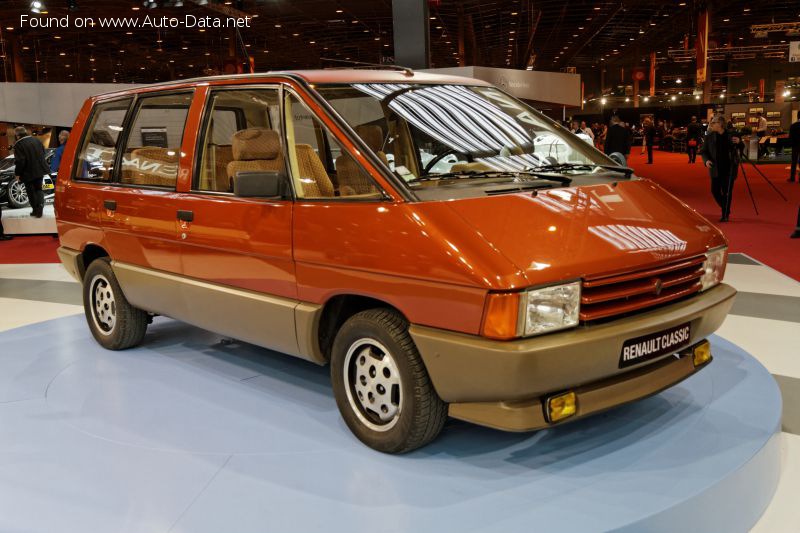
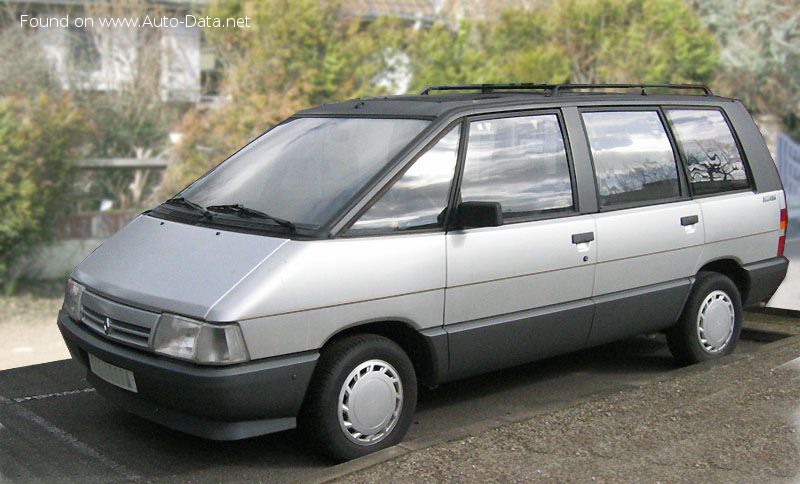
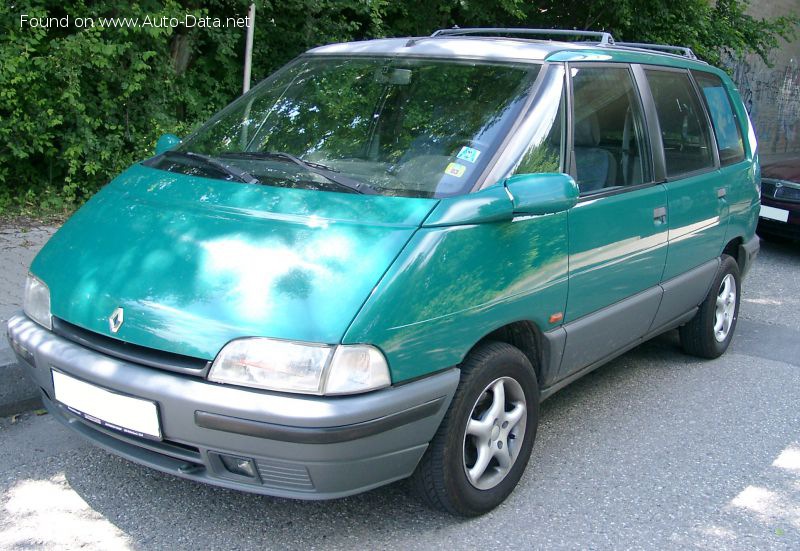
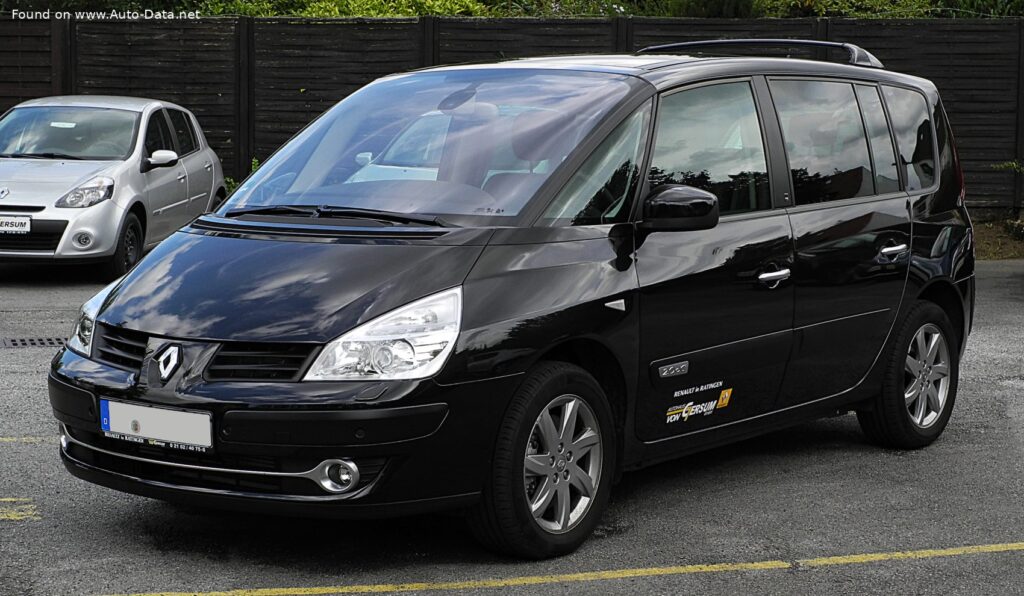
The Renault Espace IV (Phase III, 2010) 2.0 dCi (150 Hp) Automatic represents a significant iteration of Renault’s pioneering multi-purpose vehicle (MPV) for the European market. First introduced in 1984, the Espace carved out a new niche for family transportation, blending the practicality of a van with the comfort and driving dynamics of a passenger car. The fourth generation, launched in 2002, continued this legacy, and the Phase III update in 2010 brought refinements to its design, technology, and powertrain options, aiming to maintain its competitive edge in a segment it largely created.
As a model never officially sold in the United States, the Espace’s primary role was in Europe, where it was celebrated for its innovative modular interior, comfortable ride, and sophisticated styling. This specific variant, featuring the 2.0-liter dCi diesel engine paired with an automatic transmission, was a popular choice, offering a compelling blend of fuel efficiency, robust performance, and effortless driving dynamics tailored for long-distance family travel across the continent. It stood as a testament to Renault’s commitment to innovation in family mobility, offering a unique blend of space, versatility, and driving pleasure in the competitive European minivan segment.
Engine & Performance
Under the hood of the Renault Espace IV (Phase III, 2010) lies a capable M9R-code 2.0-liter (1995 cm³ or 121.74 cu. in.) inline four-cylinder turbodiesel engine. This powerplant was engineered to deliver a balance of power and economy, a critical consideration for European drivers. It produces a healthy 150 horsepower at 4000 rpm, which, while not sports-car-like, is more than adequate for moving the Espace and its occupants with confidence, even when fully loaded. The true strength of this diesel unit, however, lies in its torque output: a substantial 250.77 lb.-ft. (340 Nm) available at a low 2000 rpm. This ample low-end torque is crucial for a vehicle of this size and weight, enabling strong acceleration from a standstill, confident overtaking maneuvers, and comfortable cruising with minimal effort.
Power is routed to the front wheels via a smooth 6-speed automatic transmission, enhancing driving comfort, particularly in urban environments or during long journeys. This powertrain combination allows the Espace to accelerate from 0 to 60 mph in a respectable 11.8 seconds, with a top speed of 116.82 mph (188 km/h). Fuel efficiency was a key selling point for this diesel variant, with a combined fuel economy rating of 32.7 US mpg (7.2 l/100 km). This efficiency, coupled with an 83-liter (21.93 US gallon) fuel tank, provided an impressive cruising range, making it an ideal choice for European road trips. The engine also met the Euro 5 emissions standard, indicating its relatively clean operation for its time, further aided by a particulate filter system.
Design & Features of the {original_focus_keyword}
The design of the Renault Espace IV (Phase III, 2010) adhered to the contemporary minivan aesthetic, prioritizing interior volume and passenger comfort. Its body type is classified as a Minivan or MPV, featuring five doors and a versatile 7-seat configuration. With a length of 183.5 inches (4661 mm), a width of 74.57 inches (1894 mm) including mirrors, and a height of 70.91 inches (1801 mm), the Espace commanded a significant road presence while offering substantial interior space. The generous 110.35-inch (2803 mm) wheelbase was instrumental in creating a spacious cabin and a stable ride.
The Espace’s interior was its true highlight, known for its modularity. The individual seats in the second and third rows could be easily removed, slid, or folded, allowing for numerous seating and cargo configurations. This flexibility transformed the vehicle from a 7-seater family hauler to a cavernous cargo van with a maximum trunk volume of 101 cu. ft. (2860 liters), or a more modest 10.28 cu. ft. (291 liters) with all seats in place. Practical features like a high seating position, large windows, and numerous storage compartments further enhanced its family-friendly appeal.
Suspension-wise, the Espace featured an independent McPherson strut setup with coil springs and an anti-roll bar at the front, providing a comfortable and controlled ride. The rear utilized a semi-independent setup with coil springs. Braking performance was handled by ventilated discs at the front and disc brakes at the rear, supported by an Anti-lock Braking System (ABS) for enhanced safety. The vehicle rode on 225/55 R17 tires mounted on 17-inch wheel rims, contributing to both ride comfort and handling stability. Other practical aspects included a 175 mm (6.89 in.) ground clearance and a turning circle of 36.09 ft (11 m), making it reasonably maneuverable for its size.
Technical Specifications
| Category | Specification | Value |
|---|---|---|
| General Information | ||
| Brand | Renault | |
| Model | Espace | |
| Generation | Espace IV (Phase III, 2010) | |
| Type (Engine) | 2.0 dCi (150 Hp) Automatic | |
| Start of Production | 2010 year | |
| End of Production | 2012 year | |
| Powertrain Architecture | Internal Combustion engine | |
| Body Type | Minivan, MPV | |
| Seats | 7 | |
| Doors | 5 | |
| Performance Specs | ||
| Fuel Consumption (Urban) | 9.3 l/100 km | 25.3 US mpg |
| Fuel Consumption (Extra Urban) | 6.1 l/100 km | 38.6 US mpg |
| Fuel Consumption (Combined) | 7.2 l/100 km | 32.7 US mpg |
| CO2 Emissions | 189 g/km | |
| Fuel Type | Diesel | |
| Acceleration 0 – 60 mph | 11.8 sec | |
| Maximum Speed | 188 km/h | 116.82 mph |
| Emission Standard | Euro 5 | |
| Weight-to-Power Ratio | 12.9 kg/Hp | |
| Weight-to-Torque Ratio | 5.7 kg/Nm | |
| Engine Specs | ||
| Power | 150 Hp @ 4000 rpm | |
| Power per liter | 75.2 Hp/l | |
| Torque | 340 Nm @ 2000 rpm | 250.77 lb.-ft. @ 2000 rpm |
| Engine Layout | Front, Transverse | |
| Engine Model/Code | M9R | |
| Engine Displacement | 1995 cm³ | 121.74 cu. in. |
| Number of Cylinders | 4 | |
| Engine Configuration | Inline | |
| Cylinder Bore | 84 mm | 3.31 in. |
| Piston Stroke | 90 mm | 3.54 in. |
| Compression Ratio | 16:1 | |
| Number of Valves per Cylinder | 4 | |
| Fuel Injection System | Diesel Commonrail | |
| Engine Aspiration | Turbocharger, Intercooler | |
| Valvetrain | DOHC | |
| Engine Oil Capacity | 6.6 l | 6.97 US qt |
| Engine Systems | Particulate filter | |
| Space, Volume and Weights | ||
| Kerb Weight | 1933 kg | 4261.54 lbs. |
| Max. Weight | 2640 kg | 5820.2 lbs. |
| Max Load | 707 kg | 1558.67 lbs. |
| Trunk (boot) Space – minimum | 291 l | 10.28 cu. ft. |
| Trunk (boot) Space – maximum | 2860 l | 101 cu. ft. |
| Fuel Tank Capacity | 83 l | 21.93 US gal |
| Max. Roof Load | 80 kg | 176.37 lbs. |
| Permitted Trailer Load with Brakes (12%) | 2000 kg | 4409.25 lbs. |
| Permitted Trailer Load without Brakes | 750 kg | 1653.47 lbs. |
| Permitted Towbar Download | 80 kg | 176.37 lbs. |
| Dimensions | ||
| Length | 4661 mm | 183.5 in. |
| Width including mirrors | 1894 mm | 74.57 in. |
| Height | 1801 mm | 70.91 in. |
| Wheelbase | 2803 mm | 110.35 in. |
| Front Track | 1574 mm | 61.97 in. |
| Rear (Back) Track | 1556 mm | 61.26 in. |
| Front Overhang | 1026 mm | 40.39 in. |
| Rear Overhang | 832 mm | 32.76 in. |
| Ride Height (Ground Clearance) | 175 mm | 6.89 in. |
| Minimum Turning Circle (Turning Diameter) | 11 m | 36.09 ft. |
| Drivetrain, Brakes and Suspension Specs | ||
| Drivetrain Architecture | Internal combustion engine (ICE) drives the front wheels. | |
| Drive Wheel | Front wheel drive | |
| Number of Gears and Type of Gearbox | 6 gears, automatic transmission | |
| Front Suspension | Independent, type McPherson with coil spring and anti-roll bar | |
| Rear Suspension | Semi-independent, coil spring | |
| Front Brakes | Ventilated discs | |
| Rear Brakes | Disc | |
| Assisting Systems | ABS (Anti-lock braking system) | |
| Steering Type | Steering rack and pinion | |
| Tires Size | 225/55 R17 | |
| Wheel Rims Size | 17 inches | |
Legacy & Market Impact
The Renault Espace holds a revered place in automotive history, particularly in Europe, as one of the original and most successful multi-purpose vehicles. The fourth generation, including the Phase III update from 2010 to 2012, continued to build upon this strong foundation. It maintained the Espace’s reputation for innovative packaging, exceptional passenger comfort, and a genuinely adaptable interior, setting it apart from more conventional station wagons and SUVs of its era. For families across Europe, the Espace offered an unparalleled solution for transporting children, luggage, and even bulky items, making it a beloved choice for daily life and extended vacations alike.
In its primary market, the Renault Espace IV (Phase III, 2010) faced stiff competition from other European manufacturers who had followed Renault into the MPV segment. Key rivals included the Ford Galaxy/S-Max, Volkswagen Sharan, Citroën C8, and Peugeot 807. Despite the growing popularity of SUVs, the Espace managed to retain a loyal customer base thanks to its unique blend of attributes. Its diesel powertrain, especially the 2.0 dCi (150 Hp) Automatic variant, was particularly well-regarded for its efficiency, reliability, and smooth power delivery, aligning perfectly with the demands of European drivers who often prioritize fuel economy and long-distance comfort.
The Espace’s enduring legacy is its role in demonstrating that a family vehicle could be both practical and stylish, without sacrificing driving enjoyment. While the later generations of the Espace would evolve to adopt more SUV-like styling cues to adapt to changing market tastes, the Phase III of the Espace IV represented the pinnacle of the traditional, full-size European minivan. It remains a testament to Renault’s bold vision and engineering prowess, continuing to be a highly functional and respected vehicle for those who value space, versatility, and comfort above all else. Its impact on family transportation in Europe is undeniable, solidifying its status as a true automotive icon.