The Mitsubishi Lancer VIII Sport 2.0i 16V (135 Hp): A Global Compact Sedan
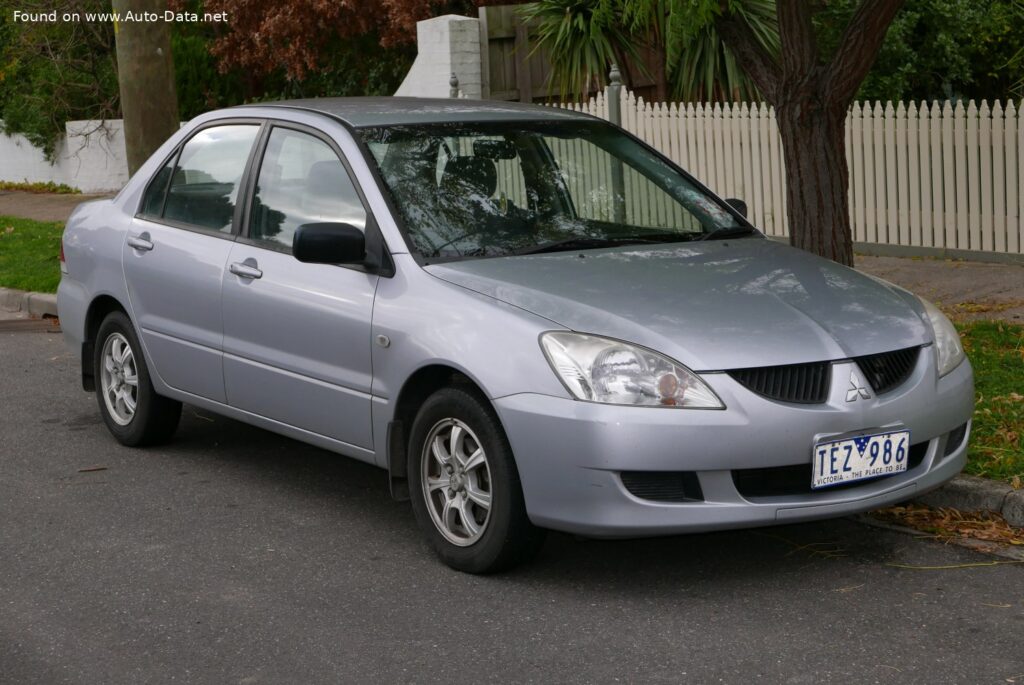
The Mitsubishi Lancer VIII, produced from 2003 to 2007, represents a significant chapter in the Lancer’s long and storied history as a globally recognized compact car. This particular variant, the Mitsubishi Lancer VIII Sport 2.0i 16V (135 Hp), carved out a niche as a practical yet spirited offering within the Lancer lineup. While the Lancer nameplate is synonymous with rally-bred performance through its Evolution variants, the standard Lancer VIII, including this Sport model, focused on delivering reliable transportation, comfortable seating for five, and a competitive feature set for the compact sedan market. It was designed to appeal to a broad customer base seeking an economical and dependable vehicle with a touch of driving engagement, particularly in markets like Europe and Asia where this specific powertrain configuration was more prevalent.
Engine and Performance
At the heart of the Mitsubishi Lancer VIII Sport 2.0i 16V (135 Hp) is the venerable Mitsubishi 4G63 engine. While often celebrated in its turbocharged guise within the Lancer Evolution, this naturally aspirated 2.0-liter (1997 cm3 or 121.86 cu. in.) inline-four engine demonstrates its inherent robustness and efficiency. Featuring a Double Overhead Camshaft (DOHC) valvetrain and multi-port manifold injection, it delivers a respectable 135 horsepower at 5750 rpm. Torque output stands at 176 Nm (129.81 lb.-ft.) at 4500 rpm, providing ample pulling power for daily driving and highway cruising.
Power is channeled to the front wheels via a precise 5-speed manual transmission, offering the driver direct control over the engine’s output. This powertrain configuration allows the Lancer VIII Sport to accelerate from 0 to 60 mph in a brisk 9.2 seconds, with a top speed of 126.76 mph (204 km/h). These figures placed it competitively within its segment, offering a more engaging driving experience than many of its peers. Fuel efficiency, a key consideration for compact sedan buyers, was also commendable for the era, with a combined fuel economy rating of 28 US mpg (8.4 l/100 km).
Design and Features
The Mitsubishi Lancer VIII Sport 2.0i 16V (135 Hp) adopted a clean, aerodynamic sedan body style, characteristic of early 2000s automotive design. Its four-door, five-seat configuration emphasized practicality and passenger comfort. The exterior styling was understated yet purposeful, with a length of 176.38 inches (4480 mm), a width of 66.73 inches (1695 mm), and a height of 56.89 inches (1445 mm). The 102.36-inch (2600 mm) wheelbase contributed to a stable ride and a surprisingly spacious interior for a compact car.
The “Sport” designation often implied minor aesthetic enhancements and perhaps a slightly firmer suspension tune, though the core mechanicals remained focused on a balanced ride. Standard features for the era included power steering, an Anti-lock Braking System (ABS) for enhanced safety, and a robust suspension setup comprising MacPherson struts at the front and a transverse stabilizer at the rear. Braking performance was handled by ventilated discs at the front and solid discs at the rear, ensuring confident stopping power. The car rode on 195/50 R16 tires mounted on 6J x 16-inch wheel rims, providing a good balance of grip and ride comfort.
Inside, the Lancer VIII offered a functional and ergonomic cabin. The trunk space of 15.19 cu. ft. (430 liters) was generous for the class, making it suitable for families or individuals needing ample cargo capacity. The design prioritized ease of use and durability, reflecting Mitsubishi’s reputation for building robust vehicles.
Technical Specifications: Mitsubishi Lancer VIII Sport 2.0i 16V (135 Hp)
| Category | Specification | US/Metric Conversion |
|---|---|---|
| General Information | ||
| Brand | Mitsubishi | |
| Model | Lancer | |
| Generation | Lancer VIII | |
| Type (Engine) | Sport 2.0i 16V (135 Hp) | |
| Start of Production | 2003 year | |
| End of Production | 2007 year | |
| Powertrain Architecture | Internal Combustion engine | |
| Body type | Sedan | |
| Seats | 5 | |
| Doors | 4 | |
| Performance Specs | ||
| Fuel consumption (economy) – urban | 11.7 l/100 km | 20.1 US mpg |
| Fuel consumption (economy) – extra urban | 6.5 l/100 km | 36.2 US mpg |
| Fuel consumption (economy) – combined | 8.4 l/100 km | 28 US mpg |
| Fuel Type | Petrol (Gasoline) | |
| Acceleration 0 – 60 mph | 9.2 sec | |
| Maximum speed | 204 km/h | 126.76 mph |
| Weight-to-power ratio | 9.4 kg/Hp | 20.72 lbs/Hp |
| Weight-to-torque ratio | 7.2 kg/Nm | 15.87 lbs/Nm |
| Engine Specs | ||
| Power | 135 Hp @ 5750 rpm | |
| Power per liter | 67.6 Hp/l | |
| Torque | 176 Nm @ 4500 rpm | 129.81 lb.-ft. @ 4500 rpm |
| Engine layout | Front, Transverse | |
| Engine Model/Code | 4G63 | |
| Engine displacement | 1997 cm3 | 2.0 liters / 121.86 cu. in. |
| Number of cylinders | 4 | Inline |
| Cylinder Bore | 85 mm | 3.35 in. |
| Piston Stroke | 88 mm | 3.46 in. |
| Compression ratio | 10.3:1 | |
| Number of valves per cylinder | 4 | |
| Fuel injection system | Multi-port manifold injection | |
| Engine aspiration | Naturally aspirated engine | |
| Valvetrain | DOHC | |
| Engine oil capacity | 4.3 l | 4.54 US qt |
| Coolant | 7 l | 7.4 US qt |
| Space, Volume and Weights | ||
| Kerb Weight | 1270 kg | 2799.87 lbs. |
| Max. weight | 1750 kg | 3858.09 lbs. |
| Max load | 480 kg | 1058.22 lbs. |
| Trunk (boot) space – minimum | 430 l | 15.19 cu. ft. |
| Fuel tank capacity | 50 l | 13.21 US gal |
| Dimensions | ||
| Length | 4480 mm | 176.38 in. |
| Width | 1695 mm | 66.73 in. |
| Height | 1445 mm | 56.89 in. |
| Wheelbase | 2600 mm | 102.36 in. |
| Front track | 1470 mm | 57.87 in. |
| Rear (Back) track | 1470 mm | 57.87 in. |
| Drivetrain, Brakes and Suspension Specs | ||
| Drivetrain Architecture | The Internal combustion engine (ICE) drives the front wheels of the vehicle. | |
| Drive wheel | Front wheel drive | |
| Number of gears and type of gearbox | 5 gears, manual transmission | |
| Front suspension | Spring Strut | (commonly MacPherson Strut) |
| Rear suspension | Transverse stabilizer | |
| Front brakes | Ventilated discs | |
| Rear brakes | Disc | |
| Assisting systems | ABS (Anti-lock braking system) | |
| Steering type | Steering rack and pinion | |
| Power steering | Hydraulic Steering | |
| Tires size | 195/50 R16 | |
| Wheel rims size | 6J x 16 | |
Legacy and Market Impact
The Mitsubishi Lancer VIII, including the Sport 2.0i 16V (135 Hp) model, played a vital role in Mitsubishi’s global portfolio during the early to mid-2000s. While it might not have garnered the same enthusiast following as its high-performance Evolution siblings, it was a crucial bread-and-butter model that competed in the fiercely contested compact sedan segment. In markets where it was offered, such as Europe, Australia, and parts of Asia, it stood as a reliable, economical, and somewhat sporty alternative to rivals like the Honda Civic, Toyota Corolla, and Mazda3.
Its legacy is one of dependable, no-nonsense transportation with a hint of driving enjoyment. The 4G63 engine, even in its naturally aspirated form, contributed to a reputation for durability and straightforward maintenance. The “Sport” trim level aimed to attract buyers looking for a bit more zest than the standard models, without venturing into the extreme performance territory of the Evo. It offered a balanced package of everyday usability, reasonable running costs, and a chassis that, while not overtly dynamic, was competent and predictable.
Ultimately, the Lancer VIII Sport 2.0i 16V (135 Hp) embodied Mitsubishi’s commitment to producing well-engineered, practical vehicles for a global audience. It may not be the most celebrated Lancer variant, but it was a solid performer that upheld the brand’s reputation for reliability and offered a compelling option for drivers seeking a compact sedan with a bit more character than the average commuter car.