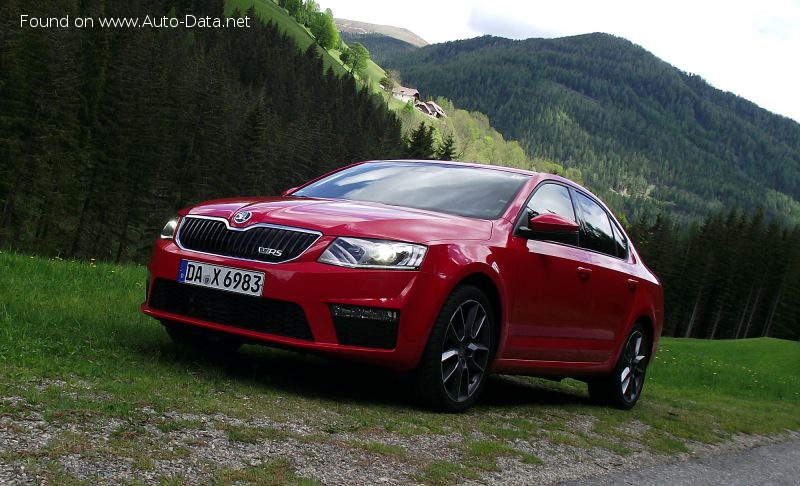
Skoda Octavia III RS 2.0 TSI (230 Hp)
The Skoda Octavia III RS 2.0 TSI (230 Hp) represents a compelling blend of practicality and performance within the European compact car segment. Produced by the Czech automaker Skoda, a subsidiary of the Volkswagen Group, this particular variant of the third-generation Octavia was available between 2015 and 2017. While the Skoda brand itself is not officially sold in the United States market, the Octavia RS is highly regarded in Europe as a “hot hatch” or a sporty family car, offering a more spacious and understated alternative to its platform-mates like the Volkswagen Golf GTI and SEAT Leon Cupra. It carved out a niche for itself by combining the everyday usability of a spacious five-door hatchback with the spirited performance typically found in dedicated sports models, all while maintaining Skoda’s reputation for value and intelligent design.
The Octavia III generation, launched in 2013, brought significant advancements in terms of platform, technology, and design. The RS model, standing for “Rally Sport,” has historically denoted the performance pinnacle of the Octavia range. The 2.0 TSI (230 Hp) iteration specifically enhanced the model’s sporting credentials, offering increased power output over its 220 Hp predecessor, further solidifying its position as a potent yet practical performance vehicle for the discerning European driver.
Engine and Performance: The Heart of the Skoda Octavia III RS 2.0 TSI (230 Hp)
At the core of the Skoda Octavia III RS 2.0 TSI (230 Hp) lies a highly capable and widely acclaimed turbocharged gasoline engine. This powerplant is a variant of the Volkswagen Group’s EA888 engine family, known for its robust performance and efficiency across numerous models. Specifically, the engine code for this version is CHHA, featuring a 1,984 cm³ (121.07 cu. in.) inline four-cylinder configuration. It utilizes a sophisticated fuel injection system that combines both direct injection and multi-port manifold injection, optimizing fuel delivery for both power and efficiency across the rev range. Coupled with a turbocharger and intercooler, this setup ensures a responsive and potent power delivery.
The engine generates a formidable 230 horsepower, peaking between 4,700 and 6,200 rpm, showcasing its broad powerband. Torque output is equally impressive at 350 Nm (258.15 lb.-ft.), available from a low 1,500 rpm and sustained up to 4,600 rpm. This wide torque plateau contributes significantly to the car’s excellent drivability and in-gear acceleration. Mated to a precise 6-speed manual transmission, this powertrain sends power to the front wheels, providing an engaging driving experience typical of European hot hatches.
Performance figures for the Octavia III RS 2.0 TSI (230 Hp) are competitive within its segment. It accelerates from 0 to 62 mph (0-100 km/h) in a brisk 6.7 seconds, with a calculated 0-60 mph time of 6.4 seconds, making it a genuinely quick car. Its top speed is electronically limited to 155 mph (250 km/h), a common practice for German and related European automakers. Despite its performance capabilities, the engine also features a Start & Stop System and adheres to the Euro 6 emission standard, contributing to a combined fuel economy of approximately 37.9 US mpg (6.2 l/100 km) and CO2 emissions of 142 g/km, striking a commendable balance between exhilaration and environmental responsibility.
Design and Features
The Skoda Octavia III RS 2.0 TSI (230 Hp) is presented exclusively as a five-door hatchback, a body style that perfectly encapsulates its dual nature of sportiness and practicality. Its design, while sharing the Octavia’s generally understated and mature aesthetic, is subtly enhanced with RS-specific elements that hint at its performance capabilities without being overly flamboyant. These include a distinctive front bumper with larger air intakes, a unique grille with the RS badge, sporty side skirts, a rear diffuser, and a subtle rear spoiler. The standard tire size of 225/45 R17, with an option for 225/35 R19, further underscores its athletic stance.
Inside, the Octavia RS offers a cabin that is both functional and driver-focused. Sport seats, often upholstered in a combination of fabric and leather or Alcantara, provide excellent support during spirited driving. RS badging is tastefully integrated throughout the interior, appearing on the steering wheel, gear knob, and instrument cluster. The car’s dimensions, including a length of 184.45 inches and a width of 71.42 inches, contribute to a remarkably spacious interior for five occupants. A key highlight of the Octavia’s design is its cavernous trunk space, offering a minimum of 20.84 cu. ft. (590 liters) and expanding to a massive 55.8 cu. ft. (1580 liters) with the rear seats folded down, making it one of the most practical performance vehicles in its class.
In terms of chassis and assisting systems, the Octavia RS features an independent McPherson strut front suspension with a coil spring and anti-roll bar, complemented by an independent multi-link spring suspension with a stabilizer at the rear. This setup, combined with a lowered ride height (128 mm / 5.04 in. ground clearance) and sportier tuning, provides excellent handling dynamics. Braking is handled by ventilated discs at the front and solid discs at the rear, supported by ABS (Anti-lock Braking System). Electric power steering ensures precise control, adapting to speed for optimal feel and responsiveness. These features collectively contribute to a driving experience that is both engaging on winding roads and comfortable for daily commuting.
Technical Specifications
| Category | Specification |
|---|---|
| Brand | Skoda |
| Model | Octavia |
| Generation | Octavia III |
| Type (Engine) | RS 2.0 TSI (230 Hp) |
| Start of Production | 2015 year |
| End of Production | 2017 year |
| Powertrain Architecture | Internal Combustion Engine |
| Body Type | Hatchback |
| Seats | 5 |
| Doors | 5 |
| Performance Specifications | |
| Fuel Consumption (Urban) | 7.7 l/100 km (30.5 US mpg) |
| Fuel Consumption (Extra Urban) | 5.3 l/100 km (44.4 US mpg) |
| Fuel Consumption (Combined) | 6.2 l/100 km (37.9 US mpg) |
| CO2 Emissions | 142 g/km |
| Fuel Type | Petrol (Gasoline) |
| Acceleration 0 – 60 mph | 6.4 seconds (Calculated) |
| Acceleration 0 – 62 mph (0-100 km/h) | 6.7 seconds |
| Maximum Speed | 250 km/h (155.34 mph), Electronically limited |
| Emission Standard | Euro 6 |
| Weight-to-Power Ratio | 6 kg/Hp (167.9 Hp/tonne) |
| Weight-to-Torque Ratio | 3.9 kg/Nm (255.5 Nm/tonne) |
| Engine Specifications | |
| Power | 230 Hp @ 4700-6200 rpm |
| Power per Liter | 115.9 Hp/l |
| Torque | 350 Nm (258.15 lb.-ft.) @ 1500-4600 rpm |
| Engine Layout | Front, Transverse |
| Engine Model/Code | EA888 / CHHA |
| Engine Displacement | 1984 cm³ (121.07 cu. in.) |
| Number of Cylinders | 4 |
| Engine Configuration | Inline |
| Cylinder Bore | 82.5 mm (3.25 in.) |
| Piston Stroke | 92.8 mm (3.65 in.) |
| Compression Ratio | 9.6:1 |
| Number of Valves per Cylinder | 4 |
| Fuel Injection System | Direct injection and Multi-port manifold injection |
| Engine Aspiration | Turbocharger, Intercooler |
| Valvetrain | DOHC |
| Engine Oil Capacity | 5.7 l (6.02 US qt) |
| Coolant Capacity | 8.6 l (9.09 US qt) |
| Engine Systems | Start & Stop System |
| Space, Volume and Weights | |
| Kerb Weight | 1370 kg (3020.33 lbs.) |
| Max. Weight (GVWR) | 1912 kg (4215.24 lbs.) |
| Max Load | 542 kg (1194.91 lbs.) |
| Trunk (Boot) Space – Minimum | 590 l (20.84 cu. ft.) |
| Trunk (Boot) Space – Maximum | 1580 l (55.8 cu. ft.) |
| Fuel Tank Capacity | 50 l (13.21 US gal) |
| Max. Roof Load | 75 kg (165.35 lbs.) |
| Permitted Trailer Load with Brakes (12%) | 1600 kg (3527.4 lbs.) |
| Permitted Trailer Load without Brakes | 720 kg (1587.33 lbs.) |
| Dimensions | |
| Length | 4685 mm (184.45 in.) |
| Width | 1814 mm (71.42 in.) |
| Width including Mirrors | 2017 mm (79.41 in.) |
| Height | 1449 mm (57.05 in.) |
| Wheelbase | 2680 mm (105.51 in.) |
| Front Track | 1535 mm (60.43 in.) |
| Rear (Back) Track | 1506 mm (59.29 in.) |
| Front Overhang | 899 mm (35.39 in.) |
| Rear Overhang | 1106 mm (43.54 in.) |
| Ride Height (Ground Clearance) | 128 mm (5.04 in.) |
| Minimum Turning Circle (Turning Diameter) | 11.13 m (36.52 ft.) |
| Approach Angle | 12.9° |
| Departure Angle | 12.4° |
| Drivetrain, Brakes and Suspension Specifications | |
| Drivetrain Architecture | Front-wheel drive with Internal Combustion Engine |
| Drive Wheel | Front-wheel drive |
| Number of Gears and Type of Gearbox | 6 gears, manual transmission |
| Front Suspension | Independent, McPherson type with coil spring and anti-roll bar |
| Rear Suspension | Independent multi-link spring suspension with stabilizer |
| Front Brakes | Ventilated discs |
| Rear Brakes | Disc |
| Assisting Systems | ABS (Anti-lock Braking System) |
| Steering Type | Steering rack and pinion |
| Power Steering | Electric Steering |
| Tires Size | 225/45 R17; 225/35 R19 |
| Wheel Rims Size | 7.5J x 17; 7.5J x 19 |
Legacy and Market Impact
The Skoda Octavia III RS 2.0 TSI (230 Hp) built upon the strong foundation of its predecessors, further cementing the Octavia RS’s reputation as a “sleeper” performance car in the European market. Its appeal stemmed from its ability to deliver genuine driving thrills without sacrificing the practicality and value for which Skoda is renowned. Unlike many of its more overtly aggressive rivals, the Octavia RS offered a more mature and understated aesthetic, making it an attractive proposition for those who desired performance but also needed a versatile family vehicle.
In its primary European market, the Octavia RS competed directly with established hot hatches and performance-oriented compact cars. Key competitors included its Volkswagen Group stablemates such as the Volkswagen Golf GTI, which shared much of its underlying mechanical architecture and engine, and the SEAT Leon Cupra, often positioned as a more performance-focused and visually aggressive option. Beyond the VW Group, it faced competition from vehicles like the Ford Focus ST, Renault Mégane RS, and even entry-level premium sports sedans, thanks to its generous interior space and near-mid-size dimensions.
The 2.0 TSI (230 Hp) variant, with its increased power, was particularly well-received, offering a noticeable bump in performance that elevated its dynamic capabilities. Its strong resale values and enthusiast following in Europe underscore its success. The Octavia RS demonstrated that Skoda could deliver not just sensible and affordable transportation, but also engaging and high-performance vehicles that retained the brand’s core values of practicality and clever design. This model generation played a crucial role in enhancing Skoda’s brand image, proving its capability to produce vehicles that are both emotionally appealing and rationally sound, leaving a lasting legacy as a highly competent and desirable performance hatchback.