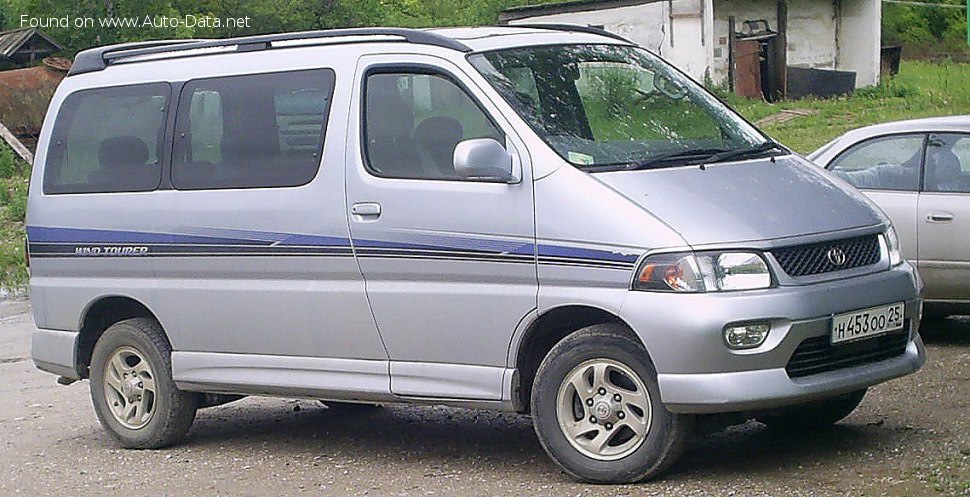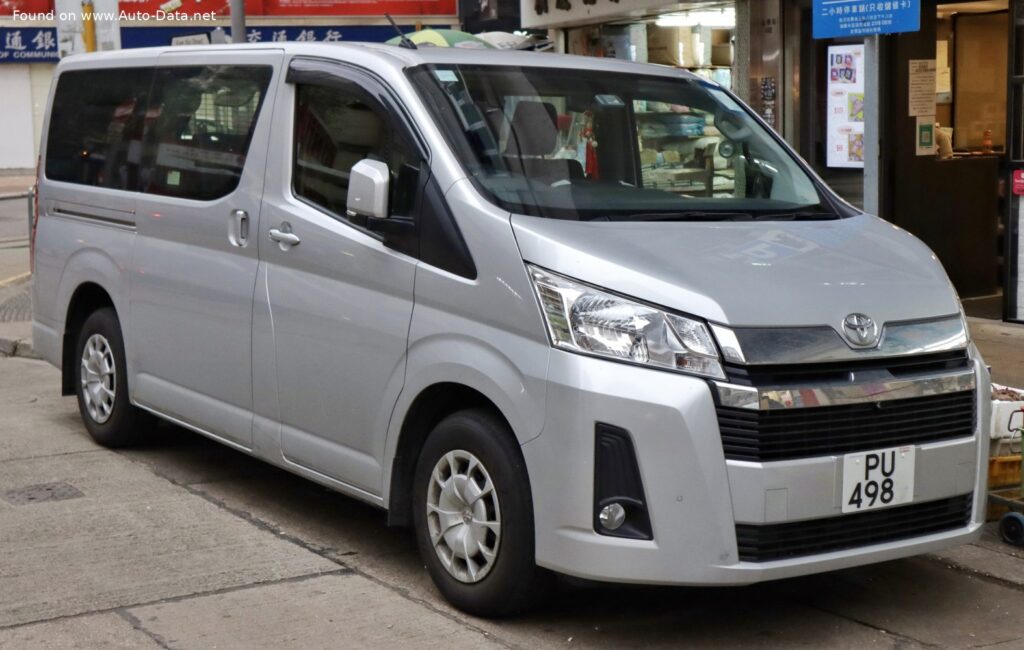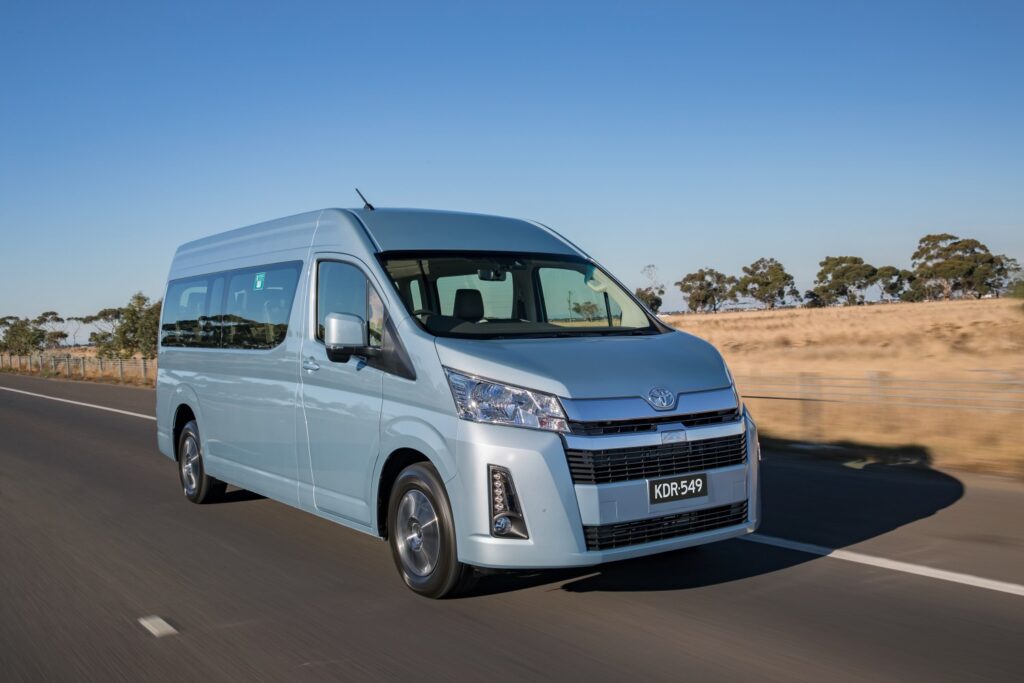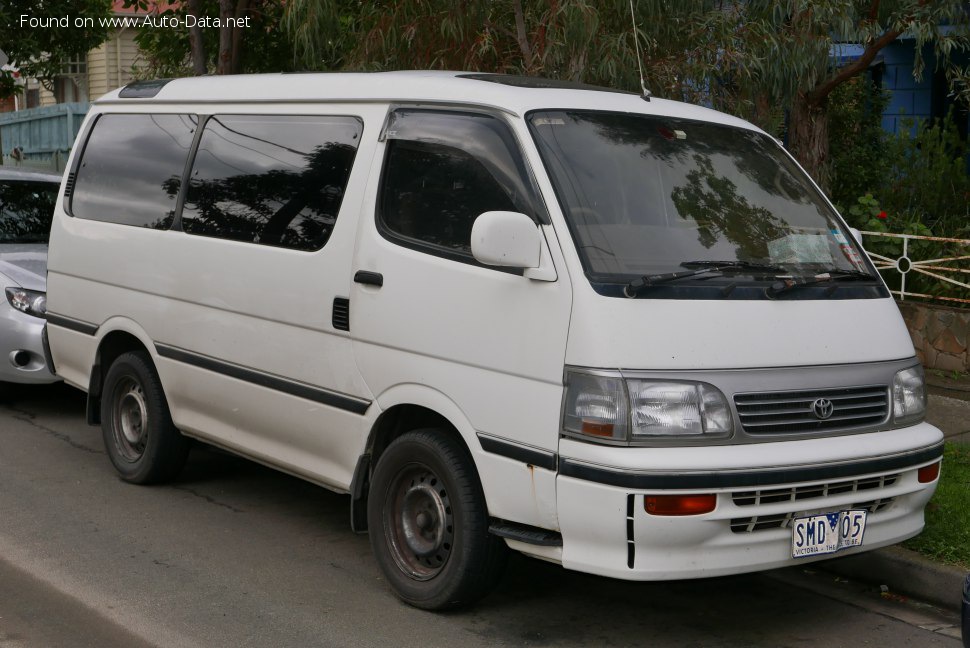
The Toyota HiAce, a name synonymous with reliability and versatility in commercial and passenger transport across much of the world, saw its fourth generation, the H100 series, debut in 1989. This particular variant, the Toyota HiAce IV (H100) 2.4 i (132 Hp), represented a robust and practical solution for a wide array of needs, primarily outside the North American market where dedicated passenger minivans and full-size vans had different market dynamics. Known for its durable construction and efficient use of space, the H100 HiAce quickly established itself as a global workhorse, serving as everything from a family hauler in Asia and Australia to a public transport vehicle in various developing nations. Its production span, lasting an impressive 15 years from 1989 to 2004, underscores its fundamental soundness and broad appeal in its target markets.
Positioned in the light commercial vehicle and multi-purpose vehicle (MPV) segments, the H100 series succeeded the H50/H60/H70 series and brought with it advancements in comfort, safety, and powertrain technology. While not a common sight on American roads in its original form, the HiAce lineage has profoundly influenced the global automotive landscape, demonstrating Toyota’s commitment to building vehicles that are both dependable and adaptable. The 2.4 i (132 Hp) model, with its gasoline engine and minivan body style offering seating for up to eight, was a popular configuration, balancing passenger capacity with reasonable running costs and a capable powertrain.
The Evolution and Role of the Toyota HiAce IV (H100)
The fourth-generation Toyota HiAce, internally designated H100, represented a significant evolution from its predecessors. It maintained the HiAce’s core philosophy of robust utility but introduced a more refined design and improved ergonomics. Unlike many contemporary minivans sold in the United States, which often featured front-wheel-drive car-based platforms, the HiAce IV (H100) retained a more traditional, rear-wheel-drive, body-on-frame or semi-unibody construction, emphasizing durability and load-carrying capability. Its engine was typically positioned longitudinally under the front seats, a layout common in commercial vans, allowing for a compact overall length while maximizing interior space.
In markets like Japan, Australia, New Zealand, Europe, and many parts of Asia and Africa, the HiAce IV (H100) was an omnipresent vehicle. It served as a vital tool for small businesses, a dependable people mover for larger families, and a staple in taxi fleets and shuttle services. Its reputation for longevity and minimal downtime made it a favorite among fleet operators and individual owners who relied on their vehicle for daily income or essential transport. The Toyota HiAce IV (H100) 2.4 i (132 Hp) variant specifically offered a blend of sufficient power for passenger transport and fuel efficiency that was competitive for its class and era.
Engine and Performance: The 2.4 i Powertrain
At the heart of the Toyota HiAce IV (H100) 2.4 i (132 Hp) model was Toyota’s 2RZ-E engine, a naturally aspirated, inline-four gasoline unit. This engine featured multi-port manifold injection, a relatively advanced fuel delivery system for its time, ensuring efficient combustion and improved throttle response compared to older carbureted designs. With an engine displacement of 2,438 cubic centimeters (148.78 cubic inches), it delivered a respectable 132 horsepower at 5,000 revolutions per minute (rpm).
Torque output was equally crucial for a vehicle designed to carry passengers or cargo, and the 2RZ-E engine provided 204 Newton-meters (150.46 lb.-ft.) of torque at 4,000 rpm. This torque curve, peaking at a mid-range rpm, ensured adequate pulling power for city driving, highway cruising, and when the vehicle was fully loaded. The engine’s layout was a middle, longitudinal configuration, meaning it was situated between the front axles, often beneath the driver and front passenger seats, providing a balanced weight distribution and maximizing interior cabin space relative to the vehicle’s footprint.
Fuel economy figures for the 2.4 i variant reflected its utilitarian nature. In urban driving conditions, it consumed approximately 11.9 liters per 100 kilometers (19.8 US miles per gallon), while extra-urban (highway) consumption significantly improved to 6.2 liters per 100 kilometers (37.9 US miles per gallon). These figures, while not groundbreaking by modern standards, were competitive for a rear-wheel-drive minivan of its size and capacity in the late 20th and early 21st centuries. The engine’s simplicity and widespread use across various Toyota models also contributed to its reputation for reliability and ease of maintenance, with an engine oil capacity of 4.1 liters (4.33 US quarts) and a coolant capacity of 9 liters (9.51 US quarts).
Design and Features: Practicality Personified
The design of the Toyota HiAce IV (H100) was driven by functionality and durability. Its minivan body type, with four doors and seating for eight, emphasized passenger comfort and accessibility. The exterior dimensions—a length of 4,615 millimeters (181.69 inches), a width of 1,690 millimeters (66.54 inches), and a height of 1,935 millimeters (76.18 inches)—provided a substantial presence on the road while remaining maneuverable in urban environments. The wheelbase of 2,330 millimeters (91.73 inches) contributed to a stable ride and allowed for a relatively spacious interior.
Inside, the HiAce H100 was designed for practicality. While not luxurious, its cabin was robust, easy to clean, and configured to withstand the rigors of daily use, whether for commercial transport or large families. Seating arrangements were flexible, allowing for various configurations to prioritize either passenger comfort or cargo space. The large windows provided good visibility, a crucial aspect for a vehicle often operated in congested areas.
In terms of safety, the HiAce IV (H100) featured an Anti-lock Braking System (ABS) as an assisting system, which was a significant advancement for a commercial-oriented vehicle of its era. This system enhanced driver control during emergency braking by preventing wheel lock-up. The braking system itself consisted of ventilated discs at the front for effective stopping power and durable drum brakes at the rear, a common and cost-effective setup for vehicles designed to carry heavy loads. The vehicle rode on 195/85 S R14 tires, a size that balanced load capacity with ride comfort and availability.
Technical Specifications: Toyota HiAce IV (H100) 2.4 i (132 Hp)
| Category | Specification |
|---|---|
| Brand | Toyota |
| Model | HiAce |
| Generation | HiAce IV (H100) |
| Type (Engine) | 2.4 i (132 Hp) |
| Start of Production | 1989 year |
| End of Production | 2004 year |
| Powertrain Architecture | Internal Combustion engine |
| Body Type | Minivan |
| Seats | 8 |
| Doors | 4 |
| Performance Specs | |
| Fuel Consumption (Urban) | 11.9 l/100 km (19.8 US mpg) |
| Fuel Consumption (Extra Urban) | 6.2 l/100 km (37.9 US mpg) |
| Fuel Type | Petrol (Gasoline) |
| Engine Specs | |
| Power | 132 Hp @ 5000 rpm |
| Power per Liter | 54.1 Hp/l |
| Torque | 204 Nm @ 4000 rpm (150.46 lb.-ft. @ 4000 rpm) |
| Engine Layout | Middle, Longitudinal |
| Engine Model/Code | 2RZ-E |
| Engine Displacement | 2438 cm3 (148.78 cu. in.) |
| Number of Cylinders | 4 |
| Engine Configuration | Inline |
| Fuel Injection System | Multi-port manifold injection |
| Engine Aspiration | Naturally aspirated engine |
| Engine Oil Capacity | 4.1 l (4.33 US qt) |
| Coolant Capacity | 9 l (9.51 US qt) |
| Dimensions | |
| Length | 4615 mm (181.69 in.) |
| Width | 1690 mm (66.54 in.) |
| Height | 1935 mm (76.18 in.) |
| Wheelbase | 2330 mm (91.73 in.) |
| Drivetrain, Brakes and Suspension Specs | |
| Drivetrain Architecture | The Internal combustion engine (ICE) drives the rear wheels of the vehicle. |
| Drive Wheel | Rear wheel drive |
| Front Brakes | Ventilated discs |
| Rear Brakes | Drum |
| Assisting Systems | ABS (Anti-lock braking system) |
| Tires Size | 195/85 S R14 |
Legacy and Market Impact
The Toyota HiAce IV (H100) left an indelible mark on the global automotive market, particularly in regions where robust, reliable, and versatile transport was paramount. Its enduring popularity stems from its reputation for exceptional durability and low running costs. These attributes made it an ideal choice for businesses that required a vehicle to operate consistently under demanding conditions, day in and day out, with minimal maintenance. The H100’s simple yet effective engineering meant that repairs, when needed, were straightforward and parts were readily available across numerous markets.
In its primary markets, the HiAce IV (H100) faced competition from other Asian manufacturers, such as the Nissan Caravan (also known as the Urvan), Mitsubishi L300 (Delica), and to a lesser extent, models from Hyundai and Kia. European competitors included the Ford Transit, Volkswagen Transporter, and Mercedes-Benz Sprinter, though the HiAce often held an advantage in terms of initial purchase price and perceived long-term reliability in many Asian and African markets. Its compact exterior, combined with a surprisingly spacious interior, allowed it to navigate narrow city streets and crowded urban centers with ease, a significant advantage over larger, North American-style full-size vans.
The HiAce H100’s legacy is not just about sales figures; it’s about its profound societal impact. It facilitated commerce for countless small and medium-sized enterprises, from delivery services to tradespeople. It provided essential public transportation in many developing countries, bridging gaps in infrastructure and connecting communities. For families, it offered an affordable and reliable way to transport multiple passengers, often with their luggage, for long distances. Even today, decades after its production ended, many H100 series HiAce vans can still be seen on roads around the world, a testament to their inherent quality and the care with which they were engineered.
While the Toyota HiAce IV (H100) 2.4 i (132 Hp) may not be a household name in the United States, its global significance cannot be overstated. It represents a pinnacle of Toyota’s commitment to building practical, long-lasting vehicles that meet the diverse needs of a worldwide customer base. Its blend of straightforward engineering, generous interior space, and admirable reliability secured its place as a truly iconic vehicle in the annals of international automotive history, a true global workhorse that defined a generation of commercial and passenger transport.