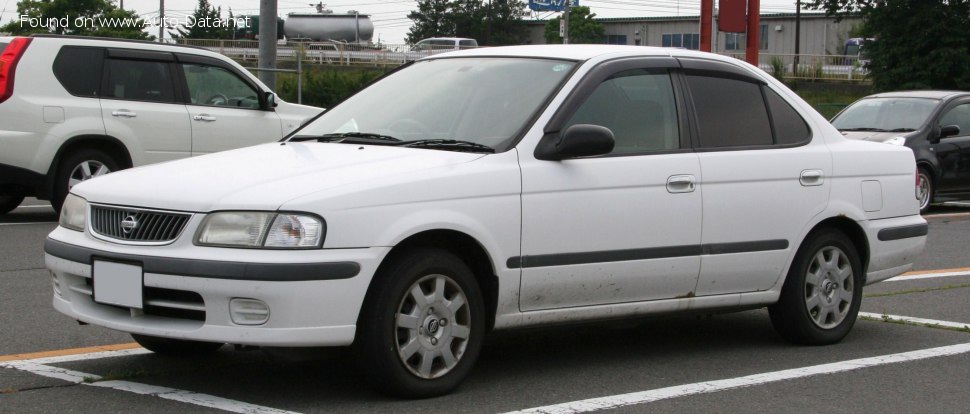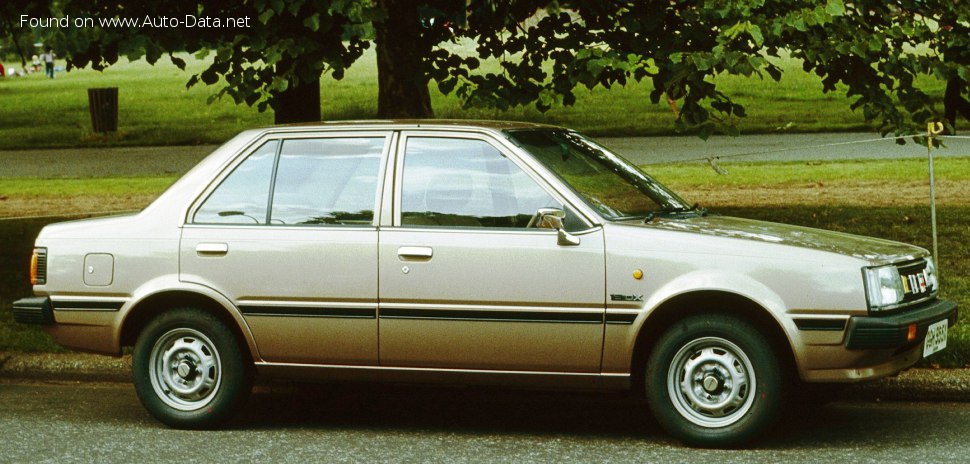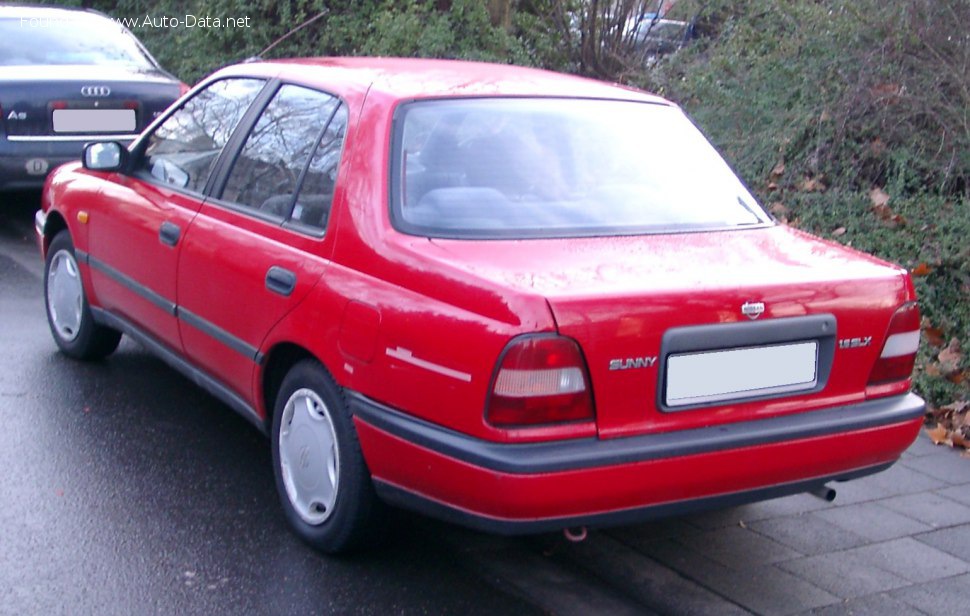
Introduction to the Nissan Sunny III (N14) 1.4 16V (75 Hp)
The Nissan Sunny III, internally designated N14, represents a significant chapter in the history of Nissan’s global compact car offerings. Produced from 1990 to 1995, the N14 generation continued the Sunny’s legacy as a reliable, economical, and practical vehicle designed to meet the diverse needs of motorists in various international markets. While the Sunny nameplate often appeared as the Sentra in North America, the N14, particularly in its 1.4 16V (75 Hp) sedan configuration, played a crucial role in European, Asian, and other global regions. This specific model, manufactured between 1990 and 1992, embodied the prevailing engineering philosophies of the early 1990s, focusing on durability, fuel efficiency, and a straightforward driving experience. It was positioned as a sensible choice for families and individuals seeking dependable transportation without unnecessary frills, offering a compelling blend of affordability and Japanese automotive reliability.
Engine and Performance: The Heart of the Nissan Sunny III (N14)
At the core of the Nissan Sunny III (N14) 1.4 16V (75 Hp) lay the GA14DS engine, a 1.4-liter (1392 cm3 or 84.95 cu. in.) inline four-cylinder powerplant. This engine featured a 16-valve, OHC (Overhead Camshaft) valvetrain, a configuration that was becoming increasingly common in compact cars of the era, offering a good balance between power and efficiency. Despite its relatively modest displacement, the GA14DS delivered 75 horsepower at 6000 rpm, providing adequate motivation for daily commuting and light highway duties. Torque output stood at 112 Nm (82.61 lb.-ft.) at 4000 rpm, ensuring respectable low-to-mid range responsiveness for city driving.
A notable characteristic of this particular variant was its carbureted fuel injection system. While multi-point electronic fuel injection was gaining traction, many entry-level models in the early 1990s, especially in markets outside North America, still utilized carburetors for their simplicity and cost-effectiveness. This system, coupled with a naturally aspirated design, contributed to the engine’s reputation for robustness and ease of maintenance. Power was transmitted to the front wheels via a 5-speed manual transmission, a common and effective setup that allowed the driver to extract the most from the engine’s output while also contributing to fuel economy. The front-transverse engine layout and front-wheel-drive architecture were standard for compact cars of this period, maximizing interior space and offering predictable handling characteristics. With a kerb weight of 2028.25 lbs (920 kg), the Sunny achieved a weight-to-power ratio of 12.3 kg/Hp (81.5 Hp/tonne), underscoring its lightweight and efficient design for its segment.
Design and Features: Practicality and Functionality
The Nissan Sunny III (N14) 1.4 16V (75 Hp) was offered in a traditional 4-door sedan body style, a highly popular choice in many global markets for its balance of passenger comfort and cargo capacity. Measuring 166.54 inches (4230 mm) in length, 66.54 inches (1690 mm) in width, and 54.92 inches (1395 mm) in height, the N14 Sunny was a compact vehicle that was maneuverable in urban environments yet offered sufficient interior room for five occupants. Its wheelbase of 95.67 inches (2430 mm) contributed to a stable ride quality, while the front and rear track widths (56.89 inches / 1445 mm and 56.3 inches / 1430 mm, respectively) provided a solid stance on the road.
Interior appointments were functional and durable, designed for longevity and ease of use. The sedan configuration provided a generous trunk space of 15.54 cu. ft. (440 liters), making it a practical choice for families or individuals requiring ample cargo room for groceries, luggage, or other essentials. The fuel tank capacity of 13.21 US gallons (50 liters) ensured a decent cruising range, a crucial factor for long-distance travel in regions where fuel stations might be less frequent.
In terms of chassis and safety, the N14 Sunny featured a conventional but effective setup. The front suspension utilized a wishbone design, known for its ability to provide good ride comfort and handling precision, while the rear employed a spring strut system, a cost-effective and space-efficient solution for compact cars. Braking was handled by ventilated discs at the front, offering superior heat dissipation and stopping power, complemented by drum brakes at the rear. For its time, the inclusion of an Anti-lock Braking System (ABS) as an assisting system was a significant safety feature, providing improved control during emergency braking situations. Steering was managed by a rack and pinion system with hydraulic power steering, offering a comfortable and responsive driving feel. The vehicle rode on 155/80 R13 tires, a common size for compact cars of the era, balancing grip, ride comfort, and affordability.
Technical Specifications: Nissan Sunny III (N14) 1.4 16V (75 Hp)
| Category | Specification | Value (Metric) | Value (US Customary/Other) |
|---|---|---|---|
General Information |
|||
| Brand | Nissan | ||
| Model | Sunny | ||
| Generation | Sunny III (N14) | ||
| Type (Engine) | 1.4 16V (75 Hp) | ||
| Start of production | 1990 year | ||
| End of production | 1992 year | ||
| Powertrain Architecture | Internal Combustion engine | ||
| Body type | Sedan | ||
| Seats | 5 | ||
| Doors | 4 | ||
Performance Specs |
|||
| Fuel Type | Petrol (Gasoline) | ||
| Weight-to-power ratio | 12.3 kg/Hp | 81.5 Hp/tonne | |
| Weight-to-torque ratio | 8.2 kg/Nm | 121.7 Nm/tonne | |
Engine Specs |
|||
| Power | 75 Hp @ 6000 rpm | ||
| Power per liter | 53.9 Hp/l | ||
| Torque | 112 Nm @ 4000 rpm | 82.61 lb.-ft. @ 4000 rpm | |
| Engine layout | Front, Transverse | ||
| Engine Model/Code | GA14DS | ||
| Engine displacement | 1392 cm3 | 84.95 cu. in. | |
| Number of cylinders | 4 | ||
| Engine configuration | Inline | ||
| Cylinder Bore | 73.6 mm | 2.9 in. | |
| Piston Stroke | 81.8 mm | 3.22 in. | |
| Compression ratio | 9.5:1 | ||
| Number of valves per cylinder | 4 | ||
| Fuel injection system | Carburetor | ||
| Engine aspiration | Naturally aspirated engine | ||
| Valvetrain | OHC | ||
| Engine oil capacity | 3.2 l | 3.38 US qt | 2.82 UK qt | |
| Coolant | 5.7 l | 6.02 US qt | 5.02 UK qt | |
Space, Volume and Weights |
|||
| Kerb Weight | 920 kg | 2028.25 lbs. | |
| Trunk (boot) space – minimum | 440 l | 15.54 cu. ft. | |
| Fuel tank capacity | 50 l | 13.21 US gal | 11 UK gal | |
Dimensions |
|||
| Length | 4230 mm | 166.54 in. | |
| Width | 1690 mm | 66.54 in. | |
| Height | 1395 mm | 54.92 in. | |
| Wheelbase | 2430 mm | 95.67 in. | |
| Front track | 1445 mm | 56.89 in. | |
| Rear (Back) track | 1430 mm | 56.3 in. | |
Drivetrain, Brakes and Suspension Specs |
|||
| Drivetrain Architecture | The Internal combustion engine (ICE) drives the front wheels of the vehicle. | ||
| Drive wheel | Front wheel drive | ||
| Number of gears and type of gearbox | 5 gears, manual transmission | ||
| Front suspension | Wishbone | ||
| Rear suspension | Spring Strut | ||
| Front brakes | Ventilated discs | ||
| Rear brakes | Drum | ||
| Assisting systems | ABS (Anti-lock braking system) | ||
| Steering type | Steering rack and pinion | ||
| Power steering | Hydraulic Steering | ||
| Tires size | 155/80 R13 | ||
Legacy and Market Impact
The Nissan Sunny, particularly the N14 generation, holds a significant place in automotive history as a cornerstone of Nissan’s global strategy for compact vehicles. While its North American counterpart, the Sentra, often received more powerful engines and slightly different styling cues to suit local tastes, the Nissan Sunny III (N14) 1.4 16V (75 Hp) was specifically tailored for markets where economy, reliability, and low running costs were paramount. In Europe, Asia, and other developing regions, the N14 Sunny was a strong contender in the highly competitive compact segment, battling rivals such as the Toyota Corolla, Honda Civic, Mazda 323, and various European offerings like the Volkswagen Golf (though often in hatchback form) and Opel/Vauxhall Astra.
Its reputation was built on Nissan’s long-standing commitment to engineering dependable and durable vehicles. The GA14DS engine, despite its carbureted setup, was known for its longevity and relative simplicity, making it a favorite among mechanics and owners alike. This reliability, combined with a practical sedan body and a comfortable ride, cemented the Sunny’s status as a sensible and trustworthy choice for families and individuals. The availability of ABS, even in a compact car of its era, highlighted Nissan’s commitment to offering advanced safety features across its range, further enhancing its appeal.
The N14 generation helped Nissan maintain a strong presence in international markets during a period of intense global competition. It demonstrated Nissan’s ability to produce a versatile platform that could be adapted to various market demands, from basic utilitarian transport to more equipped variants. The Sunny’s enduring appeal in these markets stems from its no-nonsense approach to motoring: it was a car designed to get the job done efficiently and reliably, without demanding excessive attention or maintenance. Its legacy is one of quiet competence and widespread accessibility, contributing significantly to Nissan’s global sales figures and reinforcing its image as a manufacturer of robust and practical automobiles for the everyday driver. Decades later, many N14 Sunnys continue to serve as daily drivers in various parts of the world, a testament to their inherent durability and timeless utility.