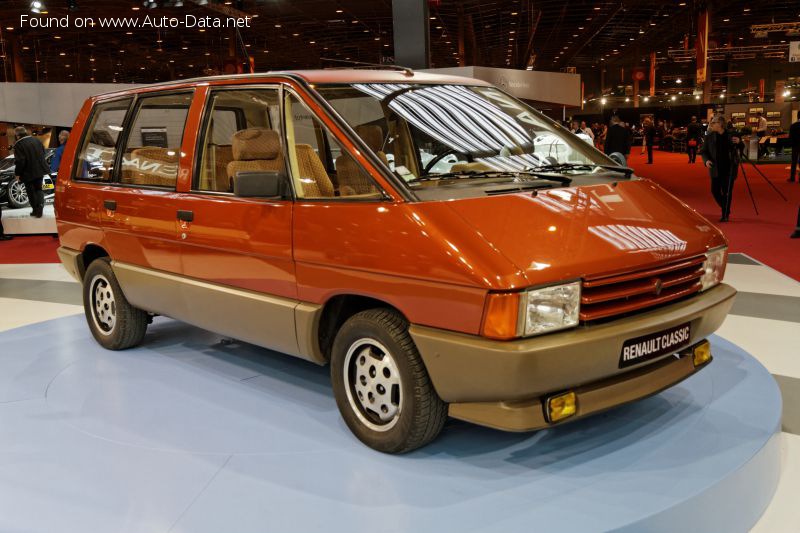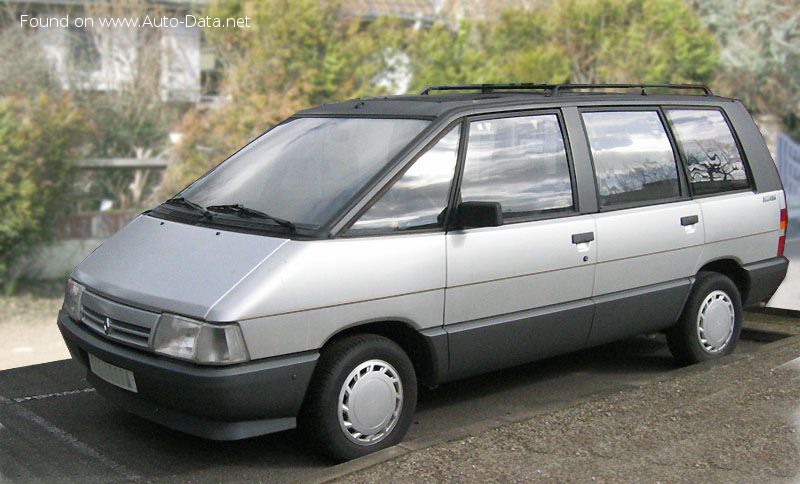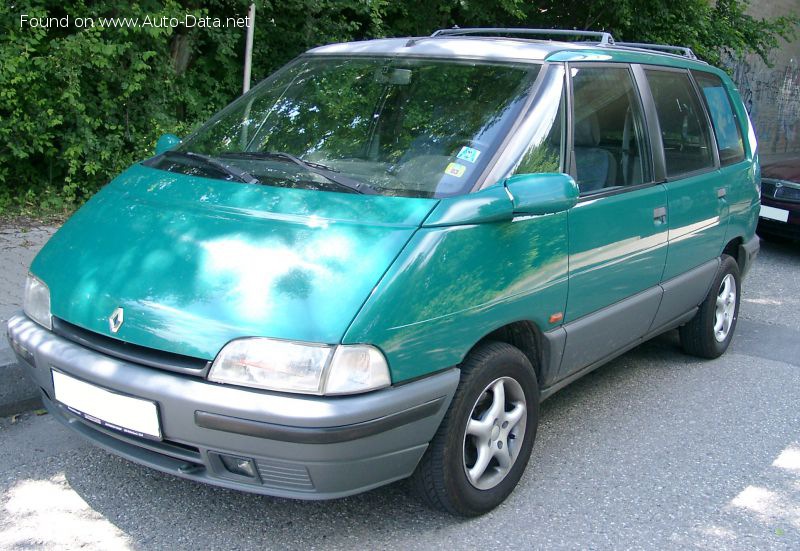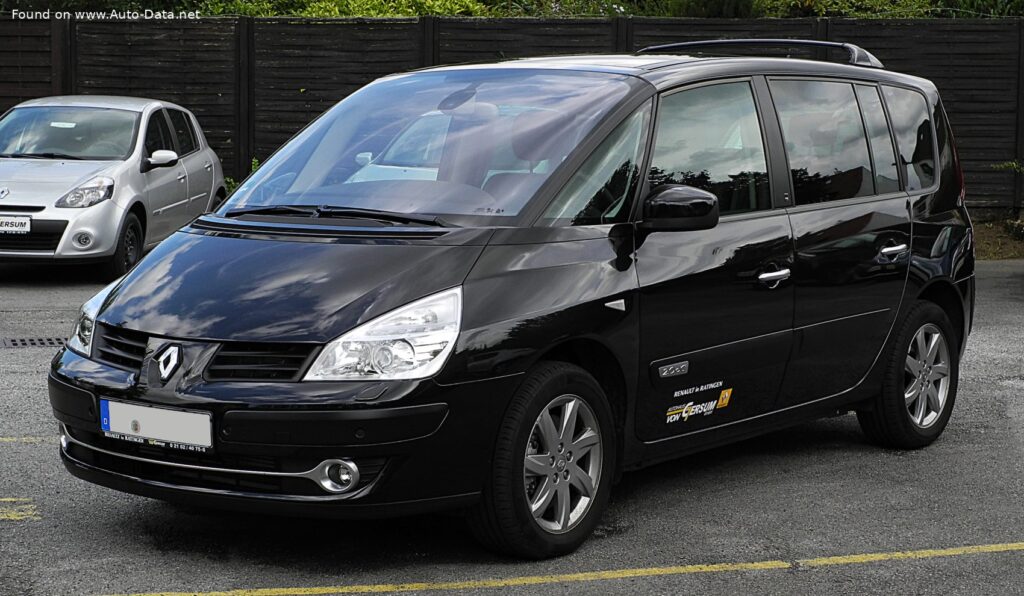
The Renault Espace IV (Phase III, 2010) 2.0 TCe (170 Hp): A European Minivan Icon
The Renault Espace, a name synonymous with the European minivan (or Multi-Purpose Vehicle – MPV) segment, represents a significant chapter in automotive design and family transport. The fourth generation, known as the Espace IV, launched in 2002, continued the model’s tradition of offering unparalleled interior space and versatility. The specific iteration under review, the Renault Espace IV (Phase III, 2010) 2.0 TCe (170 Hp), represents a mid-cycle refresh that brought subtle updates in styling, features, and powertrain options to keep it competitive in its primary European market.
As a vehicle never officially sold in the United States, the Espace holds a unique position. It pioneered the MPV concept in Europe, establishing a template for family vehicles that prioritized passenger comfort, modular seating, and a commanding driving position long before SUVs dominated the market. This 2010 Phase III model, produced until 2012, showcased Renault’s continued commitment to the segment, blending practical utility with a distinctively French flair for design and comfort.
Engine and Performance: Powering the Renault Espace IV (Phase III, 2010)
At the heart of this particular Espace IV lies the 2.0 TCe (Turbo Control efficiency) engine, a modern gasoline (petrol) powertrain designed to offer a balance of performance and fuel economy. This inline four-cylinder engine, with an engine code F4R, features a displacement of 1,998 cubic centimeters (121.93 cubic inches). It benefits from a DOHC (Double Overhead Camshaft) valvetrain and direct fuel injection, coupled with a turbocharger and intercooler, to produce a respectable 170 horsepower at 5,000 revolutions per minute (rpm).
Torque output is equally impressive for a family-oriented vehicle, peaking at 199.14 pound-feet (270 Nm) at a relatively low 3,250 rpm. This ample torque at mid-range ensures responsive acceleration and effortless cruising, even when the vehicle is fully loaded with passengers and cargo. Power is delivered to the front wheels via a smooth-shifting 6-speed manual transmission, providing the driver with direct control over the vehicle’s output.
Performance figures for the 2.0 TCe are quite competitive for its class. The Espace can accelerate from 0 to 60 miles per hour in approximately 9.2 seconds, with a top speed reaching 127.38 mph (205 km/h). Fuel efficiency, while not class-leading by today’s standards, was respectable for its time and size, with a combined rating of 26.7 US miles per gallon (8.8 liters per 100 km). The engine also met the Euro 5 emissions standard, reflecting Renault’s efforts to comply with increasingly stringent environmental regulations.
Design and Features: Practicality Meets European Style
The Renault Espace IV (Phase III, 2010) retains the distinctive “monobox” silhouette that defined the Espace line, characterized by its single-volume shape that maximizes interior space. As a minivan or MPV, it offers five doors and a versatile seven-seat configuration, making it an ideal choice for larger families or those requiring flexible seating arrangements. The Phase III refresh brought subtle exterior tweaks, including updated grille designs, revised lighting signatures, and new wheel options, giving it a slightly more modern appearance without altering its fundamental identity.
Measuring 183.5 inches in length, 74.57 inches in width (including mirrors), and 70.91 inches in height, the Espace commands a significant road presence. Its long wheelbase of 110.35 inches contributes to a stable ride and generous interior volume. The true genius of the Espace lies in its interior flexibility. The individual rear seats can be slid, folded, or even entirely removed, allowing for a vast array of passenger and cargo configurations. Minimum trunk space starts at a usable 10.28 cubic feet, expanding dramatically to an impressive 101 cubic feet with the rear seats removed, rivaling many larger SUVs and wagons.
Underneath, the Espace features an independent McPherson strut front suspension with coil springs and an anti-roll bar, providing a comfortable and controlled ride. The rear suspension utilizes a semi-independent setup with coil springs, balancing ride comfort with load-carrying capability. Braking is handled by ventilated discs at the front and solid discs at the rear, supported by an Anti-lock Braking System (ABS) for enhanced safety. The vehicle rides on 17-inch wheels shod with 225/55 R17 tires, offering a good balance of grip and ride quality. Additional practical features include a generous 21.93 US gallon fuel tank, a maximum roof load capacity of 176.37 lbs., and a substantial permitted trailer load with brakes of 4,409.25 lbs.
Technical Specifications: Renault Espace IV (Phase III, 2010) 2.0 TCe (170 Hp)
| Feature | Specification |
|---|---|
| Brand | Renault |
| Model | Espace IV (Phase III, 2010) |
| Type (Engine) | 2.0 TCe (170 Hp) |
| Start of Production | 2010 |
| End of Production | 2012 |
| Body Type | Minivan, MPV |
| Seats | 7 |
| Doors | 5 |
| Performance Specifications | |
| Fuel Consumption (Urban) | 20.3 US mpg (11.6 l/100 km) |
| Fuel Consumption (Extra Urban) | 32.7 US mpg (7.2 l/100 km) |
| Fuel Consumption (Combined) | 26.7 US mpg (8.8 l/100 km) |
| CO2 Emissions | 204 g/km |
| Fuel Type | Petrol (Gasoline) |
| Acceleration 0-60 mph | 9.2 seconds |
| Maximum Speed | 127.38 mph (205 km/h) |
| Emission Standard | Euro 5 |
| Weight-to-Power Ratio | 10.4 kg/Hp |
| Weight-to-Torque Ratio | 6.5 kg/Nm |
| Engine Specifications | |
| Power | 170 Hp @ 5000 rpm |
| Power per Liter | 85.1 Hp/l |
| Torque | 199.14 lb.-ft. @ 3250 rpm (270 Nm) |
| Engine Layout | Front, Transverse |
| Engine Model/Code | F4R |
| Engine Displacement | 121.93 cu. in. (1998 cm3) |
| Number of Cylinders | 4 |
| Engine Configuration | Inline |
| Cylinder Bore | 3.26 in. (82.7 mm) |
| Piston Stroke | 3.66 in. (93 mm) |
| Compression Ratio | 9.8:1 |
| Valves per Cylinder | 4 |
| Fuel Injection System | Direct injection |
| Engine Aspiration | Turbocharger, Intercooler |
| Valvetrain | DOHC |
| Engine Oil Capacity | 5.71 US qt (5.4 l) |
| Coolant Capacity | 9.83 US qt (9.3 l) |
| Space, Volume and Weights | |
| Kerb Weight | 3880.14 lbs. (1760 kg) |
| Max. Weight | 5456.44 lbs. (2475 kg) |
| Max Load | 1576.31 lbs. (715 kg) |
| Trunk Space (Minimum) | 10.28 cu. ft. (291 l) |
| Trunk Space (Maximum) | 101 cu. ft. (2860 l) |
| Fuel Tank Capacity | 21.93 US gal (83 l) |
| Max. Roof Load | 176.37 lbs. (80 kg) |
| Permitted Trailer Load with Brakes (12%) | 4409.25 lbs. (2000 kg) |
| Permitted Trailer Load without Brakes | 1653.47 lbs. (750 kg) |
| Permitted Towbar Download | 176.37 lbs. (80 kg) |
| Dimensions | |
| Length | 183.5 in. (4661 mm) |
| Width (including mirrors) | 74.57 in. (1894 mm) |
| Height | 70.91 in. (1801 mm) |
| Wheelbase | 110.35 in. (2803 mm) |
| Front Track | 61.97 in. (1574 mm) |
| Rear Track | 61.26 in. (1556 mm) |
| Front Overhang | 40.39 in. (1026 mm) |
| Rear Overhang | 32.76 in. (832 mm) |
| Ride Height (Ground Clearance) | 6.89 in. (175 mm) |
| Minimum Turning Circle | 36.09 ft. (11 m) |
| Drivetrain, Brakes and Suspension | |
| Drivetrain Architecture | Front-wheel drive, Internal Combustion engine |
| Drive Wheel | Front wheel drive |
| Number of Gears and Type of Gearbox | 6 gears, manual transmission |
| Front Suspension | Independent, McPherson with coil spring and anti-roll bar |
| Rear Suspension | Semi-independent, coil spring |
| Front Brakes | Ventilated discs |
| Rear Brakes | Disc |
| Assisting Systems | ABS (Anti-lock braking system) |
| Steering Type | Steering rack and pinion |
| Tires Size | 225/55 R17 |
| Wheel Rims Size | 17 inches |
Legacy and Market Impact in the European Minivan Segment
The Renault Espace holds a significant place in automotive history, particularly in Europe, as one of the original and most enduring pioneers of the modern minivan concept. Introduced in 1984, the Espace revolutionized family transportation by offering a car-like driving experience combined with unparalleled interior flexibility, modularity, and space. The fourth generation, launched in 2002, built upon this heritage, evolving the design to be more stylish and refined, while retaining its core values of practicality and comfort. The Phase III refresh, which includes the Renault Espace IV (Phase III, 2010) 2.0 TCe (170 Hp) model, ensured the Espace remained a strong contender in a segment that, while shrinking due to the rise of SUVs, still had a dedicated following.
In its primary European market, the Espace IV competed against a range of established rivals, including the Ford Galaxy, Volkswagen Sharan, SEAT Alhambra, Citroën C8, and Peugeot 807. What set the Espace apart was often its distinctive French design, emphasis on ride comfort, and innovative interior features. While not necessarily the sportiest or most luxurious, it consistently delivered on its promise of spacious and comfortable family travel. Its reputation for durability and practicality made it a popular choice for large families and taxi services across the continent.
The Espace’s absence from the North American market is a testament to the differing automotive tastes between continents. While minivans like the Chrysler Voyager (which was incidentally developed with a similar concept to the original Espace at one point, though independently) and Honda Odyssey dominated the US, the larger, often more truck-like American minivans and the increasing preference for SUVs meant there was little appetite for a European-sized MPV like the Espace. However, its influence on global automotive design, particularly in the development of flexible interior spaces and the very concept of the family-friendly MPV, is undeniable.
The Espace IV’s production run concluded in 2014, making way for a dramatically different fifth-generation model that blurred the lines between an MPV and an SUV. The 2010-2012 Phase III models, with their blend of established Espace practicality and updated powertrain technology, represent a mature point in the traditional MPV’s evolution, solidifying its legacy as a comfortable, versatile, and enduring emblem of European family motoring.